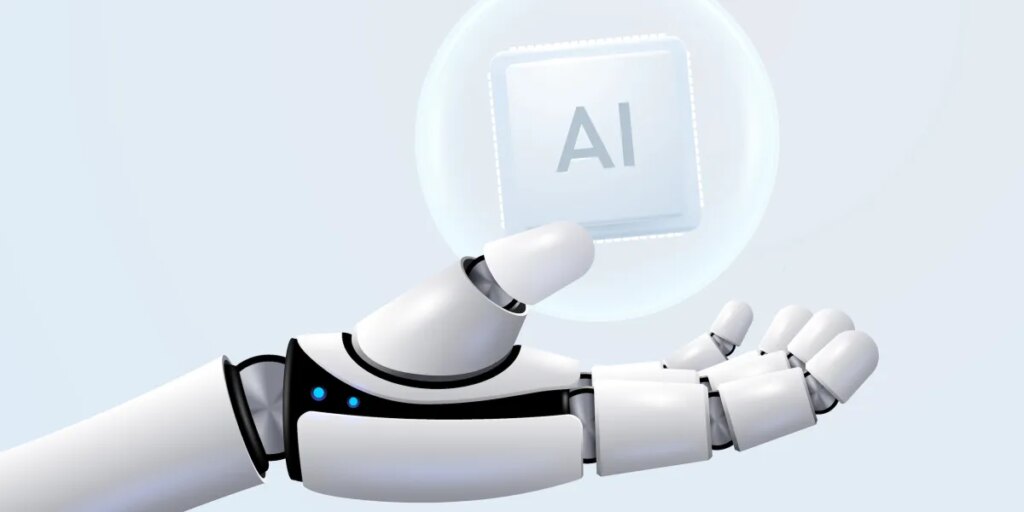
Good morning. Artificial intelligence is stepping out of the virtual world and into the real one — and that shift is called physical AI. What does that mean? Instead of working only on computers or digital data, it enables machines to sense, think, and act in the real world. Physical AI was a key topic of discussion during a Fortune Brainstorm Tech dinner on Monday at CES 2026 in Las Vegas. Andrew Nusca, editorial director of Fortune‘s Brainstorm series and author of the Fortune Tech newsletter, hosted a fireside chat with Qualcomm President and CEO Cristiano Amon on the subject. Amon said he agreed with Nvidia CEO Jensen Huang’s prediction that physical AI will be the next major wave of artificial intelligence.
“It’s going to be massive,” Amon said. Physical AI is grounded in real-time sensor data. “You train on things that you see, things that you sense, things that you do,” he explained. This enables robots and self-driving cars, for example, to handle complex tasks, adapt to changing environments, and make split-second decisions while moving and interacting with the world around them.
Physical AI is emerging in automotive, Amon continued. When you think about assisted driving and autonomous driving, that’s a physical AI problem, he explained. You have sensors and cameras observing everything around you and telling the car where to go and when, he said. Qualcomm has transformed into a major automotive technology provider, positioning itself as a key player in the industry’s shift toward “software-defined vehicles.”
Qualcomm’s move into automotive was driven by the company’s recognition of increasing computing needs within vehicles—especially in processors for assisted driving, Amon explained. “You cannot put a server in the trunk of a car,” he said. It consumes too much power and takes away from the car’s energy, he added.
To meet those demands, Amon said, Qualcomm focused on creating power-efficient semiconductor designs capable of handling significant computing loads. Leveraging its consumer electronics experience, the company can integrate cameras, sensors, and connectivity features into a single piece of silicon—a design well-suited for modern vehicles.
“The same thing that made Qualcomm successful in automotive will make us successful in robotics,” Amon said. The conversation around physical AI, he added, naturally extends to robotics—and he believes its impact will go far beyond humanoid robots. At CES, Qualcomm announced a full suite of robotics technologies.
A 2026 tech trends report by Deloitte explores how AI and robotics are converging. “Robots powered by physical AI are no longer confined to research labs or factory floors,” the report states. “They’re inspecting power grids, assisting in surgery, navigating city streets, and working alongside humans in warehouses.”
According to Deloitte’s research, the industry, regulators, and potential adopters are working to eliminate barriers that slow large-scale deployment. As organizations overcome these challenges, AI-enabled robots are expected to move from niche applications to mainstream adoption.
Sheryl Estrada [email protected]
The post From factory floors to offices: Physical AI is ‘going to be massive’ appeared first on Fortune.