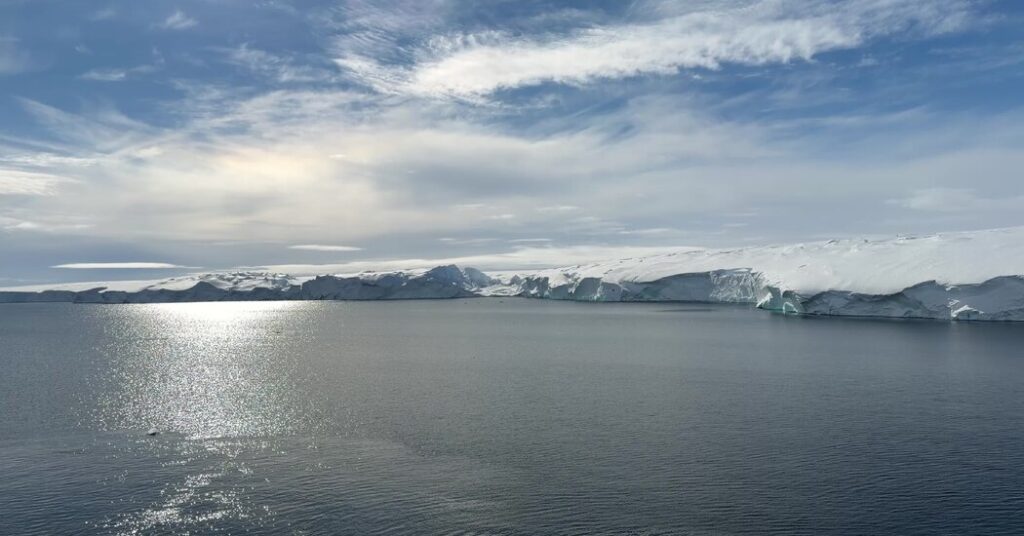
Yesterday, we arrived at the Thwaites Glacier. This morning, we are surrounded by it.
The end of the glacier that sits on the ocean is formed of two long tongues of ice, with a narrow channel of water between them.
We sailed down this channel overnight and, by breakfast, made it to the end. Now we are enveloped on three sides in Thwaites’s icy embrace.
The Araon’s captain, Kim Gwang-heon, was nervous about sailing here. Satellite imagery showed the passage strewed with sea ice. Once the ship started down the channel, the winds could have blown the ice in our direction, blocking our way back out. But Won Sang Lee, the expedition’s chief scientist, was determined to try.
The end of the channel is as close as the ship can get to the spot on Thwaites where the scientists hope to drill through the ice later this month. Anchoring nearby would let the researchers fly their gear to the site with the fewest trips by helicopter between the ship and the glacier. That will help their complex, monthlong operation start as soon as possible. And so, thanks to Captain Kim’s expert sailing, we find ourselves close enough to the glacier’s immense face to have a staring contest.
The sun is warm. The sea is calm. Even the penguins are having a good morning. Small groups of them leaped and romped in the waters around the ship.
As far as Dr. Lee can tell, we might be the first humans to reach these waters. The seabed is unmapped by modern sonar, suggesting no other ship has sailed here. “The past four years it’s been almost covered by sea ice,” Dr. Lee said.
The lack of ice is a great help to research trips like this one, but it is also a sign of how quickly the Antarctic climate is shifting. The annual maximum sea ice cover around the continent has plumbed new lows in recent years.
“It’s really changing rapidly, this region,” Dr. Lee said. “It’s really good for science, but not good for human beings.”
Raymond Zhong reports on climate and environmental issues for The Times.
The post Face to Face With the Thwaites Glacier appeared first on New York Times.