
Recently, something incredibly rare happened: American policymakers at the highest levels of government committed to tackling animal cruelty.
Specifically, late last month, the Trump administration announced a multi-agency “strike force” to crack down on animal abuse.
In a Fox News interview with Lara Trump about the initiative, Attorney General Pam Bondi said Trump’s Department of Justice will aggressively pursue dog fighting cases, and Secretary of Agriculture Brooke Rollins promised to hold puppy mills — operations that confine dogs in cages for breeding, and where most of America’s puppies for sale originate — accountable for mistreating animals.
Key takeaways
- Last month, the Trump administration announced a “strike force” to crack down on puppy mills, dog fighting, and animal experimentation.
- Reactions from animal advocates are mixed, as the administration has made progress to phase out animal experiments, but has also taken actions to benefit industries that exploit other animals.
- The move reflects a growing interest on the political right to improve animal welfare, an issue that neither major US political party has substantively addressed.
- The real test will be whether conservatives will take on the meat industry, which accounts for some 99 percent of exploited animals exploited.
Alongside Bondi and Rollins, Health and Human Services Secretary Robert F. Kennedy Jr. spoke about how his agency has been working to end animal experimentation for drug development and scientific research.
The announcement of this new “strike force” took animal advocates by surprise. Historically, both Republican and Democratic administrations have largely ignored animal welfare as a policy matter, failed to enforce what few legal protections animals do have, and benefited animal-exploiting industries through favorable executive orders, subsidy programs, and deregulatory measures.
That was certainly the case during Trump’s first term and, for the most part, it’s true for his second, which makes it hard to square the agency heads’ strong language in support of animal welfare during the Fox News interview with many of its past actions. Those include reduced enforcement of the Animal Welfare Act, gutting the USDA’s animal welfare research department, removing protections for endangered species, and suing California to dismantle its cage-free egg law. (The one major exception is the Trump administration’s long-running campaign to phase out animal experimentation.)
It remains to be seen just how much the “strike force” initiatives will help animals, but the administration’s effort to stake out territory on these issues is striking. Animal welfare is often coded as a liberal cause, but it has widespread support among voters across the ideological spectrum, though neither party has meaningfully taken it up as a priority — until recently. Over the last few years, some prominent figures on the right have seized on this opening, and the administration’s strike force is the latest and most high-profile move.
Will Trump’s “strike force” against animal abuse actually help a lot of animals?
While HHS has laid out some details about its efforts to phase out animal experimentation, Secretary Rollins and Attorney General Bondi didn’t include many during their Fox News segment on the new initiative, and no official documents have been released about their plans, so it’s hard to properly assess just how much it’ll help animals. But actions over the past year provide some clues, according to Delcianna Winders, the director of Vermont Law and Graduate School’s Animal Law and Policy Institute. (Disclosure: In 2023, I attended a media fellowship program at Vermont Law and Graduate School.)
To start, Winders lauds Bondi’s plan to combat dog fighting. But she notes that dogs used in fighting comprise “a very small number of animals relative to the number of animals who are supposed to be protected under the Animal Welfare Act,” which provides minimum standards for more than a million animals in zoos, puppy mills, and laboratories, in addition to meting out penalties for animal fighting.
The Justice Department hasn’t released any details on its plan, and it’s unclear where the money will come from to designate prosecutors in all 50 states to work specifically on dog fighting cases, as Bondi has promised. The agency didn’t respond to our request for comment about its initiative.
To help far more dogs, the administration would need to strictly regulate puppy mills, which USDA Secretary Rollins suggests the agency will do.
“On the surface, it’s exciting,” Winders said. “It’s exciting to hear a secretary of agriculture say, ‘We want to tackle puppy mills.’ That has never happened before.” But Winders is skeptical the USDA will follow through: “All of the evidence, including the evidence from the past year, indicates that there is not a commitment to do that.”
Over the past year, the USDA hasn’t issued a single fine against a puppy mill and has increasingly relied on issuing relatively toothless warnings (instead of fines and other penalties) to businesses that violate the Animal Welfare Act. The Trump administration’s slash-and-burn budget cuts have also led to a further decline in the number of USDA inspectors, even as the number of facilities it’s tasked with inspecting has significantly increased. This has meant there just aren’t enough employees to inspect the country’s more than 2,000 USDA-licensed puppy mills.
Another crack in the plan is that providing immediate relief for dogs in puppy mills — by taking them out of especially harmful conditions — would require involvement from the Justice Department, but its division that handles such cases has also been hollowed out. The USDA did not respond to questions about its initiative.
However, Winders is optimistic about HHS’s efforts to phase out animal experiments, an area where “we’ve already seen significant progress.”
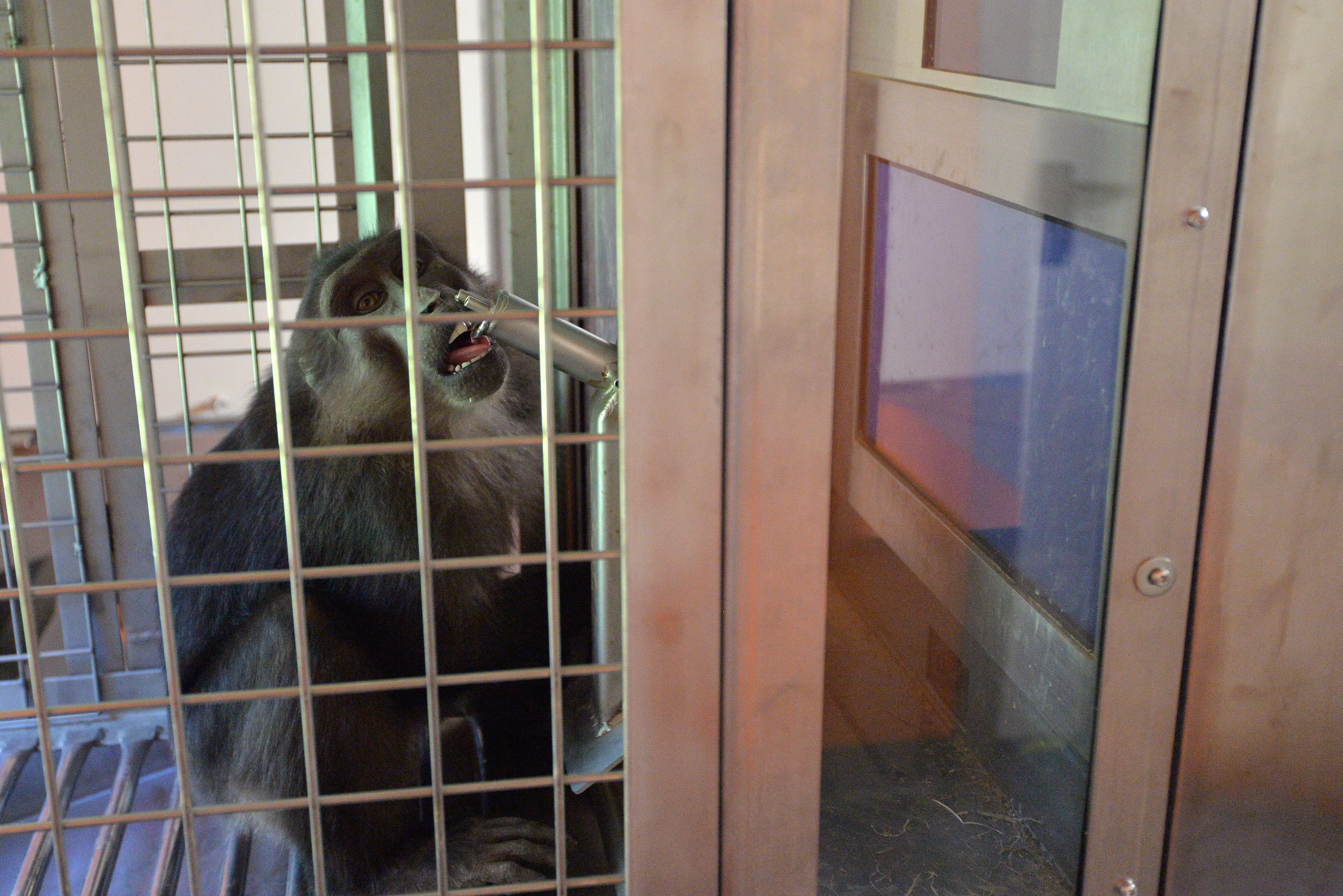
A Tonkean macaque at a primatology experiment center in France.
| Patrick Hertzogfont-family: -apple-system, BlinkMacSystemFont, “Segoe UI”, Roboto, Oxygen-Sans, Ubuntu, Cantarell, “Helvetica Neue”, sans-serif;”>/AFP via Getty Images”
Christian Charisius/Picture Alliance via Getty Images
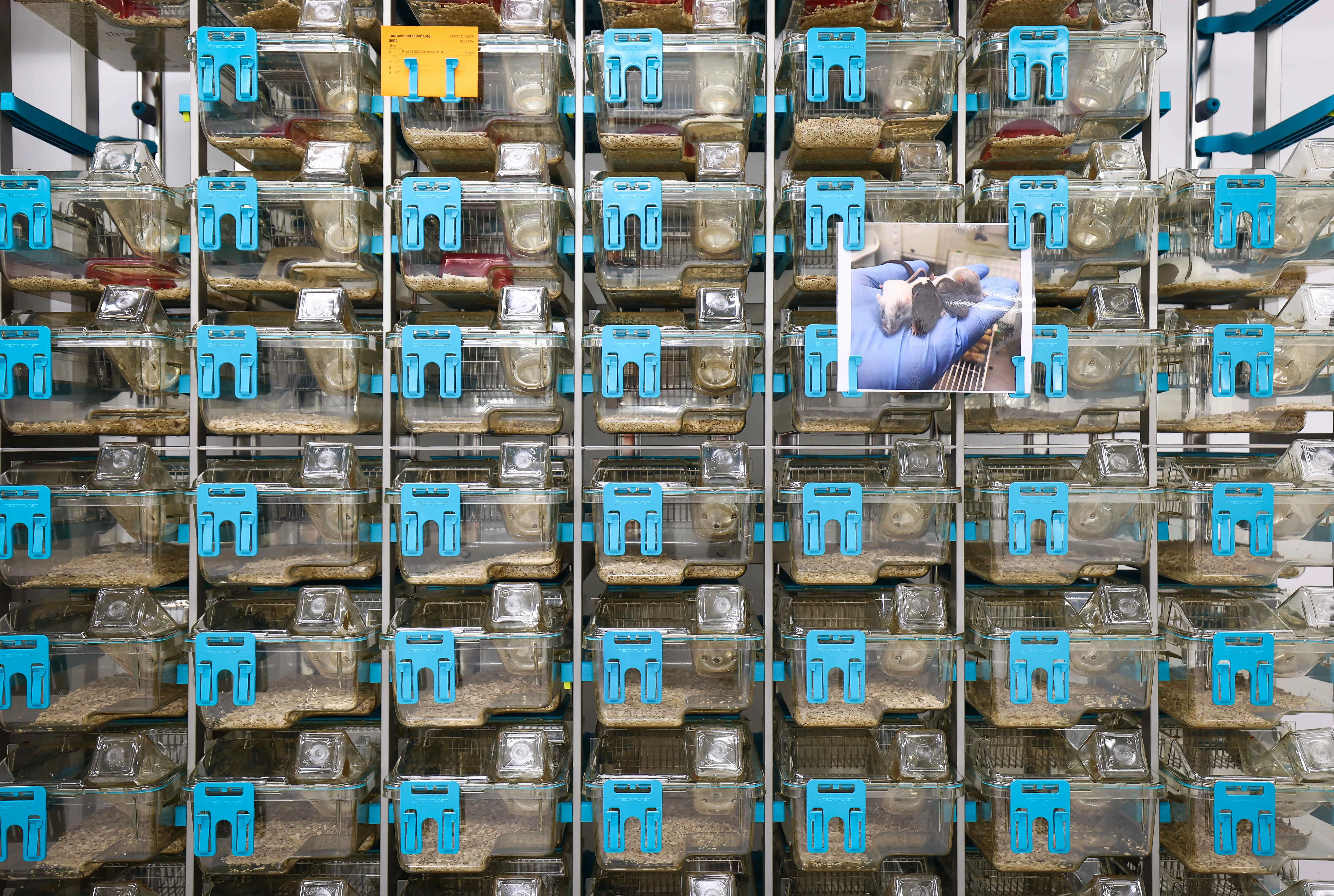
Last April, the US Food and Drug Administration announced it would no longer require animal testing for the development of certain drug classes. And weeks later, the National Institutes of Health — the world’s largest public funder of biomedical research — launched an initiative to reduce animal experimentation and fund the development of alternative non-animal research methods, like organoids, tissue chips, and computational modeling.
Pro-animal research groups, and some academics, have criticized the administration’s anti-animal experimentation plans as vague at best, and a significant hindrance on scientific research at worst. The criticism is understandable, given Secretary Kennedy’s reckless policy decisions on many areas, including vaccines. But there’s certainly merit to the idea that we ought to reduce our dependence on using well over 100 million animals annually in biomedical research, drug development, and toxic chemical testing. There’s the argument that it’s inhumane, but it’s also expensive and often ineffective, as results rarely translate from mice, rats, dogs, or monkeys to humans.
The rise of conservatives for animal welfare
In November 2024, Vivek Ramaswamy — a conservative who ran for president that year and is currently running to be governor of Ohio — posted on X that “animal cruelty will eventually become a genuine concern for conservatives” and that it “shouldn’t be a partisan issue.”
The strike force initiative, despite its flaws, shows Ramaswamy’s prediction was somewhat prescient.
Animal welfare may be perceived as a progressive issue, and indeed, Democrats tend to support animal welfare at higher rates than Republicans — but not by much. And over the last decade, there’s been an increasing appetite among conservatives to challenge industries that exploit animals and claim the Republican Party as the party for animal welfare.
The most notable demonstration of that is the White Coat Waste Project, which was launched over a decade ago by a former right-wing consultant and has worked to cut government spending for animal experimentation on the grounds that it’s cruel but also amounts to taxpayer waste. The group has found some support among Democrats, but more so among high-profile Republican elected officials and right-wing activists and pundits.
More recently, Liam Gray — a former editor at the right-wing news outlet the Daily Caller — founded the Wilberforce Institute, a home for conservatives and libertarians who champion animal welfare. His organization has a presence at a lot of conservative events — including Turning Point USA’s AmericaFest last month — and he said that while there’s often some suspicion at first, once he talks with conservatives about the actual issues, “people agree with what we’re saying” and that the response has been “overwhelmingly positive.”
When it comes to the Trump administration’s strike force initiative, Gray said that while there may be valid criticisms to be had, “in the animal movement, there’s a tendency to let the perfect be the enemy of the good, and I think that I don’t want to see that happen here.”
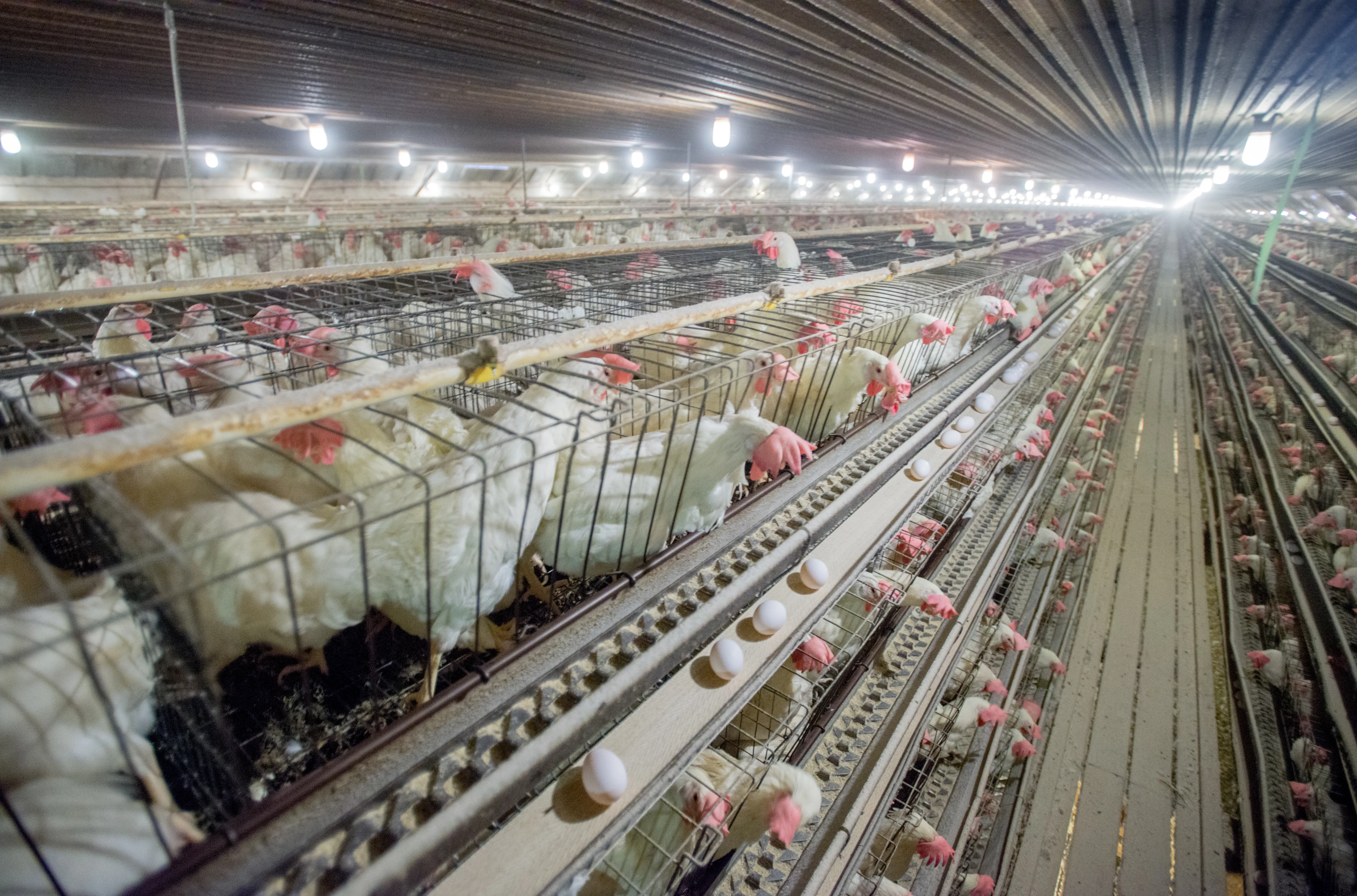
He does, however, want to see the Trump administration address factory farming, which is the proverbial elephant in the room. Animals raised for meat account for around 99 percent of all animals exploited for profit in the US, and the Trump administration has done a lot to benefit the industry, and almost nothing to regulate it. That might be because the meat and dairy industries overwhelmingly contribute to Republican candidates (though Democrats go similarly easy on these industries).
Most recently, the new US dietary guidelines — published yesterday — emphasize meat and dairy consumption, news that the meat industry is celebrating.
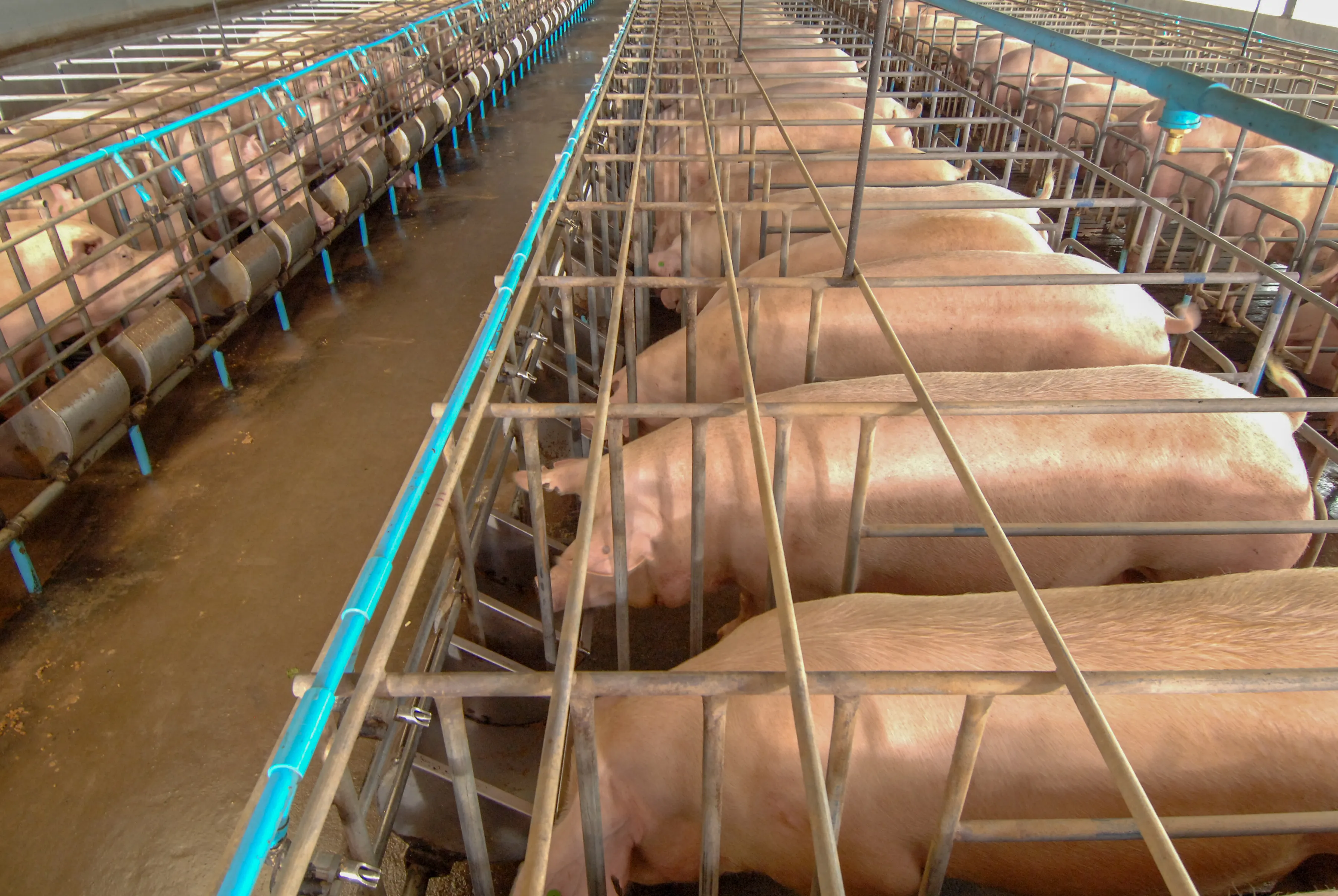
Female breeding pigs are confined in gestation crates, which are so small they cannot turn around, for practically their entire lives.
Edwin Remsburg/VW Pics via Getty Images
“What I would like to see from the Republican party is a recognition that we are wasting billions of dollars supporting and sustaining and bolstering factory farming,” Gray said, by way of subsidy support and various marketing and research programs. “And if you’re a proponent of the free market, then you should believe that this industry should be able to survive on its own.”
But beyond the government’s financial support of the meat industry, there’s a tension at the heart of the conservative cause for animal welfare. Conservatives tend to oppose regulation, which is what animals most need. Virtually all animal suffering is not the result of one-off cases of people hurting or neglecting individual animals, but the lack of regulations and laws that allow large-scale industries to hurt animals with impunity. Republicans have shown they can challenge the animal research field, but the real test will be whether it can do the same for the livestock sector.
Over the past decade, it’s been fascinating to see the animal rights movement — which is mostly comprised of left-leaning activists — reckon with the fact that an administration they largely oppose has taken some actions to help animals. Especially on the animal experimentation issue, it’s led to a “diverse, sometimes-uneasy coalition of animal welfare advocates, science reformers, and far-right political figures,” as journalist Rachel Fobar put it for Vox last year. But that coalition, with all its contradictions and disagreements, represents what little hope there is to prevent animal cruelty at the federal level. I hope it can turn splashy television announcements into substantive policy — and I hope more people of all political stripes join them.
The post American voters support animal welfare — and MAGA is seizing on it appeared first on Vox.