“No Blood for Oil” was one of the best-known anti-war slogans two decades ago, even if it was never an accurate explanation of President George W. Bush’s vision for Iraq. Now that old phrase is back, and this time it’s seemingly accurate: President Donald Trump is stating openly that arresting dictator Nicolás Maduro was partly a play for Venezuela’s 300 billion-plus barrels of black gold, the world’s largest proven reserves.
Oil alone would not have been a legitimate, let alone rational, reason to attack Venezuela. The slogan was wrong in 2003, but it had a cynical logic: America was a net oil importer, and Iraq had the world’s fourth-largest reserves. Boosting Iraqi production would have benefited U.S. consumers, and seizing the nearly 2 million barrels a day Iraq was producing would have been a financial windfall.
But if “No Blood for Oil” was dubious then, it’s nonsensical now. The oil industry has transformed in the intervening quarter-century, making Venezuela’s oil less necessary and less attractive, especially for the U.S.
New technologies like shale oil have greatly boosted production. In 2002, the world pumped 65.8 million barrels of crude oil per day. In 2024, it produced 76.6 million. Electrification, especially of automobiles, also means it takes less oil to power advanced economies. That combination keeps prices in check so well that the once-mighty OPEC cartel has given up restricting production and started fantasizing about driving producers of shale oil out of business by flooding the market with cheap crude.
The leader of the shale revolution has been the U.S., which went from being the world’s biggest net importer of oil — 11 million barrels per day in March 2003 — to one of its leading exporters. America now produces more oil domestically than any other country. While U.S. consumers might benefit from greater supply on the global market, American producers would not.
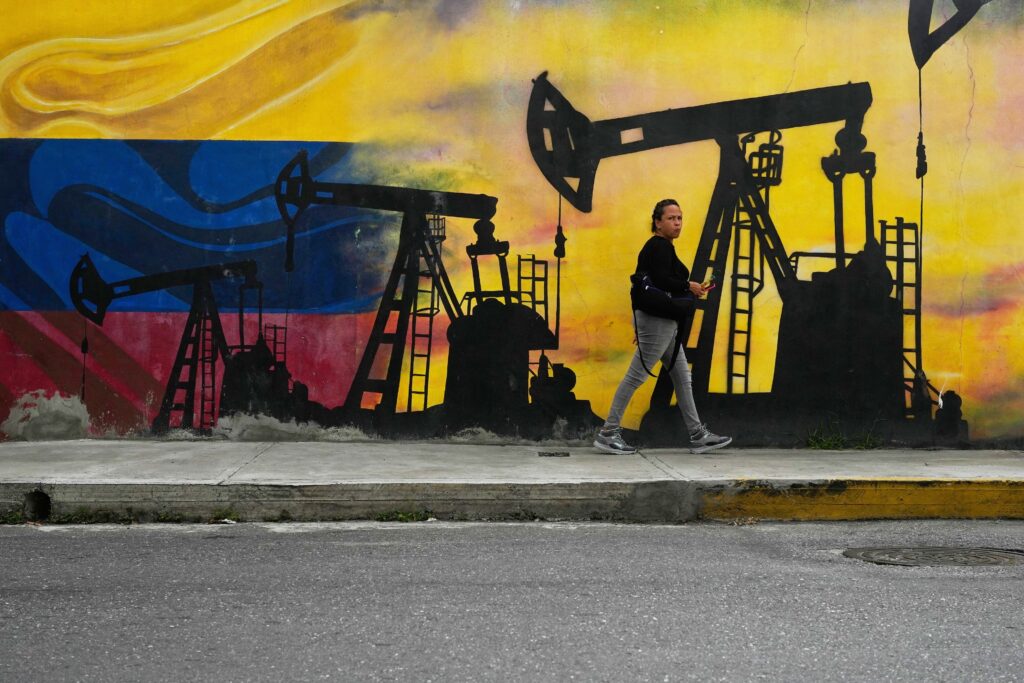
Moreover, extracting Venezuela’s oil will be no easy task. The country’s crude is heavy and sulfurous, difficult to refine. The security situation remains unpredictable. Meanwhile, socialism has left infrastructure in shambles.
The state-owned oil company was used as a piggy bank for social programs. When managers pushed back, they were purged and replaced by regime loyalists. Multinationals were pressured to turn more of their profits over to the government or see their fields nationalized, to the point that it stopped making sense to invest. As a result, production declined dramatically. In 1998, when Hugo Chávez was elected, Venezuela pumped 3.1 million barrels per day. Last year, it managed 863,000.
Reversing that would require an estimated $90 billion of capital expenditures. Outside of Chevron, other U.S. oil executives are understandably wary.
Why, then, does Trump keep talking about Venezuelan oil as a boon for America? Perhaps because he’s stuck in the mindset of his youth, when OPEC ruled the roost, and oil was a scarce commodity that Americans, accustomed to gas lines, were desperate for.
Trump has scheduled a meeting for Friday with oil executives, hoping to cajole them into entering Venezuela’s market. While America may not need their oil, the Venezuelan people desperately need companies and engineers competent enough to get it out of the ground.
The post America doesn’t need Venezuelan oil appeared first on Washington Post.