The Dec. 31 editorial “Zohran Mamdani accidentally honors the private sector” was a legitimate critique of the new mayor’s ideology but missed some history.
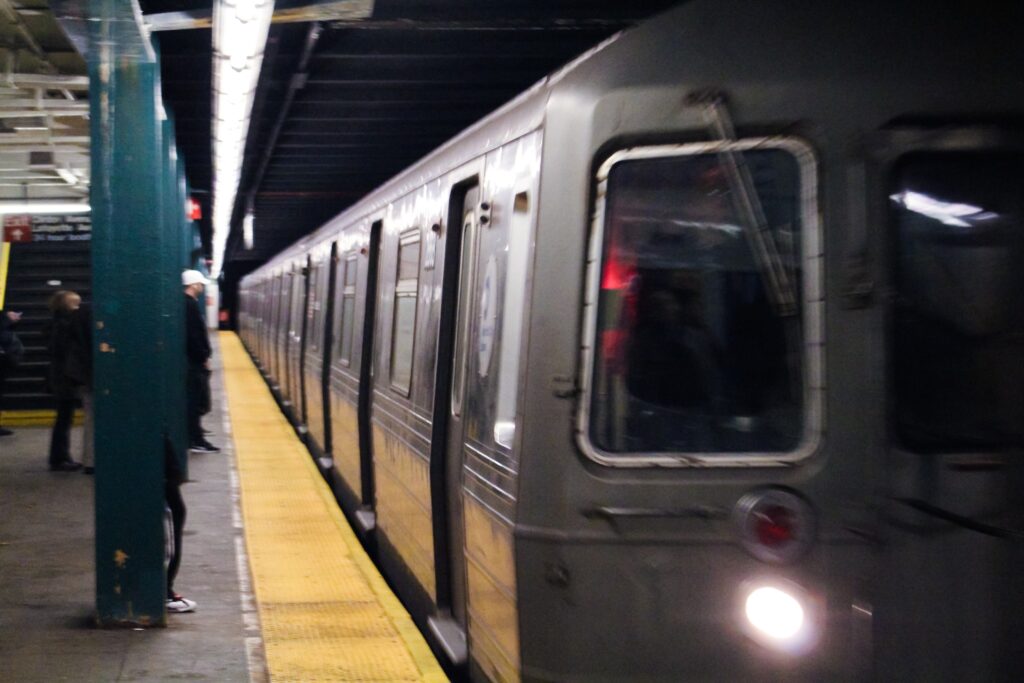
In 1900, the city government paid private contractors to build City Hall and 27 other subway stations, and tunnels along public streets. In turn, the city leased those assets to private operating companies, which provided the trains and labor forces. Thus, New York’s subways were not a solely private enterprise. In 1940, the Interborough Rapid Transit Company (IRT) and Brooklyn-Manhattan Transit Corporation (BMT) were sold to the city government. Those firms joined a third subway network, the Independent system, which began as a public-sector-run enterprise. Its managers absorbed the IRT and BMT 15 years later to form one system.
The Metropolitan Transportation Authority was created to rescue bankrupt commuter railroads from private owners that neglected rolling stock and physical plants until tragedies forced the issue. In 1950, there were multiple terrible accidents on the Long Island Rail Road that killed many passengers. New York state was forced to step in and ultimately create the MTA so that all major transportation providers downstate were united under a single agency that provided stable funding. I agree with the editorial’s claim that New York Mayor Zohran Mamdani’s ideas risk worsening nearly every problem with the system. Free buses are hardly a panacea. Repurposing vacant newsstands for homeless outreach adds another onerous responsibility to the MTA, when critics bemoan the slow pace of accessible station construction. Since New York mayors do not directly control the MTA, the next four years promise to be challenging.
Andrew Sparberg, Oceanside, New York
The writer is a retired manager at the MTA Long Island Rail Road and author of “From a Nickel to a Token.”
National Mall needs improvements
The Dec. 22 Metro article “Trump builds plans for anniversary” noted that construction of Washington’s own “triumphal arch” will begin soon, according to President Donald Trump.
I am a D.C. tour guide, and I work primarily with the middle school groups that descend on our city every spring. To say that a new arch is the last thing the National Mall area needs is an understatement.
The Korean War Memorial, the gold stars on the World War II Memorial, as well as the bathrooms and some of the water features at the Franklin D. Roosevelt Memorial, all need attention.
Many of the groups I work with prefer night tours. But there are very few lights at night. At the FDR Memorial, the lack of light makes the quotes difficult to read. There are also very few working lights around the Lincoln Memorial, the “Three Servicemen” sculpture and the area between the Korean War Memorial and the World War II Memorial.
I carry a high-powered rechargeable flashlight with me on all night tours. I often must use it to be able to read the entire Gettysburg Address inside the Lincoln Memorial.
Also, there is very little shelter for large groups, especially when the museums are closed, in the two-mile stretch from the Capitol to the Lincoln Memorial.
The National Mall needs many improvements ahead of America’s 250th anniversary celebrations that should take priority over building an arch.
Joanne Popkin, Washington
The secret to longevity
Regarding the Jan. 2 online Well+Being article “What a longevity expert eats in a day”:
I would like to congratulate Eric Topol, a cardiologist and longevity expert, for abiding by a diet that, while undoubtedly healthy, is awfully monotonous.
I suppose I qualify as a “super ager”: I am 90 (closer to 91) and I lift weights, take long walks, bike, dance and, as needed, trim a tall hedge or clear the roof of debris.
I also cook. I eat salads, fresh fruit and vegetables, yogurt and whole-grain cereals. But I also enjoy hearty beef stews and succulent lamb chops, pizza and various kinds of ultraprocessed sausage, sugary fruit tarts and ice cream, not to mention a glass of wine with dinner and sometimes with lunch.
To me, it’s the variety that makes each meal a joyful event to be looked forward to; it’s a lesson I learned from my mother, who lived to 103, and one to which young (71) Dr. Topol might give some heed.
Coby Lubliner, El Cerrito, California
Post Opinions wants to know: Bob Brody’s Dec. 30 op-ed, “Every family has a history. Here’s how to hand it down.,” encouraged children to interview their parents and grandparents. How has your family preserved its history? What have you discovered? Send us your response, and it might be published as a letter to the editor.
The post A short history of New York’s public transit appeared first on Washington Post.