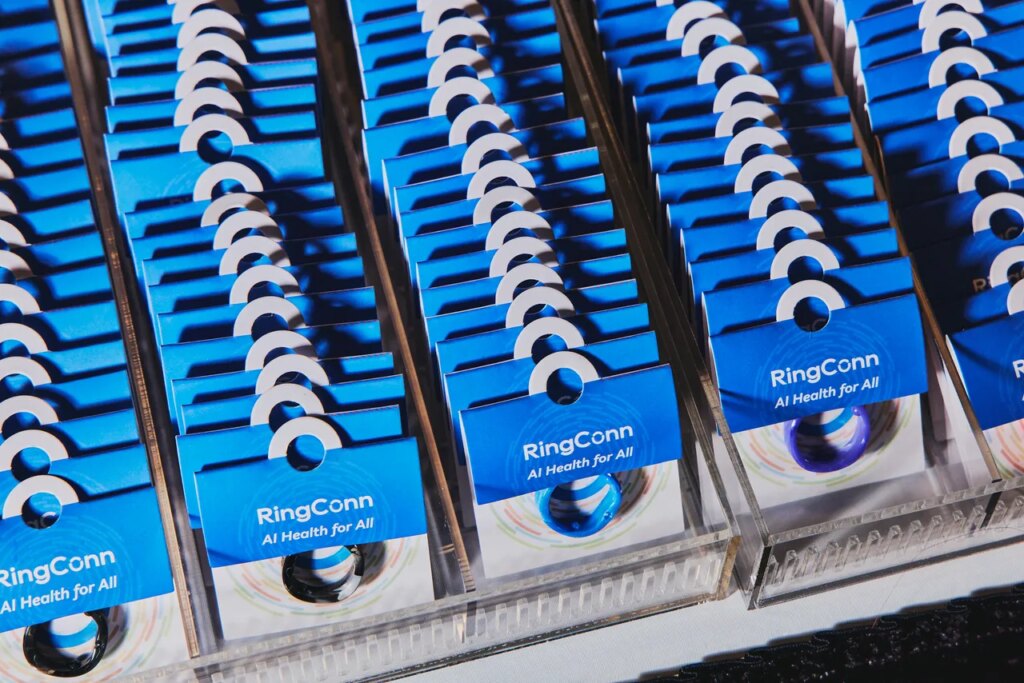
If you’ve been following last year’s smart ring drama, you may have seen that the number of health-tracking rings you can buy has shrunk since October 21, 2025.
As we reported in August, the US International Trade Commission ruled in favor of Oura in a patent case in which Oura alleged that its competitors RingConn and Ultrahuman had infringed on the company’s patent for a smart ring that tracks health and fitness stats. Oura’s victory subsequently led to RingConn and Ultrahuman being banned from importing new rings into the US.
The lawsuit was bad news for both Oura competitors, and especially Ultrahuman, which had planned to expand its US-based manufacturing facility to meet growing market demand (and ostensibly to also get around the new US tariffs). Ultrahuman is distinguished from Oura in that its smart ring does not have a subscription; Oura users pay $6 per month to use its rings.
I caught up briefly with Ultrahuman’s chief business officer, Bhuvan Srinivasan, to clarify the company’s next steps to address the US market, and find out more about the latest smart ring squabbles.
Why Were the Rings Banned?
The ITC ruled that RingConn and Ultrahuman had infringed on the 178 patent, which protects a specific ring hardware design—for example, if the ring has a layered arrangement with internal and external components housing interior electrical components.
If you think this is a surprisingly broad description that can cover … well, pretty much any smart ring, or a wide range of electronic devices in general, you are correct. Over the past few years, many smart ring manufacturers have been embroiled in legal disputes over this patent.
This has panned out in a few different ways. In 2024, Oura announced that it had reached a multi-year licensing agreement with Circular, the French smart ring manufacturer, that would allow Circular to continue selling new rings in the US. (This move looks a little less generous when you consider that my two-week testing period of the Circular Ring 2 was plagued with server and connection issues.)
Also in 2024, Samsung attempted to preemptively sue Oura against future patent infringement claims in a case which a judge dismissed. Samsung’s concerns were not unwarranted. In late 2025, Oura then filed another complaint against Samsung (the Galaxy Ring), Reebok (the Reebok smart ring), Zepp Health (Amazfit ring), and Nexxbase (the Luna Ring). Oura then reached a licensing agreement with RingConn and another competitor, Omate, that would allow the company to continue selling rings in the United States.
It’s worth noting here that filing complaints against other companies isn’t all that Oura has been doing. Late last year, the company launched a brand new ceramic ring collection and a charging case. It also announced plans to break ground on a Texas facility to support manufacturing for its largest enterprise customer, the US Department of Defense.
Where Does That Leave Competitors?
To be clear, we like Oura’s rings here at WIRED; the Oura Ring 4 is still our best overall smart ring. (I’m wearing mine right now.) However, I was curious to find out the next steps for Oura’s competitors.
“Intellectual property is super important to us,” says Ultrahuman’s Srinivasan, who has a background in biomedical engineering and was a former engineer at the health tech company Medtronic. “The pace of progress is so high that ultimately it will be innovation, and how quickly you can put out new features and new technology, [that determines success].”
Right now, the smart ring industry is developing so quickly that the ban on importing other rings might expire, due to … well, obsolescence. The best way of getting around a patent on one design is to just make a new design.
“While patent 178 is a foundational smart ring form‑factor patent that has helped define the category, it’s just one of many in our broader patent portfolio with much more innovation in the smart ring space in front of us,” Oura’s director of communications, Alison Deasy, wrote in an email. “We will continue to be at the forefront of that innovation, continuously raising the bar for ourselves and our competition by investing heavily in R&D and delivering science‑backed accuracy, clinically aligned insights, and experiences our members trust.”
Whether new smart ring designs arrive in the coming months or the next year, Ultrahuman is moving forward as well. Srinivasan emphasized that if you’re a current Ultrahuman user in the US, your ring will continue to get subscription-free insights in the app. Moreover, the ITC does not have any jurisdiction over software, so the company has continued to push new services into the app that pairs with its rings.
That includes features like Blood Vision, which is Ultrahuman’s competitor to Oura’s and Whoop’s direct-access blood testing services. This week at CES, Ultrahuman announced that its foundational, or entry-level, Blood Vision service would now be free. The entry-level free blood panel checks for 20 biomarkers, which isn’t bad, considering that the blood panels that I had done by my primary care provider as part of my yearly checkup also only checked for 20 biomarkers as well (that includes a complete blood count, A1C to check for diabetes, and a lipid profile).
While Ultrahuman is continuing with its subscription-free model, it also introduced PowerPlugs, an app store of sorts for smart rings that lets users customize which health features they want to track with their ring. This is important because the more metrics that the ring has to measure and the harder it has to work, the shorter its battery life becomes. As Oura has increased the number of biomarkers that it tracks, I have noticed the battery’s lifespan has shrunken noticeably in the past year or so.
If there’s one thing all these developments have exposed, it’s that the market for this relatively new fitness tracker category is only going to grow in the next few years. There is a palpable hunger for health trackers that are worn somewhere other than the wrist, and it’s becoming increasingly clear that no one company is going to be able to satisfy customers’ demands for such a device. Also, people just like smart rings: unlike wrist-worn trackers, rings are lightweight and more energy efficient, and they don’t have distracting screens. Whether it’s from Oura or another company, a smart ring is an increasingly elegant and simple way to keep tabs on your health.
The post What’s Going on With Smart Rings? appeared first on Wired.