Tiffany Jenkins, a cultural historian, is the author, most recently, of “Strangers and Intimates: The Rise and Fall of Private Life.” This op-ed was adapted from an article in UnHerd.
In 2001, as Lance Loud lay dying in a hospice bed, he made one last request: Turn the cameras back on. The same filmmakers who had made his family infamous in 1973 were summoned, once more, to capture his final days. Even at the end, Lance couldn’t resist the spotlight that had exposed and defined the Louds for nearly three decades.
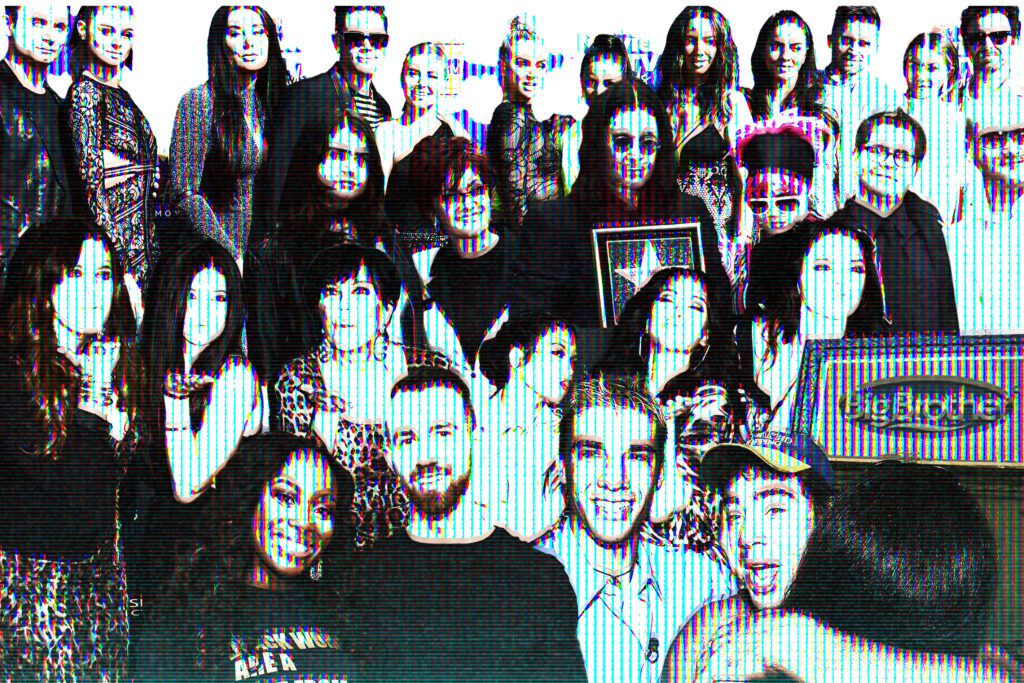
It was a fitting finale for America’s first reality-TV family. Long before Facebook collected our data or TikTok monetized our confessions, the Louds were at the vanguard of an industry that would ultimately spawn “Big Brother,” “Keeping Up With the Kardashians” and a whole raft of reality shows obsessed with domestic spectacle.
But, more important, the Louds had revealed a cultural transformation already underway — one where the American public would willingly and enthusiastically invade their own privacy, turning intimate life into public performance.
On Jan. 11, 1973, millions of viewers gathered to witness a household unraveling in real time. That evening, PBS began broadcasting “An American Family,” a 12-hour documentary series with a difference.
The Loud family seemed perfect subjects for the experiment. Bill Loud and his wife, Pat, lived with their five children on a mountain drive in Santa Barbara, California. Their lifestyle embodied the American Dream that family sitcoms like “The Brady Bunch” had idealized: affluent, attractive, seemingly stable. Producer Craig Gilbert had chosen them from hundreds of volunteers precisely because they appeared to represent the ideal.
But Gilbert’s revolutionary vision was to disrupt the model. “An American Family” would get beneath the veneer of middle-class family life. Unlike traditional documentaries, with scripts and directors controlling the story, the cameras would simply roll and capture whatever happened.
Gilbert’s 300 hours of raw footage, filmed over seven months, revealed the dirty laundry behind the facade. In one episode, Pat demanded her philandering husband leave; they went on to divorce. Their eldest son, 19-year-old Lance, was living a hedonistic life in New York’s Chelsea district, becoming the first openly gay person portrayed in a family context on American television.
The media responded swiftly and brutally. Newsweek’s cover featured a group shot with the strap line “Broken Family.” Inside, the magazine branded them “affluent zombies” whose “shopping carts overflow, but their minds are empty.” The New York Times dissected each member with surgical precision. It called Lance an “evil flower,” “camping and queening about like a pathetic court jester.” It condemned Delilah, just 15, for never grieving “for the migrant workers, the lettuce pickers, the war dead,” and for lacking an interest in “philosophy or poetry” or any “adolescent idealism.”
The Louds had unwittingly become harbingers of a far broader social transformation. Private life — that bourgeois creation of separate spheres, domestic sanctity, and clear boundaries between public and personal — might have had its roots in 18th-century concepts of individual liberty, but it wasn’t until 1890 that “the right to be let alone” was immortalized in an Harvard Law Review article by law partners Samuel Warren and future Supreme Court justice Louis Brandeis. Yet by the 1970s, this carefully constructed edifice was crumbling. The collapse of the public-private divide that would later characterize the digital age had already begun, before Mark Zuckerberg was even born.
Pat Loud stood by the family’s decision to take part in “An American Family.” She pushed for greater openness in everyday life: the therapeutic mantra of the moment. “We opened the doors in a lot of houses and blew out a lot of dust,” she once wrote. “If families are going to make it, that’s how. Not with secrets, or little slots to fit into, or a lot of propaganda from parents.”
She was articulating what had become the dominant cultural orthodoxy: that secrecy was pathological, that privacy enabled dysfunction, and that psychological health demanded full disclosure. Malcolm Bradbury’s 1975 novel “The History Man,” satirized the spirit of the age. Its antihero, Howard Kirk, a radical sociology lecturer, sits with his lover, Myra, and his wife, Barbara, with whom he has an open marriage. “It is called The Defeat of Privacy,” Kirk tells them of his new book. “It’s about the fact that there are no more private selves, no more private corners in society, no more private properties, no more private acts.”
The idea had begun brewing in the postwar era — sociologist David Riesman’s 1950 bestseller, “The Lonely Crowd: A Study of the Changing American Character,” analyzed how foundational sources of meaning were cracking. Traditional authorities — church, family and established social hierarchies — were giving way to mass education and the emerging media landscape of radio and television. Simultaneously, the economy was shifting from agriculture and industry toward services and sales, toward grey-suited conformists who could work and play well with others.
Riesman predicted that these forces were creating a move from “inner-directed” to “other-directed” personalities. Rather than drawing guidance from traditional authorities or cultivating rich inner lives, Americans were developing a social radar, constantly attuned to peer expectations and seeking approval from those around them. Riesman observed: “The other-directed person wants to be loved rather than esteemed.”
Riesman, then, had anticipated the “narcissistic” self (described in Christopher Lasch’s 1979 book, “The Culture of Narcissism”), one that would become increasingly comfortable with the self-invasion of privacy and indeed actively require it: all in search of an approving audience. The ancient maxim “know thyself” became “recognize me.”
Riesman’s study was also formative for the American sociologist Todd Gitlin, one-time leader of the Students for a Democratic Society. Teaching at the University of California at Berkeley in the 1980s, in an era of confessional TV talk shows hosted by Phil Donahue and Oprah Winfrey, Gitlin found that his students struggled to understand the distinction between private and public lives. The idea of being inwardly focused made no intuitive sense to them. These students had been born into a world that was fundamentally other-directed at every level.
But Gitlin himself, with the SDS, had helped create this world. Throughout the 1960s, the SDS, which grew from fewer than 1,000 members in 1962, according to Smithsonian magazine, to an estimated 100,000 members in 1969, with more than 300 chapters across the country, played a crucial part in the turn toward the narcissistic self: by politicizing authenticity. The SDS became a core component of the counterculture movements that dominated student activism, helping to reshape how an entire generation understood the relationship between personal experience and political action.
In the 1962 “Port Huron Statement,” the SDS’s founding manifesto, Tom Hayden extolled the “personally authentic” and a mindset that “openly faces problems which are troubling and unresolved.” Disillusioned by “tarnish” on “American virtue,” students were “looking uncomfortably to the world” they would inherit, the statement said. The SDS agenda marked a highly individualistic turn for a left politics that had been rooted in class solidarity.
Indeed, the New Left turned away from class struggle and drew on existentialist currents to advocate for politics based on individual experience and personal growth. As Gitlin recalled in his memoir, “The Sixties: Years of Hope, Days of Rage,” the decade was fueled by a passion to “bring political commitment into private life, to make private values count in public.” The aim was to overcome the “treacherous” liberal schism between public postures and private evasions.
But it was a particular strain of feminists who put the boot into private life far more forcefully than any tech giant ever could. Organizations such as New York Radical Women and Radical Mothers rejected the feminism of Betty Friedan. Friedan’s “The Feminine Mystique” (1963) had awakened millions of women to “the problem that has no name” — the stifling boredom and unfulfillment of suburban domesticity — and launched the modern women’s movement. But while Friedan sought equality through legislation and workplace reform, believing women could balance careers with traditional roles like marriage and motherhood, radical feminists wanted to change things from the inside out.
An early rule of the New York Radical Women was that members couldn’t generalize about oppression unless they first shared testimony from their own lives; political positions had to be forged in personal experience. Gatherings often began by going around the room listening to women’s day-to-day problems. These “consciousness-raising groups” spread like wildfire. Their aim was to analyze society from personal experience.
This thinking crystallized in Carol Hanisch’s influential 1970 essay “The Personal Is Political,” a phrase that would shape how entire generations understood the boundary between public and private life. For centuries, the liberal tradition had maintained a clear distinction: Public life was the realm of politics, economics and civic engagement, while private life remained a sanctuary, free from public interference. But “the personal is political” obliterated this distinction.
As politics increasingly became a form of entertainment, the personal inevitably turned into entertainment. Intimate confession and recognition of the “true” self is now a mainstay of contemporary discourse. Being false or, worse, a hypocrite, is a deadly modern sin. Social media platforms would accelerate and monetize these trends, of course, but they surely didn’t invent them.
All the while, public life has incorporated things that were once reserved for the private sphere — crying, confessing to crimes, follies and misdemeanors — while the civil discourse of politics and formal manners have fallen away. Even substantive policy debates about literally life-and-death matters like assisted suicide or abortion have become entirely about feelings: caring, being kind, or expressing anger. Personal experience trumps evidence. Cool reasoning has no place.
Today, there is little distinction between the public and private world. Intimacy floods the public realm while light shines on the private. Instead, we have embraced a narrow, impoverished conception of privacy, always a protean concept, not as protection from authority and public scrutiny, and as a sanctuary for the inner self and a shelter for intimacy — but merely as data protection.
Through it all, we blame the convenient scapegoat of the moment: the internet. But this gets the timeline wrong. By the time social media arrived, we were already living in a post-private world. The digital revolution simply gave us more efficient tools to do what we were already doing: performing our identities, seeking validation through revelation, and treating intimacy as a public commodity.
This matters, because if we misdiagnose the problem, we’ll never find the cure. All the digital detoxing and platform regulation in the world won’t restore what was lost long before the internet was ever invented. Far better, then, to face up to how we voluntarily dismantled the very idea that some things should remain hidden, that mystery and restraint might be virtues, and that not everything must be shared.
The business models of technology giants like Google and Facebook clearly violate people’s privacy, as does state surveillance. But we would be kidding ourselves if we thought that technology alone has undermined the moral status of privacy and private life. The cameras that Lance Loud invited into his hospice room were not smartphones or CCTV cameras. They were the logical expression of a cultural revolution that began decades earlier. We invited them in.
The post What destroyed ‘the right to be let alone’ appeared first on Washington Post.