The United States is pressuring the interim Venezuelan government to expel official advisers from China, Russia, Cuba and Iran, American officials said.
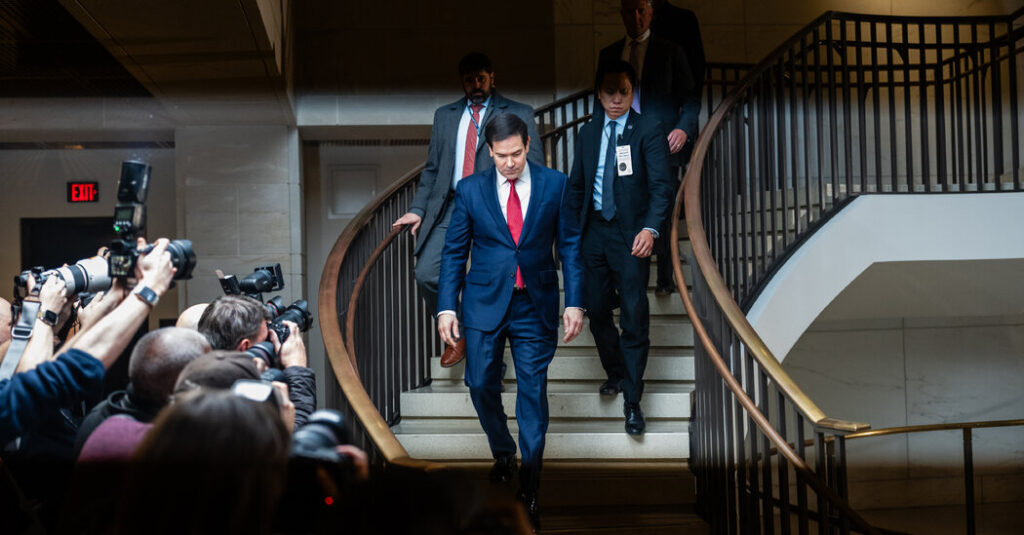
Marco Rubio, the secretary of state, listed the Trump administration’s demands to Venezuela’s new leader, Delcy Rodríguez, in a classified meeting on Monday with senior congressional leaders. The U.S. officials, who were granted anonymity because they were not authorized to discuss the matter publicly, said that spies and military personnel from Cuba, Russia, China and Iran would be forced out, while some diplomats would be permitted to stay in Venezuela.
Army Delta Force commandos engaged in an intense firefight on Saturday with the Cuban security forces that had protected the ousted leader, Nicolás Maduro, outside his compound in Caracas, the Venezuelan capital. Mr. Maduro used the Cuban forces as bodyguards instead of his own military because he perceived them as more trustworthy.
Mr. Rubio also said he had told Ms. Rodríguez that he wanted Venezuela to reopen the oil trade with the United States, a demand that President Trump has made publicly. Venezuela would most likely have to relax or end its nationalization of the oil industry to entice the American companies that left the country to come back. It may also have to pay restitution of some form.
Minutes after Army Delta Force soldiers captured Mr. Maduro and his wife, Cilia Flores, and flew them out of the country to an American warship, Mr. Rubio called Ms. Rodríguez, two U.S. officials said. It is not clear if he laid out the administration’s demands in that first call or during subsequent talks.
Ms. Rodríguez has tried to defend her country’s sovereignty in the face of the seizing of Mr. Maduro, while also striking a conciliatory tone. In her new role, she must maintain a precarious balance — protecting her political future without antagonizing the United States, given the American naval armada that remains off the coast and Mr. Trump’s direct threats against her.
Mr. Rubio told lawmakers that the administration did not want to see animosity toward the United States from the interim leadership, the officials said, underscoring Ms. Rodríguez’s difficult position. In Monday’s meeting, Mr. Rubio did not offer any substantive comments on a timetable to hold elections or restore democracy to Venezuela. International election experts and the Biden administration said Mr. Maduro falsified the results of a 2024 vote that the opposition candidate had won handily.
Julian E. Barnes covers the U.S. intelligence agencies and international security matters for The Times. He has written about security issues for more than two decades.
The post U.S. Pressures Venezuela to Expel Official Advisers From China, Cuba, Iran and Russia, Officials Say appeared first on New York Times.