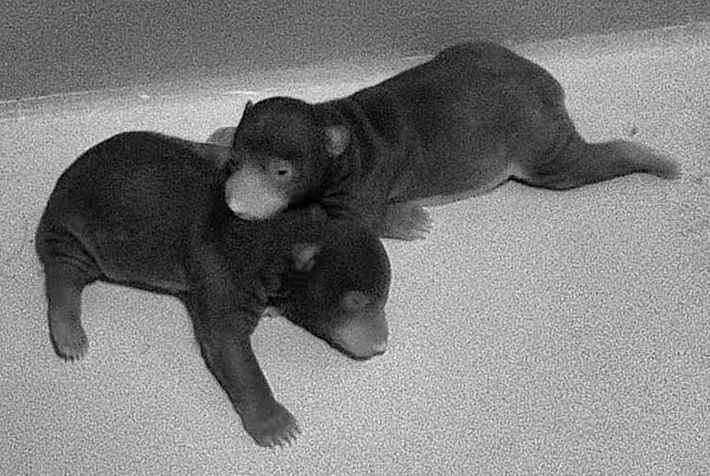
Two sloth bear cubs were born at the National Zoo, which appears to be good news for this vulnerable species and perhaps bad news for the termites on which they dine.
The births, which occurred Dec. 7, were announced Tuesday.
The mother sloth bear, Molly, came to the zoo in April from a zoo in Kansas, in accordance with a breeding plan from a national zoo organization concerned with the survival of vulnerable species.
The zoo has two male sloth bears. Molly’s arrival was followed by what the zoo described Tuesday as “successful introductions.”
Keepers, the zoo said, “observed breeding behaviors” in July between Molly and both of the two males.
One of the males is Niko, who is 11. The other is Deemak, who is age 7.
It appears that both will have to wait before handing out cigars. The zoo has not determined which is the father. It could be that both are fathers, the zoo said. Each may have fathered one cub, the zoo said.
However, this mystery need not go unsolved. DNA testing, at the zoo’s genomics lab, should clear it up, the zoo said.
Males take little part in raising sloth bear cubs.
Also undetermined at this point is the gender of each cub. But the newborns and their mother seem to be thriving, the zoo said. The cubs have yet to appear in public, but that is expected in the spring, said the zoo.
In any event, the two are the first born at the zoo since 2013, Tuesday’s announcement said.
In the meantime, their birth “is a significant achievement for the Association of Zoos and Aquariums Species Survival Plan,” said the zoo’s Asia Trail curator Michael Brown-Palsgrove.
They represent “a milestone for the long-term sustainability of this rare species,” the zoo said. As adults, these are creatures of substantial size, with males sometimes weighing more than 300 pounds, with a body length of up to six feet.
“These cubs strengthen the genetic diversity and sustainability of the managed population while also supporting global conservation efforts for this vulnerable species through research, education and public engagement,” said Brown-Palsgrove.
The cubs and their mom seem to be thriving, the zoo said.
Sloth bears are not related to sloths. In the 18th century, some of the animals’ characteristics prompted a naturalist to call them “bear sloths.” Later it was recognized that they were not sloths, but bears.
They are native to the Indian subcontinent, the zoo said, typically in lowland forests and grasslands. Threats include loss of habitat and conflicts with humans.
Distinctive characteristics include shaggy coats, curving claws and flexible snouts.
They eat a variety of foods, but appear specially suited to consume insects. Their claws, sickle-like in shape, are used to break open termite mounds. Powerful lungs then inhale their prey, according to the zoo.
The post Two sloth bear cubs born at National Zoo appeared first on Washington Post.