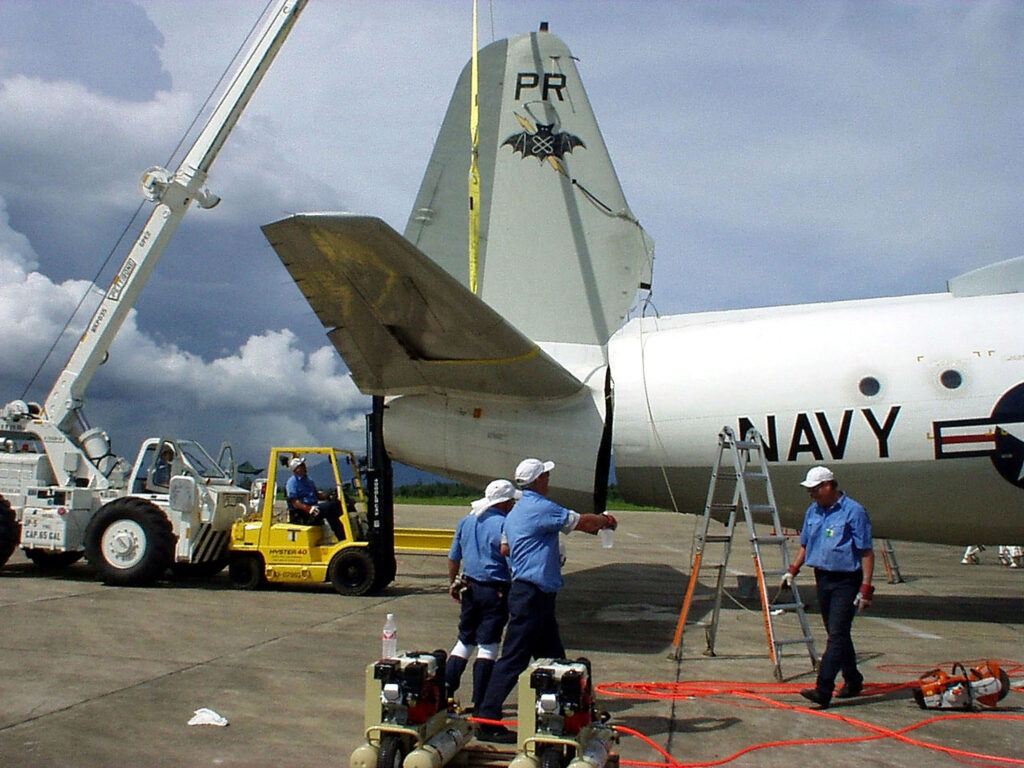
Nearly 25 years ago, on a drizzly morning in the South China Sea, the ship I was serving on received word of a midair collision between a Navy spy plane and a Chinese fighter jet. We’d left Hong Kong just hours earlier, wrapping up a port visit and embarking on the last leg of a six-month deployment. The plane, packed with highly classified information and surveillance equipment, made an emergency landing on an island a few hundred miles south of us — its crew of 24 held captive and many interrogated by the Chinese government. The crew on my ship knew two things immediately: We were not going home, and wherever we were going, we had support back home.
That made steaming toward danger and uncertainty more bearable. Visions of families and friends excitedly waving on the pier — holding “welcome home” signs and newborns in sailor hats — sustained us in foreign waters on the other side of the world. The thought of our fellow shipmates’ uncertain fate steeled our will to do whatever was required to ensure their safe return. And the resolve of the U.S. government and support from the public confirmed for us that our mission was legal, ethical and honorable. When the order came for our ship to head toward the downed plane, we entered the world stage on sure footing.
Things aren’t always this straightforward; not every mission is as clear-cut. Sometimes service requires acting in gray areas — moral ones, certainly, but democratic ones, too. By design, the decisions to deploy forces, gather intelligence, or conduct operations ranging from rescue missions to strike packages emerge from partisan politics and public debate. National security issues are among the most contentious decisions and routinely stress test our government, something democratic republics are built to absorb. Increasingly, though, the military is asked to conduct operations without clear congressional authorization or adequate public awareness or debate. The democratic costs of that arrangement are real, as are the human costs.
The military operations in Venezuela — boat strikes at sea, the capture of Nicolás Maduro — were executed as planned, but the message from home questions their success. News of firing on stranded mariners and skipping congressional authorization for Saturday’s raid raised moral and legal questions. The Pentagon has censured and threatened to demote Arizona Sen. Mark Kelly (D), a retired Navy pilot, for a video reminding service members that unlawful orders should not be followed. Polls show the public doesn’t approve of the strikes on suspected drug boats but is evenly divided about the operation to remove Maduro.
Grappling with the morality of a mission is part of life in uniform. Questioning the legality of operations shouldn’t be. Service members presume that the orders they’re given are lawful. If they are not, then everyone will know it. If they don’t, then the message from home — from the public and Congress, from the courts and experts — will tell them which is which. But when that signal goes quiet or gets muddled, and when institutions are shielded from accountability, responsibility shifts to those with the least influence and asks that they bear the most consequences.
Once our ship arrived at the designated position far off the coast of the island where our shipmates were, conversations turned to exploring the moral dilemmas. Given the historic intelligence loss that came with the plane’s compromise, a couple of folks wondered if the crew should have ditched the plane in the ocean. Others posed a different hypothetical: If, for that same reason, we were asked to blow the plane up on the runway where the Chinese were holding it, would we go through with it? Or maybe our ship would be part of a covert rescue attempt. We lingered a few days — at first feeling like we’d sailed into a tinderbox, but soon recognizing our presence was as much a demonstration of force as it was a show of national resolve and solidarity with the 24 sailors being held, one of whom was a friend of mine.
The geopolitics were tense. The Chinese fighter pilot died in the collision. The emergency landing was labeled a violation of sovereign airspace and the extent of U.S. spying was made more public. Just months earlier, the Supreme Court’s controversial intervention in the disputed 2000 presidential election led to George W. Bush winning the presidency, and Congress was split nearly down the middle. But we didn’t wonder where the nation stood. There were bipartisan condemnations of the crew’s detention, the legality of its operations was defended, and the rush to find a diplomatic solution assured us that whatever order came next would be legitimate. That helped us all breathe a little easier — after some missions, you can’t go home again.
In the end, back in the United States, the aircrew returned to a deserving hero’s welcome. And for us on the ship, the smiling families and frantic waving on the pier made us feel like heroes, too. When missions are lawful, properly authorized and publicly supported, that not only encourages success, it gives the work meaning and purpose. And it makes military service in gray areas easier to defend once safely back home.
The post This shouldn’t be part of life in military uniform appeared first on Washington Post.