What is actually happening in Venezuela? Is it a real regime change? A cynical attempt to replace one dictatorship with another? An even more cynical grab for oil revenue? A Trumpian break with past U.S. policymaking, or just Yankee imperialism as usual?
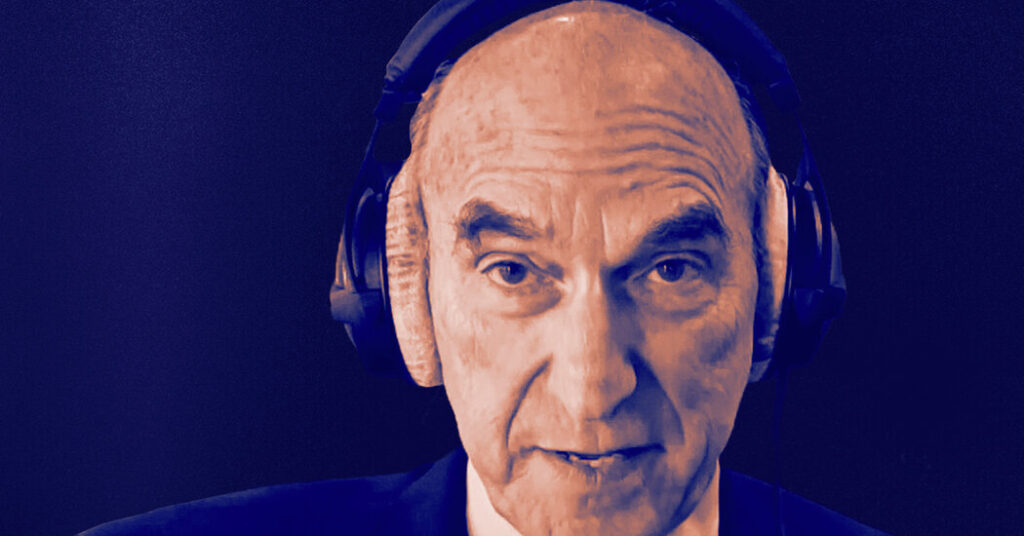
My guest this week helped make U.S. foreign policy toward Latin America under three different Republican presidents: Ronald Reagan, George W. Bush and Donald Trump in his first term. He’s intimately familiar with coups and civil wars and successful transitions to democracy, and he’s long been an advocate of overthrowing Nicolás Maduro, but maybe not overthrowing him this way.
Below is an edited transcript of an episode of “Interesting Times.” We recommend listening to it in its original form for the full effect. You can do so using the player above or on the NYTimes app, Apple, Spotify, Amazon Music, YouTube, iHeartRadio or wherever you get your podcasts.
Ross Douthat: Elliott Abrams, welcome to “Interesting Times.”
Elliott Abrams: Thank you.
Douthat: Last November, you wrote an essay for Foreign Affairs with the very-much-of-the-moment title “How to Topple Maduro: And Why Regime Change Is the Only Way Forward in Venezuela.” Congratulations, he has been toppled. Is this the policy — to the extent that we know what the policy is — that you wanted and argued for then?
Abrams: No. I was arguing for a policy of regime change, and we don’t seem to have that policy. The regime is still in place in Caracas fully. Um, and the, if you will, the frontman, Delcy Rodríguez is being accepted by the United States. She is surrounded by indicted drug trafficking criminals who are still in place.
So I would like to hear more from the administration about how we move from this moment to democracy in Venezuela. We have heard the word “elections” from the president, from the secretary of state, but we’ve heard nothing about how and why they think this bunch of criminals is going to commit suicide by leading to a democratic transition.
Douthat: So, stepping back for a second, and we’ll dig into the situation on the ground, but just walk me through the basic argument for why regime change in Venezuela should be a priority for the United States — what the benefits of actually changing the regime, not just changing the frontman, are supposed to be.
Abrams: Sure. Venezuela was at one time just about the leading democracy in Latin America, in a very prosperous country. Under Chávez and Maduro, they’ve ruined all that. It’s now a brutal dictatorship that, first of all, has immiserated the people of Venezuela, has led to the greatest refugee flow in the history of Latin America.
Eight million Venezuelans, about a fourth of the population, have moved out, which creates obvious difficulties for all of their neighbors, including us. With that high a migration flow, they have invited into Venezuela Cuban thugs, and Hezbollah and Iran, as well as Russia and China. So, it’s a security issue for the whole region, again, including for the United States.
There’s also the oil question, which I frankly think is marginal, given world oil markets. I think the president is exaggerating that pretty wildly. But they do have a lot of oil. They also have some critical minerals, some rare-earth minerals that should be investigated further for the benefit of Venezuela and us as well.
And Venezuela is one of the reasons that the regime in Cuba remains in place, because it gives a substantial amount of subsidized or free oil to Cuba, which is propping up that vicious regime. So a transition to democracy in Venezuela would benefit, first of all, the people of Venezuela, but everyone else in the Caribbean and Latin American region and us.
Douthat: Can you just talk for a minute more about the geopolitical component? When you say the regime in Venezuela has invited in Hezbollah or invited in Russia or China, just make that concrete. What are we talking about in terms of both presence and advantages for our adversaries in having a friendly regime in Caracas?
Abrams: For Hezbollah, for example, and Iran, we know that the Maduro regime gave them blank passports so that agents of Iran and Hezbollah could be moving around Latin America and elsewhere under false identities. We know that Iran has helped not only give drones to the Venezuelan military, but helped them learn how to build drones.
We know from the Israeli experience with Iran, drones can go a very long distance now. We’re talking about drones that can hit not only Puerto Rico, but hit the continental United States. When I was in the State Department doing this about five years ago, Iran was contemplating giving intermediate-range missiles, which could reach the United States, to the Maduro regime in Venezuela.
So this is an actual security threat in Latin America and to us.
Douthat: And on the drug side of things, the Trump administration has been talking about drug trafficking, obviously. The charges against the dictator Maduro are related to drug trafficking. At the same time, Venezuela has never been seen as a central node for fentanyl.
You know, for the aspects of the drug trade that Americans are most concerned about, that have killed most Americans. What is Venezuela’s role in the drug trafficking networks right now, in your estimation?
Abrams: Well, I think the fentanyl issue is completely phony. But the cocaine issue is not phony. The coca comes from Colombia and moves east into Venezuela and is trafficked out of Venezuela — or at least was until the last couple of months — by air and by sea. Some of it — much of it, I think — goes toward Europe.
But some of it comes to the United States. It is not an accident that the E.L.N., the guerrilla group that’s heavily engaged in drug trafficking now, is mostly in western Venezuela, having been driven out — substantially driven out — of Colombia by the cooperation between the U.S. and the governments of Colombia over the years.
Venezuela is a keynote in the trafficking of Colombian cocaine.
Douthat: What do you think the administration is actually thinking at the moment in terms of — from what you can see? You were in the first Trump administration. You’re obviously not in the second Trump administration, but what is their calculus, based on what we know after, you know, three or four days?
Abrams: It is not entirely clear to me. But ——
Douthat: Nor to me.
Abrams: But let me do the best I can. The Trump administration has reached the conclusion that an immediate transition to democracy, to a government run by Edmundo González, who was elected president a year and a half ago, and María Corina Machado is not possible, instantly.
And therefore we have to work on a transition, and for the transition you have to work with the guys who are in there now. So what you do is, you begin to make demands. And we will make demands, we’ll make demands about the oil industry, we’ll make demands about getting the Iranians, Hezbollah, Cubans, et cetera out.
I’d like to think we’ll make demands about politics and human rights. So far, we haven’t. But this is a process. It’ll take some time, but we’ll get there, and we’ll get to free elections, and we’ve got to work with the people who are there. But we can make this work for the benefit of the Venezuelans and, of course, for our benefit.
I mean, I think that’s the administration view.
Douthat: Do you think that that’s naïve, unrealistic? What do you think is likely to happen if that is the plan? What would you expect?
Abrams: I think the problem with that plan is that we are relying on a bunch of criminals to drive themselves from power willingly, to commit suicide. In the Latin American cases, with which I’m familiar from my time in the Reagan administration, we did a lot of transitions in Latin America, in South America. There’s always a negotiation with the army.
There is always a process. It does take time. There was always an amnesty. In those cases — Brazil, Argentina, Peru, Chile — we were talking about generals. These people are not generals. These people are just criminals. And they face a very difficult fate if and when they leave power, and they don’t want to leave power.
So we are relying on them to conduct a reform program. Or, I hope we are. Otherwise, you’ll never get to democratization and free elections. I will give you a concrete example. It was fairly shocking to me that in all the appearances the administration made over the weekend — Secretary Rubio, I think, did every Sunday show — he did not demand the immediate release of all political prisoners. Why not?
I can understand that there are things that you think Delcy Rodríguez can’t do. She can’t fire the strongmen of the regime. The minister of defense, Vladimir Padrino López, or the minister of interior, Diosdado Cabello, maybe. But if she can’t free political prisoners, then she has no power at all, and we’re dealing with the wrong person.
So I think this is the fundamental problem with the way the administration has set this up. Our interests do not coincide with the interests of the people in this regime still running the country — unless we are perfectly happy with endless dictatorship, brutal dictatorship in Venezuela, which, by the way, will only increase the flow of migrants out of Venezuela.
Douthat: So let’s take that possibility, because I think certainly there are probably people inside the Trump administration who are indifferent to the question of democracy in Venezuela. I’m doubtful that Secretary Rubio is one of them, but I think some people would be, who might say that some of the things that you listed earlier that the United States could want from Venezuela, a change above all in its relationship to hostile actors, to Iran, Russia, and China, are perfectly possible in a world where some kind of dictatorship remains in power.
And essentially then from an America-first perspective that the president likes to talk about, you can have a world where effectively you take the regime and flip its geopolitics and say: “OK, you’re still a dictatorship, but guess what? Now you’re America aligned. Our oil companies are coming back in. Maybe we want your help toppling the Cuban regime. Who knows? But we don’t care one way or another about democracy.”
What else do you see, abstracting away from moral considerations to the extent that you can, what else do you see as wrong with that view of what the administration might be thinking?
Abrams: Point 1: This regime, which again, remains in place, is thoroughly corrupt. I do not think you will have the economic revival that we want, that the United States wants, with this corrupt group in power.
Point 2: The president has threatened Iran that if you shoot demonstrators, there will be hell to pay — whatever his language was. Suppose there is a demonstration for the freeing of political prisoners in Caracas in a week or a month — a big demonstration — remembering that the people of Venezuela have already spoken in the presidential election a year and a half ago, an unfair election, terribly unfair. Nevertheless, Machado’s ticket won 67 percent of the vote. Huge landslides.
So those people go out in the streets. Tell me what happens. People are shot, beaten, jailed. I don’t think we can, I mean, politically, I just don’t think it’s going to be possible, for the administration to turn away from that and say: “Oh, those are our people. If they thought they had to shoot demonstrators, that’s fine.” I don’t think that’s possible. So I think this is actually an unstable situation.
Douthat: Give me the alternative plan then. You’re now in charge of the Trump administration. Starting from where we are rather than where we were three or four days ago, what is the alternative approach to regime change?
Abrams: Let me just go back to what happened in the rest of South America years ago. You do need a negotiation between the people in power and the democratic political forces, democratic parties. You need to negotiate about a lot of things. One of them is always amnesty. Another of them is: What’s the trajectory here that gets you in the end to a full democracy?
When are there municipal elections, state elections? When is the presidential election? When does the opposition start getting full access to state-run media? There are a lot of questions to negotiate. In all of the other South American cases, those negotiations took months and months, if not years.
We didn’t have that in Venezuela because we got rid of Maduro overnight. What the United States should be doing now is saying: We understand that there needs to be a negotiation by the democratic opposition forces with both the Chavista party and the military. And that is not going to be an overnight negotiation.
We give our full support to the democratic forces. Edmundo González is the legitimate president. He may not be able to take over tomorrow, but he is. María Corina Machado is obviously the leader of the opposition. We, then, maybe are our own auspices. Maybe it’s the Vatican. We foster a negotiation to settle all of those questions.
Maybe it takes one month, six months, but it’s fundamentally the same process that other Latin American countries went through. And maybe some of them can actually help and foster the negotiations because there are still people alive who went through that. I understand the administration’s conclusion that it could not be done overnight, but what’s missing here is strong support for the democratic forces rather than undermining and deprecation of the democratic forces, the democratic parties.
If we were to do what I’m suggesting, I think it would work, and I think that it would create a division that would be extremely helpful. Between the Chavista political forces, people who are politicians, who are mayors or governors of states who in a future Venezuela, in a year or two, would run for office, on the one side, and on the other side, the vicious thugs that have control of the police and the army and who have got to go.
Douthat: What is our leverage, apart from obviously our demonstrated ability to pluck the dictator out and take him to New York? I’m going to concede that suggests some leverage. But say we adopt the Abrams plan here and we take it to the people who you have described as criminals who are in charge of Venezuela, and they say absolutely not.
We don’t want to negotiate away our own power. We don’t believe in amnesty. We don’t believe it will be honored. We don’t want to go into exile. They give you the middle finger. What is the United States’ move in that situation? Is it to threaten further military action?
Abrams: It’s a combination of things. President Trump has already threatened further military action.
Douthat: That is true. Yes. Not only in Venezuela, but yes.
Abrams: I mean, in Venezuela, I don’t think he wants to do it, but it would be foolish for him to have taken it off the table completely. We are blocking their oil exports. We can continue to do that.
We have massive economic sanctions. We can refuse to lift them. There are some intelligence things I would like to see being done right now, too. Padrino López’s family seems to live very well. Why don’t we say to Padrino López: That’s over. We are coming for your money and say the same thing to Delcy Rodríguez and the rest of them.
We are coming for your money. You are going to end up out of office, probably out of your country and destitute unless you play ball with us.
Douthat: I want you to talk about what went on in the first Trump administration when you were involved in the policy. But my sense from public reports and so on is that the administration has been engaged in some kind of negotiation with some elements in this government for some time and that there’s a lot of speculation about how and why the Maduro raid went on.
But clearly people in the White House and in the Department of State were trying to get Maduro to agree to his own version of sort of what you’re describing, where he slinks away into a gilded exile and the country moves on. And all of this is happening under conditions of embargo, blockade and then escalating military strikes.
The U.S. has been striking drug boats and so on, or at least alleged drug boats. I’m just trying to imagine an administration official saying, yes, maybe there are some more dials we can turn, some more things we can threaten. But we’ve already been pushing a lot of those buttons.
We’ve already spent a year or so making those kinds of approaches. How does that narrative compare to what you saw in 2016 to 2020 when obviously there were efforts to achieve regime change then?
Abrams: I don’t know what we have been saying to Maduro. For example, obviously the president wanted him to leave, but I don’t know what we were saying in those conversations about what would happen to the regime after he left. We had no such conversations with Maduro. I was doing this in 2019 and 2020.
.op-aside { display: none; border-top: 1px solid var(–color-stroke-tertiary,#C7C7C7); border-bottom: 1px solid var(–color-stroke-tertiary,#C7C7C7); font-family: nyt-franklin, helvetica, sans-serif; flex-direction: row; justify-content: space-between; padding-top: 1.25rem; padding-bottom: 1.25rem; position: relative; max-width: 600px; margin: 2rem 20px; }
.op-aside p { margin: 0; font-family: nyt-franklin, helvetica, sans-serif; font-size: 1rem; line-height: 1.3rem; margin-top: 0.4rem; margin-right: 2rem; font-weight: 600; flex-grow: 1; }
.SHA_opinionPrompt_0325_1_Prompt .op-aside { display: flex; }
@media (min-width: 640px) { .op-aside { margin: 2rem auto; } }
.op-buttonWrap { visibility: hidden; display: flex; right: 42px; position: absolute; background: var(–color-background-inverseSecondary, hsla(0,0%,21.18%,1)); border-radius: 3px; height: 25px; padding: 0 10px; align-items: center; justify-content: center; top: calc((100% – 25px) / 2); }
.op-copiedText { font-size: 0.75rem; line-height: 0.75rem; color: var(–color-content-inversePrimary, #fff); white-space: pre; margin-top: 1px; }
.op-button { display: flex; border: 1px solid var(–color-stroke-tertiary, #C7C7C7); height: 2rem; width: 2rem; background: transparent; border-radius: 50%; cursor: pointer; margin: auto; padding-inline: 6px; flex-direction: column; justify-content: center; flex-shrink: 0; }
.op-button:hover { background-color: var(–color-background-tertiary, #EBEBEB); }
.op-button path { fill: var(–color-content-primary,#121212); }
Know someone who would want to read this? Share the column.
Maduro had just stolen the 2018 presidential election. We said that he had stolen it and that he was not the legitimate president. That is why we viewed Juan Guaidó as the legitimate interim president. We did not have those conversations then.
And the reason that you can have them much more effectively now is what we just did militarily. When we say to this little junta that’s now running the country, Padrino López, Diosdado Cabello, Delcy Rodríguez, her brother Jorge Rodríguez: Here’s what you need to do. We obviously have a much greater chance of success now that they’ve seen Maduro removed by American military force and have to wonder, is it conceivable that I could end up the way Maduro ended up?
The answer is, sure, it’s conceivable, it could happen again. But that was not what we were doing back then. What we were doing back then was making a bet that failed, that the combination of political and diplomatic and economic pressure, sanctions, would force the regime into a real negotiation with the opposition and a real transition to democracy.
And it did not work. My view of this, again, sort of in the context of the Reagan years, we had done that kind of negotiation with generals in South American countries. They were not criminals. They wanted to go back to the barracks and retire, and all they needed was an amnesty for having done the coup.
This is not the situation in Venezuela. These are real criminals engaged in human trafficking, drug trafficking, gold trafficking and, of course, massive, massive human rights abuses over the last, particularly the last decade. So the analogy failed.
Douthat: Give me a couple concrete examples of the situations with generals that you have in mind in the Latin American past.
Abrams: Uruguay. There was a negotiation between the generals, the junta that was running the country and the democratic political parties. And it was called the Naval Club Pact. They sat together, they negotiated it, including an amnesty of Julio María Sanguinetti as the first democratic president after the coup.
Same negotiation in Argentina and in Chile, the socialists and Christian Democratic parties negotiated with elements of the military. It happened in all these cases. It was different in each case.
Douthat: In all of those cases, though I’m more familiar with Argentina and Chile than Uruguay, but at least in the Argentine and Chilean cases, it wasn’t just that generals had done a coup and wanted to go back to their barracks. They also were implicated in massive human rights abuses, executions, disappearances of political prisoners, and so on.
So there is a sense in which there is that parallel here, right?
Abrams: There is. Yeah.
Douthat: What is the difference?
Abrams: You’re exactly right. The difference is that the generals wanted an amnesty for human rights violations, but they weren’t in it to get rich. They weren’t just a bunch of people engaged in drug trafficking, gold trafficking to enrich themselves.
They did what they did, they thought, because they were fighting communism. This is a different crowd, and it is, in my opinion, it’s a criminal junta. And we have them under indictment. I’m not making this up.
Douthat: I want to come back to the 1980s in a minute and talk about bigger-picture questions about conservative foreign policy. But just to go on the point about generals, what is the role of the Venezuelan military then at this moment? Is there a scenario where the Venezuelan military, as distinct from the paramilitary groups on the one hand, and the circle that was around Maduro, that’s now around Rodríguez, on the other hand, says, we want to negotiate a settlement and we’re willing to essentially kick out or fight with the other elements in the regime, the more explicitly criminal elements in your formulation?
Abrams: Yes, that is what we hoped in 2019 and 2020. There were a couple of problems. One was a massive presence of Cuban intelligence agents whose job was to coup-proof the regime by making sure that dissidents in the army were found and killed or jailed. So that didn’t work. Could it work now? Yeah, we need a negotiation. The first thing you need to do, though, is, as part of this negotiation, the top layer has to go. When I say you need a negotiation — in Chile after we helped get rid of Pinochet and they had elected a democratic president, who was the head of the army? Pinochet.
That was the deal they had to negotiate. So it’s always a compromise, and that is the kind of negotiation they’re going to have to do with the army. But I think what we should be saying, and I hope this is the messaging from the C.I.A., for example, to people in the army. And I know that it is the messaging from the opposition to people in the army: This is a big country. Venezuela is twice the size of California. We have long borders. We need an army. We need a professional army. We need you. We will have a better army. We will have a modern army. We’ll have an army that’s not corrupt.
That’s the messaging that should be delivered to people in the army.
And we’ll have an amnesty. And I hope that that is the message that they’re getting. Because if there’s any hope of bringing the army into this process, of ending the regime and bringing Venezuela back to democracy, it’s going to have to be with that kind of messaging.
Douthat: As I’m listening to you, though, it does seem like the fundamental change in U.S. leverage that is opening the possibilities that you’re arguing for is just that we have used military force seemingly successfully — for what we were trying to do against the regime.
Abrams: And the blockade.
Douthat: Right, and the blockade. But on the military front. How much further can you realistically go? Is Step 2 just saying: Guess what? We captured Maduro, we can go in and snatch and grab Rodríguez or anybody else. Is it beyond that we can actually insert U.S. forces in some kind of seizure of power mode? What is your assessment of the range of military options available?
Abrams: There are a large range of options that I think the president doesn’t want to engage in. For example, drone strikes or airstrikes on more parts of the military and intelligence structure. We did some of those. Could do more of those. We could take the oil facilities, put troops in there.
We could kill leaders of the regime. Presumably you could do another raid or you could use drone strikes, and you could kill some of them. There are a lot more things we could do. I think it’s clear the president doesn’t want long-term military involvement of that sort. But the opportunities are certainly there.
Douthat: And the president doesn’t want them, for his own very specific reasons, but also because he campaigned and ran for president repeatedly as a skeptic and critic of U.S. military interventions, like the interventions in Iraq, in Libya and elsewhere. And I feel like everyone who has argued for a harder push for regime change in Venezuela has had to grapple with that record, those legacies.
Abrams: Yeah, but ——
Douthat: How do you grapple with that?
Abrams: Well, I would really urge everyone to stop making Iraq analogies. This is not the Middle East. There are no Sunnis and Shias and Kurds and Druze shooting at each other. This is a homogeneous society with a long history of democracy. This is not Iraq or Libya or Syria. So stop with those comparisons.
What we should be making is Latin American comparisons, and those are actually more helpful and lead to a little bit more optimism.
Douthat: Go on. I want to argue this a little bit because I’m one of those skeptics. And I absolutely hear you. I don’t think Venezuela resembles Iraq in any way. But you have been discussing the complexity and depth of criminality in the leadership of the regime and the fact that there are paramilitary cadres separate from the military or overlapping with it that are loyal to the regime.
You’ve mentioned that Venezuela is a country twice the size of California with some pretty forbidding geographic features. You’ve mentioned, in Venezuela, the presence of powerful drug gangs and territory adjacent to Colombia, which itself fought long and bloody counterinsurgencies.
It’s easy for me to say, “OK, there are reasons to think that if you could get to the kind of negotiation you want to get to, that some kind of new government could stabilize Venezuela.” I’m open to that scenario, but it does seem like there are certainly plenty of ways in which a harder push for regime change gets you into counterinsurgency and civil war dynamics that certainly have existed in Latin America, including in your own experience in past Republican administrations.
Abrams: Sure.
Douthat: Aren’t those substantial worries? Like the government falls and the criminal gang retreats to the hinterland, makes money off the cocaine trade and fights a bloody civil war for the next 10 years.
Abrams: Yes. All these terrible things are conceivable and very unlikely. Why? Take the colectivos, these sort of paramilitary gangs that are used to beat up people from the democratic parties who demonstrate. They are paid and motivated by the government of Venezuela, by the regime.
If that stops, they’ll go away. They’re doing this because they’re paid to do it. They won’t stop doing it. They’re hired gangs.
Douthat: But why would they not be paid to do it in a scenario where regime elements continue to essentially operate as drug gangs, which is how a lot of paramilitaries everywhere from Peru to Colombia have operated?
Abrams: Yeah, well ——
Douthat: Like, isn’t there money available to pay them, even if the regime cracks up in some way just because of drugs?
Abrams: The actual drug gangs. Take the E.L.N. first of all ——
Douthat: Tell us about the E.L.N.
Abrams: The E.L.N., the National Liberation Army, Colombian guerrilla group. Decades old. Forced actually across the border into western Venezuela.
They’re foreigners. And they’re pretty small, again, in a country twice the size of California. What you need to worry about is the army and the police under Diosdado Cabello. So if he decides to try to finance and lead an insurgency, then kill him. We took out Suleimani, and that’s what he needs to be told right now.
Don’t think about it. It will not end well for you. Supporting the democratic forces in Venezuela, it will be difficult and complex and it will take months and months of negotiation. And there will be people on the regime side, the Chavista side, who resist and maybe take up arms.
That’s why you need to get the army on the side of democracy. I’m not saying this is easy. What I’m saying is it happened throughout Latin America, and it can be done in Venezuela. But what it really requires is that we, the United States, the gringos, get on the right side. There is a very famous moment in the movie that was made about the Chilean transition, which won a lot of awards. There’s a young man who’s for the opposition and says to his boss, “We’re going to fight Pinochet.”
And the boss says: “You’re never going to be able to do this. The gringos won’t let it happen.” And the young man says [in Spanish]: “The gringos are with us, with the opposition, trying to get rid of Pinochet.” That’s what’s missing now in Venezuela. Whose side are we on?
Douthat: But of course we were on Pinochet’s side, for a substantial period of time.
Abrams: Yeah, and then we got on the right side.
Douthat: Right. But much of U.S. foreign policy in Latin America has been conducted in multiple registers with a formal commitment to democracy and human rights, but also with a willingness, sometimes an eagerness, to support dictatorial and authoritarian regimes for the greater good of combating a geopolitical rival or the ideology of communism, right?
Abrams: Not for most of your lifetime, and mine. That history of the early Cold War period is absolutely correct. Before the Cold War, you have Franklin Roosevelt saying of Somoza, the Nicaraguan dictator then, “He’s a son of a bitch, but he’s our son of a bitch.” And that ended starting in about 1970, ’75. It’s a long time ago, and we’ve been on the right side of this for a very long time, and we ought to stay on the right side.
Douthat: I want to talk about what Trump represents in that light, but let’s talk about the 1980s for a minute. I think a lot of people who have been critics of you personally for a very long time would say that we really got on the right side of it when the Soviet Union cracked up and the Cold War ended. And in the 1980s, what you had was a Reagan administration that was like the Carter administration before it: eager to speak the language of democracy and human rights, but also ended up supporting a lot of different regimes and rebellions, insurgent forces that were themselves authoritarian, even murderous, for the sake of anti-communism. And then that obviously is then taken up on the right by contemporary would-be realists to say, look, Ronald Reagan did this, but ——
Abrams: Well, that’s wrong. It’s ahistorical. If you ask anybody who was part of the movement to get rid of Pinochet under Ronald Reagan, who lived through it, they know the actual story, which is how hard we pushed for the referendum that led to an election getting rid of Pinochet.
People usually call upon El Salvador as a model. We supported José Napoleón Duarte, the Christian Democrat. He was elected president. He led El Salvador into democracy. And what happened to the F.M.L.N. guerrillas? They laid down their arms. They were not all murdered. They won an election, and their victory was respected in El Salvador and by the United States government.
This notion that what we were doing in the, I don’t know, 1940s in backing dictators in Latin America is the history. Period. And it kind of ends with Franklin Roosevelt or, I don’t know, Henry Kissinger. That is not what happened under Carter and Reagan and Bush and Clinton ever since.
And that is what I am hoping the Trump administration will remain faithful to.
Douthat: Don’t you think the actual history is a little messier than that? Yes, the U.S. was involved in pushing for democratic transitions, but, in the context of the 1980s, was also arming and supporting, in an effort to be counterrevolutionary and resist communism, regimes and movements that committed serious war crimes. Isn’t that just true?
Abrams: It is again — when Ronald Reagan came to power, which is January 1981, he did not adopt the policy of backing the military junta in El Salvador. Jimmy Carter adopted that policy. We inherited that policy. Why did Jimmy Carter do that? Because he was indifferent to war crimes? Crimes against humanity?
No. He did it because there was a communist effort to overthrow the government of El Salvador and do in El Salvador what had been done in Nicaragua. Now take Nicaragua. We back the Contras. Why? Because we wanted to restore a chance of democracy in Nicaragua. So what happened? We pushed them into an election, and there was a democracy until Daniel Ortega came back. And to this day, he prevents a return of democracy to Nicaragua. We were on the right side. Did we have to fight? Did we have to have unsavory people on our side? Yeah. And should we not have helped the Soviet Union defeat Hitler?
This is world politics, and sometimes your allies are very unsavory people. The question is, in my mind, what are you doing this for? What’s the goal? Who are you trying to help? And the answer in El Salvador was, in that case, the Christian Democrats and a return to democracy.
Did we work with the generals? Yeah. And we pushed them and pushed them in the direction of democratization. So the notion that this is a terrible history of support for war criminals is ahistorical.
Douthat: What I’m interested in part here, though, is continuity versus change in how the Trump administration is approaching these issues. There is, on the one hand, a narrative that says, “Look, Trumpism with its emphasis on realpolitik and great power conflict and natural resources and so on is a total break with Reaganism and the Reagan era.”
At the same time, it is also the case, as you yourself just said, that Ronald Reagan accepted alliances and deals with what you just called “unsavory forces,” which means, again, concretely, people who committed war crimes, in some cases. This extended outside Latin America, and it encompassed debates over regimes in Africa and so on.
There was plenty of U.S. support for dictators.
Abrams: Yeah, but Ross, I mean, really,.Ronald Reagan supported, quote, “the dictator” Chun Doo-hwan in South Korea. He embraced him and pushed him out. He embraced Ferdinand Marcos in the Philippines and pushed him out. The policy of the Reagan administration was to promote democracy wherever and whenever we could. Nobody likes to admit that, but that’s the historical fact.
Douthat: What do you think people inside the Trump administration think? I know this is speculation, but let’s take the secretary of state, Marco Rubio. I think, absolutely, five years ago, Rubio would’ve essentially made exactly the argument you just made about the Reagan era and said, “Look, you make compromises in foreign policy. You make deals. You embrace unsavory characters. But the important thing is to have democracy as this polestar for your efforts.” That’s not the rhetoric that I hear from him overall right now.
Abrams: Right.
Douthat: So do you think that that has shifted and the current Trump administration is a break with the Reagan era past?
Abrams: Yeah. I mean, I believe ——
Douthat: You’re hopeful that it’s not, but ——
Abrams: I believe that Secretary Rubio — you can look at his record in the Senate. A long record of public service. I think he would like to see democracy in Venezuela, in Cuba and in Nicaragua. I think the president has no real interest in that. So there’s internal debate in the administration.
I’m sure Rubio isn’t the only person in the administration who would like to see the expansion of democracy and respect for human rights. And I would assume that Rubio is constantly trying to figure out if he can separate himself from the president on Issue A. Can he push the president forward on Issue B? Does he need to be quiet on Issue C? There’s an element of that in any administration, obviously. But it’s a lot greater, it seems to me, in this administration.
Douthat: What do you think the president thinks that we’re doing in Venezuela? Earlier, you said the drug issue is real, but it’s not really about fentanyl. The oil issue is real, but not nearly as substantial as issues related to human rights and geopolitics. What the president wants to talk about is the oil.
He talks about a lot of things, but do you think that is something that he has been sold on? If you had to explain why Donald Trump made this decision now, what would you say?
Abrams: To me, this is actually a mystery. And, in fact, it’s the largest mystery. I don’t know the answer. Think of what’s going on in the world, from Gaza to Ukraine, Taiwan. Why did the president elevate this?
Why is Venezuela so important to him? Who is telling him this about the oil? I’ve talked to a number of people in the oil industry. I mean, I did five years ago when I was in the State Department. You can read what people are saying in writing now, anonymously. People in the industry know there’s no great oil bonanza here. They know that there are not lines forming to invest $10 billion in Venezuelan oil. So I don’t understand where this is actually coming from. It does seem that it’s not the president’s desire to democratize Venezuela. I can argue that it’s a perfect storm from his point of view: migration, oil, drugs.
But again, if you go one step further, the migration issue, well, we’ve closed the Mexican border. Venezuelans are not going to be able to get here. The oil issue, I’ve argued, is not as big as it looks. The drug issue is substantial, but not as substantial as the president’s making out. So I don’t get it.
Douthat: The Monroe Doctrine or the “Don-Roe” doctrine as we must now call it. There’re two arguments here. One is a view that maybe Trump has been convinced that the U.S. should just be treating the Western Hemisphere as its sphere of influence in which we have much more total influence and power than we do right now. That also explains the fixation on Greenland. And that can be seen either in isolationist terms, where Trump wants us to basically retreat to a fortress America that encompasses both Americas, or in a kind of geostrategic perspective, where it’s like we’re in a new cold war with China.
Why are we tolerating these Chinese-friendly regimes in Havana and Caracas close to home? And we need to prove to China and Russia that we can basically take care of business close in hand. How do you think that fits into any of this?
Abrams: I’m sure it does. And there are elements of it with which I agree.
We should not be letting Hezbollah run around Venezuela. We should not be letting Iran build up a drone force in Venezuela. We should, I think, be willing to use force to prevent that from happening. The rest of it, of course, I don’t agree with.
I think it’s a little bit exaggerated in the case of Venezuela. There is a Russian presence in Venezuela. I don’t think it’s ever exceeded 400 or 500 men on the ground. They’re trainers. That’s all they’ve been doing. So, I don’t think that’s such a big deal. But, if you look at the national security strategy, the president seems to be concerned about this. And I’m sure, he thinks of it as part of his legacy.
Douthat: Do you think that this has serious ripple effects for either Ukraine policy or Taiwan policy? I have read incredibly detailed arguments, both making the case that this is a prelude to the U.S. abandonment of Ukraine and Taiwan and making the case that what we’re demonstrating here is a military supremacy that should throw Russia and China both back on their heels. How do you think about that?
Abrams: I don’t know. I mean you invited me about five minutes ago to step into the mind of Donald Trump, and I can’t do that. I don’t know what he’s thinking about all of this. There’s a great danger in the sphere of influence argument, obviously, that is the way Russians talk about this so-called near abroad and it’s an argument that Xi Jinping could use.
Douthat: Where the idea is basically if America gets to do things in the Caribbean, then we get to do things in Taiwan.
Abrams: Yeah. But I would point out that Putin acted first in Georgia under George W. Bush and then in Ukraine before Donald Trump did anything about Venezuela. Before, in some cases, Donald Trump was president. So the notion that Putin needs our excuses or justifications or advice or ideology for him to invade countries is silly.
Douthat: I agree. I think the weakest argument is the claim that now the U.S. won’t have the moral standing to defend Ukraine or Taiwan because I don’t think anyone in Beijing or Moscow is worrying about those arguments anyway.
Abrams: Yep.
Douthat: Instead of going inside the mind of Trump himself, let’s end by going inside the minds of people around him, because you do have experience serving in a Trump administration. And it seems like a lot of what has happened in both Trump administrations — maybe more in the first — has been people with a traditional Republican internationalist Reaganite view of the world, trying to manage someone who at the very least thinks in the terms that you described, just like early 20th century ——
Abrams: Dollar diplomacy.
Douthat: Dollar diplomacy. Picking the best son of a bitch available and so on. And Republican presidents — we can argue about how much this was true of Reagan, but it was true in different ways, I think, of Eisenhower, Nixon, George H.W. Bush, and now Trump — have always felt a certain kind of comfort in saying that we’re supporting nasty regimes for the time being in an environment of geopolitical threat.
And I guess it seems to me that that has to be what a bunch of people inside the White House are telling themselves right now, pursuing this policy. Russia, China, it’s all a mess, and we can get to a somewhat better outcome here even if we don’t get all the way to a late-1980s, early-1990s end game?
Abrams: Well, I’ll tell you what’s wrong with that. What they are sacrificing here are two enormous assets; I would argue, the greatest assets of the United States. They’re threatening our alliance system. Something Russia doesn’t have, and China doesn’t have, which we have had ever since World War II. They seem to be devaluing and threatening that.
Secondly, I believe one of our greatest assets is the association of the United States with the cause of liberty. And they seem to be abandoning that as well.
Douthat: To end on a point of agreement, since I think I am more of a foreign policy realist in some sense than you are: I also think that even America’s most realist president, whether it was Eisenhower or Nixon, tended to speak the language of liberty to have that public rhetoric, and it seems like that is what is most absent here.
Abrams: Yes, I agree with that. And I think it’s a gigantic mistake for the United States.
Douthat: All right, on that note, Elliott Abrams, thanks so much.
Abrams: Thank you. It’s been a pleasure.
Thoughts? Email us at [email protected].
This episode of “Interesting Times” was produced by Sophia Alvarez Boyd, Victoria Chamberlin, Andrea Betanzos and Emily Holzknecht. Associate produced by Emma Kehlbeck. It was edited by Jordana Hochman. Mixing and engineering by Efim Shapiro, Pat McCusker and Sophia Lanman. Cinematography by Marina King. Video editing by Arpita Aneja, Steph Khoury and Benjamin Wright. Original music by Isaac Jones, Sonia Herrero, Pat McCusker and Aman Sahota. Fact-checking by Kate Sinclair, Michelle Harris and Mary Marge Locker. Audience strategy by Shannon Busta. Video directed by Jonah M. Kessel. The director of Opinion Audio is Annie-Rose Strasser.
The Times is committed to publishing a diversity of letters to the editor. We’d like to hear what you think about this or any of our articles. Here are some tips. And here’s our email: [email protected].
Follow the New York Times Opinion section on Facebook, Instagram, TikTok, Bluesky, WhatsApp and Threads.
The post The Case for Real Regime Change in Venezuela appeared first on New York Times.