The Trump administration has a three-phase plan for stabilizing and rebuilding Venezuela and installing a new government, Secretary of State Marco Rubio told members of Congress on Wednesday, laying out a prolonged mission for the United States there following the military raid that captured President Nicolás Maduro.
Mr. Rubio’s comments during a classified briefing with senators on Capitol Hill suggested a far longer-term and more elaborate strategy for Venezuela, including potentially for the U.S. military, than the Trump administration has laid out publicly to date.
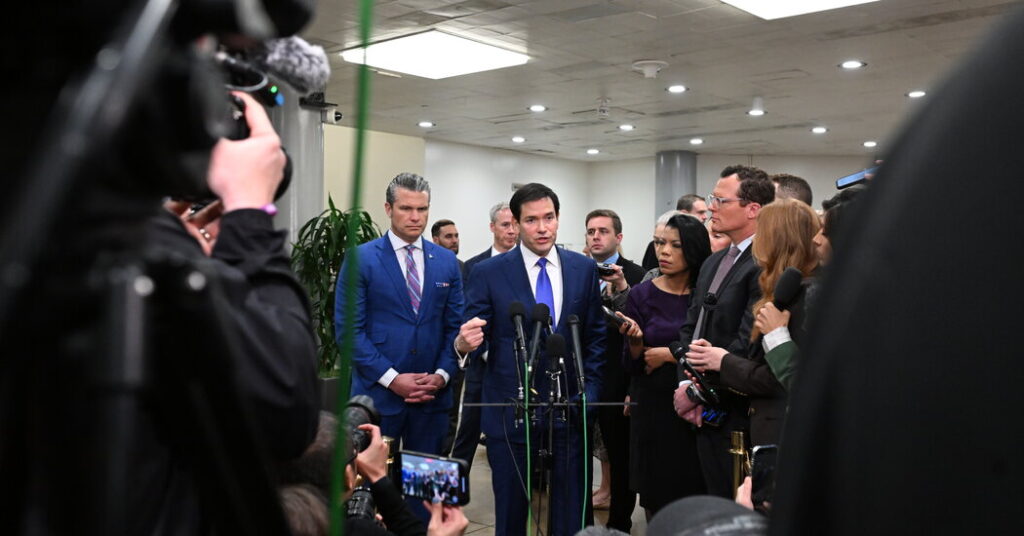
Following the briefing, Mr. Rubio told reporters that the first priority would be “the stabilization of the country.”
“We don’t want it descending into chaos,” he said, adding that he was working with Venezuela’s interim president, Delcy Rodríguez, with whom he had spoken several times since the weekend raid.
Central to that effort, Mr. Rubio explained, would be a tightened quarantine on Venezuelan oil, reflected in the seizure on Wednesday of two additional oil tankers.
“We are in the midst right now and in fact about to execute on a deal to take all the oil,” Mr. Rubio said, pointing to the most powerful economic lever the U.S. has over Venezuela.
“We are going to take between 30 and 50 million barrels of oil. We’re going to sell it in the marketplace at market rates, not at the discounts Venezuela was getting,” Mr. Rubio added. “That money will then be handled in such a way that we will control how it is disbursed in a way that benefits the Venezuelan people, not corruption, not the regime.”
The Venezuelan state oil company later confirmed in a statement that it was in negotiations to sell oil to the United States, but did not detail how such a deal would work.
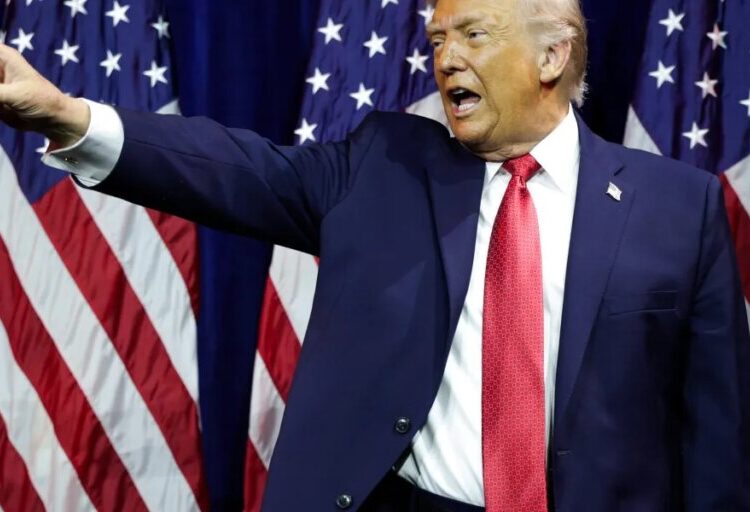
Mr. Rubio’s remarks echoed comments President Trump made on social media the night before, when he said the seized oil “will be sold at its Market Price, and that money will be controlled by me, as President of the United States of America, to ensure it is used to benefit the people of Venezuela and the United States!”
It was unclear what legal authority the administration would rely on to commandeer the oil money to use as it sees fit. The Constitution gives Congress control over government spending, barring any money from being expended except as appropriated by legislation.
The second phase of the plan, Mr. Rubio said, would be focused on the recovery of the nation that has lived under the Maduro government for more than a decade. Part of that effort, he said, would be funded by “ensuring that American, Western and other companies have access to the Venezuelan market in a way that’s fair,” he explained.
Lastly, Mr. Rubio said that the focus will be on “rebuilding civil society” and transitioning to a more representative democratic government. That would be done through a “process of reconciliation nationally within Venezuela, so that the opposition forces can be amnestied and released,” he said.
He sounded an optimistic note about the work ahead, saying, “we feel like we’re moving forward here in a very positive way.”
Robert Jimison covers Congress for The Times, with a focus on defense issues and foreign policy.
The post Rubio Lays Out Long-Term U.S. Involvement in Venezuela appeared first on New York Times.