It felt like someone was stabbing me in the stomach.
At the time, there were plenty of halfway reasonable explanations why my stomach might be hurting. Maybe it’s a cold. Maybe I have the flu. Maybe this is just me getting used to college food. Or maybe I just got punched in the stomach a few too many times.
I was a 19-year-old freshman running back at West Virginia Wesleyan College. Living away from home, training hard, studying, there were bound to be reasons why my stomach hurt. Except this hurt just wouldn’t go away.
For more than six months, I was living with a strange kind of persistent, stabbing pain that would return again and again through the course of the day. It didn’t seem to matter if I popped a Tums or changed what I ate. It’s hard to put food down when it feels like you’re being consistently pummeled from the inside. The pain got so bad that I was subsisting on a diet of little more than chocolate milk and mixed fruit from the dining hall.
I knew I was getting skinnier, but I thought, “Hey, that’s what training hard can do.” It’s not uncommon to lose a little weight during football season.
It wasn’t until the springtime, after I’d turned 20, that I realized how serious the weight loss had gotten. My friends and I were home messing around, cracking jokes, and jumping on the scale to see who’d lost and gained weight since college started. I stepped on the scale, and it registered 155 pounds. I had lost 30 pounds in half a year. That’s when my dad called the doctor and made sure I got an appointment the next day.
After a few visits, doctors discovered I was bleeding internally, and I was sent to the hospital for tests, including a colonoscopy. They couldn’t even get the camera through my colon during the exam, because it was completely blocked. Later on, doctors told me my tumors were as big as a pineapple. Five pounds worth, and two of them had broken open and were spreading.
I had stage four cancer — it was aggressive, and it was traveling throughout my body.
How could this be happening? I was a young college athlete, just out of high school, and a pretty healthy guy. How could I have late-stage colon cancer?
But I did. And I’m not alone. More and more, doctors are diagnosing young people with late-stage, aggressive colon cancers like mine, occurring decades earlier than what’s “normal,” and catching everyone by surprise.
At first, doctors couldn’t figure out why my cancer resisted treatment
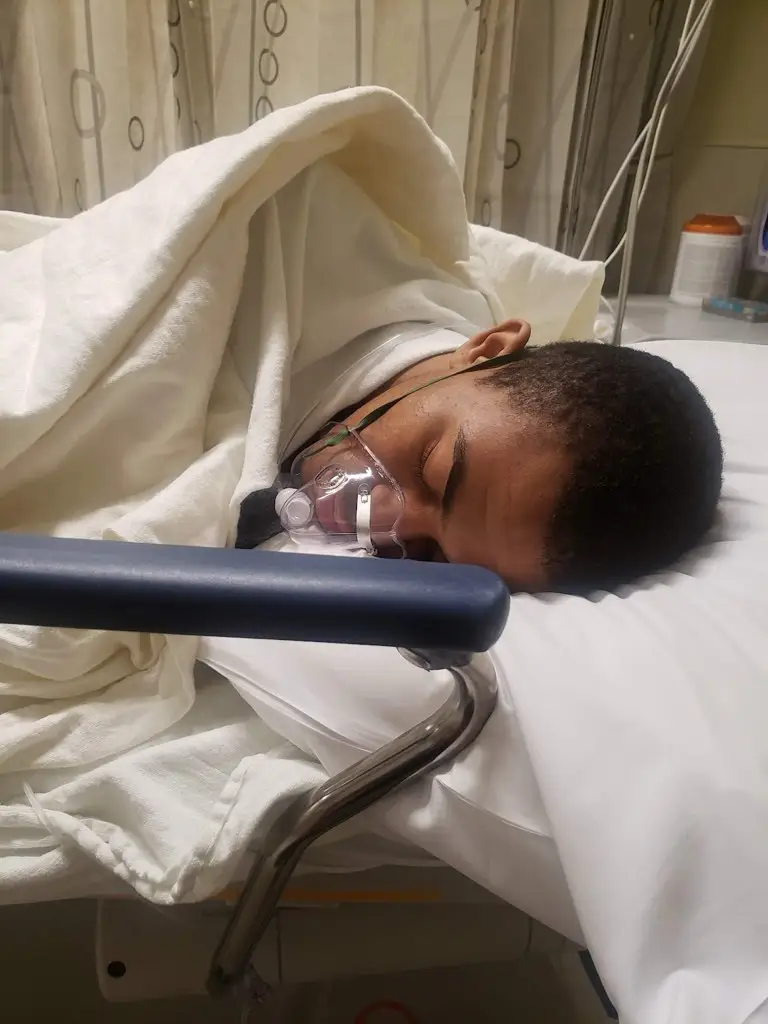
Getting cancer felt like getting my free will ripped away from me. I lived in the hospital, underwent major surgery, got my insides stripped out, and then had a colostomy bag put in temporarily to deal with my waste. It was isolating, and I felt like I was living in a different universe.
Afterwards, once the colostomy bag was removed and I was able to go to the bathroom on my own again, I had to get a physical therapist just to re-learn how to do the simple things in life. Things that weren’t easy to me anymore included getting up, using the toilet, or having the ability to just move around the way I used to.
On top of that, I was outfitted with a port for chemotherapy infusions, lost my hair, and dealt with how those toxic treatments completely sap your energy.
And yet, even after all the treatment was over, doctors were still finding more cancer in my body. They did one more major surgery, put in another temporary colostomy bag, and tried a new kind of chemotherapy. Six more months of treatment. The cancer still wasn’t eradicated. At this point in time, I’d done two major surgeries and 12 rounds of chemo, and the doctors were still telling me, “Well, we have to do another surgery and a different type of chemo.”
My faith in my oncologist was waning, my frustration mounting. I’m thinking: You keep telling me if I do these things, I’m going to be all right, and it’s going to be gone, but it’s the same cycle over and over again. I was starting to feel like a test patient.
That’s when, with some help from my football coaches, I sought a second opinion out of state. Finally, I was tested for Lynch syndrome, the genetic condition sometimes called “cancer family syndrome” or “hereditary nonpolyposis colorectal cancer” because of how it predisposes people to several kinds of cancers, but especially colon cancer, usually in their 40s and 50s.
Once I had my proper diagnosis, the disease became easier to treat. Oncologists have recently discovered how well Lynch syndrome responds to immunotherapy, where you recruit your own immune system to recognize and fight cancer, sometimes without any need for toxic radiation or chemotherapy.
I went back to my doctor again, who agreed to take a different approach and do immunotherapy this time, with no chemo required. The difference was amazing. Instead of lying in bed all day, exhausted, I was able to live a relatively normal life during this round of treatment. I wouldn’t say my energy was 100%, but maybe 80%, which is a really major improvement from life during chemo.
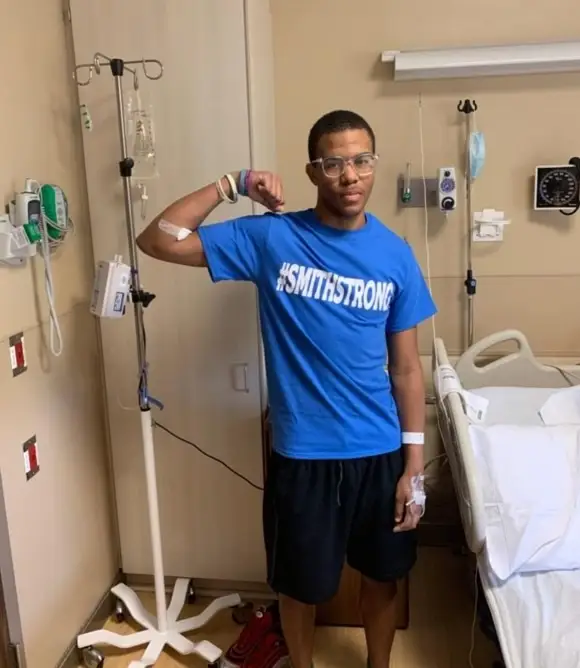
I not only felt better, but I was also getting better. Doctors were able to stop my immunotherapy treatments completely in mid-2024, and I’ve been all clear since then.
I still get scans about every three months. I know I’ll have to be vigilant; my condition puts me at a lifelong higher risk of developing cancer because the mutations that are built into my DNA make it easier for the disease to sprout up.
School was my much-needed dose of normalcy through all of the cancer treatment. I told myself I was still going to graduate on time, even if I couldn’t be an athlete. My doctors suggested taking a break to heal, and while I understood where they were coming from, I just knew for my own mental health I had to maintain at least some of the “normal” things in life while I was a cancer patient. It helped me stay motivated, knowing that at least I could still graduate on time, even if I couldn’t play football.
I also kept on working out, getting in regular exercise throughout my treatments. Even when I was getting chemotherapy infusions, I’d strap on a bag to let the chemo drip into me while I moved around, and head to the track for three to five miles of walking. Some days I could only walk very slowly, others it was a brisk pace, depending on my energy. I think the movement really helped manage the side effects, making them milder. Even though I did have some symptoms, and chemo was rough, I felt like keeping my body active and getting that blood flowing and moving around was so beneficial.
I changed my workouts and eat less sugary cereal now
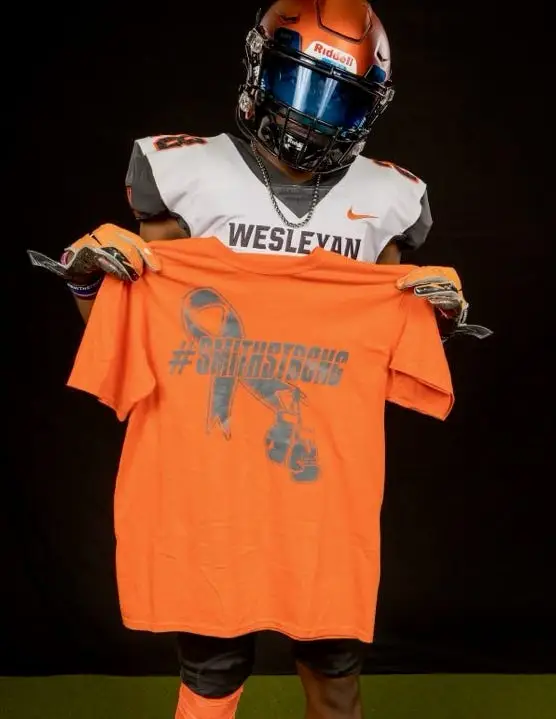
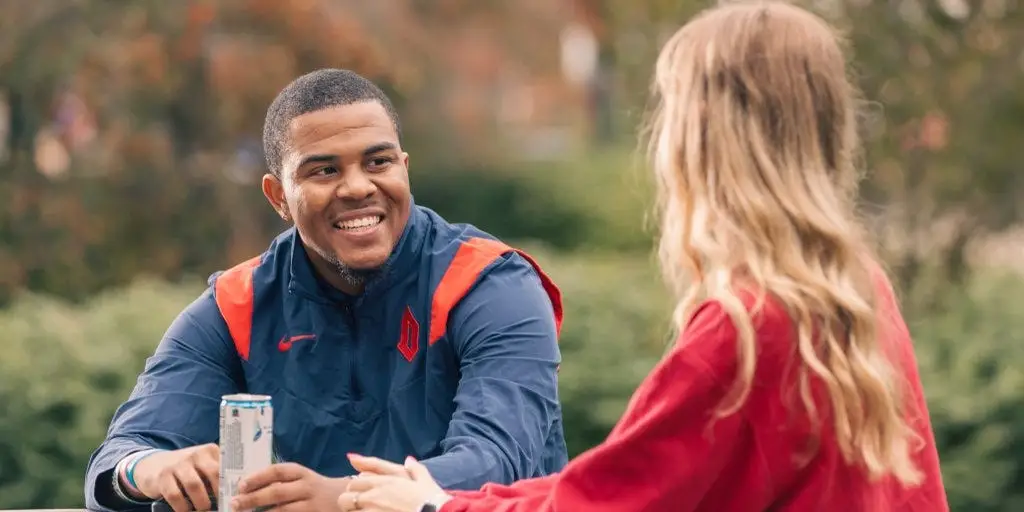
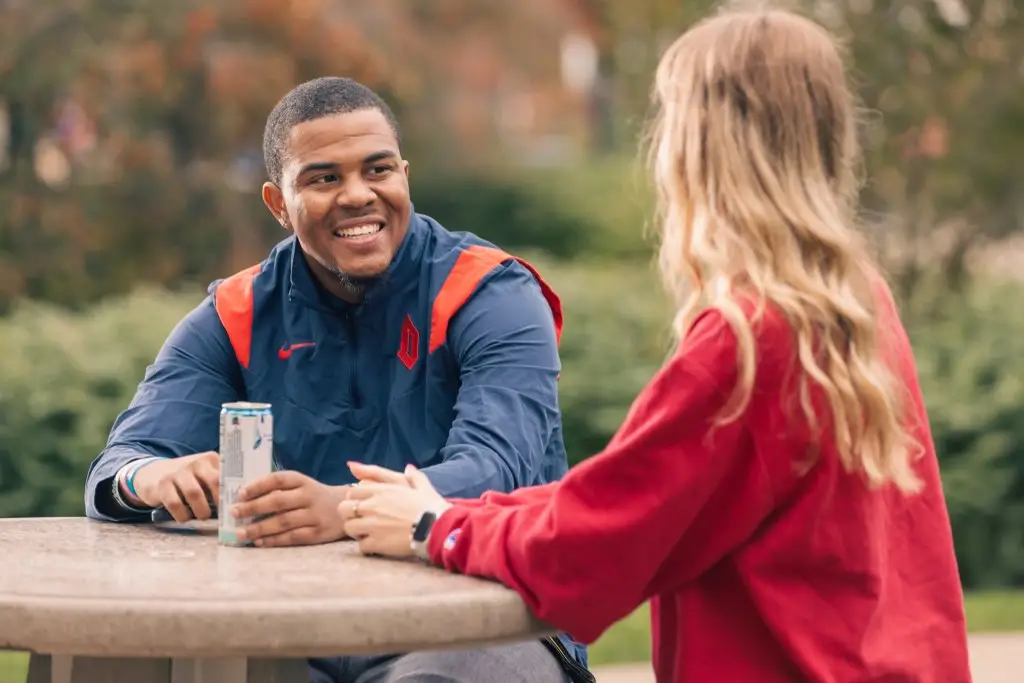
After two years off the field, with a clean bill of health, I returned to the football team my senior year. It felt good to be back on the field, but my body was not the same anymore.
I have issues with neuropathy, a type of treatment-related nerve damage that makes my hands and feet tingle and go numb. This makes me hyper-sensitive to cold temperatures, making it hard to drive a car when it’s cold out or even open up the freezer and pull something out. It’s kind of hard to catch a football when you can’t really feel your hands, or run when your feet are numb. Eventually, I decided it was time to quit the sport I love, but it felt good doing it on my own terms, and playing for one last season.
I still work out almost every day, but it’s not the same as having a team sport. I’ve started some personal training, training people who were inspired by how well I recovered and how much muscle I was able to build back after my treatments.
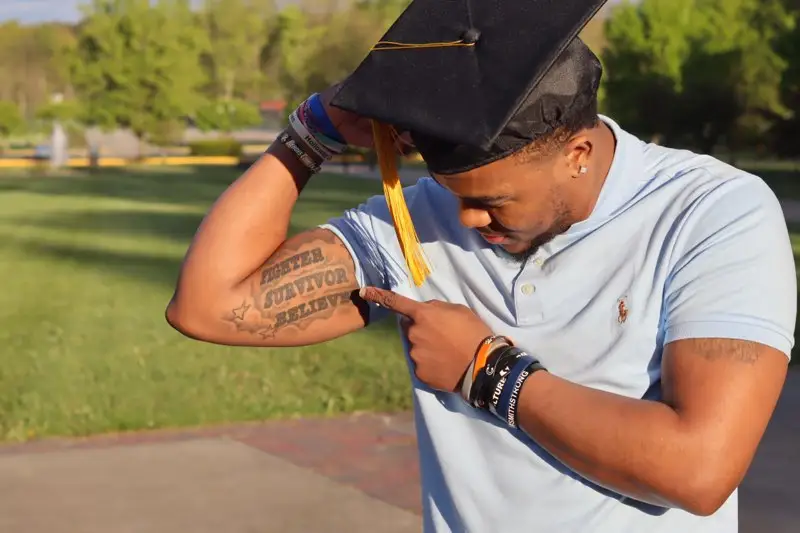
I have also changed my diet. After living with a colostomy bag a few times and seeing exactly what comes out of your body after you eat, you start to think about food differently. Some of that stuff is not being digested at all, especially the artificial colors in brightly colored cereals. I don’t eat as much junk food or cereal as I used to, in part because seeing those bright blue, purple, and green colors coming out of my body scared me straight. I try to stick to a diet that’s good for muscle building and longevity, mainly focusing on lean proteins like chicken and fish, plus lots of leafy greens, with room for a little bit of red meat now and then to keep my iron levels up, but not as much as I used to eat.
I hope my story can be helpful to others going through cancer treatment. I have run a few clothing drives, and donate to my local hospital just so cancer patients like me can have snacks and blankets, comfortable stuff while they’re waiting around.
I know how it can feel when your family is going through such a hard time. It’s always good to have somebody see you, someone who has experienced it, to help you get through a tough time.
Read the original article on Business Insider
The post I developed stabbing stomach pain as a college football player. It turned out to be stage 4 colon cancer. appeared first on Business Insider.