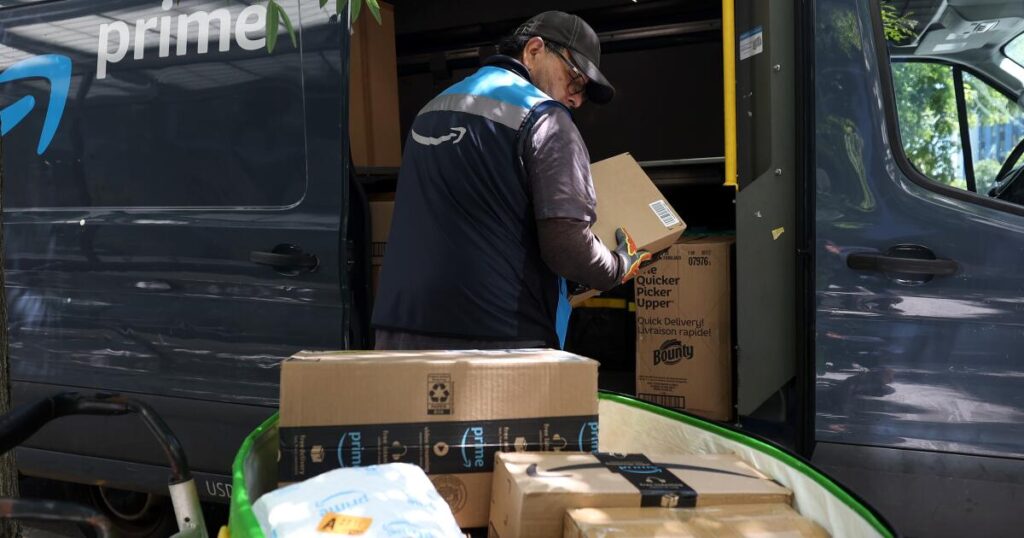
Consumers splurged this last holiday season, enticed by good deals even as they worried about growth and inflation.
Online shoppers spent a record $257.8 billion during the holiday season as they snagged major discounts on electronics, sporting goods and appliances, Adobe data show.
The San José company, which analyzes online transactions on its Adobe Analytics platform, said Wednesday that online consumer spending from Nov. 1 to Dec. 31 jumped nearly 7% in the U.S. compared to the same period a year earlier. The data provide a glimpse into how the U.S. economy is impacting e-commerce.
Amid anxiety around inflation, tariffs and layoffs, shoppers still opened up their wallets, especially during Cyber Monday, the biggest e-commerce day of the season. Consumers spent $14.25 billion on that day.
Many shoppers also anticipated bigger discounts to come during Black Friday and Thanksgiving.
“We saw that growth really scale up during those days, especially in this environment where consumers are very considerate about prices out there,” said Vivek Pandya, director of Adobe Digital Insights.
Shoppers found discounts on higher-priced items such as electronics, furniture and appliances, driving up the total spending during the holidays.
Some bought electronics 30% off the listed price and used payment methods that allowed them to buy gadgets such as smartphones but pay later.
The rise of chatbots, powered by artificial intelligence, and the popularity of shopping through social media meant consumers leaned more on technology to find products and deals.
“We have a consumer out there that was still willing to spend during this holiday season if they felt like the price was right,” Pandya said.
Adobe saw an uptick in people using smartphones to shop and AI chatbots to research products and search for deals. Traffic from AI sources had a higher conversion rate than from non-AI sources, he said.
Consumers might find AI more helpful for researching more expensive products such as electronics or appliances that involve comparing various features.
Consumers spent more on items such as video games, smartwatches, refrigerators and other pricey household items while also buying cheaper items such as puzzles and holiday decor.
Some of the top-selling toys included the Lego Icons sets and “Wicked” dolls along with gaming consoles and video games.
Hot tech products included the Apple Watch Series 11 and the Ray-Ban Meta glasses, Adobe found.
Online spending on electronics totaled $59.8 billion, up roughly 8% compared to the same period last year.
Adobe doesn’t break out the data by state, but other studies had predicted consumer spending in California would grow. Accounting firm KPMG found consumers planned to spend more because they were wary about having to pay more later because of inflation.
About 72% of consumers surveyed by KPMG in the Pacific region — which includes California, Oregon, Washington, Hawaii and Alaska — cited inflation as a top concern last year.
Meanwhile, economists have described the U.S. economy as “K-shaped,” illustrating the disparity between the rich who have more money to spend and the poor who are more cautious about their finances.
In December, Bank of America released a report that showed higher-income households not only saw their after-tax wages grow but also increased their spending year over year by 2.6%. Lower-income groups increased spending by 0.6%.
Historically, online shoppers have been more affluent, Pandya said. But some consumers also view online shopping as a way to find better deals because it’s easier to compare prices from various retailers without having to walk into a store.
He anticipates consumers could still eye spending during major events such as Valentine’s Day or Mother’s Day when retailers offer discounts.
“That might encourage them to continue to spend,” Pandya said. “We’ll see how January data looks as that starts to come in.”
The post Holiday shoppers spent a record amount online, searching out deals amid economic anxiety appeared first on Los Angeles Times.