By all accounts, Cuba is enduring the worst economic moment in the 67-year history of its communist revolution.
While the island nation has endured periodic episodes of mass migration, food shortages and social unrest in decades past, never before have Cubans experienced such a wholesale collapse of the social safety net that the country’s leaders — starting with Fidel Castro — once prided themselves on.
“I, who was born there, I, who lives there, and I’ll tell you: It’s never been as bad as it is now, because many factors have come together,” said Omar Everleny Pérez, 64, an economist in Havana.
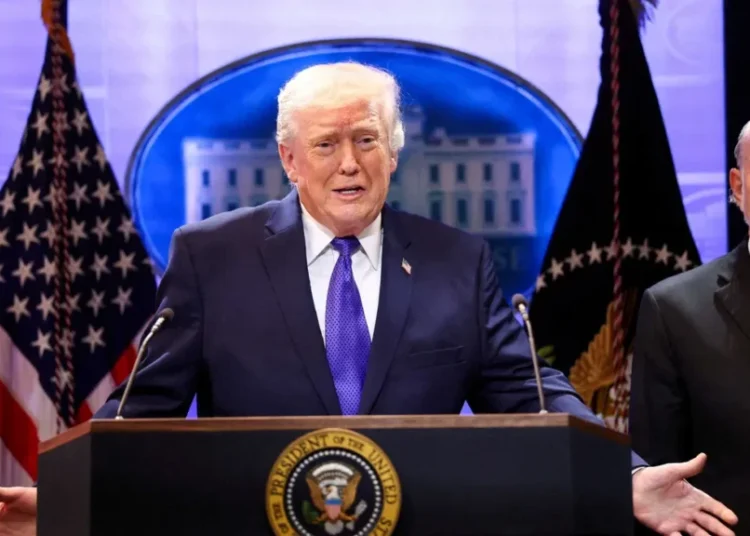
As Trump administration officials congratulate themselves on a triumphant military victory in Venezuela, in which President Nicolas Maduro was seized and the United States claimed control over the South American country, eyes have now turned to Cuba, which enjoyed a warm relationship with the jailed president and which depended on the oil he sent.
Of Cuba, “It’s going down for the count,” Mr. Trump said Sunday, dismissing the need for military action there, because he said the government was likely to collapse on its own.
Odalis Reyes can see evidence of Cuba’s decay with her own two eyes.
From the window in her cramped sitting room, Ms. Reyes, a seamstress in Old Havana, looks out at a relic of the country’s obsolete past, the rusting hulk of an electric power station that once provided electricity to her poor neighborhood on the edge of the popular tourist district of Cuba’s capital.
Now it serves as a reminder of the constant blackouts.
“Yes, many hours without electricity, many, many — 14, 15 hours,” Ms. Reyes, 56, said. “Oh, that terrifies you, it terrifies you, because food — which this is the hardest thing — you’re afraid it will spoil.”
“We don’t even know how we’re going to get by anymore,” she added. “We’re like human robots, humanoids.”
In recent years, Cubans complained because the monthly allotments of rice, beans and other food staples that they received from government ration cards lasted only 10 days. Now the cards are virtually worthless because food is rarely available at the government ration stores.
To buy gasoline, people have to use an app to sign up for an appointment — at least three weeks in advance. One resident of Havana, the capital, said he joined the queue three months ago, and is now No. 5,052 in line.
The lack of gasoline has led to sporadic trash pickup, which has led to outbreaks of mosquito-born illnesses like dengue and chikungunya. Medicines are nearly impossible to find without relatives abroad to send them.
The blackouts have exacerbated an already bleak situation, particularly in provinces outside the capital, which can go 20 hours a day without power.
It’s dark, people are sick, and they don’t have medicine, said Mr. Pérez, the economist.
The economic situation in Cuba has always been difficult. It was particularly terrible during an era in the mid-1990s known as the “special period,” which came after the collapse of the Soviet Union, which had kept Cuba afloat.
The Cuban government has consistently blamed its economic travails on a decades-long U.S. trade embargo that it claims puts a chokehold on its ability to do business in the world market and earn much-needed cash. Economic sanctions by Republican administrations, which have excluded food and medicine, have made it even harder, government officials say.
“Correcting distortions and reviving the economy is not a slogan,” President Miguel Diaz-Canel said in a speech last month. “It is a concrete battle for stability in everyday life, so that wages are sufficient, so that there is food on the table, so that blackouts end, so that transportation is revived, so that schools, hospitals and basic services function with the quality we deserve.”
At the end of the third quarter last year, the country’s gross domestic product had fallen by more than 4 percent, the president said, inflation was skyrocketing, and deliveries of rationed food were not being met.
Mr. Díaz-Canel reiterated the government’s long running goals: to make food production a top priority and work to make state-owned businesses more efficient.
Experts say that it remains unclear how big an effect the fall of Mr. Maduro will have on Cuba, as the Trump administration exerts more control over Venezuela’s state oil industry. When Hugo Chávez was president, he kept Cuba afloat with some 90,000 barrels of oil daily. In the last quarter of 2025, Cuba received just 35,000.
The resulting power outages have hurt industries like nickel production, because the factories are off when there’s no power.
Another crucial industry, tourism, has also suffered in recent years. Before the Covid pandemic, four million people a year used to visit Cuba; that number has struggled to get back to two million, economists said.
Amid the struggles, some were calling for more private enterprise.
Emilio Interián Rodríguez, a Cuban lawmaker who is president of an agricultural cooperative, delivered a blistering speech urging agricultural overhauls and more private enterprise. He made the declaration on the floor of the National Assembly — where pro-government rhetoric is the norm. Private business owners, he said, were doing a better job than state companies.
“Thanks to micro, small and medium enterprises, today we have more things, and thanks to micro, small, and medium enterprises today we are achieving results in many things that we had never achieved before,” he said.
Experts agree that while U.S. policies have hurt Cuba, poor planning and mismanagement are also to blame for the country’s economic troubles. Efforts to allow private businesses to operate have faltered because of onerous regulations.
The private enterprises, known as MiPyMEs, were legalized in 2021 and have been a lifeline in Cuba, Mr. Pérez and other residents said.
Some private stores resemble supermarket chains in the United States, with everything from Goya brands to Philadelphia cream cheese.
But prices at the private stores are exorbitant, particularly for people who earn salaries in the local currency. A typical monthly pension is 3,000 pesos, less than $7, while a carton of 30 eggs costs 3,600 pesos —$8. Five years ago, a carton of eggs cost 20 to 30 Cuban pesos.
“There is food, and plenty of it, but the prices are incredible,” Mr. Pérez said. “Nobody with a salary, not even a doctor, can hardly buy in those stores.”
About a third of Cubans receive economic help from overseas, and some earn dollars in the private sector. But about a third, particularly pensioners, are living in poverty, Mr. Pérez said.
Difficult living conditions helped spur spontaneous mass protests in 2021, but a harsh government crackdown quashed the demonstrations.
Cuba’s financial collapse has fueled an extraordinary exodus — about 2.75 million Cubans have left the country since 2020, according to Juan Carlos Albizu-Campos, a Cuban demographer. While the official population is about 9.7 million people, Mr. Albizu-Campos said 8.25 million would be more accurate.
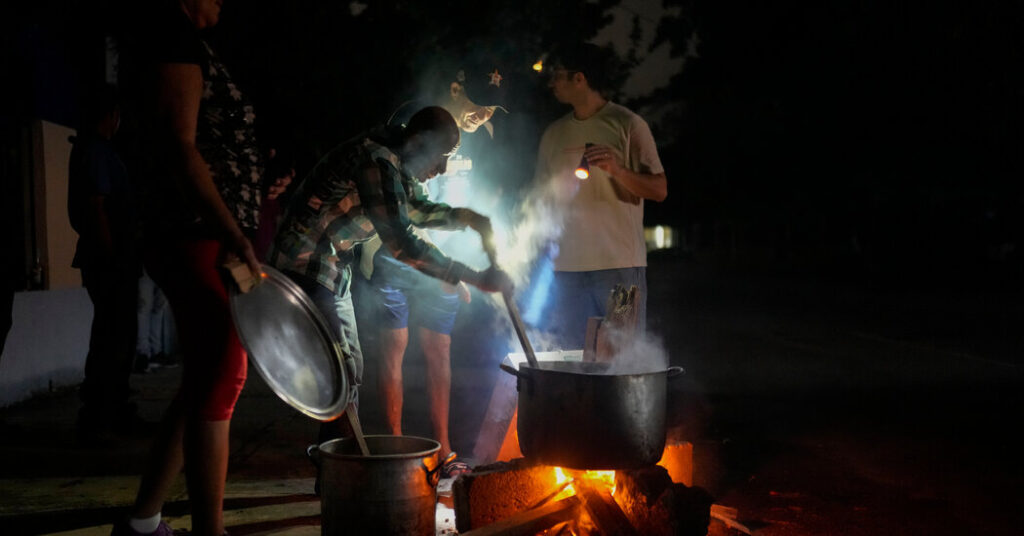
Some people have taken to cooking with firewood. The country is producing 25 percent less power than it did in 2019, said Ricardo Torres, a Cuban economist who is currently a fellow at American University.
Cuba’s economy has declined three years in a row, he said.
“The domestic economy,” Mr. Torres said, “is in a free fall.”
Yoan Nazabal, 32, a bartender and taxi driver in Havana, said his wife had a cesarean section six months ago, and was stunned to find out what they were expected to bring to the hospital.
“We had to bring our own catheter to the hospital!” he said. “Everyone talks about how great our medical system is, and how it is free — and it has been, historically. Our doctors are first-class. But they don’t have any resources with which to do their job.”
Hannah Berkeley Cohen contributed reporting from Miami.
Frances Robles is a Times reporter covering Latin America and the Caribbean. She has reported on the region for more than 25 years.
The post Cuba’s Long-Suffering Economy Is Now in ‘Free Fall’ appeared first on New York Times.