MATAMOROS, Mexico — The first time Daniel Santiago saw one of Elon Musk’s super rockets blast off, he thought it was the most magnificent thing he’d ever witnessed — an animalistic roar, a window-shattering tremor, then fire and steel arcing into the skies over Playa Bagdad on Mexico’s northeastern tip.
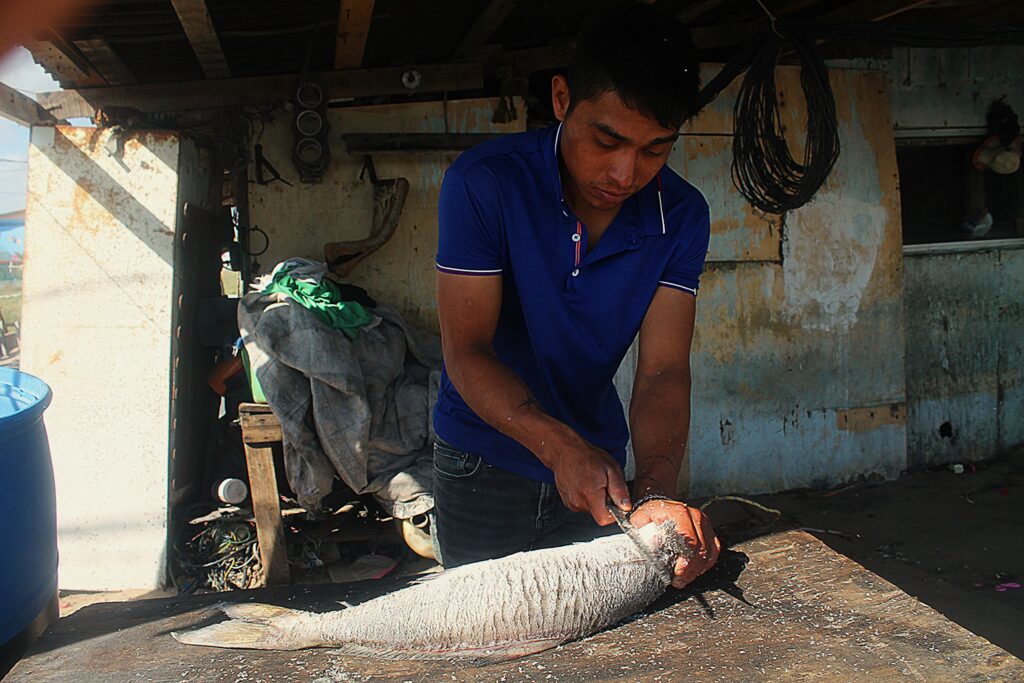
But then came the next launch, and the one after that, and soon Santiago was broke and fearful of going hungry. Mexican officials and environmentalists warned that the test launches have inflicted ecological damage, and Mexican fishermen like him suspected they were seeing evidence of it out at sea.
By early 2025, community members said, the fish had all but vanished off the coast of Playa Bagdad, just a few miles over the border from Starbase, Texas, where, since April 2023, SpaceX has been testing the world’s largest rocket.
Though scientific researchhas shown that space launches have resulted in “fish kills” in the past, no causal link has yet been established between the SpaceX launches and the reported disappearance of fish along this stretch of Mexican coastline. Finding one could take years, scientists caution, and will be a particular challenge in a region where overfishing is common and the movements of marine life are driven by myriad factors.
But “some environmental impact would be expected given the noise, explosions and trash” generated by the SpaceX launches, said Félix Gutiérrez Villanueva, an oceanographer at Mexico’s Autonomous University of Tamaulipas, who is studying the issue in coordination with local environmentalists.
Santiago wasn’t a scientist. But he knew he couldn’t earn a living the way he once had, and soon he said he was venturing deeper and deeper into the Gulf of Mexico in search of something to catch — until he found himself ensnared in a dragnet, this one cast by the Trump administration.
On April 17, Santiago and three other fishermen were 14 miles north of the U.S.-Mexico maritime border when they were busted by the U.S. Coast Guard. Inside the speedboat, according to court documents, the men had 1,200 hooks and nearly 700 pounds of red snapper, worth around $4,100.
In the past, U.S. authorities say they probably would have released the men. But last year, the Justice Department announced it had stiffened penalties for Mexican fishermen caught in American waters.
“I didn’t want to go that day,” said Santiago, 22. “But I couldn’t make ends meet.”
The men were charged with unlawfully transporting fish and sent to prison, an outcome hailed as a “first” by federal prosecutors in Texas. Santiago, who pleaded guilty, spent the next five months behind bars. In the months since, locals say, many other Playa Bagdad fishermen have wound up in the grasp of U.S. law enforcement.
Neither SpaceX nor the U.S. attorney’s office for the Southern District of Texas responded to requests for comment.
The saga of this small fishing village highlights the unintended environmental and social impacts of the global space race and how they can transcend national lines. As companies and countries attempt more launches every year, researchers are beginning to study little-discussed dangers — mounting space debris, maritime pollution, disruptions to animal patterns — and sound the alarm on the limited efforts to mitigate them.
“We’ve got a proliferation of rocket launches,” said Andrew Birchenough, a senior official with the United Nations’ International Maritime Organization. “And there’s a regulatory gap here.”
A short distance from the ramshackle clapboard homes in Playa Bagdad, SpaceX is testing the Starship and Super Heavy booster, which it describes as the “most powerful launch vehicle ever developed.” The 11 test launches, witnesses say, have been accompanied by massive explosions, sonic booms and far-flung debris.
The company is now reportedlyplanning to significantly increase its launch schedule. But there has been little, if any, attempt to gauge the fallout in Mexico, said Jared Margolis, a senior attorney with the Center for Biological Diversity, a nonprofit group that works to protect endangered species.
“No federal agency has considered or studied or taken into account the cross-border impacts,” he said.
Environmentalists and fishermen in Tamaulipas state allege that the launches have contributed to a die-off of marine life, including fish, sea turtles and dolphins. In June, after a SpaceX Starship exploded ahead of an engine test, scattering debris for miles across the region’s beaches, President Claudia Sheinbaum announced the government had found environmental “contamination” in Mexico and would consider legal action.
In a statement at the time, SpaceX denied that its launches posed any hazard to the borderlands. “Previous independent tests conducted on materials inside Starship, including toxicity analyses, confirm they pose no chemical, biological or toxicological risks,” SpaceX said. “We have requested local and federal assistance from the government of Mexico in the recovery of anomaly related debris, offered resources and assistance in the clean-up, and have sought validation of SpaceX’s right to conduct recovery operations.”
The company did not provide copies of the tests referenced in its statement or respond to The Washington Post’s request to review them.
Mexico’s Foreign Ministry said in a statement to The Post that the United States is liable for all damage incurred by its launches, citing the 1967 Outer Space Treaty. Each launch that might impact Mexican territory, the statement said, requires the “express authorization” of Mexican authorities.
But “we’ve received no direct, formal information from the company,” said Cristopher González Baca, a senior Mexican environmental official who oversees the protected lands around Playa Bagdad. “The only information we have is what they put online.”
In November, fisherman Martin Pablo Zapata, 48, looked out at the sea, flat and gray, and shook his head. They were up against Elon Musk, whom he called “the world’s most powerful man,” and he worried the future of their village was at stake.
“We have no hope,” Zapata said.
A fragile ecosystem
The coastal ecosystem surrounding the U.S.-Mexico border is considered one of North America’s most sensitive, used by migratory birds from across the Americas and home to the critically endangered Kemp’s ridley turtle. Both nations have established reserves and wildlife refuges across the area intended to preserve its unique and threatened ecology.
But the original pitch by SpaceX — one of America’s largest companies and a frequent recipient of large government contracts — to build a launch site in close proximity to the protected lands stirred only modest pushback. State officials viewed it as way to bring jobs to one of the country’s poorest regions, where nearly 1 in 3 people live below the poverty line.
According to the 2014 environmental impact statement by the Federal Aviation Administration, the company’s plan each year was to launch only around a dozen Falcon rockets, which is SpaceX’s most established model and required no further experimentation.
Within a few years, though, the plan changed. To realize Musk’s vision of colonizing Mars, SpaceX wanted to begin testing a mammoth rocket that would be entirely reusable and large enough to carry dozens of people into deep space. Boca Chica, the coastal area around Brownsville, Texas, seemed like an ideal location.
“We’ve got a lot of land with nobody around, and so if it blows up, it’s cool,” Musk said in 2018.
In 2022, over the objections of environmentalists, the FAA granted SpaceX authorization to proceed following an expedited review, without publishing an additional impact statement. “The FAA analyzed all available information … and determined Starship / Super Heavy launch operations would not significantly affect the quality of the human environment,” the agency told The Post in a statement. “The preparation of the Environmental Impact Statement is not required.”
Critics of the decision suspected that Musk’s political influence was at play.
The plan for Starbase “was supposed to be one thing, and then you have someone with a lot of power and influence, and it gets a lot bigger,” said Eric Roesch, an environmental compliance analyst who has been monitoring the SpaceX launches. “The long-term environmental impacts have never been studied or disclosed.”
Neither Musk nor the FAA responded to questions about Musk’s alleged influence on the process.
In August, President Donald Trump gave his blessing to the streamlined process, ordering the Transportation Department, which oversees the FAA, to “eliminate or expedite” environmental reviews related to space launches.
In an interview with The Post, Tamaulipas governor Américo Villarreal Anaya said he’s been told that SpaceX wants to begin weekly launches, and he’s grown increasingly troubled by the potential consequences for Mexico.
“Perhaps we hadn’t grasped the scale of the impacts that could end up affecting the ecosystem in this region,” he said.
To Elias Ibarra, a veterinarian who founded the nongovernmental organization Conibio Global, the effects of the launches are already clear. For months, he’s been scouring the beaches with a small crew of activists, posting images of what they allege is large space debris, including tanks for flammable liquids, a large metal drum half the size of a truck and charred cylinders.
“We only have 10 people on our team,” he said. “We’ve only been able to clean 1 percent of the area that has been affected.”
He said his organization, in partnership with researchers from the Autonomous University of Tamaulipas, has also identified the location where they believe one of SpaceX’s massive rocket motors may have splashed into Mexican waters near Playa Bagdad after a failed launch, leaving a deep indentation in the seafloor. If accurate, Ibarra speculated, the vibrations from the booster could have been powerful enough to drive away marine life.
When he visits Playa Bagdad now, he sees a community in despair. Many of the houses are dark and shuttered.
“There are no more fish,” he said.
A fractured family
Guadalupe Perez Reyes, 26, could tell that her husband was worried. He’d once returned with hauls of corvina, trout, sierra and wahoo, enough to support his mother and their two young children. But after the SpaceX launches, Roberto Morales-Amador, 27, was just as likely to return with nothing at all. The couple — and some researchers — believe the launches were probably to blame.
“When the launches aren’t successful, the rockets explode, and it creates a lot of debris that falls into the ocean — and that’s what causes the impacts on fisheries,” said Patrick Schröder, a sustainability researcher at Chatham House who is studying the dangers of space debris.
The night the young fisherman went out with Daniel Santiago, her husband didn’t say anything about where he was going. She knew he didn’t want her to worry, but she did anyway.
“They were taking risks,” she said. “There wasn’t enough fish here to support our family.”
Her husband climbed into the 25-foot fishing boat and disappeared into the night. Normally, he was gone for one day — two at most. But this time, after being convicted of illegal fishing, he was away for more than eight months. During his time in U.S. custody, Perez said, she tried to adjust to her family’s new life, in the shadows of one of humanity’s most audacious technological endeavors.
“We’re trying to get used to this,” she said, weeping one day in November, a few weeks before her husband’s return. “I can’t tell you how.”
The next test launch of the Starship has been tentatively planned for early this year. But Perez said she had no plans of moving.
“This is where my kids are,” she said. “This is where I am.”
Geysha Espriella in Matamoros contributed to this report.
The post Caught between Trump and Musk’s rockets, a Mexican village despairs appeared first on Washington Post.