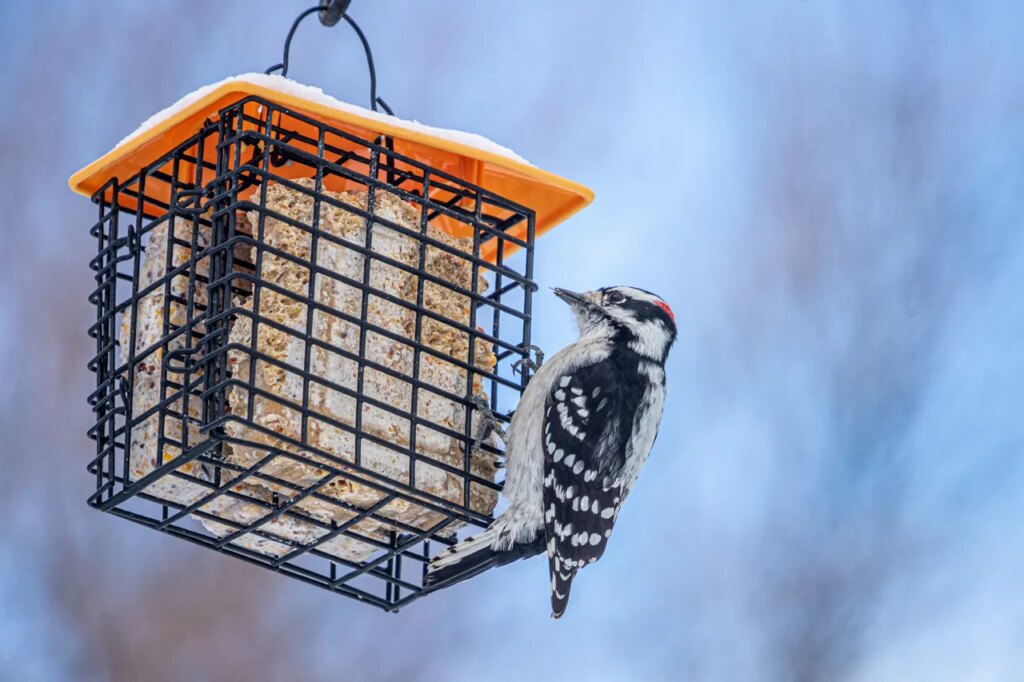
For many regions, winter feels like a time of dormancy. Trees are bare, mammals are hibernating, people are bed-rotting. While migratory birds do fly south for the winter, many seed- and insect-eating birds do not, and with leaves off the trees, the winter months are often the best time to watch them.
As someone who tests smart bird feeders year-round for WIRED, I’m always interested in ways to ensure I’m attracting the largest and most interesting variety of birds to my yard, no matter the season.
Further, if you received a smart bird feeder for Christmas and your neighborhood flocks haven’t discovered it yet, you may be looking for some ways to speed up the process. I talked to some ornithologists to learn how to boost the attractiveness of the average yard during these cold, windy, rainy, and sometimes icy months.
Mix Your Menu
Though there may be less diversity of bird species around your area due to some migratory birds having moved on (warblers and tanagers, for instance), many seed and insect eaters find enough locally to sustain them. In my West Coast region, this means chickadees, all kinds of sparrows, and even larger birds like flickers. Both ornithologists I spoke to recommended diversifying feed types in winter to appeal to the widest variety of birds.
“To attract the greatest species diversity to your feeders, offer various types of seeds in various styles of feeders,” says Noah Perlut, ornithologist and professor in the School of Marine and Environmental Affairs at the University of New England. “Some species prefer eating mealworms from platform feeders, while others prefer suet, and others feed from seed tubes.”
Suet (rendered animal fat, basically—often tallow) is indeed a staple in my own winter bird-feeding setup. It comes in a variety of styles, including balls or cakes. I like to use cakes mixed with hot pepper, which squirrels don’t like, set in an inexpensive cage feeder. I’ve found it attracts a range of insect-eating birds in my area, including woodpeckers, nuthatches, juncos, and chickadees.
I also like feeders that sport dual feed bays, especially if you aren’t able to site multiple feeders around your yard due to space or the inability to meet the 5-7-9 rule to deter squirrels. (That’s 5 feet off the ground; 7 feet from any structures like fences that could be jumped from; and 9 feet from anything overhanging, like branches.)
Maria Kincaid, head ornithologist at FeatherSnap—whose marquee Scout feeder happens to feature dual feed bays—suggests supplementing regular seed with black-oil sunflower seeds, unsalted peanuts, and mealworms. (Some smart bird feeders come with suet ball holders, while others have them available as an add-on.)
Kincaid also recommends specifically using a smart bird feeder in winter, so that you can note which types of food are the most popular. This can help you calibrate your feeding ratios to prevent waste.
“Most songbirds that will visit our feeders in the winter have different diet requirements than they do in the spring,” Kincaid says. “High-fat and high-protein foods are especially important during the winter, as it takes more energy to keep warm in colder temperatures.”
Sharing Shelter
Sufficient cover—trees, bushes, shrubs, or even a brush pile—keeps birds feeling safe and happy year-round, but it’s especially important from December to March, when less foliage could cause them to feel more exposed or threatened.
“Winter is often the busiest time of the year at bird feeders,” Perlut says. “This increased activity is not necessarily reflective of food scarcity—instead, it is a time of year when songbirds focus on self-care instead of breeding activities.”
Giving birds a safe place to groom, digest their food, or just rest is sure to make your yard a preferred hangout spot. Maintaining ample trees and bushes also provides more places for birds to forage.
“Feeder food makes up a small percent of most birds’ daily diet—less than 15 percent—so maintain shrubs, flowering plants, and trees that may offer birds seeds and insects throughout the winter,” Perlut says.
Keep It Food-Safe
With increased winter precipitation, mold and mildew can be a concern with feed that doesn’t get eaten quickly. In warmer seasons, I like to supplement my smart seed feeders with nyjer seed in a seed sock, as it ensures a steady food source that squirrels won’t pillage. However, it gets moldy almost immediately with rain or increased humidity, so it’s a no-go for winter.
“Feeders should be cleaned every two weeks to a month in the winter,” says Kincaid. (Note: If you have a smart feeder without solar battery backup, you’ll have a natural cleaning schedule every time you bring it back inside to charge.)
“If you’re using a smart feeder,” she says, “make sure to remove the camera and be careful to not get the camera housing wet, as it could damage the feeder. Rinse it thoroughly and disinfect with a 10 percent bleach solution. I like to put my bleach in a spray bottle, so I can control where it goes better, and focus on the areas that birds touch, like the seed tray and perches. Let the bleach solution sit for 10 minutes before rinsing thoroughly again, and let the feeder dry completely before refilling with seed and hanging.”
Thirsty Birds
Kincaid had another suggestion that didn’t immediately occur to me, living in the rainy Pacific Northwest: Making sure your winter feeding setup includes a bird bath.
“Available water becomes a limiting factor in your area if it freezes regularly,” Kinkaid says. “Having drinking water is important, and warming snow or frozen water takes a considerable amount of energy.
“Consider putting out a shallow bird bath that is heated if you live in a place where it freezes regularly. Make sure it has ample places to perch, and consider putting dark rocks in it, which not only absorb heat from the sun and help to keep your bird bath from freezing, but give birds a place to perch without having to stand in cold water.”
Make sure to clean your bird bath regularly, Kinkaid adds, especially if it’s heated, as this could encourage bacteria growth. And, of course, once winter is over (on March 20, 2026, in the northern hemisphere), everything—including feeders—will need another cleaning before welcoming the migratory birds back and transitioning your feed back to regular seed mixes.
The post Winter Bird Feeding Tips for the Peak of Bird Watching Season (2026) appeared first on Wired.