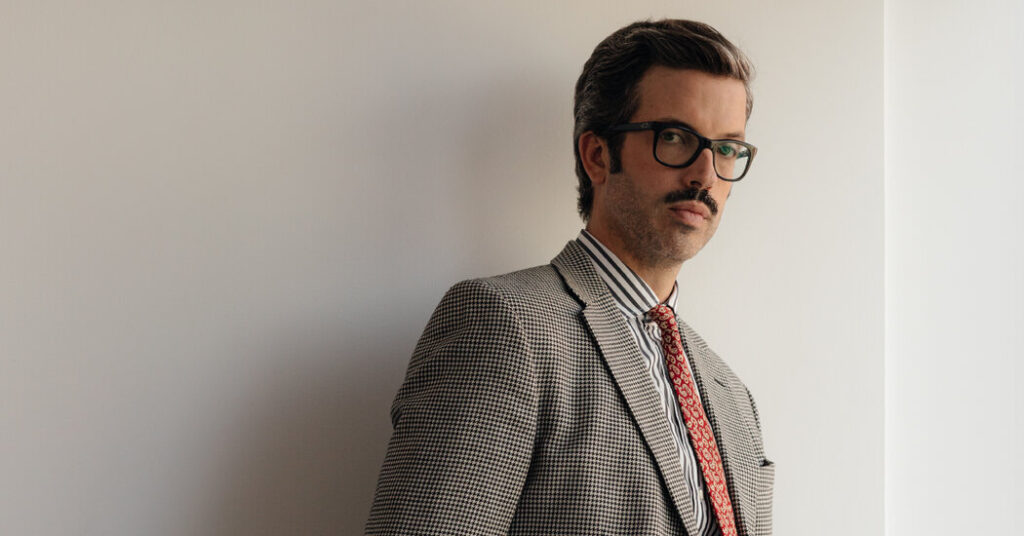
Will Welch is stepping down as editor of GQ, he told staff members on Tuesday, signaling another round of upheaval at Condé Nast, the publisher of the longtime men’s magazine.
Mr. Welch, who was named the editor of American GQ in 2018 and its global editorial director in 2020, will leave the company to work in a new role with Pharrell, the musician and men’s creative director of Louis Vuitton, in Paris.
A successor has not been named. Condé Nast did not immediately respond to a request for comment.
His departure is the latest in a series of high-profile exits at Condé Nast. Last year, the top editors of American Vogue and Vanity Fair also vacated their roles. Several employees were then laid off or fired after Teen Vogue was folded into Vogue’s website.
Through years of shake-ups, Mr. Welch, 44, became a star at the company, representing both corporate stability and editorial experimentation. He also oversaw Pitchfork, the online music publication owned by Condé Nast.
In 2019, 12 years after joining GQ as an associate editor at age 26, Mr. Welch published the “The New Masculinity Issue.” Pharrell appeared on the cover wearing a mammoth puffer coat that resembled a ball gown.
It was attempt, after #MeToo, to guide men toward “the most elevated version of ourselves,” Mr. Welch wrote in a 2025 editor’s letter, away from “tired old manly-man tropes” and “boorish, violent and misogynist behavior.”
“It became our blueprint for a whole new approach to GQ,” wrote Mr. Welch, who stuck to this mission of eccentricity and subversion, particularly in men’s fashion, even as the social pendulum swung back toward traditional hyper masculinity.
Mr. Welch also drew A-list celebrities to GQ’s annual “Men of the Year” parties. Events have become a crucial brand- and revenue-building tool for modern magazines; Vogue’s biggest night of the year is the Met Gala, which is sponsored in part by Condé Nast.
His tenure was not without controversy. GQ was criticized in 2023 for deleting a scathing article about David Zaslav, the chief executive of Warner Bros. Discovery, for example.
In November, Mr. Welch spoke to The New York Times about expanding GQ’s digital presence — and his realization, in recent years, that “a whole new generation” recognized GQ not as a print magazine but as a YouTube channel, putting out mostly “gamified, simplistic celebrity content.” (In one popular video series, famous couples quiz each other.)
That realization inspired Mr. Welch to bring more “depth and richness” to its channel, he said, such as with lengthier and more journalistic celebrity interviews.
“I really see my most fundamental position is to leave GQ in a better place than I found it,” he said at the time.
The post Will Welch to Leave GQ After 7 Years as Its Top Editor appeared first on New York Times.