Please note: We ask that adults respect the intent of our Student Opinion questions and refrain from posting here. While there are many other places on nytimes.com for adults to have their say, this is the only forum that explicitly invites the voices of young people. Please be sure to observe the Times commenting guidelines in your response.
We have also published a related lesson plan.
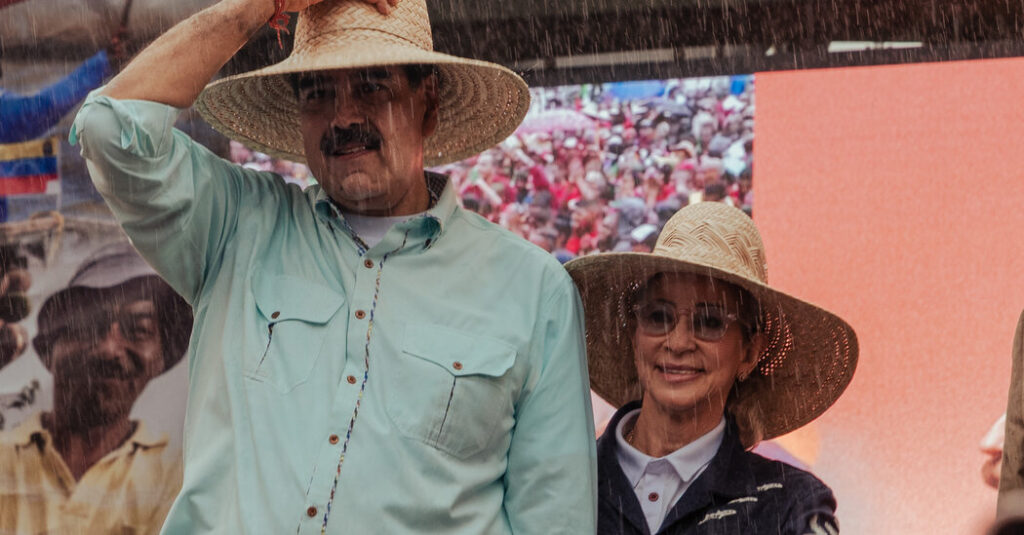
President Trump on Saturday announced the capture of the authoritarian leader of Venezuela, Nicolás Maduro, in a U.S. military operation that appeared to be the culmination of a campaign against Mr. Maduro by the president and other top American officials.
Mr. Maduro’s capture came after months of deadly U.S. strikes on supposed drug-carrying boats, the seizure of two tankers carrying Venezuelan oil and a U.S. military buildup off the South American country’s shores.
What have you heard, seen or read about the U.S. military operation in Venezuela? Where have you gotten your information? What questions do you have about what happened and why?
What happened?
In “What We Know About Maduro’s Capture and the Fallout,” Aimee Ortiz, Hannah Ziegler and Yan Zhuang explain how the mission, known as Operation Absolute Resolve, was carried out:
The United States carried out “a large scale strike against Venezuela” in which Mr. Maduro and his wife, Cilia Flores, were captured, Mr. Trump said.
Gen. Dan Caine, chairman of the Joint Chiefs of Staff, said that Mr. Trump ordered the operation late Friday. The mission, which took about two hours and 20 minutes, involved 150 aircraft that worked to dismantle Venezuelan air defenses to clear a path for military helicopters carrying troops to Caracas, the capital, he said.
Nearly 200 Special Operations forces took part in the raid, according to Defense Secretary Pete Hegseth.
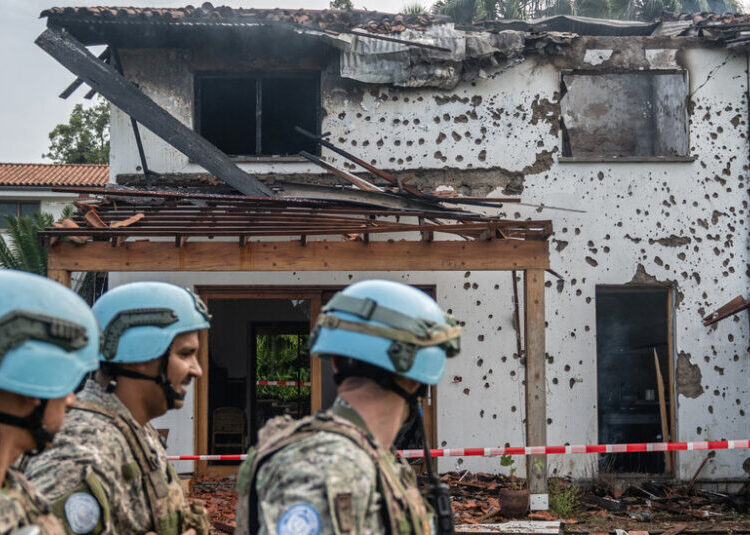
U.S. forces encountered significant resistance, Mr. Trump said. At least 80 people were killed, including military personnel and civilians, according to a senior Venezuelan official who spoke on the condition of anonymity to describe preliminary reports. Cuban state media reported that 32 Cubans were killed in the U.S. attack. President Miguel Díaz-Canel of Cuba said they were from Cuba’s armed forces or its interior ministry.
What was the purpose?
In the Jan. 4 edition of The Morning newsletter, “The Venezuela Takeover,” Adam B. Kushner writes about why the Trump administration removed Mr. Maduro:
The administration spent much of 2025 twisting the vise on President Nicolás Maduro, calling him a cartel leader and trying to dislodge him from office. After his arrest yesterday, the attorney general said that Maduro would face narco-terrorism and drug trafficking charges. But Trump also spoke about another rationale: Venezuela’s oil reserves, the largest in the world. He said that U.S. companies would soon rebuild Venezuela’s oil sector.
What are the larger implications?
Mr. Trump said that the United States planned to “run” Venezuela for an unspecified period. In the news analysis “Trump Plunges the U.S. Into a New Era of Risk in Venezuela,” David E. Sanger and Tyler Pager suggest these actions set a dangerous precedent:
Mr. Trump’s actions on Saturday cast America back to a past era of gunboat diplomacy, when the United States used its military to grab territory and resources for its own benefit.
A year ago this week, he openly mused, also at Mar-a-Lago, about making Canada, Greenland and Panama parts of the United States. Now, after hanging in the White House a portrait of William McKinley, the tariff-loving president who presided over the military seizure of the Philippines, Guam and Puerto Rico, Mr. Trump said it was well within the rights of the United States to wrest from Venezuela resources that he believes had been wrongly taken from the hands of American corporations.
The U.S. operation, in seeking to assert control over a vast Latin American nation, has little precedent in recent decades, recalling the imperial U.S. military efforts of the 19th and early 20th centuries in Mexico, Nicaragua and other countries.
How has the world reacted?
Mr. Maduro was a deeply unpopular leader in Venezuela and was accused of stealing the election in 2024. Those in Venezuela and abroad had mixed reactions, The Morning newsletter reports:
Two Venezuelas. Maduro’s supporters demanded his — and the first lady’s — return, and they staged protests and rallies, which were broadcast on Venezuela’s state-run TV. Some who opposed Maduro hesitated to celebrate while the future remained uncertain. “The first thing on my mind isn’t, ‘We are free and I’m so happy,’” a man named José told The Times. “It is, ‘What will happen tomorrow?’” Fearing the chaos to come, Venezuelans flocked to supermarkets to stock up.
In South Florida, members of the Venezuelan diaspora celebrated Maduro’s capture. Some blared music or honked their car horns. Many danced at impromptu parties.
On Monday, the United States was condemned at an emergency meeting of the United Nations Security Council for what even its staunch allies called a violation of international law in the capture of the Venezuelan president and the military incursion into a sovereign state. The Times reports:
The deputy French ambassador denounced the assault and Mr. Maduro’s apprehension, saying it “chips away at the very foundation of international order.”
The U.N.’s top official, Secretary General António Guterres, said the Trump administration had violated the U.N. charter.
Colombia’s ambassador said it was reminiscent of bygone eras of American interference in the region and that the United States was undermining “international peace and security.”
Russia and China demanded the release of Mr. Maduro and his wife, and called for a halt to any further military action by the United States.
Students, read one or more of the articles in their entirety and then tell us:
-
What is your reaction to the dramatic U.S. military raid in Venezuela and the capture of Mr. Maduro? What are you thinking and feeling?
-
What have you read, seen or heard about what is going on in Venezuela? How much have you been following the story and the escalation between the U.S. and Venezuela over the past few months? Have these events affected you, your family or your community?
-
What questions do you have about what has happened? For example, what are you confused about? What are you wondering?
-
At a news conference after the raid, President Trump called Mr. Maduro an “illegitimate dictator” and a “terrorist” who had caused great suffering to the people of Venezuela. Do you think the U.S. actions to remove Mr. Maduro and bring him to the U.S. to stand trial were justified? Why, or why not?
-
Some countries, including Mexico and China, along with many congressional Democrats, expressed outrage at the U.S. military action. Colombia’s president called it an “aggression against the sovereignty of Venezuela and Latin America.” Brazil’s president labeled it an “extremely dangerous precedent for the international community.” Do you agree or disagree?
-
What are the larger implications of one country capturing and arresting another country’s leader, and then taking control of that country, as the U.S. president declared he was doing in Venezuela? Do you think the United States, or any other country, should have the right to do this? If yes, under what circumstances? If no, why not?
Students 13 and older in the United States and Britain, and 16 and older elsewhere, are invited to comment. All comments are moderated by the Learning Network staff, but please keep in mind that once your comment is accepted, it will be made public and may appear in print.
Find more Student Opinion questions here. Teachers, check out this guide to learn how you can incorporate these prompts into your classroom.
Jeremy Engle is an editor of The Learning Network who worked in teaching for more than 20 years before joining The Times.
The post What’s Your Reaction to the U.S. Military Operation in Venezuela? appeared first on New York Times.