The federal government is no longer broadly recommending several vaccines as part of the Trump administration and Health Secretary Robert F. Kennedy Jr.’s broader overhaul of childhood immunization.
Federal health officials said the new guidance aligns the United States with other countries that recommend fewer shots and empowers parents to consult doctors to make vaccination decisions that are best for their children. Public health experts and medical associations criticized the changes, arguing they would result in fewer children being protected from common pathogens.
Here’s a look at the specific vaccines that are subject to the narrower guidance.
Flu shots
The U.S. will no longer recommend annual flu shots for children, instead suggesting parents make that decision in consultation with medical professionals.
While flu deaths are overwhelmingly among older people, officials recorded nearly 300 pediatric flu deaths during last year’s unusually severe flu season — and 89 percent of the victims were not fully vaccinated. That was the highest number of pediatric-influenza-associated deaths since the 2009-2010 H1N1 swine flu pandemic. Young children are more vulnerable to severe illness from the flu than older children.
Uptake of the annual flu shot is low in the U.S., with about 43 percent of children getting it last flu season.
The effectiveness of the flu vaccine varies by season, but the Centers for Disease Control and Prevention previously cited studies showing vaccination in the 2019-2020 season reduced children’s risk of severe life-threatening influenza by 75 percent and the risk of flu-related pediatric intensive care unit admission by 74 percent in flu seasons between 2010 and 2012. In a scientific assessment accompanying the new vaccine recommendations, Trump administration officials cited a literature review to question the effectiveness of annual flu shots for children and called the results of the latter study “highly implausible.”
Hepatitis
The CDC no longer recommends hepatitis A vaccination for all children ages 12 to 23 months. The new guidance recommends it only for those traveling internationally to areas with high levels of the virus. Hepatitis A usually spreads through food or water with contaminated feces, and children under the age of six generally do not have symptoms, according to the CDC. Infections declined more than 95 percent in the U.S. after vaccination expanded in the 1990s.
The administration’s assessment argued the “benefit-risk ratio is at best very low for most children” for the hepatitis A vaccine because there is insufficient data on its safety and the disease is very rare.
Unlike hepatitis A, hepatitis B spreads through bodily fluids and often causes chronic infections that lead to liver disease and cancer. The CDC already revised its recommendation for hepatitis B vaccination in December.
Infants born to mothers who haven’t been tested or test positive for the virus should still get the first of three doses shortly after birth under the new recommendations. But if the mother tests negative, the first dose shouldn’t be given until two months and parents should follow their doctor’s advice on if or when to give it at all.
Opponents of the changed recommendations argued the universal recommendation ensured children did not fall through the cracks because of false negatives, premature testing or early exposures.
Meningitis
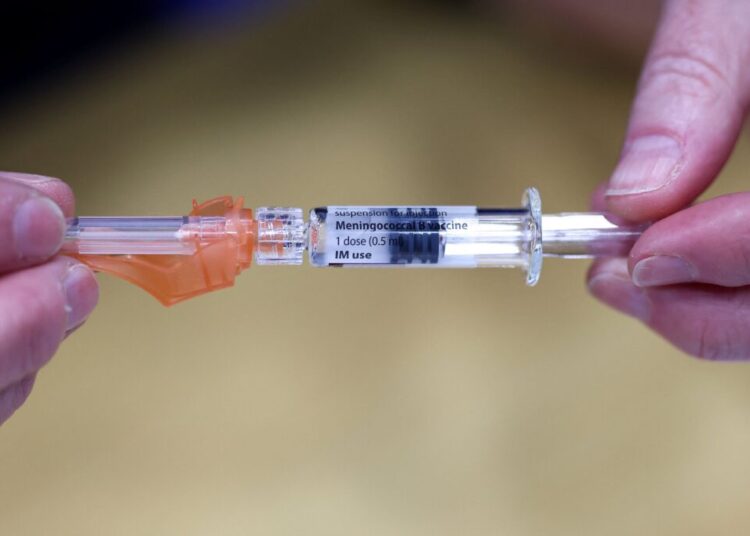
Several meningococcal vaccines are available to protect against the bacterial disease that causes meningitis, inflammation of the lining of the brain and spinal cord. The disease is rare and has declined since the 1990s, but can have severe consequences. Meningococcal disease kills 10 to 15 infected people out of 100, according to the CDC, and about 10 to 20 percent of survivors develop disabilities.
The CDC previously recommended the meningococcal ACWY vaccine to adolescents with a first dose at ages 11 or 12 and a second dose at age 16. Health officials say it will now be recommended for high-risk groups, such as children with HIV infections, first-year college students living in residential housing and those traveling to countries where the disease is endemic. The Trump administration assessment asserted meningococcal disease has declined in countries with and without routine vaccine recommendations.
The meningococcal B vaccine, which targets a less common group of disease, was already not recommended routinely.
Rotavirus
Before vaccination, rotavirus was the leading cause of severe diarrhea in young children. It hospitalized between 55,000 and 70,000 and killed between 20 and 60 annually in the U.S., according to the CDC.
Vaccines now routinely administered to infants became available in the late 2000s and protect 9 in 10 recipients from severe disease, according to the CDC. Now federal officials say parents should make their own decisions in consultation with doctors.
The Trump administration’s scientific assessment said “reasonable people can reach different conclusions” about routinely recommending the vaccines because the risk of mortality and chronic illness is “very low.”
Paul Offit, a pediatric infectious-disease physician and a coinventor of one of the vaccines, said “it’s not a reasonable decision” to skip getting the three doses of the oral vaccine. “It’s a rapidly dehydrating vomiting illness,” Offit said. When doctors tell parents to rehydrate children with fluids that contain sugar and electrolytes, “parents can’t successfully do that because the child is continually vomiting.”
HPV
The administration is still recommending children be vaccinated for human papillomavirus, but to receive one dose instead of two, citing research showing its effectiveness. The World Health Organization, which in 2024 endorsed a one-dose HPV vaccine, saying using one dose would allow lower-income countries with fewer resources to effectively protect their population against the virus that can spread undetected and cause cancer.
But the Food and Drug Administration recently told the HPV vaccine manufacturer Merck that there is not enough evidence to conclude that a single dose provides the same protection against cervical cancer as two doses, according to a May 2025 company press release.
Merck said in a company statement that the change in dose recommendation is a “concerning departure from the high-standard science that has guided health authorities and positioned the U.S. as a leader in public health.”
“The prior childhood and adolescent vaccination schedule was built on decades of rigorous scientific research and data from real-life use,” Merck said. “Departing from this standard risks inviting outbreaks of preventable, potentially devastating diseases, creating barriers to accessing vaccines, and increasing confusion for parents.”
The shift to recommending one dose could lead to insurers eventually not covering a second HPV dose, an HHS spokesman said.
RSV
Respiratory syncytial virus is a rampant pathogen that infects nearly every young child and is the leading cause of hospitalization in children. In recent years, all children were able to gain protection for the first time through maternal vaccination or monoclonal antibodies, a lab-made product that offers highly effective vaccine-like protection against hospitalization for a single season when a child is at greatest risk.
The existing recommendation doesn’t change under the new guidelines announced Monday. The administration said it now recommends RSV monoclonal antibodies only for certain high-risk groups, but that includes children whose mothers did not get vaccinated during pregnancy. HHS spokesman Andrew Nixon confirmed this applies to otherwise healthy children and existing guidance has not changed — a distinction that caused widespread confusion Monday.
“Here is another example of how confusing and poorly thought out this is,” said Kathryn Edwards, a pediatric infectious diseases physician who has studied vaccines for 40 years.
The post What to know about vaccines no longer routinely recommended to children appeared first on Washington Post.