Ukraine, the Middle East and China in 2026
At the end of last year, I asked my colleagues what they expected in 2026 for the regions they cover. I asked them specifically to flag any potential wild cards. Well, the mother of all wild cards was played last weekend. Ripples of the U.S. attack on Venezuela are likely to be felt across the world throughout the year, as I wrote yesterday.
But that doesn’t mean other stories won’t also be important. Will Russia’s war in Ukraine finally end? Will Israel go back to war in Gaza? Will China keep winning — or are there bumps ahead in its competition with the United States? Today my colleagues on the ground look ahead to what this year might bring.
Andrew Kramer, Kyiv bureau chief
‘Russian troops are pressing forward’
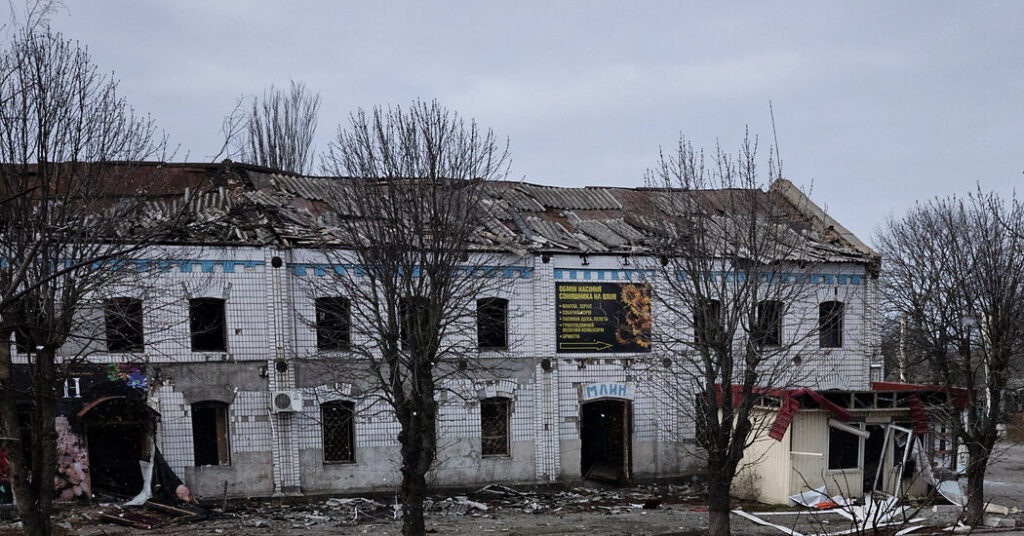
The war in Ukraine will enter its fifth year in February. The fighting is fiercely violent but mostly static. Russia is advancing, but at a glacial pace with high casualties. Ukraine’s army, battered as it is, is not on the brink of collapse.
Still, those tracking Ukraine’s mounting problems with desertion and draft dodging see a slow-motion disaster in the making. Wide gaps have opened between Ukrainian positions that could allow Russia to break through. Russian troops are pressing forward in small advances that could accelerate if Ukraine’s personnel shortage worsens.
As the situation on the battlefield deteriorates, Ukrainians, most of whom have lost relatives or friends and who endure hours of blackouts each day, want the war to end even at the cost of concessions to Russia, polling shows. That is opening political space for President Volodymyr Zelensky to negotiate.
The Trump administration is trying to leverage promises of business deals to persuade Russia to lay down arms, while steadily withdrawing battlefield support for Ukraine with the exception of intelligence sharing and some weapons sales. But it’s not clear that economic incentives can sway President Vladimir Putin’s decision-making when it comes to Ukraine. For Putin, subjugating Ukraine to Russia is an ideological goal.
The wild card
Wars in the Middle East swirled for decades around the geopolitics of oil. But Europe, too, is crisscrossed by oil trade routes — and they are increasingly under threat.
Ukraine has invested heavily in two technologies — long-range aerial drones and sea drones — that have already targeted refineries, pipeline pumping stations, ports and tankers. Russia’s exports of about three million barrels on the Black and Baltic Seas are potentially at risk. Any extra Venezuelan oil is still years away, meaning that stabilizing oil markets, should the campaign ramp up, would not be easy.
Ben Hubbard, Istanbul bureau chief
The future of Syria
I’ll be watching Syria, whose trajectory in the next year could indicate what sort of country it is shaping up to be since rebels ousted the longtime dictator Bashar al-Assad just over a year ago.
The glass-half-empty view of it so far is that its cities are destroyed. It has no large-scale funding for reconstruction. And its new government has failed to bring the country together: There have been outbreaks of sectarian violence, and some regions have resisted efforts to be brought under the control of the central government.
The glass-half-full view is that postwar violence has been limited and President Ahmed al-Sharaa, a former jihadist whose forces overthrew Assad, has gotten sanctions lifted and established surprisingly warm relations with other countries.
In many quarters, the first year after Assad’s fall was full of elation that 13 years of civil war had ended and a dreadful autocrat was gone. Now, the party is over and al-Sharaa faces critical questions about what he wants Syria to become and how he plans to lead.
Syria’s central position in the Middle East has long meant that problems within its borders (jihadist groups, illicit drugs and refugees, among others) became problems elsewhere. If the country can get back on its feet, stability there could radiate outward, too.
The wild card
I see Israel as the greatest wild card in the Middle East this year.
In 2025, Israel bombed Gaza, Lebanon, Yemen, Iran and Qatar. Besides its de facto control of Gaza and the West Bank, its military has occupied territory in Lebanon and Syria.
Many Israelis still feel a deep sense of insecurity since Hamas led a surprise attack on Israel on Oct. 7, 2023, which started the Gaza war. The response of Prime Minister Benjamin Netanyahu’s government has been extensive military action aimed at stomping out threats.
Israel can claim significant military victories in its degrading of Hamas in Gaza and Hezbollah in Lebanon as well as of Iran’s military. But its international standing has taken a beating, and it remains unclear whether its leaders can find a path away from perpetual war and toward a more sustainable peace.
Vivian Wang, China correspondent
China is winning
In the U.S.-China competition, 2025 seemed to go to China. Will that hold in 2026?
Last year, China didn’t just survive President Trump’s tariffs — it recorded the first $1 trillion trade surplus in history. It showed, with start-ups like Deepseek, that it’s a serious contender in the artificial intelligence race, even though the U.S. had restricted China’s access to advanced computing chips. It also saw Trump loosen restrictions on those chips.
Those victories were made possible partly by China’s investments in manufacturing and science. But another major factor was Trump.
Last year, Trump seemed willing to make concessions on other key issues — like technological leadership, or Taiwan — to get what he wanted: namely, fewer Chinese imports. But the U.S. president is unpredictable, and he could take a different tack this year.
China’s leverage is also fragile. One of its biggest bargaining chips was its threat to stop exporting rare-earth minerals. But the U.S. and other countries are now trying to reduce their dependency on China for these materials.
China was also able to make up for reduced exports to the U.S. by selling more to other markets. But those countries are nervous about the influx of Chinese products, too.
This could all have major consequences for ordinary Chinese people. If other countries take a tougher stance on Chinese imports, existing problems like unemployment and stagnant wages could get worse.
The wild card
One thing that surprised me last year was China’s apparent soft-power wins. Labubu toys became a global fad. Foreign tourists and influencers made glowing videos about how high-tech Shanghai was or about the vertical infrastructure of Chongqing. Opinion polls showed that Americans, especially young ones, have become less hostile to China.
Historically, China has not been very good at soft power. But if China is able to continue turning the tide of public opinion, not only in the U.S. but also around the world, that could change how willing policymakers are to confront the country on geopolitical issues.
MORE TOP NEWS
Trump’s threats rattle Europe and the Americas
Leaders in Europe and beyond pushed back against Trump and his might-makes-right vision of power after the recent U.S. operation in Venezuela, along with Trump’s threats to intervene in Colombia and Mexico and seize control of Greenland. In a defiant joint statement, the leaders of Denmark, France, Germany, Britain and other countries said that “Greenland belongs to its people.”
During an emergency meeting of the Organization of American States, countries including Brazil, Mexico and Colombia condemned the U.S. military action in Venezuela. A protester interrupted the organization’s U.S. representative, shouting “hands off Venezuela” and describing the U.S. raid as “an imperial oil grab.”
OTHER NEWS
-
European leaders met in Paris for talks on Ukraine, focusing on commitments to postwar security.
-
Syria and Israel resumed U.S.-mediated talks about reducing border tensions.
-
Five years after Trump supporters stormed the Capitol, the president is still sowing doubt about the 2020 elections.
-
The Swiss bar hit by a deadly fire last week had not been inspected for six years, officials acknowledged.
-
Bela Tarr, a Hungarian filmmaker whose movies made him a hero of the art house cinema crowd, has died at 70.
REPTILE OF THE DAY
The side-blotched lizard
Scientists have found a species of lizard that plays an evolutionary version of rock-paper-scissors. Males develop one of three colors on their throats — blue, orange or yellow — which corresponds to a different mating strategy. Each beats one type but is beaten by another, creating a repeating cycle where no single strategy always wins.
MORNING READ
Before Brian Cox became a physicist, he was a rock star. As a keyboardist in his first band, he toured with Jimmy Page. His second band had a No. 1 hit on the British pop charts in 1994.
Now, he’s on a different kind of world tour, with a dazzling show that is reaching mainstream audiences around the world. Cox explores black holes, galaxies and the significance — and insignificance — of human beings in the universe. Read more.
AROUND THE WORLD
Time for a trip? We’ve got you.
Every year, our Travel desk compiles a list of 52 places to go. This year, the list features a tiger reserve in India and a solar eclipse festival in Iceland. Here are some other highlights as you consider your next travel destination.
-
Discover a lesser-known part of South Korea on the Dongseo (“East-West”) Trail, the country’s first coast-to-coast hiking trail.
-
If you’re looking to score last-minute World Cup tickets, your best bet is in Dallas, Texas, home to the tournament’s biggest stadium and more matches than any other city (nine).
-
The centenary celebrations for Winnie-the-Pooh will be in East Sussex, England. A.A. Milne lived there in a 16th-century farmhouse with his wife and his son, Christopher Robin, who played there with his stuffed bear.
Watch Gabriela Bhaskar, a New York Times photographer, describe in the video above her visit to the Bandhavgarh Tiger Reserve in India and to Penang, Malaysia.
THE WELL CHALLENGE
It’s Day 2 of the five-day Brain Health Challenge. Today, we’re talking about food.
Studies have found that the foods in the MIND diet — including berries, leafy greens, olive oil and whole grains — are especially good for the brain. Here’s how to “MIND-ify” your meals.
Are you following the Well Challenge? I have been! And I’d love to hear from you. If you have any brain health tips to share from your country, email me at [email protected].
RECOMMENDATIONS
Read: Daniyal Mueenuddin’s “This Is Where the Serpent Lives” recalls the power of Russian classics.
Listen: The “Hard Fork” podcast features tips from our tech columnist for using artificial intelligence smartly.
Exercise: Can walking be your whole workout? It depends on the intensity of the walk — and your health goals.
RECIPE
Coconut chicken curry can be found throughout East Africa, South Asia and beyond, but digaag qumbe is a uniquely Somali take on the dish. At the heart of it is xawaash, a warming, cumin-forward spice mix that is used in many Somali dishes.
WHERE IS THIS?
Where is this building?
TIME TO PLAY
Here are today’s Spelling Bee, Mini Crossword, Wordle and Sudoku. Find all our games here.
You’re done for today. See you tomorrow! — Katrin
We welcome your feedback. Send us your suggestions at [email protected].
Katrin Bennhold is the host of The World, the flagship global newsletter of The New York Times.
The post Three Views on What 2026 Might Bring appeared first on New York Times.