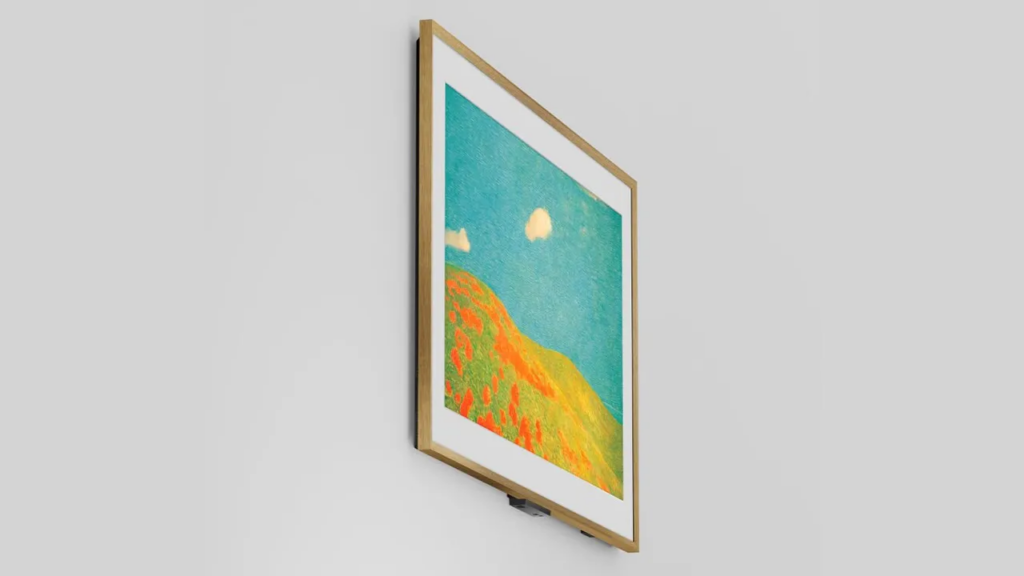
The Samsung Frame TV, first announced in 2017, doesn’t look all that great as an actual television. But switch it off and it sure is pretty—certainly much better to look at than an empty black void.
This is thanks to its matte-finish, anti-glare screen and the picture-frame-like bezels that together transform whatever fine art you choose to display on the TV when it’s in standby mode (Samsung offers a variety of high-resolution digital slides) into something that resembles a framed painting. In the years since its debut and through a few updates, the Frame TV has become one of the more considered options for people who live in smaller spaces without dedicated rooms for watching TV.
It has taken a while for other brands to catch up, but we’re now seeing a huge wave of Frame-like TVs hit the market. The trend is largely driven by aesthetes in cities where smaller living rooms are the norm, but it’s getting a boost from advances in screen design.
Late last year, Hisense announced its CanvasTV, a frame competitor that also has a matte screen and displays art. (We have a review unit coming shortly.) TCL has the similar NXTvision model that uses a Vincent van Gogh self-portrait in the marketing, and LG has announced the Gallery TV (also repping van Gogh) for later this year. Even Amazon has decided to throw its hat in the ring, with the Ember Artline TV. Announced this week at CES 2026, Amazon’s $899 television can display one of 2,000 works of art (available for free to Ember Artline owners) and even has a tool that uses Alexa AI to help you decide which artworks are the best fit for your room.
So what’s so great about Art TVs, and why do brands seem to be pivoting so hard into the category?
Part of it has to do with personal space. It’s true that many younger buyers just don’t have the same taste or sense of style as folks from previous generations. But also, young city-dwelling professionals are less likely to have the room to place a large screen in a dedicated area in their home, a pain point compounded by the fact that TV screen sizes have ballooned over the past decade.
The other reason TV makers are getting artsy has to do with the evolution of TV technology itself. Brands are choosing to step into this space now because they have finally developed the means to create matte screens that can accurately represent a painting or a fine art photograph. Though Samsung is a pioneer in the space, matte LED screens are enjoying something of a renaissance across all television brands.
A typical glossy TV display reflects light like a window, but a matte screen absorbs light like a canvas might. This effect enables any art pieces displayed on the screen look extra realistic. Another advance in technology is backlighting. Where previous generations of these Art TVs needed to be lit from the edges of the display in order to maintain their painting-like thinness and allow them to be mounted flush against a wall, brands have recently been able to employ more advanced lighting systems while keeping the TVs slim. Local dimming, better backlighting processing, and the ability to adjust the screen brightness to match a room’s ambient lighting when in “art mode” make these new displays look better than ever.
We had issues with our 2025 review unit of the Samsung Frame Pro—so much so that we can’t recommend buying one—but the experience of using a Frame-style TV in an otherwise well-designed room is legitimately quite nice, especially for those who entertain in their living rooms. A high percentage of my friends and coworkers who live in smaller apartments have asked me about these TVs that look lovely when they’re off (which is most of the time). That said, frame-style TVs are still very much a niche, and they still command higher prices than similar models from the same brands that offer similar performance.
If you want the art gallery vibe on the cheap—or if you’re not ready to buy a new matte-screen television—there are ways to get it. I have had success flush-mounting an LG OLED and simply playing YouTube videos of 4K artwork when people come over. Modern sets with Google TV software come with a built-in feature that will display recent pics from Google Photos when you walk in the room; I really like this for showing photos of my daughter and me when working around my office.
But if you want a premium experience, it’s a good time to invest in an Art TV. This year’s high-end Samsung OLED models (also announced at CES) will also come with an Art Mode that offers an experience identical to the Frame models but will boast much nicer displays—and likely look even better on your wall.
The post The Inevitable Rise of the Art TV appeared first on Wired.