
Many people—the overwhelmed, dissatisfied, or understimulated—share a powerful desire to escape the life they’re living. But doing so usually isn’t practical or possible. What is available is the daydream—a limitless realm of freedom. In this other world, one might be famous or rich, finally catch the attention of their beloved, or simply sit on a beach as a waiter brings them cocktails. They might fly or speak to animals, heroically save a child, tell off their boss with no consequences, win the Super Bowl at the whistle, or travel to another continent, planet, or time period. No one can stop them; no one can even object.
Some writers are naturally drawn to this kind of reverie. Daydreams can illuminate our hidden, anarchic, or even seductive inclinations, and they can say a lot about our conscious lives. Their conjurers, who refuse to accept the rules of the real world, can also be great fun to read about. While working on my new novel, The Ten Year Affair, which follows a woman fantasizing about a love affair with a longtime friend, I thought about what happens when speculation or wishing starts to bleed into the real. Daydreaming, I realized, can sustain a person over the course of a life—and perhaps even change it, for good or for ill. The six books below explore the limitations and hazards of dreaming, even as they push the boundaries and conventions of the act.

Y/N, by Esther Yi
The title of Yi’s strange and appealing 2023 novel refers to, as the unnamed narrator puts it, “a type of fanfiction where the protagonist was called Y/N or ‘your name.’” The narrator attends a K-pop show in Berlin and becomes obsessed with the band’s youngest member, the 20-year-old Moon: “a gift forever in the moment of being handed over,” Yi writes. As the narrator’s fixation grows, she begins writing Y/N fan fiction about Moon, much of which is reproduced in the novel. When Moon abruptly retires, the narrator goes to Korea to find him. Some readers might expect an indictment of fan fiction and celebrity culture; Yi swerves, though, and creates a more searching and subversive tale of love, connection, and art. Even after the narrator finds Moon, her motives remain obscure. The point of her fantasy seems to be the fantasy itself.

Hangsaman, by Shirley Jackson
Jackson’s fascinating novel follows Natalie, the daughter of a writer, as she unravels during her first few months of college. At the opening, Natalie, bored and filled with loathing for her parents, flees her family home by retreating into imaginary worlds of vivid, eroticized violence. But just before she can escape to college, she’s sexually assaulted at a family party. This leads to three claustrophobic months on campus, as a traumatized Natalie fails to connect with her peers, falls in with the hard-drinking wife of her professor, and finally befriends an odd apparition created by her own mind. Hangsaman is a horror-tinged investigation into how the pressures of mid-century sexual politics affect one woman: Natalie’s unsettling hallucination is an unexpected expression of freedom, and she uses it to buck the stereotype of the kind of girl her parents, and society, expect her to be.
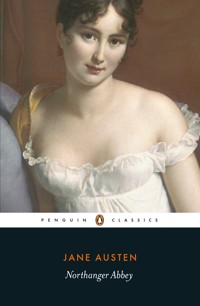
Northanger Abbey, by Jane Austen
Like Austen’s other novels, Northanger Abbey contains a marriage plot. But it’s set apart from the rest of her work by a long, satirical section sending up gothic fiction and its fans. The book’s heroine, Catherine Morland, is an avid reader of the popular novels of the day, and has a specific fondness for Ann Radcliffe’s real-life 1794 best seller, The Mysteries of Udolpho, a tale of ghostly figures and hidden manuscripts. Catherine views herself as the hero of a similar story, and when she goes to the country house of a family she has befriended (the titular Northanger Abbey), she reinvents herself as the protagonist of a mystery. Austen is the master of depicting small faux pas, and Catherine commits many—she forces open cabinets in search of creepy documents; she begins to suspect that the family patriarch has murdered his wife. The chronic daydreamer can easily identify with Catherine’s near-delusional longing for something to happen beyond the courtships and evenings around the pianoforte that seem to make up the better part of her future.

Jonathan Abernathy You Are Kind, by Molly McGhee
Abernathy, the everyman at the center of McGhee’s funny and moving novel, is drowning in debt: thousands of dollars of combined student loans and his dead parents’ bills. In a desperate attempt to make his payments, he takes a shady government gig as an auditor of dreams. In exchange for $20 a night and substantial debt relief, he’s tasked with going inside the dreams of corporate office workers and flagging anxieties that might make them less productive; once noted, bad feelings or thoughts will be literally sucked into oblivion by his superiors. Soon enough, though, Abernathy begins to wonder what these losses do to a person. McGhee’s world is dark, a place where overworked sleepers grieve and worry. McGhee’s humor and anticapitalist critique reminded me of George Saunders and Karen Russell; dopey, affable Abernathy also gets his redemption. Plus, the story fully realizes its premise: Readers will see what happens to a dream deferred—or, rather, vacuumed up.
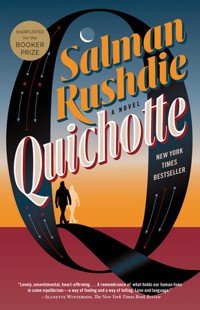
Quichotte, by Salman Rushdie
Rushdie’s sprawling picaresque is, as the title promises, a riff on Don Quixote. But in this version, set in a contemporary world resembling our own, where politics is a spectacle, the main character’s delusions revolve around television. Quichotte aspires to woo a daytime-talk-show host, Salma R, the gorgeous and talented heir apparent to Oprah’s throne. Here, Sancho is Quichotte’s imagined 15-year-old-son, an apparition made up of the flickering black-and-white fuzz of early TV, who rides along in the passenger seat of Quichotte’s car. The story of Quichotte’s quest is being written, in alternating chapters, by Sam DuChamp, a mid-list spy novelist making his first foray into literary fiction. As DuChamp dreams a story about a classic dreamer, he weaves in his own biography and disappointments, and the book likewise layers fancy on top of memory, examining the human tendency to mythologize.
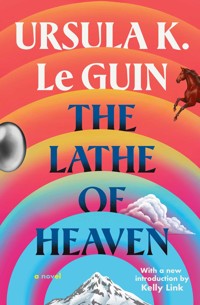
The Lathe of Heaven, by Ursula K. Le Guin
Set in Portland, Oregon, in a bleak, overpopulated near future, The Lathe of Heaven is built around the banal question What if your dreams came true? But Le Guin’s answer is astonishing. Her protagonist, the “milquetoast, repressed, conventional” George Orr, has the ability to rewrite reality with his dreams, changing both the past and the present. When he’s sent to therapy for drug addiction, his therapist, Dr. Haber, finds that he can suggest dreams to Orr that will achieve goals big and small. But the dreams don’t always deliver the hoped-for outcomes—and Haber isn’t the most well-meaning steward of Orr’s gift: Haber’s suggestion for a solution to the population problem results in a horrific pandemic; his request for peace on Earth brings aliens into the picture. Le Guin examines unchecked power, eugenics, and the ethics of governance in this inventive and consistently surprising novel, which explores the limits of trying to manifest a better world.
The post Six Books for the Chronic Daydreamer appeared first on The Atlantic.