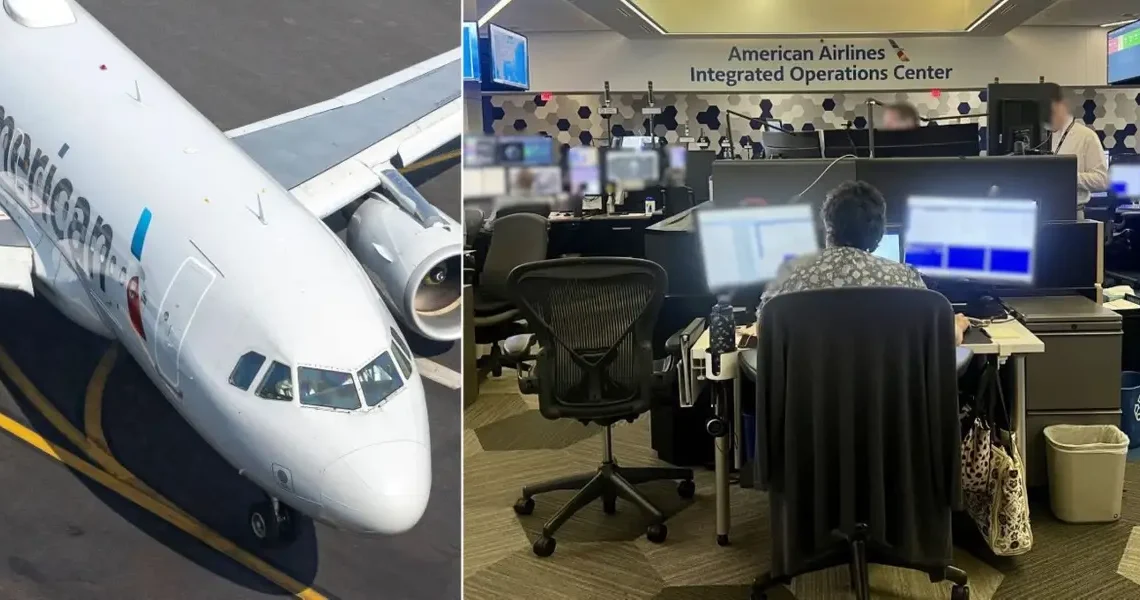
Just days into the new year, airlines were forced to manage widespread operational disruptions after US strikes on Venezuela triggered airspace restrictions across parts of the Caribbean.
Aircraft, crews, and passengers were scattered across the region with limited options for getting home. Almost immediately, airlines began coordinating recovery efforts — scheduling ad-hoc flights and sourcing aircraft ranging from regional jets to widebody planes.
That kind of behind-the-scenes decision-making happens inside massive operations centers that few travelers ever see.
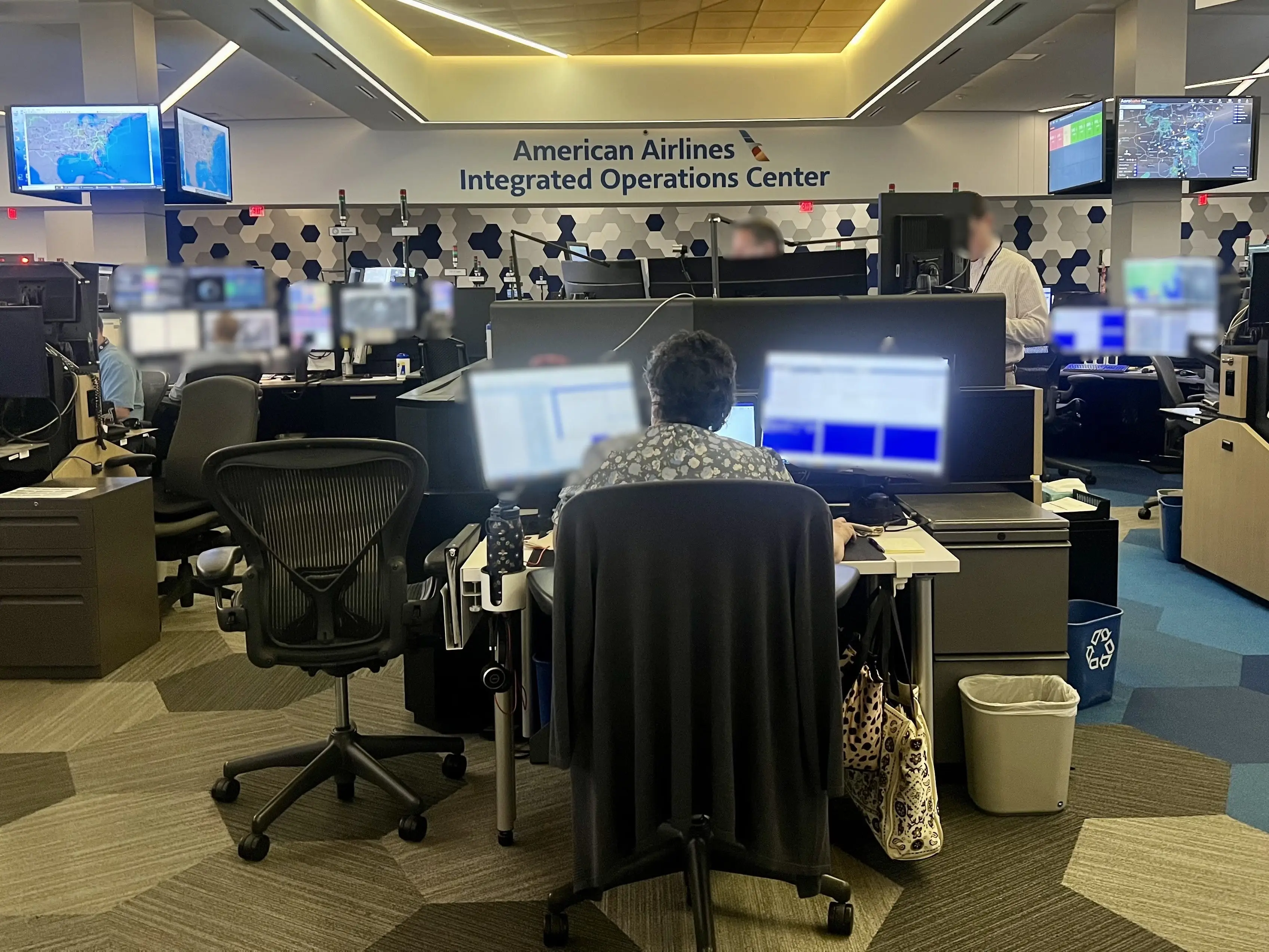
American Airlines — among the carriers most affected in the Caribbean — invited Business Insider to tour its Integrated Operations Center, or IOC, at its Dallas/Fort Worth headquarters in 2024. For privacy reasons, the company requested that photos of certain screens and employees’ faces be blurred.
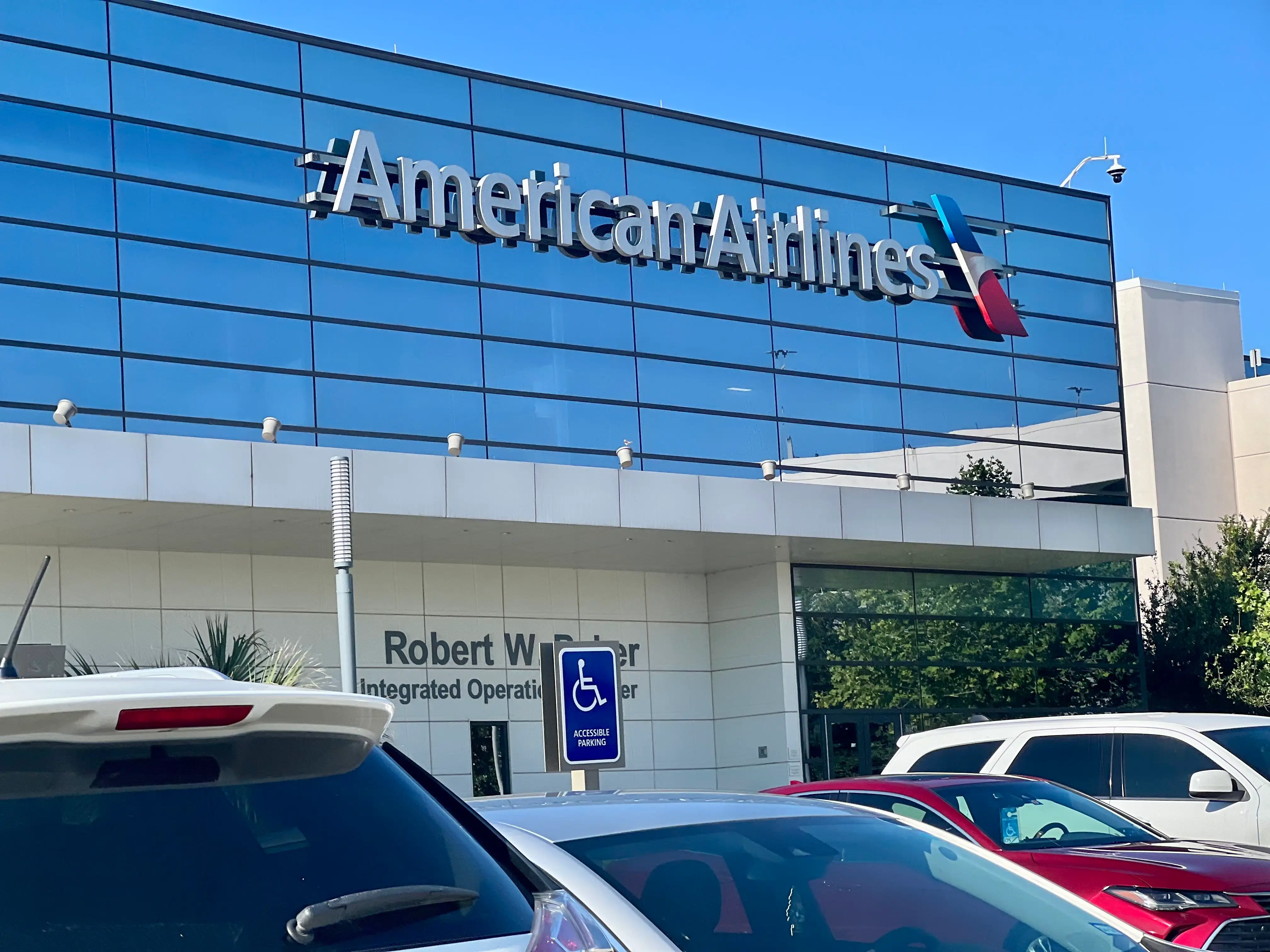
The tornado-resistant IOC runs 24 hours a day, every day of the year. It houses over 20 teams responsible for dispatching planes, monitoring weather, organizing maintenance and cargo, and preventing misconnects, among myriad other duties.
That machinery reacted in real-time on Saturday as the Venezuela-related disruptions unfolded. One American plane from Guyana to Miami added an extra hour of flight time to avoid the southern Caribbean. Others never left the ground, leaving passengers stranded on islands like Puerto Rico, Aruba, and Saint Thomas.
To accelerate recovery, American deployed roughly 8,000 seats and 50 extra flights to the region on Sunday and Monday. Regional aircraft were sent to Anguilla and the British Virgin Islands to ferry passengers to San Juan, Puerto Rico, where larger jets could take over.
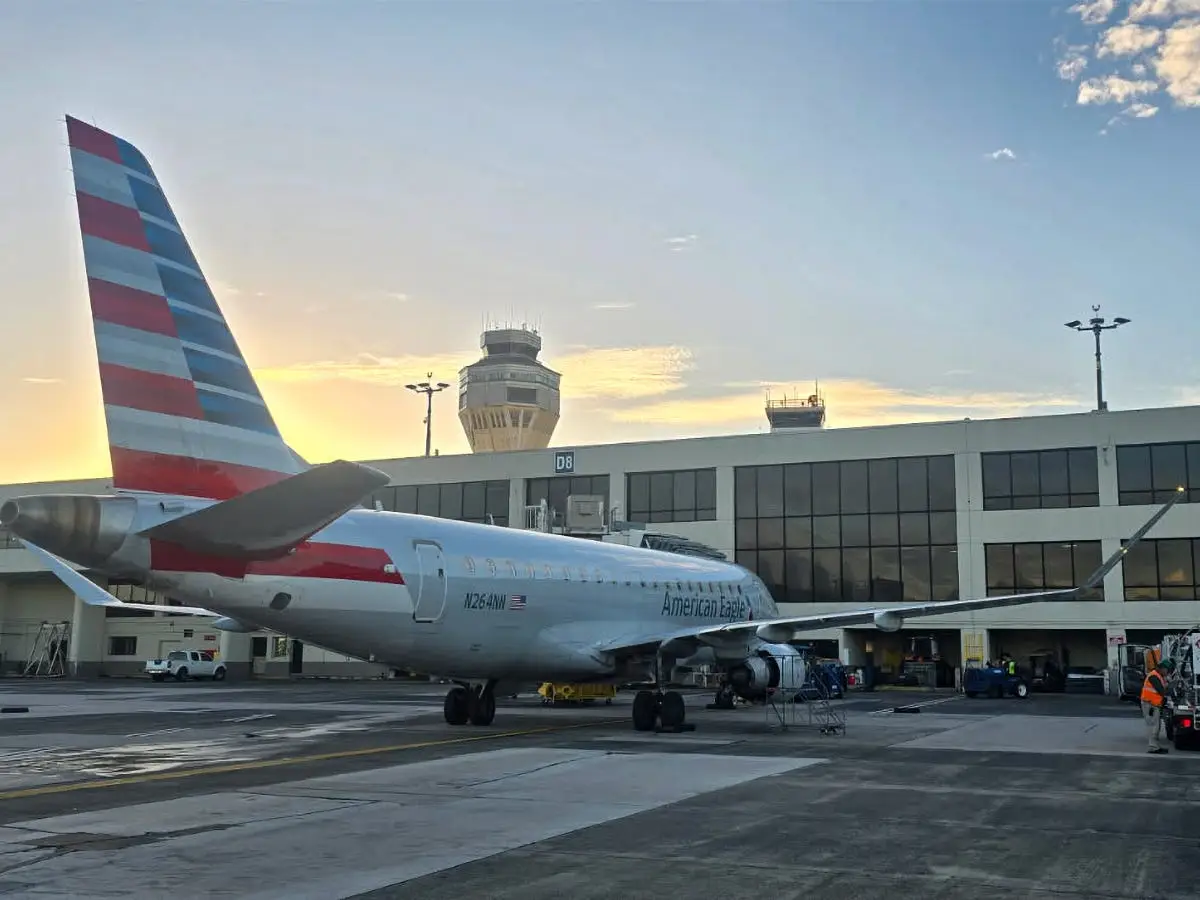
Once passengers were consolidated in San Juan, American used Boeing 777s — the largest aircraft in its fleet — to fly about 300 people at a time to Miami.
“Even before the airspace was reopened early Sunday morning, teams from across American were hard at work to recover our Eastern Caribbean operation once we had the green light,” David Seymour, American’s Chief Operating Officer, told Business Insider.
“Working 24/7 and with a singular and unrelenting focus on helping as many customers as possible, the team has pulled out all the stops,” he added. “I’m proud of them every day, but the American team shines in moments like this.”
The IOC doesn’t look like your typical cubicle office
Mark Groat, American’s IOC system customer service duty manager who led the site tour in 2024, described the 149,000-square-foot IOC as the “nerve center” of the airline.
It’s strategically set up to enable communication and collaboration between the teams.
For example, the lights are dimmed to reduce strain when looking at screens all day, and the phones use a color light system above each seat to indicate if that person is on a call.
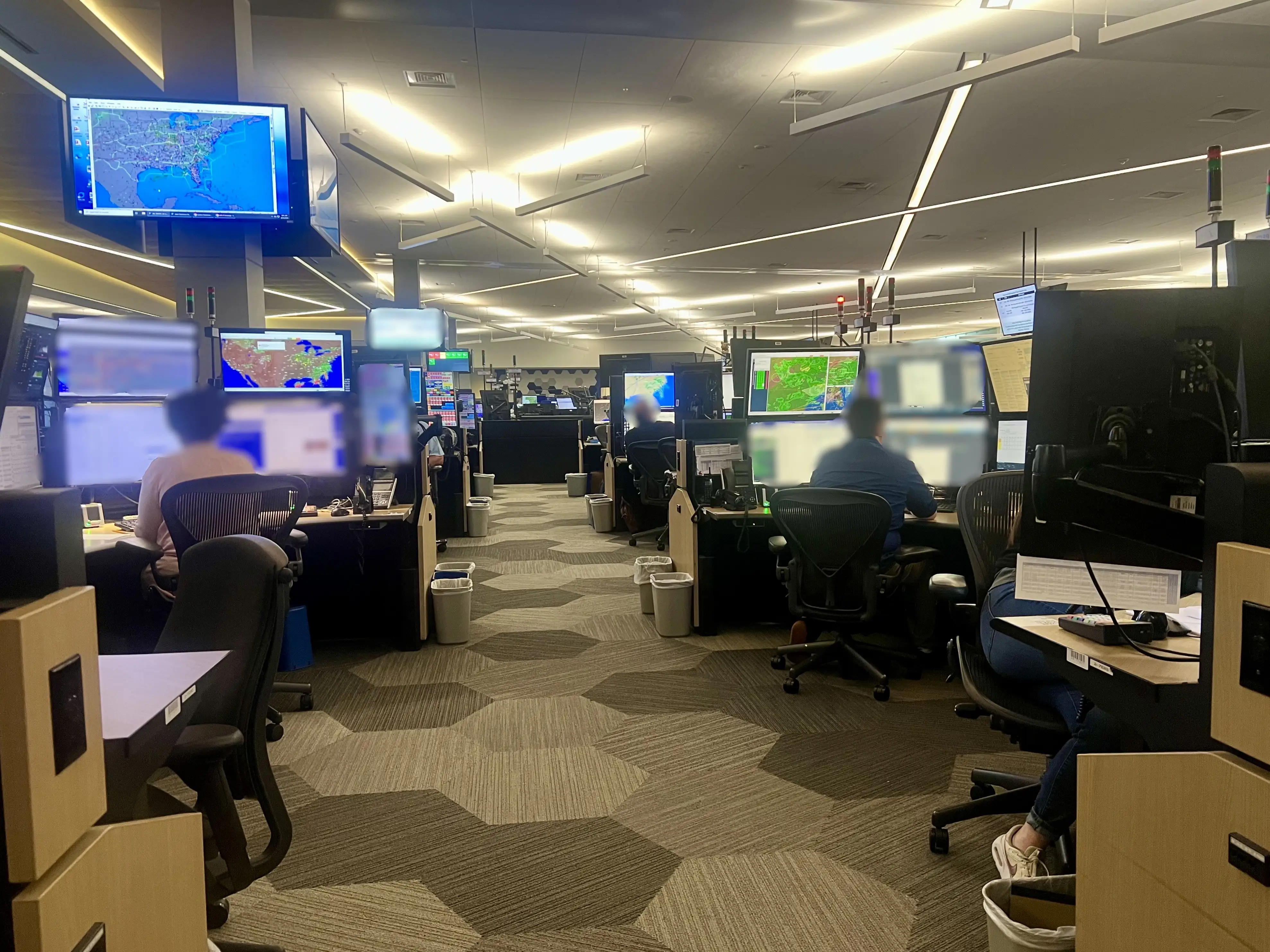
“A red light means you’re on the phone, and a green light means your phone is ringing,” Groat said, noting the maintenance team, for example, has a line to airport hangars. “So, you can kind of gauge just looking over the floor what kind of day we’re having.”
He added that on busy days when everyone is talking and walking around, white noise is pumped into the IOC to keep the room quiet.
American uses automation to help manage irregular operations
American was among the least punctual airlines in 2025. Data from the aviation analytics company Cirium shows the carrier had a 76.4% on-time arrival rate, only beating JetBlue and Frontier. United was at 78.8% and Delta hit 80.1%.
Maintenance and crew staffing are common airline-caused disruptors, but American — and US carriers as a whole — also faced uncontrollable factors, including weather, air traffic control, and a historic government shutdown.
When delays begin to cascade, decision-making becomes less about individual flights and more about the network as a whole. That network-level oversight happens on the “bridge.”
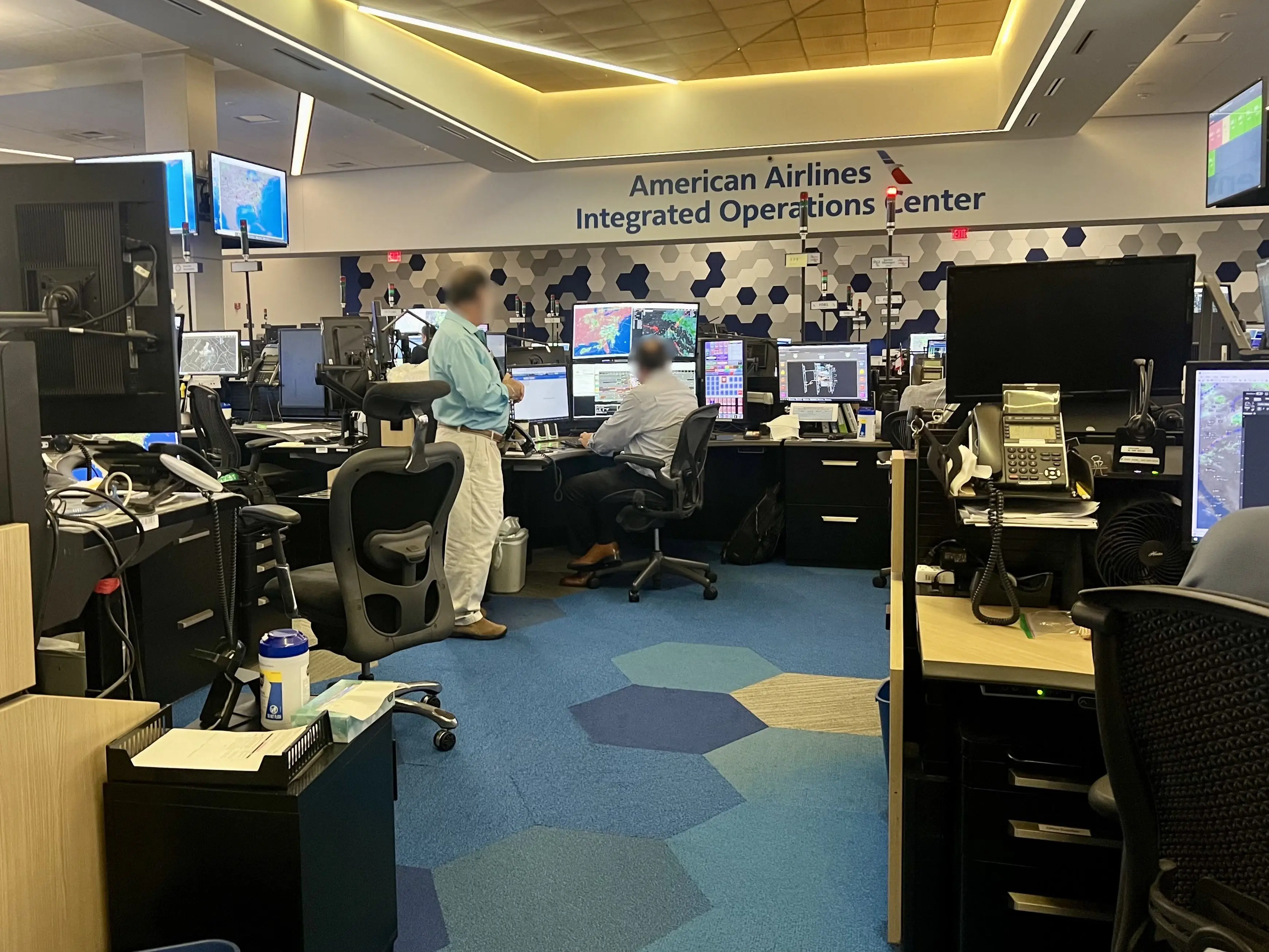
This is where the IOC director, hub managers, and other liaisons develop plans for “irregular operations” that will impact the fewest customers possible. They’re looking at things like staffing, resources, and gate constraints, Groat said.
While much of this analysis is done manually, Groat said American has an automation tool known as the “Hub Efficiency Analytics Tool,” or HEAT, to help dispatchers, coordinators, and other employees make more proactive decisions.
It analyzes factors such as when a crew member exceeds their regulated duty period, which flights have the highest number of connecting customers, how many top-tier loyalty customers are flying, and whether affected flights are domestic or international — domestic flights being easier to accommodate.
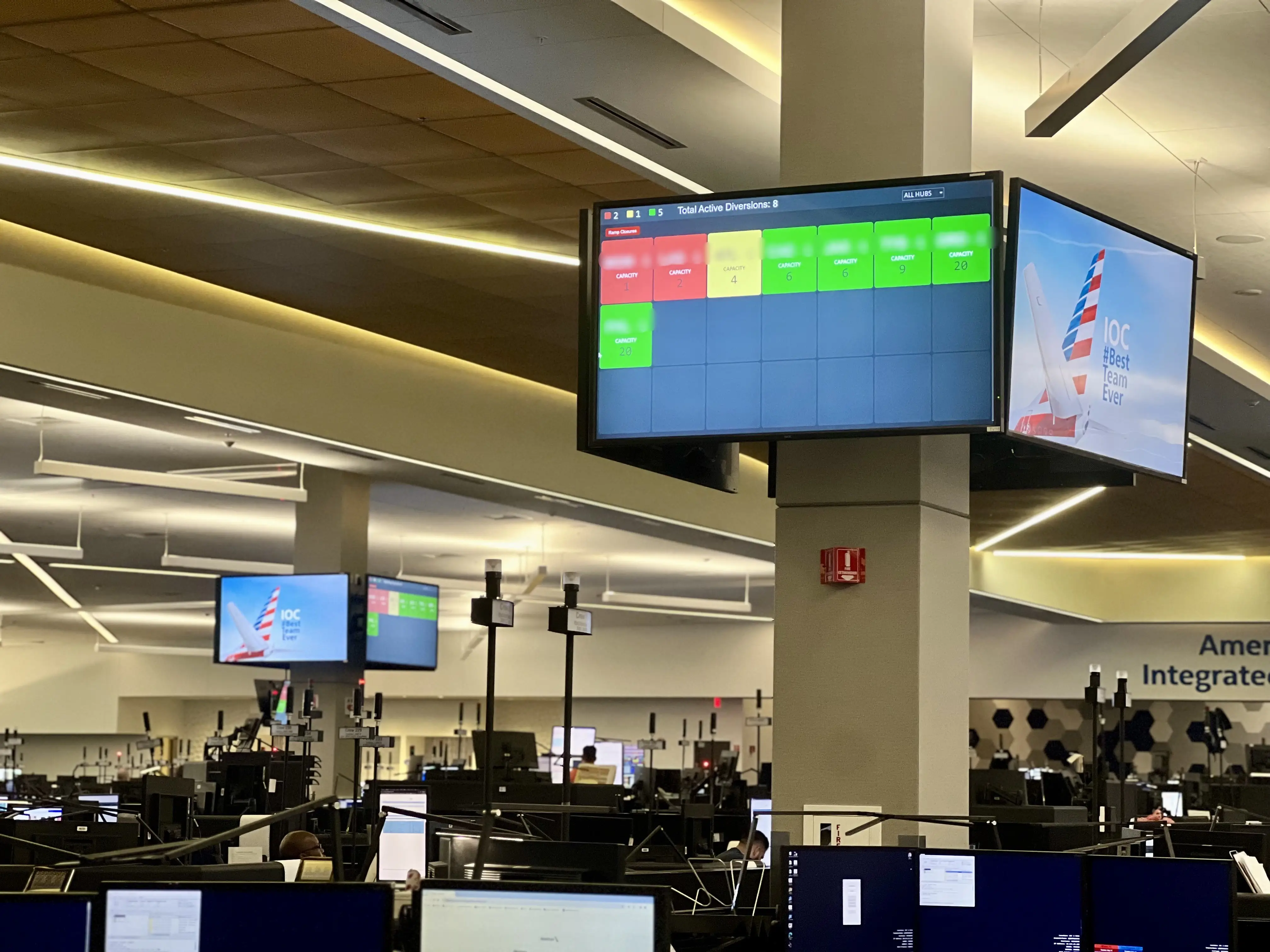
“Instead of separate units canceling flights one by one and customers being rebooked repeatedly, HEAT allows us to update the system with all the delays and cancellations at one time,” Groat said.
“This maintains the integrity of connecting bags, and it means we aren’t arbitrarily rerouting somebody who could have ultimately made their connection.”
On the day of my visit, smoke from a wildfire in the Bahamas was affecting operations at Nassau International Airport. IOC employees walked desk-to-desk, discussing options, while others analyzed how flights would be affected — which is where HEAT could come into play.
“We’ll most likely divert en route planes to Miami to wait out the event,” Groat said about the response. “If the delay times get longer and crew time becomes an issue, we’ll have to evaluate options like canceling some flights or consolidating two into one so we can get our resources back into the system and where they need to be.”
Utilizing interisland flights and 777s during the chaos in the Caribbean is a prime example of resource optimization.
American also launched a new tool at certain airports in 2025 that helps determine which flights can be held for connecting customers without disrupting the network. This was previously done manually and on a case-by-case basis.
Crew scheduling and dispatch are among the biggest teams
Planes can’t go anywhere without at least two pilots and at least one flight attendant per 50 seats. Crew scheduling is responsible for keeping some 14,000 crew on track every day.
There are three different areas within the crew scheduling department, Groat said. One handles day-to-day crewing, a second is responsible for tracking disruptions and calling in reserves, and a third helps make decisions regarding delays and cancellations.
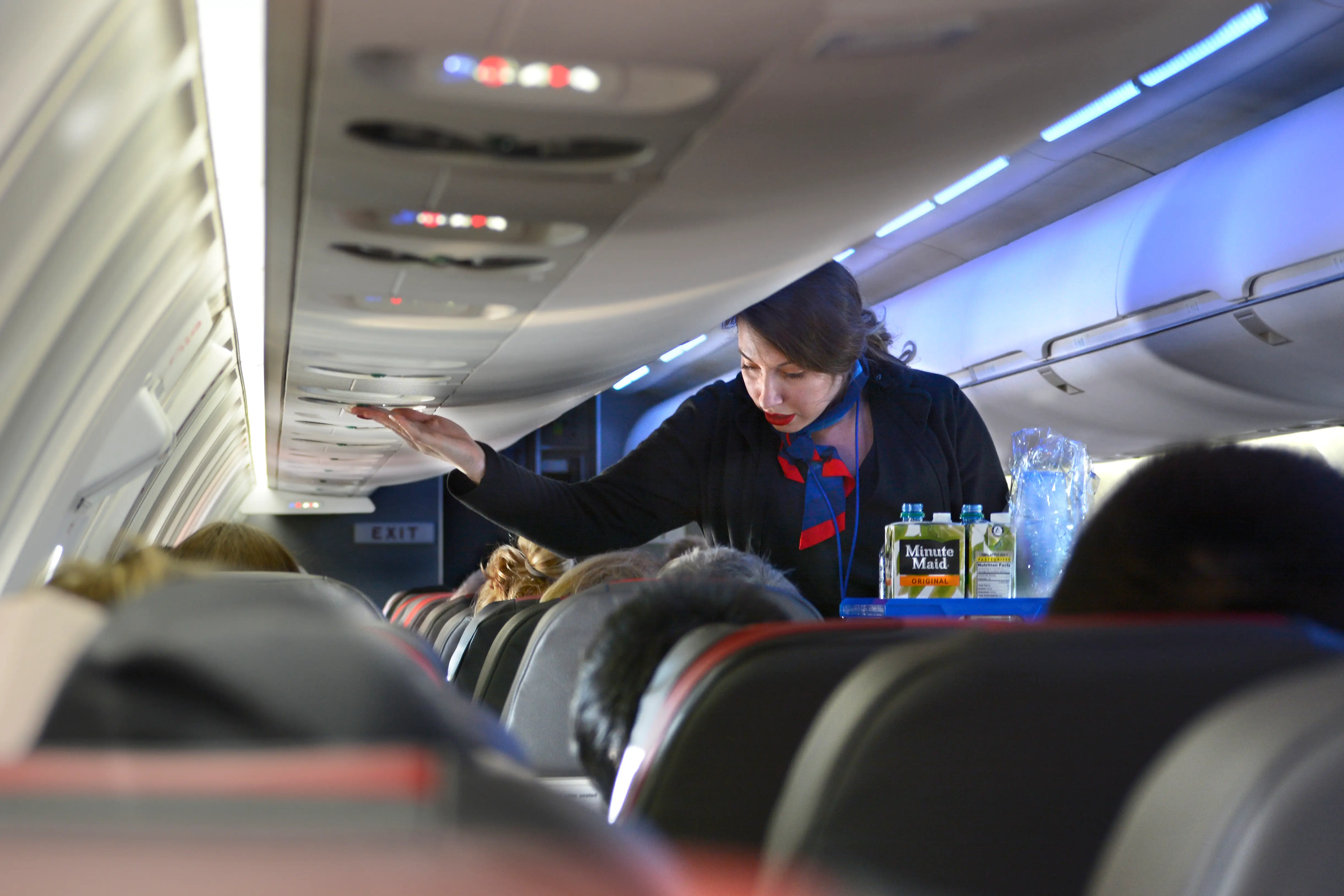
The job relies on computer systems and knowledge of specific regulations regarding fatigue and duty time, but American also provides automation tools like HEAT to help schedulers quickly and accurately staff flights.
He added that there are times when things get so displaced that not every flight can be accommodated, so the crew coordinators identify “critical” flights that need to be prioritized for operational needs.
For example, if a key plane doesn’t make it to its next airport and no replacement can get there either, a chain of disruption could occur.
Beyond crew scheduling, nearly half of the IOC floor is dedicated to teams that oversee specific fleets, including sections for the Boeing 737 family, the Airbus A320 family, and widebody jets.
These teams comprise flight dispatchers, planners who collaborate with maintenance, and crew coordinators. There are also customer service managers who are “the voice of the passenger” and try to proactively find solutions during disruptions.
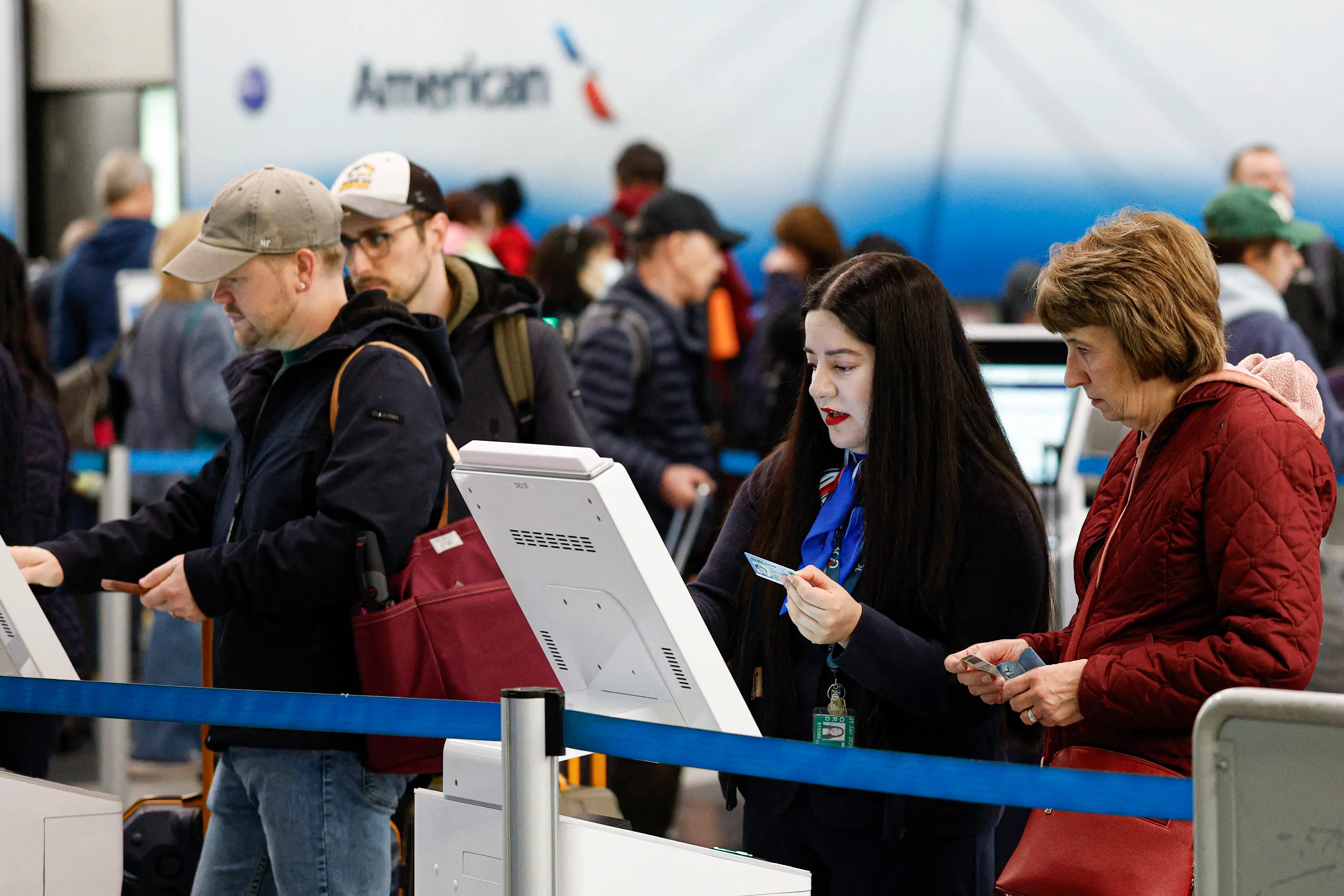
Groat also pointed to a relatively new but highly specialized team of irregular operations leads who examine long-term strategies to prevent hourslong delays affecting flights down the line.
For example, the team may consider rerouting specific planes over water to avoid severe weather in Florida or analyze how de-icing delays in Chicago could impact departures, he said.
“Every flight that we can route around a disruptor is another slot we keep flying,” he said.
Smaller workgroups are still essential to the operation
While crew scheduling and dispatchers make up the IOC’s bigger work groups, smaller teams like cargo and maintenance coordinators, load planners, air traffic liaisons, regional dispatchers, and unaccompanied minor organizers also have roles to fill.
“When disruption happens, we need to know what cargo is on the airplane that we need to care for, like perishable items, live animals, or pharmaceuticals,” Groat said. “Load planners ensure the aircraft are within the right weight and balance.”
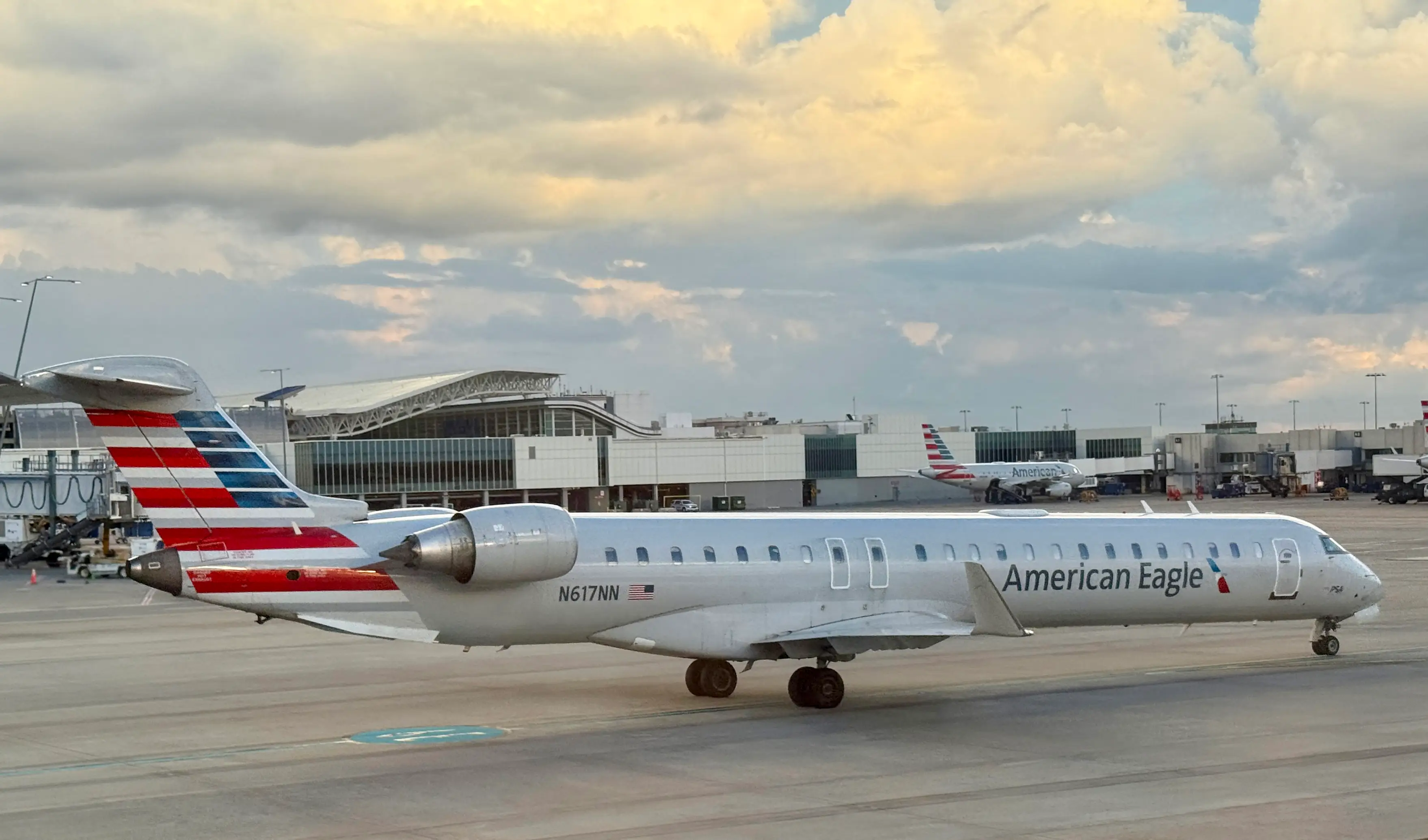
Regional dispatchers coordinate American’s subsidiary and contract flying and help find replacement planes when the regional side is disrupted. Groups like schools and sports teams are especially harder to re-accommodate
A command center is set up for emergency events
The command center is a giant, glass-enclosed room that is designated for incidents and accidents. Groat said it’s only been put to use twice since moving into the IOC building in 2015.
He said the first use was after the bomb attack at Brussels Airport in 2016, which didn’t impact American directly, but the airline still used the command center as a point of contact to help find where its customers and team members were.
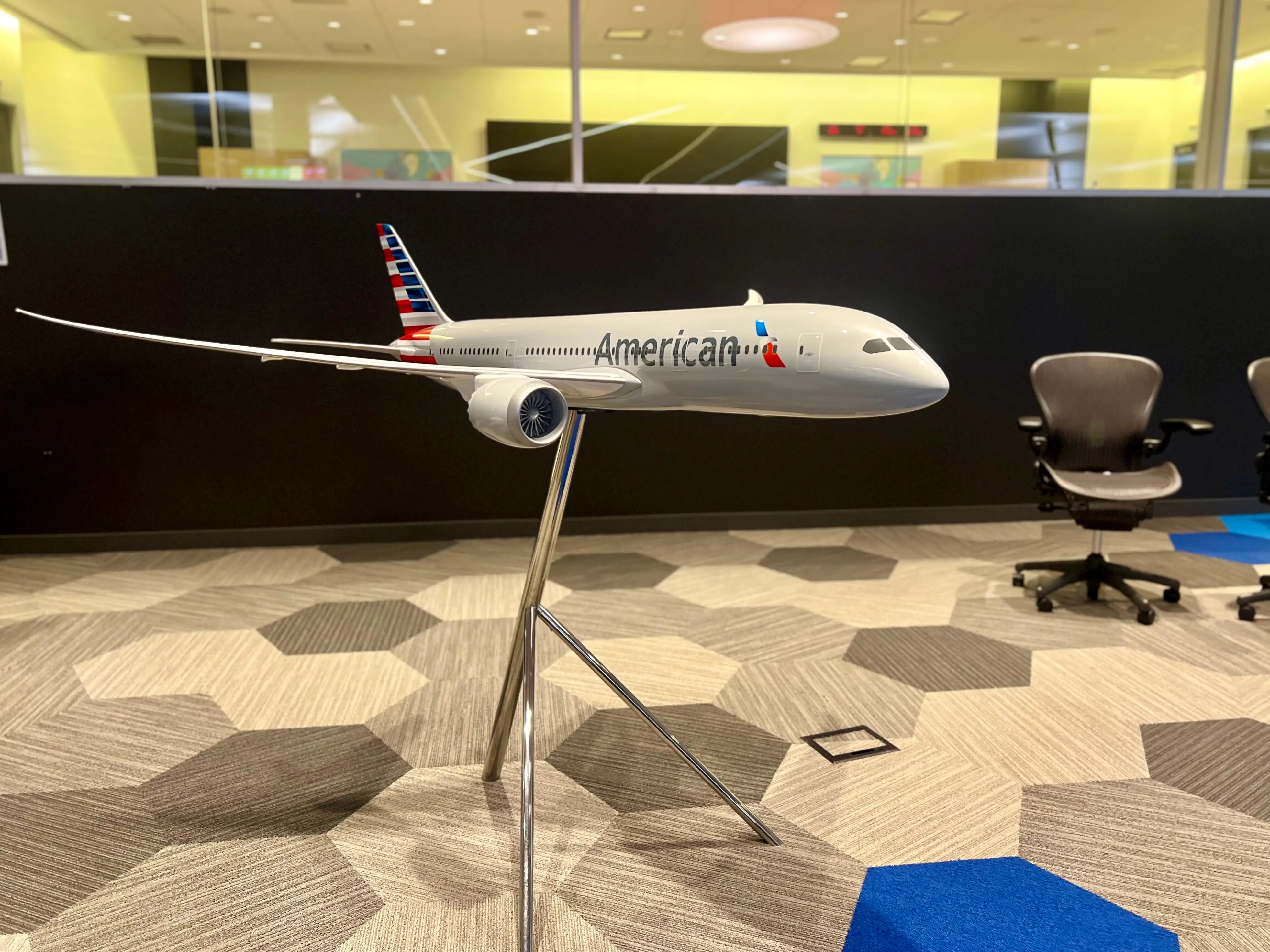
Groat said the second event was the grounding of the Boeing 737 Max 8 aircraft after two crashes killed 346 people in 2018 and 2019.
“For the Max, we had 24 planes taken out of the system very quickly, and all of them were in Miami,” he said. “We needed the means to find replacement aircraft from other parts of the system to restore the schedule there.”
Editor’s Note: This article was originally published in May 2024 and has been updated following the travel disruptions caused by the US’s January 2026 strike on Venezuela.
Read the original article on Business Insider
The post See inside American’s flight operations center that managed the Caribbean chaos after the US strikes on Venezuela appeared first on Business Insider.