Reza Pahlavi is a leader of the Iranian democratic opposition. He is the eldest son of Mohammad Reza Pahlavi, the last shah of Iran.
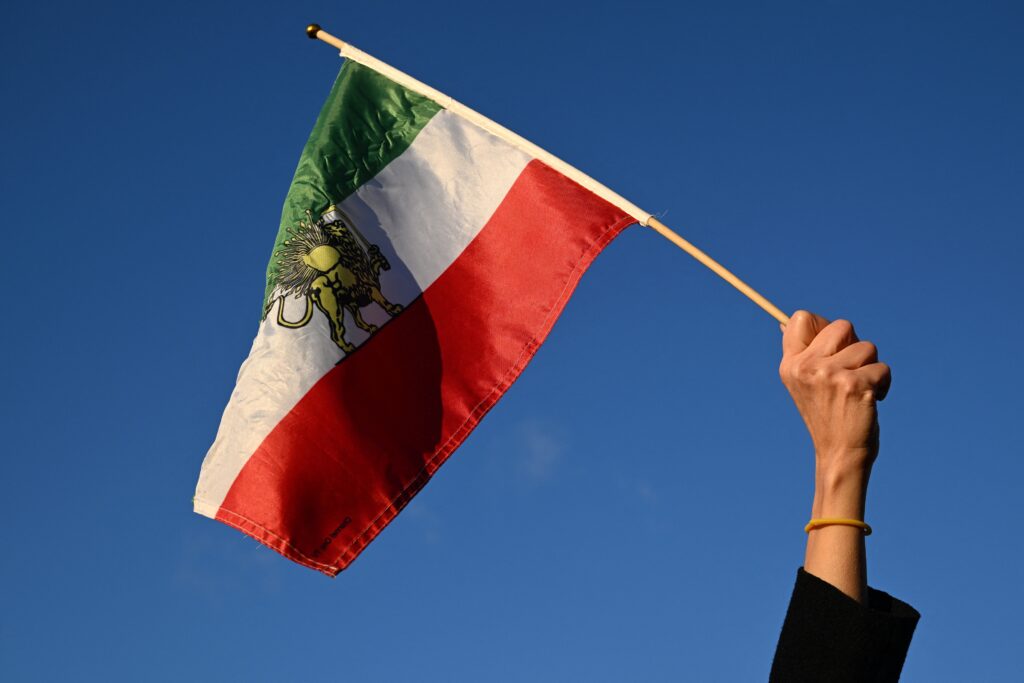
As 2026 begins, Iran is on the verge of a profound transformation. Across our country — from Tehran’s Grand Bazaar to cities, towns and villages far from the capital — Iranians are risking their lives to reclaim their future. Their message is unmistakable: The Islamic Republic has exhausted its legitimacy, and after almost 47 years, the country wants to be free.
The courage of these men and women deserves more than sympathy. It demands clarity, preparation and responsible leadership — inside Iran and among those who influence global affairs. Because Iran’s liberation will mean much more than a restoration of dignity to Iranians. It will bring a global peace dividend of almost unimaginable proportions.
That’s why I welcome President Donald Trump’s clear and firm support for the Iranian people. His message that the United States stands with those who seek freedom rather than with a regime that exports terror and instability has resonated deeply inside Iran. For protesters facing prison, torture, or death, knowing they are not alone matters. For the regime, it is a reminder that intimidation no longer guarantees survival. We saw proof of that in Venezuela.
The Islamic Republic of Iran today is weaker and more divided than at any point since 1979. Its response to peaceful dissent — mass arrests, executions and repression — shows the regime is afraid. According to human rights organizations, at least 1,500 executions were carried out from January to early December of last year, a sharp rise from 2024. Religious minorities — Christians, Jews and Baha’is — face systematic persecution. The regime’s violence is not a sign of its permanence; it is the behavior of a system struggling to maintain control.
Despite this pressure, the Iranian people persist. In recent days, protests have escalated in nearly all provinces and over 100 cities across Iran. Protesters are chanting my name alongside calls for freedom and national unity. I do not interpret this as an invitation to claim power. I bear it as a profound responsibility. It reflects a recognition — inside Iran — that our nation needs a unifying figure to help guide a transition away from tyranny and toward a democratic future chosen by the people themselves.
I have therefore stepped forward to lead and serve in that capacity: not as a ruler-in-waiting, but as a steward of a national transition to democracy. My role is to bring together Iran’s diverse democratic forces — monarchists and republicans, secular and religious, activists and professionals, civilians and members of the armed forces who want to see Iran stable and sovereign again — around the common principles of Iran’s territorial integrity, the protection of individual liberties and equality of all citizens and the separation of church and state. These three principles are to be buttressed by a process of national reconciliation and a referendum to determine the future democratic form of government.
People worry that Iran’s transition could lead to chaos, fragmentation or prolonged instability, like in Iraq or Afghanistan. That concern is legitimate — and it is precisely why preparation matters.
For a number of years, I have developed the Iran Prosperity Project, a growing network of more than one hundred Iranian experts in economics, law, energy, governance, public health and infrastructure. Together, they have developed detailed, sector-by-sector plans for an orderly transition that preserves essential services, stabilizes the economy and restores confidence at home and abroad. This work is complemented by ongoing consultations with international business leaders and executives who understand what economic recovery and proper management requires in practice, not just theory.
Another factor of stability will be working with those within the regime who break from it. We will not repeat the mistakes of Iraqi de-Baathification. My team has established secure channels for those within the regime’s own institutions who wish to break with the clerical regime and support a democratic Iran. Broadcast via Iran’s most-watched satellite news network, Iran International, my team has launched a secure platform through which members of the armed forces, security services and government institutions can confidentially signal their willingness to defect from the collapsing regime and align with the Iranian people. Tens of thousands have already engaged through this channel, clear evidence that dissatisfaction within the regime’s ranks is widespread and that many inside Iran’s institutions are prepared to play a constructive role in a peaceful transition.
There will be no power vacuum. There will be continuity of institutions where possible, accountability where necessary and a constitutional process, conducted transparently and under international observation, that allows Iranians to decide their own system of governance for the first time in generations.
Supporting the Iranian people is not an act of charity or interference; it is an investment in global stability. For almost 47 years, the Islamic Republic has fueled regional conflict, pursued nuclear blackmail and wrought global chaos. A free and democratic Iran will be a force for stability in the Middle East — not a source of endless crisis.
History rarely announces its turning points in advance. But today, the signs are unmistakable. The Iranian people are moving forward with courage and determination. What they need now is a world prepared to support a responsible transition. The time is now.
Do not simply observe the birth of a new Iran. Work with us to ensure that it is peaceful, stable and worthy of the sacrifices its people are making.
The post Reza Pahlavi: Iran is ready for a democratic transition appeared first on Washington Post.