President Trump’s decision to launch a secretive predawn military operation in Venezuela to grab President Nicolás Maduro is a blatant assault on the international legal order. The action threatens to end an era of historic peace and return us to a world in which might makes right. The cost will be paid in human lives.
Last year marked the 80th anniversary of the 1945 United Nations Charter, a document signed by 51 nations at the close of World War II. The signatories pledged to act “to save succeeding generations from the scourge of war.” The great powers have not gone to war with one another since, and no U.N. member state has disappeared as a result of conquest.
But over the past decade, that peace has begun to unravel. Today, it is on the precipice of collapsing altogether. If that happens, the consequences will be catastrophic. We can already see the devastating cost: According to my calculations, from 1989 to 2014, battle-related deaths from cross-border conflicts averaged less than 15,000 a year. Beginning in 2014, the average has risen to over 100,000 a year. As states increasingly disregard limits on the lawful use of force, this may be just the beginning of a deadly new era of conflict.
The relative peace of the last eight decades should not be taken for granted. For centuries, war was perfectly legal. It was, in fact, the main way in which states resolved their disputes. Countries could force one another into treaties at the point of a gun and then enforce those very same treaties with war if they were broken. States that won wars had the legal right to keep what they took — land, goods, people. States rose and fell, took land and lost it, and the people living in the territory over which they fought suffered the consequences.
That system of legal war began to end after World War I, when, in 1928, states renounced the act of war in the signing of the Kellogg-Briand Pact. That commitment was reaffirmed in 1945 in the U.N. Charter, which placed the commitment to renounce war at the center of a new international legal order. Territorial conquest and gunboat diplomacy, once legal, became illegal; economic sanctions replaced war as the main tool of international law enforcement; and waging war could be criminally prosecuted, as it was in the Nuremberg and Tokyo trials after World War II.
The peace was never perfect. Conflicts in Korea, Vietnam and Cambodia were early and terrible failures. The number of states in the world multiplied as decolonization took hold, and civil wars, which are not regulated by the charter, became more frequent. Yet the pact accomplished something remarkable: Conquest, once common, became rare, and fewer people died as a result of nations joining in conflicts outside their own borders.
That can be seen in data from the Uppsala Conflict Data Program, which researchers use to track organized violence and resulting deaths. The data show that battle-related deaths from conflicts that cross state borders — including those between states, like Russia’s war on Ukraine, and conflicts where a state joins an internal armed conflict in another state, like the United States’ strikes on the Islamic State in Iraq — were relatively low from the 1990s through the mid 2010s.
There were a few exceptions. In 1991, over 20,000 people died as a result of Iraq’s invasion of Kuwait and the response from the international community. In 1992, over 20,000 died in Bosnia-Herzegovina, and in 1999 and 2000, tens of thousands died in the war between Ethiopia and Eritrea. There was a rise in deaths, too, in 2003, when the United States launched the war against Iraq.
But beginning in the early 2000s, the legal constraints on war began to erode. After Al Qaeda’s devastating attacks on the United States on Sept. 11, 2001, the United States began to use force throughout the Middle East against those it deemed to be a terrorist threat. To justify continuing the strikes and extending them to a range of terrorist groups in what some would later call “the forever war,” the United States claimed a novel legal right under the U.N. Charter: to defend itself against nonstate groups that it said posed a threat.
Up to that point, it had been generally accepted among U.N. members that the right of self-defense in the charter extended only to threats posed by other states. By expanding this claim to threats posed by nonstate groups, the United States opened the door for other states to use unilateral force internationally under a legal guise. Over the next decade or so, more and more governments adopted the theory.
By 2014, the consequences of this shift started to emerge. With the rise of the Islamic State, the United States stepped up its counterterrorism efforts throughout the Middle East, and many other nations joined the fight. That same year, the United States and NATO officially concluded combat operations in Afghanistan, but they continued to provide significant support to Afghan forces. The last decade also saw a surge of deadly conflicts in Syria, Iraq, Ethiopia, Yemen, the Democratic Republic of Congo, Nigeria, Somalia, Libya and Gaza, with outside states joining in those conflicts, usually citing a right of self-defense. Hundreds of thousands of people died as a result.
Meanwhile, war between states, which had fallen to new lows after 1945, is back. The full-scale invasion of Ukraine by Russia in 2022 has caused the deaths of tens of thousands of Russians and Ukrainians each year. That same year, people were killed in state-on-state conflicts in Syria, Poland, Kyrgyzstan and Tajikistan. In 2024, conflict broke out between Iran and Israel, Afghanistan and Pakistan, and the United States and several allied states used deadly force in Yemen.
In recent years other kinds of conflicts have been on the rise as well. The war between Israel and Gaza, now in a fragile and volatile cease-fire, has claimed more than 72,000 lives. Tens of thousands of civilians have been killed in the civil war in Sudan, which escalated significantly in 2025.
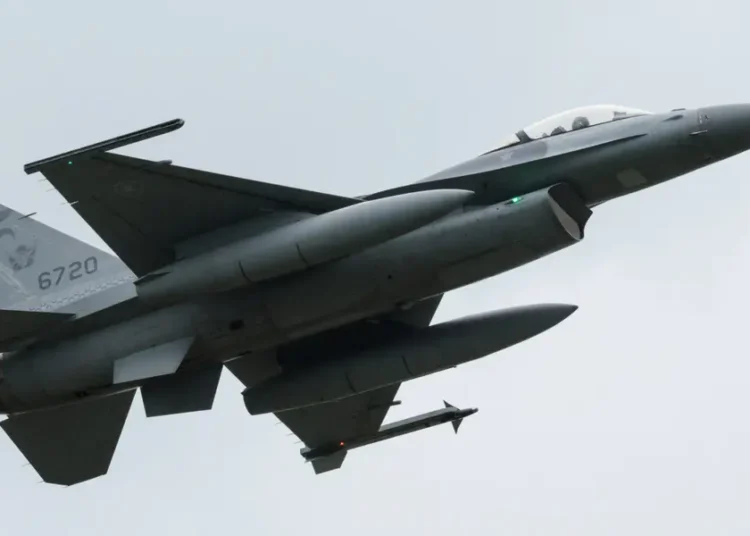
Now Mr. Trump has ordered the U.S. military to bomb Venezuela, an operation in which local authorities say at least 80 people were killed. That attack, in combination with the U.S. military’s strikes on more than 30 alleged drug smuggling boats, demonstrate a total disregard of the Charter’s constraints on war and the revival of the principle that might makes right.
The military operation is not justified by the right of self-defense. Drug trafficking is not an “armed attack” on the United States — the standard in international law for a legal act of self defense. Even if Mr. Maduro illegally seized power and is guilty of criminal conduct, those facts do not create a lawful justification to use military force against Venezuela. Nonviolent means — economic and diplomatic sanctions — are the only legal response under international law. The decision to use military force to topple a disfavored government will not stop with the United States. We can count on others to follow our example.
There may still be time to stop this trajectory. When Russia invaded Ukraine, over 140 states condemned the invasion as illegal, helping avert what would probably have been a death blow to the legal order. This is what it takes to preserve the international legal system when a powerful state violates the rules. So far, however, only a handful of states have been willing to forcefully stand up to Mr. Trump. If states fail to act together to preserve the prohibition on the use of force — the bedrock of the postwar legal order — the toll will be registered in many more lives lost in conflicts that no longer have any guardrails to stop them.
In Ernest Hemingway’s novel “The Sun Also Rises,” the character Mike Campbell explains how he went bankrupt: “Gradually and then suddenly.” The decades of imperfect but transformative peace that the U.N. Charter helped create now faces the same fate. As the United States fails to abide by the underlying principle of the international legal system it once championed, the already ailing system faces total collapse.
Oona Hathaway is a professor of law and political science at Yale, a nonresident scholar at the Carnegie Endowment for International Peace, and the president-elect of the American Society of International Law.
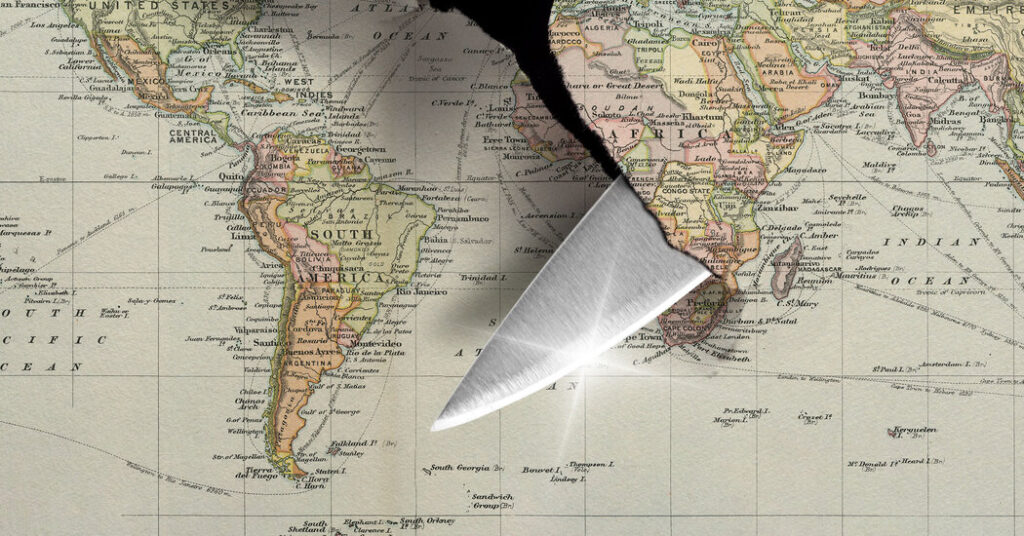
Source photographs by Elena Bezzubtseva, mikroman6 and MirageC/Getty Images.
The Times is committed to publishing a diversity of letters to the editor. We’d like to hear what you think about this or any of our articles. Here are some tips. And here’s our email: [email protected].
Follow the New York Times Opinion section on Facebook, Instagram, TikTok, Bluesky, WhatsApp and Threads.
The post Peace Is Unraveling appeared first on New York Times.