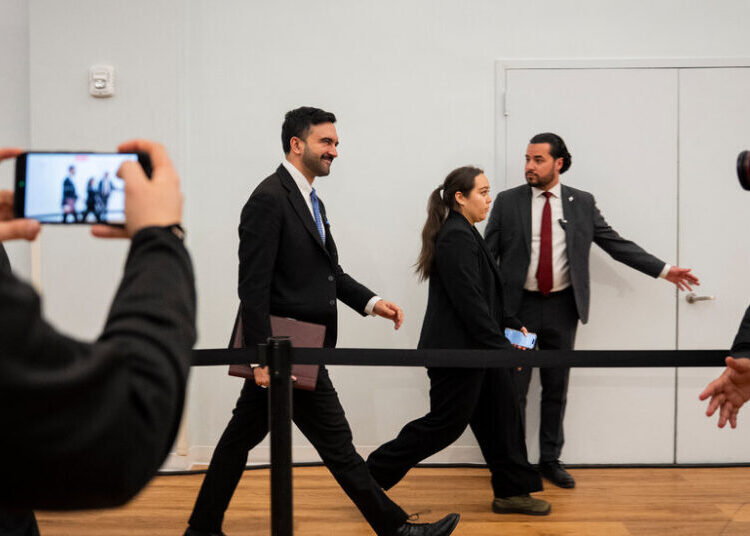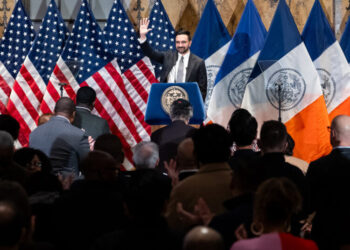
January 6, 2021, was my fourth day on Capitol Hill. I was fresh out of law school and working as a senior aide for Mondaire Jones, a newly elected Democratic member of Congress from New York. Most of his staff were queer, Jewish, Black, or some combination thereof, and our very presence felt like a rejection of the waning Trump era. We knew that Republicans had organized a rally to protest the congressional certification of the presidential election, but we were focused on different news: Jon Ossoff and Raphael Warnock had won their runoff elections in Georgia, giving Democrats control of the Senate. Suddenly our party had the majorities it needed to pass legislation that would improve people’s lives.
There were signs that January 6 was going to be an unusual day. The House would not be in session until the afternoon, but we were asked to arrive before 8 a.m. On my drive to work, I saw hundreds of people wearing MAGA hats and flying “Stop the Steal” flags—rare flashes of red in deep-blue D.C. They’d traveled far, I thought. But the rally felt less threatening than futile.
At one that afternoon, Jones went to the House floor for the vote to certify the results. Shortly after, we received a cryptic update via the Capitol’s emergency-alert system ordering us to shelter in place due to “police activity.” We feared this was connected to reports that Capitol Police had discovered a “suspicious package” in the area, and we worried that we might be in the blast radius of an explosive. Still, we continued working while we followed a live feed of the House proceedings.
[Read: The January 6er who left Trumpism]
At about 2:15, in the middle of his speech objecting to the certification of Arizona’s electoral votes, Representative Paul Gosar stopped to call for order in the chamber. We weren’t sure why; the mics weren’t picking up any disturbance. Then the camera cut to members of Congress rushing toward the doors. We watched first with confusion, then with fear as we heard screams and pleas to lock the door before the feed cut.
We scrambled for information. A glance outside our back window, which faced away from the Capitol, revealed nothing; we drew the blinds. Aside from a few vague alerts warning of a “security threat,” our only intel came from Twitter, TV, and texts from equally confused colleagues. Americans following along at home knew as much as we did.
Reports began to filter in that insurrectionists, some of whom were believed to be armed and on a mission to kill, had breached the Capitol. My colleagues and I watched footage of the mob smashing windows, ramming down doors, and swarming the rotunda; one man brandished a Confederate flag; another wore a Camp Auschwitz sweatshirt. Just that morning, a colleague had hung Pride and Black Lives Matter flags outside our office. We didn’t know whether our building had been invaded, but we knew those flags would make us a target. We momentarily broke the shelter-in-place order to pull them down, then we locked the door and dragged a heavy leather couch in front of it.
It was my first week on the job. I barely knew where the bathrooms were. I had no idea how to deal with a siege.
Another House office building had been evacuated, and the employees there were told to take shelter in our building. They weren’t told exactly where to go, though, so many came to our door in search of safety. Each knock was a jump scare. Roughly 20 members of Congress and their staff, Democrats and Republicans, accumulated in our office. We shared bags of barbecue chips and peanut M&Ms that a colleague had brought in that morning, and made small talk about office decor, our favorite D.C. restaurants, our hometowns—anything to drown out the terror on our screens and the eerie silence outside our door.
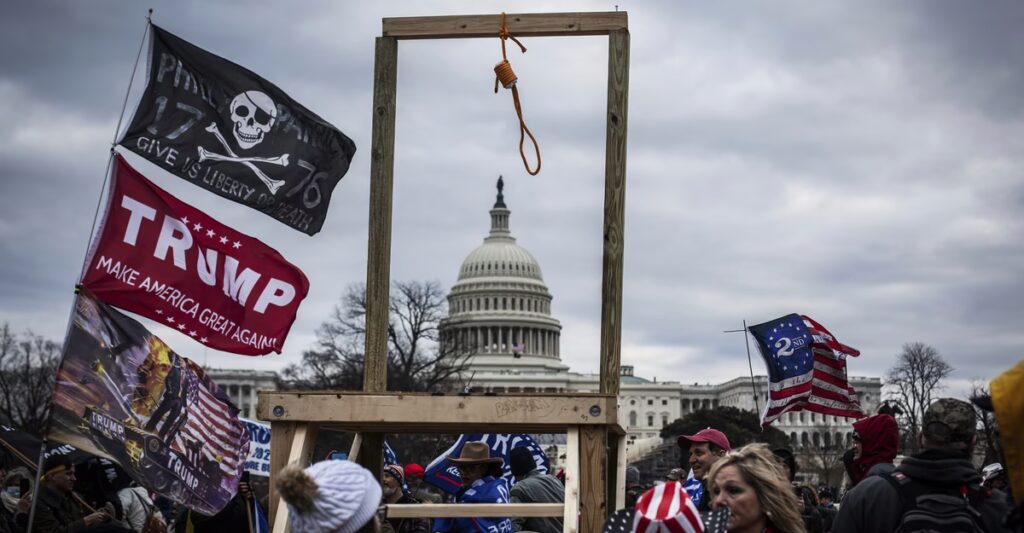
That day was full of things that were not supposed to happen, but did. The more we learned about what was going on outside—the mob had zip ties; it was erecting gallows in front of the Capitol and chanting for blood—the more possible it seemed that we could be injured or even killed. Our reactions varied: One colleague wept when he saw the “QAnon Shaman” in the speaker’s chair; another sat silently, texting loved ones; I mostly made dark jokes.
Our boss, who had been whisked off the House floor to a secure location, was only intermittently reachable. In the early evening, his phone died and we lost contact with him entirely. Since Jones had launched his campaign nearly two years ago, he and I had been in near-constant touch. I considered him a close friend, and I was terrified for him. Even after we learned that the Capitol complex had been cleared, and watched through our office window as dejected insurrectionists shuffled away, we still did not hear from Jones. Only when he showed up in our office unannounced at about 6:30 p.m., clutching a gas mask, as close to speechless as I would ever see him, did we know for certain that he was alive.
We heard that Nancy Pelosi was planning to call the House back into session so that Congress could fulfill its duty to certify the election. We had a few hours of respite while first responders cleared the Capitol of debris. Famished after eating nothing but chips and candy, I found some sad chicken tenders in the cafeteria.
When the House gaveled back into session around 9 p.m., some Republicans continued to dispute the election results. Their antics extended for almost seven more hours, which I spent curled up on an office couch, the proceedings droning on in the background. Jones and I drove home at 4 a.m. during a citywide curfew, past buildings boarded up with plywood.
I was shell-shocked; for months, I couldn’t sleep through the night. But on January 7, I woke up feeling hopeful. My colleagues and I had lived through one of the most terrible days in American history, but I believed that something good would have to come of it. A violent, desperate outburst had laid bare the authoritarianism at the center of Trump’s movement. Surely now Americans would finally shut the door on him.
Trump was banned from several social-media platforms. Republican senators including Lindsey Graham publicly rebuked him; then–Minority Leader Mitch McConnell privately expressed support for his impeachment, according to some reports. Democrats, recognizing an opportunity to prove that they could deliver on their promises, seemed poised to push through legislation that would end partisan gerrymandering and expand the social safety net.
[Read: Republicans once thought January 6 was ‘tragic’]
This period of hope was short-lived. By the time I left the Hill, in June 2022, the Republicans who had, for a moment, grown a conscience had either fallen back in line behind Trump or been excommunicated. Elon Musk was in the process of buying Twitter, and had promised to return Trump to the platform. A coalition of cynics and sycophants had pried the door back open for Trump. After one congressional Republican described the riot of January 6 as a “normal tourist visit,” and the Republican National Committee called its perpetrators “ordinary citizens engaged in legitimate political discourse,” the American people handed the GOP control of the House.
I moved abroad that December. I was fed up not just with American politics, but with America. Democrats had squandered what I felt was our best chance at solving the nation’s problems, and now a completely unhinged version of the GOP was careening toward power.
Still, I struggled to imagine that Americans would actually vote Trump himself back into the White House. When they did, I felt horrified for my country, and also personally betrayed. Trump had promised to pardon the insurrectionists, who were willing to do almost anything to keep people like me from wielding power. Apparently, 77 million of my fellow Americans were okay with that.
Looking back now, as Trump consolidates his authoritarian approach, I can see that January 6 portended not an end, but the beginning of a new era of nihilism.
Trump’s supporters are emboldened. They punish their enemies and reward their friends. They have turned the power of the state against the free press and universities, trans people and immigrants. They have slashed Medicaid to fund tax cuts for the wealthy, and have redrawn electoral maps in an effort to keep themselves in power.
Democrats appear to have internalized the same lesson: If the MAGA movement can survive after attempting a coup, perhaps nothing can stop it. Locked out of power, Democrats at the national level can barely muster outrage against Trump, and have proved unable to rally popular opposition to his agenda or articulate a credible alternative.
I’ve been home only a few times since I left the country. Each visit feels worse than the last, either because things actually are getting worse, or because distance has sharpened my vision. January 6 really did change everything—just not in the way I’d hoped.
The post January 6 Was My Fourth Day on the Hill appeared first on The Atlantic.