Business Insider is taking on CES 2026.
I’m on the ground in Las Vegas from Tuesday to Thursday, taking in all there is to know about the latest in the driverless space.
Robotaxis and self-driving cars have already had an outsize presence at the tech conference, especially in the previous hype cycle of the late 2010s and early 2020s.
Things have changed since then. The industry has largely moved on from mere concepts and technology validation to: How are we going to realistically scale autonomy?
It’s day one of the conference, and there’s already a lot to take in.
Nvidia CEO Jensen Huang unveiled the Alpamayo family, which will serve as an autonomous-driving stack for OEMs to deal with those stubborn edge cases — or the “long tail” of self-driving.
Uber and Nuro showed off an early look at the Lucid Gravity SUV that the companies hope public riders will be able to take by late 2026.
I’ll be spending less time at keynotes and speaker events and more on real-life demonstrations and meetings with industry leaders and commentators in autonomy
Think of this as my personal notebook, where I jot down everything I’ve learned and seen at the conference.
Check back in for more updates.
Amazon-backed Zoox is unlike any other robotaxi
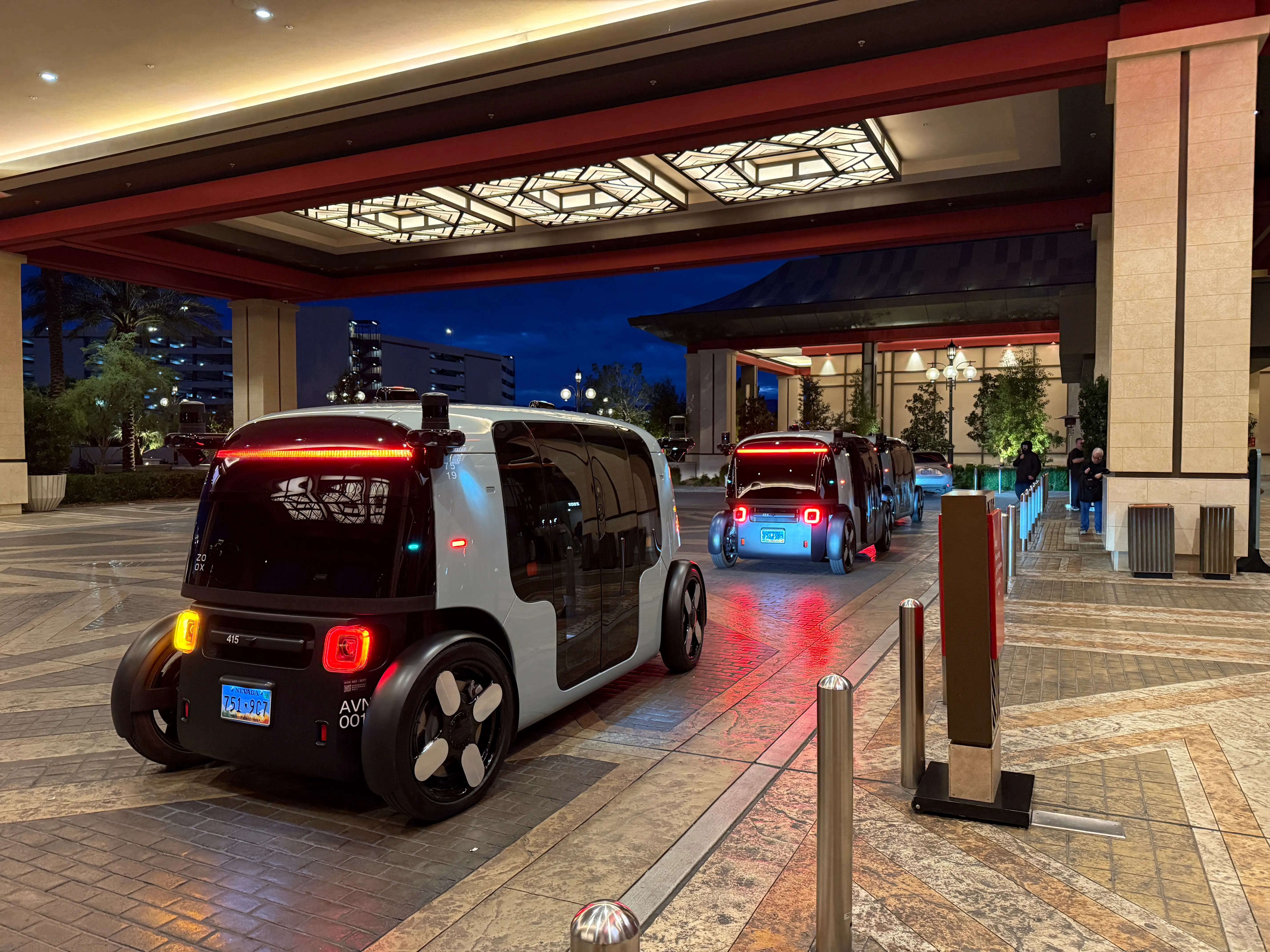
This is the first year Zoox, an Amazon-backed robotaxi company, will be giving live demonstrations of its service during CES.
I got to take a ride in one on Monday night in front of Resorts World. (The company tagline that I saw from an ad at the Harry Reid International Airport was: “Don’t just do the Strip. Zoox it.”)
My immediate thoughts were that Zoox feels unlike any other robotaxi or pseudo-robotaxi on the market. It felt more like I was on a theme park ride than in an everyday car we’re familiar with.
Unlike Waymo’s robotaxis, Zoox is not a regular car you could buy that’s been retrofitted with sensors. The Zoox car is bi-directional — meaning there’s no real front or back of the car — and the inside has no steering wheel, just seats.
The robotaxis were clearly a great tourist attraction from what I saw. My Uber driver wasn’t too happy about them.
Uber, Lucid, and Nuro have big plans to scale
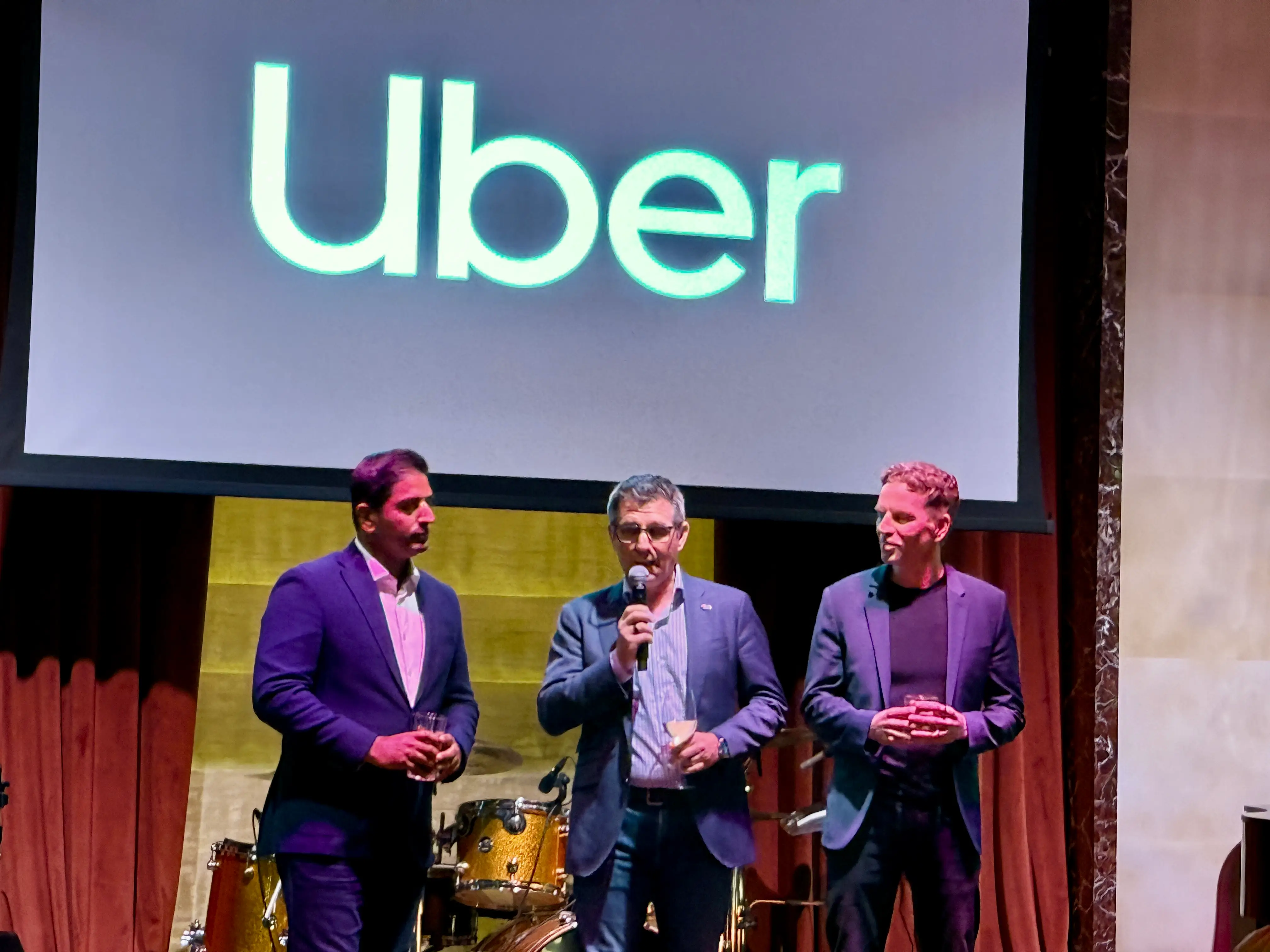
Uber, Lucid, and Nuro had a swanky cocktail hour at Fontainebleau Las Vegas, where they quite literally wined and dined a room full of reporters, analysts, and investors: endless glasses of wine and an open bar, lobster tails, jumbo shrimp, too many appetizers to count, and a giant charcuterie board — the works.
Maybe understandably so? 2026 will be a big year for the three companies.
Uber’s plan is to roll out a robotaxi service by late 2026. The first market is San Francisco, where Uber will directly compete with Waymo. These two companies are partners in other markets, like Austin.
“We’ve been moving very, very quickly,” Nuro’s co-CEO and cofounder Dave Ferguson said. “We signed this partnership last July. We’re already testing the production-intent vehicles on public roads. And very soon, we’re going to have tens of thousands of them worldwide.”
Read the original article on Business Insider
The post I’m at CES in Las Vegas to check out the latest in autonomous driving. Here’s what I’ve learned so far. appeared first on Business Insider.