After the tear gas cleared and the glass was swept up and the blood and feces were scrubbed off the walls, the Capitol returned to the business of democracy, and most of the officers who had defended it on Jan. 6, 2021, went back to work.
Some were bruised, scratched and sprayed with chemicals. Several were knocked unconscious. Some sustained traumatic brain injuries and underwent surgeries. Some were diagnosed with PTSD. Many kept showing up to work with nerves that felt jangled and bodies that hurt in ways they hadn’t before.
Five years after the Capitol attack, most of the officers injured that day have never widely shared their experience. To understand the effects of one of the most divisive days in American history on the people who lived it, The Washington Post, referencing a database from the Chicago Project on Security and Threats, contacted 58 current and former officers from D.C. police, U.S. Capitol Police, Metro Transit Police, Arlington County Police and Prince George’s County police.
Many officers never reported their injuries, The Post learned. The most-often cited number of injured officers — 140 — is likely an undercount. The Office of Government Accountability has tallied at least 174.
Many stayed in law enforcement. But some retired early. Others moved away, one as far as New Zealand, to avoid reminders of being attacked. They left for psychology, education, the Peace Corps. Some were too injured to work.
Most did not respond or declined to be interviewed, with some saying they wanted to avoid the harassment faced by others who have spoken up. But many stories are preserved in victim impact statements and court records:
I lost a lot of the will to even want to do the job at that point, a lot of the desire to even get up out of bed.
I had a concussion, a back injury, a deviated septum, a broken tooth …. My eye continued to burn for a week.
I knew we were there to protect the Capitol. But it went from protecting the Capitol to protecting my life.
As I kind of straightened my finger out, I could see tendons between the sections of bone.
I’m a Republican. These are my fellow Republicans. And I’ve had people that I’ve known all my life that don’t want to have anything to do with me now.
Some said they’ve moved on, like the country. For others, it hasn’t been so simple.
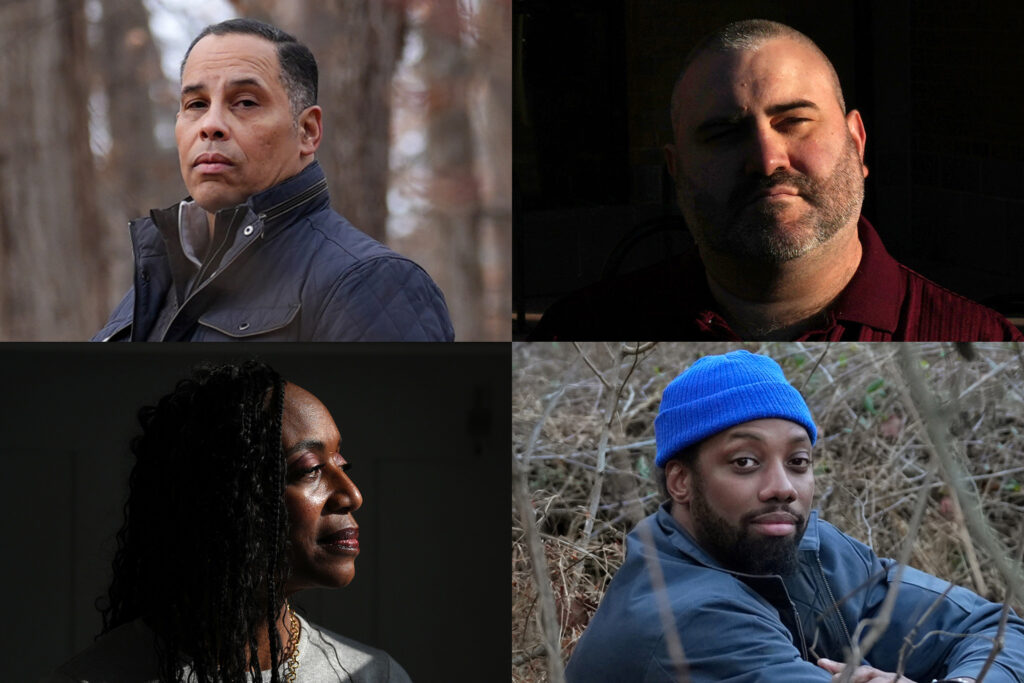
Here are some of their stories, in their own words, edited for length and clarity.
Federico Ruiz, 52
Former Capitol Police officer
I feel like I’ve given enough for this country. I joined the military and September 11th happened. We were there. The Pentagon was on fire. We went in trying to see if we could save anybody. The people in the building and certainly the people on the plane were cremated because of the jet fuel that was burning. We were looking for the remains.
I never spoke about my experiences in the Pentagon to anybody. It took a toll.
I ended up getting divorced. I was not able to stop crying in private. People found it difficult to be around me. I got counseling. Every time I looked at the Pentagon, I still saw it with a hole on the side of the building.
I joined the Capitol Police department, went up the ranks, became a sergeant. It was the best time of my life, being a sergeant, because I got to do what I was doing in the military, which is being a mentor and training people. Then January 6 came around.
I got assaulted. This guy was on a raised platform and decided to do some WWE move where he jumped and clotheslined me. He landed on top of me.
I started to feel a lot of pain in my back, and neck, and my knee, and in my whole right side. But I pushed on and didn’t tell anybody. I didn’t want to be on light duty.
The summer after January 6th, a school-aged group was walking up on King Street and they all had MAGA hats on. I looked at a teenager and my first thought was to punch him in his face, to assault this kid, just start punching all these kids with these MAGA hats. I was like: “What am I thinking, man? I really need help.” I started seeing a counselor after that.
The tone change — especially from the Republican Party — from insurrectionists to protesters, that hurt the most. I started to realize that the oath of office that I took as a police officer to defend Congress — I wasn’t able to honor it anymore. I cannot protect people that use other people as pawns in their political game. I can’t give my life or attempt to give my life for them anymore.
I decided to retire early. And the injuries I received from January 6 were getting worse and worse, so much that working after that had become kind of impossible.
As soon as I wake up, I can already feel pain. It’s always on my right side. It shoots down from the neck all the way down to my lumbar. It numbs up my arm and my leg. And then my knee and ankle are always in pain. I have to walk carefully, really gingerly. Sometimes people will say, oh you’re limping. It comes and goes.
Now I can’t go up on Capitol Hill without feeling like something’s going to happen. I avoid crowds, I avoid large gatherings. I tend to flinch when I see anybody wearing MAGA gear.
I live off of my pension right now. I can’t really function in society.
Jannique Spriggs
Former senior officer for D.C. police
The racial disrespect that day was unbelievable — on a different level. I’ve heard about it, I’ve just never experienced it. There were four White men across the street from where I was, heckling my partner and me. When they didn’t get a response, they walked across the street closer to us and said, “Two black b—–s.” So that was the tone.
That particular day kind of mentally took me back to what my mom dealt with, what I read and researched on racial disparities and what I saw in documentaries. My mom was born in ‘52, so she was there for the ‘60s riots and protests. She was in Southeast D.C. She was 16. My mother went around the corner to warn the neighborhood the police were coming when glass shattered and it got into her thigh. It was more of a gash, because it needed stitches.
I don’t want to say I understand one more than the other. I don’t understand January 6 at all.
There was a shooting at the Capitol while we were there. Officers were getting injured. They were being overtaken. We had to switch out because they were exhausted. One officer had a gash in the back of his head. His head was wrapped up in toilet paper, and my partner and I led him out of the hot zone to seek medical treatment.
The insurrectionists came equipped with zip ties, bear mace, duct tape, knives and guns. They were spreading feces on the statues and urinating on the statues. We were totally caught off guard. “Are we going to get out? Are we not? Are these people for real? Is this happening?”
My daughter called me on FaceTime because she saw the news, and she had never seen me dressed that way — helmet, all my gear on. In her 10-year-old mind, I can only imagine what was going on.
I never prepared her for a January 6th. My day-to-day was in investigations and not in patrol. I just told her everything is going to be fine.
I’m like, okay, I’ve been on this job since I was 19, started out as a police cadet. No way I’m going out like this. I’m just not.
My supraspinatus was torn. I’m still dealing with that injury.
I didn’t report that to the job because I didn’t want them to not renew my contract as a senior police officer for being out too long. I retired in August 2020 after 30 years in MPD, and then I went back as a contractor in September. I had just come back, and January 6 did it for me. I knew it was time to go.
I was angrier after that day … but I had to process differently because I had a 10-year-old that was watching me.
My daughter wrote a letter, and I sent it to the chief of police at the time.
It says: “I experience God every day, and on January 6, 2021, I needed God to help my mother. … I prayed to God that my mother would be okay and that she would not get hurt. I said the Sign of the Cross, I said one Our Father and three Hail Marys. Then, I just talked to God from my heart. God kept her safe … I need my parents.”
Jesse Leasure, 39
D.C. police officer
People were trying to hit us in the face, throwing furniture, anything they could get their hands on. Smoke grenades. Amateur fireworks. Pipes. Broken pieces of scaffolding. A ladder. I was having a hard time breathing.
I had pepper spray burns like my skin was on fire. I was drenched in that stuff.
And they had bear spray. It feels like — where your eyelids meet your eye — daggers and needles along there. It feels like someone’s rubbing sandpaper across your eyes, hot sandpaper. And if you’ve ever gotten like a first degree burn and the skin is very sensitive and you put it near something hot, it feels 1,000 times hotter — just imagine your entire face has a first degree burn, and you’re sticking it in an oven.
I couldn’t believe what was happening. They were yelling “USA.”
These are my views, not the views of the department.
Half of our entire platoon had gone to the hospital or called in sick the next day because they were so burned out and exhausted. Everybody was walking wounded. I should have called in sick. I had no permanent damage to my body, whereas a lot of my co-workers got concussed and had some serious injuries.
And the work isn’t done. It keeps going. Why would I leave?
I get paid very well. It allows me to live a comfortable life, and on top of that I get a decent retirement. But more than that, I get to help people everyday. And it may sound kind of stereotypical, but that really does mean something to me.
Especially after January 6, the department’s paying more attention to mental health.
We’re doing a much better job of erasing the stigma of seeking help. They were seeing it more as a holistic ‘We need to take care of these people’s mental health so they can do their job properly,’ especially with the suicides that we had with people who were suffering from PTSD and depressive disorder.
I was having anxiety attacks even before January 6, and it took me a long time to seek help for that. I was really miserable for a time. I was kind of keeping quiet about it, because I was always afraid of losing my job. I feel more comfortable coming out and talking about mental health.
I finally started seeking help. I was able to get it under control.
We just need to do our jobs. I try to help people the best I can. I don’t always succeed, but it’s those little victories that you have that make the job worth doing.
Carlton Wilhoit III, 35
Former officer for D.C. police
We just heard people shouting, “Enemy of the state!” and “stormtroopers!” I had bruises to my forehead. I had some hair that was pulled out.
I had to call my mom and just let her know, like, “I don’t know how this is gonna play out. I just want to let you know that I love you.”
And it was one of those things that I constantly thought about, and I constantly lost sleep about.
With policing, I was becoming checked out. It was hard to get up. It was like, “All right, here we go, let’s put on this uniform.” It wasn’t that excitement that I felt before.
Probably around 5:30 to 7:30 in the morning, I would park my vehicle near this park in my district. It’s a quiet time where you can catch up on your reports. You can read the D.C. code. Some people would use that time to get coffee.
I was thinking, “What should I do? What would be my pivot? What would be my fresh start?” I was constantly thinking about that over and over. I knew it was time to go.
My family has a huge background in agriculture. Farming, hunting, fishing. And I also went to school to study environmental science.
I just felt the need to switch careers, and I decided to apply to the Peace Corps. I got accepted. I was an agriculture extension volunteer in West Africa, in Guinea.
People would stay up all hours at night just chatting or even sleeping outside on their front porch. In my village I had cows roaming around, goats and chickens. I even had my own chickens before someone stole them.
It wasn’t like the hustle and bustle, 9 to 5. It’s not like this rat race. It was a slower way of life, but it was a quality way of life. You appreciated every single thing that you had and especially the food that you had, because of how difficult it is sometimes to secure food, especially during the dry season.
My problems were, “Hmm, do I have enough water to last me the next two days? Or do I need to go to the water pump?”
The anxiety, the loss of sleep and all of that stuff, kind of dissolved.
We had an option to attend this beekeeping intensive training. And then from there, it started to be one of my favorite hobbies.
The bees that I worked with were native African bees. I would say anywhere between 40,000 to 60,000 bees.
I like the sense of community that bees offer: its organization, its structure. They have their own little ecosystem and yet, outside of the things that they do for one another, they’re still one of the top pollinators that we have on the planet. So in order for us to have our fresh fruits and vegetables, we need pollinators such as bees.
And I just felt a sense of peace in doing it.
Abdulkadir Abdi
Former officer for D.C. police
You’re getting hit from the back, you’re getting pushed, you’re getting punched, you’re fighting people, bear spray in the air, loud noise everywhere. At that point I couldn’t really see. I just thought once they got a hold of me and my gun, anything could happen.
Luckily they didn’t. But when we moved to the tunnel, they took my baton, my magazines for my weapon, my flashlight. I had a concussion. I had a hyperextended knee.
The whole thing was on TV for like two months. I saw Officer Daniel Hodges’ video over and over again, when he was screaming. I worked with him. When you work with someone every day and then you see that, it gets you.
The week of the pardon, I was in the middle of discussing with the U.S. attorney’s office what day I should be coming in to testify. I was emailed by an attorney from the U.S. attorney’s office telling me that this case is no longer going forward due to the recent pardon. So that was the end of that conversation. There’s guys that beat up officers and then they were released. It doesn’t matter what side of the political spectrum you fall in, those guys belong in jail.
Sometimes you wonder, how can something like that happen in the U.S.? You think this is a peaceful country. The government transition is supposed to go smooth, and you think, how is this allowed?
I was born in Somalia and I left Somalia because of war and fighting. I came from a situation where the government was overthrown, and then you come here and you’re thinking, “Oh hell no, it’s happening here.” It’s like you leave a house that’s on fire, and you come to another house, you think, “Oh, this is nice,” and then it starts catching fire.
When I was 2 or 3, the war started and [my family] fled to Kenya. We lived in about two to three refugee camps there for several years, just going from one to another. It’s a very hostile environment, obviously — lack of resources, food, water and medical supplies. There’s no jobs, it’s a tough environment. My family left in 2000 to come to the U.S. Life here is completely different, obviously. You have free education, health care, a lot of resources.
I’ve wanted to be a cop since I was in high school. It’s a form of giving back to the same community that gave me everything, to contribute to the community that helped me become the person I am.
At the end of the day, when you’re a cop, you’re given a task, you get an order, and you execute the order. I was sent there to protect the Capitol, protect the institution and the people in it, and that’s what I did. But, as a human being, you look back and you think, that’s an institution that represents a lot and represents what America stands for, so it’s a very difficult pill to swallow.
Mark Adam Eveland, 34
Former officer for D.C. police
I consider myself a Republican. Never voted for Trump once, never liked him. I always thought that the message he was selling was dangerous.
I have family on both sides of the political aisle. I have friends on both sides of the political aisle. I have co-workers that were there with me that day and helped to secure the Capitol that still love Donald Trump. It’s just kind of confusing to me. A lot of my co-workers that I rely on day-to-day are Trump supporters, but we still have to rely on each other with our lives.
I had friends and family on the left that didn’t always check on me as much during the summer of 2020, when there were a lot of Black Lives Matter riots in D.C. All the people on the left kind of started to check on me after January 6th. And then all the people on the right, they’d just be like, “Well, you know, it wasn’t that big of a deal. They were antifa.”
I’ve had to, over the last five years, have the maturity and the humility to understand that just because I went through something and had my own traumas and such from it, that not everybody understands how to care about that. I was pushed, I was pulled, I was assaulted. My injuries were very minor, especially compared to the rest of my platoon.
I try to maintain friendships with people beyond politics. I can say with confidence that you’ll never change somebody’s mind if you’re not willing to build bridges with them in other places.
I know a lot of Trump supporters that are very good people. I don’t always understand how you can call yourself my friend and still love this guy who you don’t know. He’s a politician, but you know me.
I won’t lie, realistically you won’t be as close to somebody like that.
To just issue a blanket pardon — and a lot of these people are very dangerous — that really made me angry. I don’t know how anybody can say that they’re pro-law enforcement and pro-justice if you don’t let the justice system do its job.
I left MPD on the first of September 2023. I don’t want to say it was directly related to January 6. But I left for a better life.
Nate Jones contributed to this report. Photos by Leah Millis for The Washington Post
The post Five years after Jan. 6, officers describe the toll of defending the Capitol appeared first on Washington Post.