For a brief moment, some Venezuelans allowed themselves to celebrate.
When they learned on Saturday that strongman Nicolás Maduro had been seized by U.S. Special Forces, many group chats filled with messages of joy and relief. Some people cried. One family in Caracas opened a bottle of champagne they had bought months earlier and saved for a special occasion. After more than a decade of living under Maduro, there were cautious hopes for a different future.
By Monday, however, those feelings had been replaced by more familiar ones: fear, dread and uncertainty.
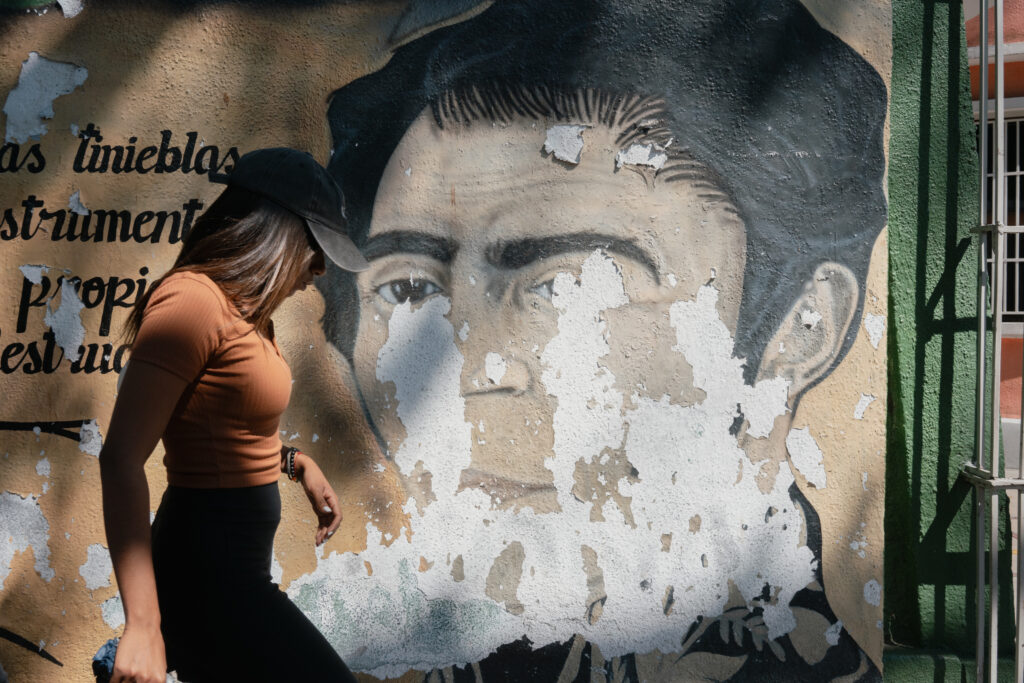
Venezuela’s government has moved quickly to suppress any public expression of support for Maduro’s ouster, launching a nationwide crackdown that has included the detention of journalists, the arrest of civilians and the deployment of armed gangs across the capital.
“It feels like it did after the presidential elections in 2024,” said María, 55, who like others in this story spoke on the condition that they be identified by their first name, or on the condition of anonymity, for fear of reprisals. “We won, but we also lost,” she said, referring to the country’s last elections, in which Maduro claimed victory despite tallies showing the opposition had prevailed.
The crackdown unfolded as Delcy Rodríguez, the country’s vice president, was sworn in as interim president Monday at the National Assembly. Senior military officials publicly pledged their loyalty to her — a signal that while the country had a new leader, the old power structure remained in place.
At least 14 journalists and media workers were detained Monday — including 11 working for international outlets, according to the National Press Workers Union. Most, the union said, were held for several hours and later released, but several reported that military counterintelligence officers searched their phones. Many of the detentions took place near the National Assembly as Rodríguez took the oath of office in a ceremony overseen by her brother, Jorge Rodríguez, who heads the legislature.
Authorities also moved against ordinary citizens — empowered by a “state of external commotion” decree that ordered Venezuela’s national, state and municipal police forces to immediately search for and arrest anyone “involved in promoting or supporting the armed attack by the United States of America.” The decree, which entered into force Saturday but was published in full Monday, also suspended the right to protest and authorized broad restrictions on movement and assembly.
In the western state of Mérida, two people in their 60s were arrested for shouting anti-government slogans and “celebrating the kidnapping of President Nicolás Maduro and First Lady Cilia Flores,” according to state police.
Across Caracas, pro-government paramilitary groups known as “colectivos” — a hallmark of the informal security state built by former president Hugo Chávez and inherited by Maduro after his death — set up checkpoints, including along the Cota Mil highway that runs north of the city. Residents described being pulled over, questioned and forced to hand over their phones. Some said the armed men scrolled through their messages and social media, looking for anything that could be construed as support for the U.S. raid.
“We’re texting each other routes to avoid,” said a Caracas resident. “You hear ‘don’t go there — they’re stopping cars with machine guns.’”
In an interview with Fox News’s Sean Hannity, opposition leader María Corina Machado — who left Venezuela in December to accept the Nobel Peace Prize in Norway — called the crackdown “really alarming” and urged the U.S. and the international community to monitor the situation. She described Rodríguez as “one of the main architects of torture, persecution [and] corruption.”
Late Monday, as weary families bedded down, gunshots rang out near the Miraflores presidential palace. On social media, residents shared videos from their window of armed men in the streets; some speculated that a coup was underway.
Hours later, the Communication and Information Ministry put out a statement saying police had fired warning shots after “drones flew over the area without authorization.”
“The entire country is completely calm,” the statement said.
The post Fear grips Caracas as a new wave of repression is unleashed in Venezuela appeared first on Washington Post.