Almost all of Baltimore was onstage with Mayor Brandon Scott on Monday, he said in jest while surrounded by dozens of residents in the western portion of the city, because it had taken the work of all of Baltimore to make history.
In 2025, Scott said, the number of people killed in the Maryland city once notorious for its crime had plummeted to a nearly 50-year low of 133 deaths — marking the third straight year of steep declines in the homicide rate and a nearly 60 percent decrease since 2021.
So he’d invited everyone who had worked to save lives in the city to West Baltimore on Monday afternoon for a news conference at Doxa Ministries to talk about how they’d done it and what comes next.
“This is Baltimore’s progress to acknowledge,” Scott said to whoops and applause. “You all have helped us make truly generational change in our city, even when so many folks not only thought, but said, it was impossible.”
When he was elected in 2020, the mayor declared gun violence a public health crisis, creating a five-year comprehensive plan to address the root problems and vowing to lower homicides by 15 percent annually — a lofty goal in a city often ranked among the most deadly in the nation.
For decades, yearly homicides had regularly exceeded 300 people. That was true, Scott said, for 18 years of his life as a Baltimore resident who grew up in Park Heights.
“The thing about last year is it is now last year,” Scott, 41, said. “This is now the standard that we all have to hold ourselves to. We know what we can accomplish now and we have to keep going.”
One life lost, the mayor said, is one life too many.
In a few months, the mayor will be required by city law to assemble and present a new five-year comprehensive violence reduction plan — a rubric that will strive to stop killings altogether in Baltimore, Scott said.
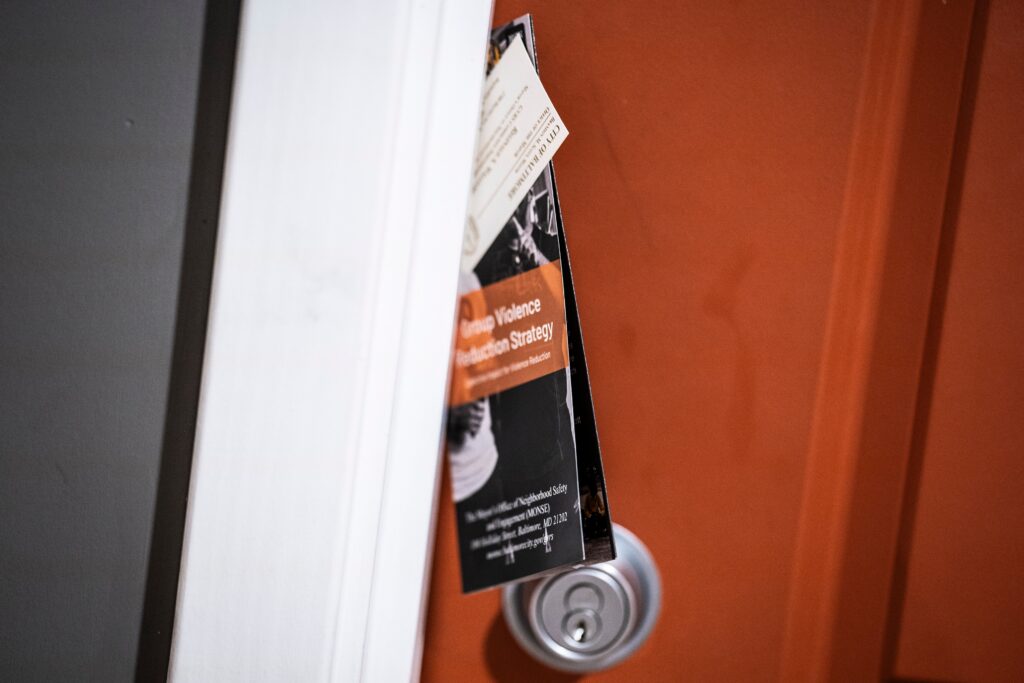
Much credit has been given to the city’s Group Violence Reduction Strategy (GVRS), a core tenet of the mayor’s philosophy to root out violence by using data and police intelligence to identify those at highest risk of shooting someone or getting shot. Then, the Mayor’s Office of Neighborhood Safety and Engagement (MONSE) deploys social service support through city employees and trusted community organizers to try to keep that violence from happening.
Key to the strategy is partnership with law enforcement — including the Baltimore Police Department, federal authorities and prosecutors to hold accountable those who commit crimes or fail to turn away from illegal behavior.
“It’s something that the whole country is looking at,” said Rep. Kweisi Mfume (D-Maryland), who praised the GVRS apparatus and vowed to continue securing federal funding for the city’s efforts.
Baltimore’s decline comes amid a nationwide dip in homicides since 2021, but the city’s rates fell the furthest and fastest, according to an analysis by the Baltimore Banner.
Baltimore State’s Attorney Ivan Bates, who recently withdrew his office’s partnership with MONSE and the city’s intensive GVRS effort, said in an interview last week that he believes his aggressive prosecution strategy for repeat violent offenders has critically contributed to Baltimore’s falling homicides. His office is no longer officially partnering with MONSE because of legal issues that, he said, could affect the integrity of cases his prosecutors are trying.
When he spoke at the news conference Monday, he credited the various collaborations citywide — among residents, local and federal law enforcement, city leaders and the Attorney General’s office.
“We’ve tried to be the partners of accountability,” he said. “We try to be that defense that Baltimore is always talking about that we need.”
Other crime markers also fell significantly between 2024 and 2025, said Police Department Commissioner Richard Worley, citing a 25 percent reduction in nonfatal shootings, a 37 percent reduction in carjackings, a 28 percent reduction in robberies and a 29 percent reduction in arsons.
In 2024, 14 juveniles were killed, compared to three in 2025.
Again and again, the mayor praised Baltimore residents and community organizers for working hard to shift the culture in the city away from violence and toward healthy conflict resolution.
He gave a key player in that strategy, Terry “Uncle T” Williams of the youth mentorship nonprofit Challenge 2 Change, the last word.
“Those that are closest to the problem has the solution,” Williams said. “We’re out there every day.”
The post Baltimore has cut homicides by almost 60 percent in five years appeared first on Washington Post.