For those of us who were concerned about what foreign policy might look like in a second Trump term, there was always one aspect of his worldview that provided some modest reassurance: his relative reluctance regarding the use of force.
Yes, he has always been rhetorically bellicose. But Mr. Trump campaigned in 2016 in part by attacking his own party’s disastrous invasion of Iraq. Before taking office in 2017, he declared that the United States would “stop racing to topple foreign regimes that we know nothing about,” and he stuck to that promise in his first term. About a month ago, his administration released a National Security Strategy that proclaimed a “predisposition to non-intervention” in other countries’ affairs.
It was a short-lived predisposition. On Saturday, Mr. Trump dispatched U.S. forces to bust into the compound of the Venezuelan dictator Nicolás Maduro, capture him and his wife, and swiftly remove them to the United States.
The raid was the exclamation point on a year in which the self-proclaimed “president of peace” ordered military action against seven countries, some of which the United States had never before waged war against — Iran, Nigeria and Venezuela. It ended any pretense that he would wield responsibly the presidency’s most consequential prerogative.
We support the judicious use of force when it is necessary to keep the country safe, it has the informed consent of the American people and all other options have been exhausted. Mr. Trump is demonstrating a profoundly different and dangerous approach. He is willing to use force — and risk the lives of American soldiers — for increasingly flamboyant expressions of strength abroad.
These high-risk actions seem designed more for ephemeral gain than long-term strategic advantage. There is a real risk of more to come. Mr. Trump’s appetite for military action seems to grow with the eating. For a commander in chief with three years left in office, his newfound fondness for military force is ominous.
For one thing, Mr. Trump’s acts of war have demonstrated the extraordinary capabilities of the U.S. military (which we were privileged to see up close), but this can lead to overconfidence. Precisely because things can and do go wrong when you put forces in harm’s way, even with enormous military advantages, a president should only do so when it is necessary to achieve core national interests.
Mr. Trump’s Venezuela venture falls well short of that mark, and the flimsy and shifting rationales for removing Mr. Maduro make that clear. It’s not a surprise that 87 percent of Americans in a recent CBS poll didn’t see Venezuela as a major threat to the United States. They’re right. It isn’t.
Second, military interventions, and particularly those that overthrow foreign leaders, often look strong and convincing in their initial execution, only to age badly over time, as it becomes clear that no one has an answer to that most basic of questions. Mr. Maduro, an illegitimate dictator, is gone. That is a good thing. What comes next?
Mr. Trump answered that question by saying the U.S. will “run” Venezuela, apparently for the purpose of giving U.S. oil companies preferential access to the country’s oil (without any clarity as to what that means). Many who cheered Mr. Maduro’s capture are already voicing concern. Will Venezuela be ruled by a different dictator, as Mr. Trump himself seems comfortable with? Is there some sort of side deal involving presidential cronies, Venezuelan warlords and major oil companies? Will it become a failed state if no one can effectively exercise power?
So far, Mr. Trump has said, confusingly, that America will deal with Mr. Maduro’s deputy, now the acting president, Delcy Rodríguez, while also saying there will be a transition without offering details about the monumental questions of how and to whom. And he has ominously threatened “a very big price, probably bigger than Maduro” if she does not do his bidding.
The main goal seems to be having a pliant leader in Caracas responding positively to American demands on oil — and more military strikes if cooperation is not forthcoming. If this is the answer to “what comes next,” the initial military action will not age well.
This leads to the third point: History has shown that poorly scoped and poorly defined military missions can quickly expand in unpredictable ways that ultimately lead to failure. Mr. Trump is far from immune to such mission creep. After piling on to the end of Israel’s 12-day war with Iran last summer, he is now threatening military force (toward what end he has not said) if the Tehran regime “violently kills” the demonstrators who are bravely protesting in the streets of Iran’s main cities.
Mr. Trump’s musing about rebuilding Venezuela and his openness to “boots on the ground” sound more like a prelude to an extended military campaign than any kind of law-enforcement action.
The casual lawlessness of all this practically goes without saying, but remains shocking. The administration barely deigns to explain its legal rationale for the use of force to a Republican-controlled Congress that has all but abandoned meaningful constraint on presidential authority.
Even more alarming is that there appears to be more to come. Mr. Trump and his team have recently threatened military strikes on at least three other countries in the Americas: Colombia, Mexico and Cuba. Possible territorial grabs in Greenland and Panama, which used to produce eye rolls from people like us, who considered it too absurd to take seriously, can no longer be easily dismissed.
After all, the Trump administration is now breathtakingly open about why it attacked Venezuela and captured Mr. Maduro. Mr. Trump has largely dropped the pretext of stopping the flow of drugs or restoring democracy and is brazen about his goal of seizing control of the country’s oil. It has suggested similar rationales for Panama (canal access) and Greenland (minerals and strategic geography). “We do need Greenland, absolutely,” Trump reiterated yesterday.
Other countries, including devoted competitors and adversaries far stronger than those Mr. Trump has chosen to bomb over the past year, will draw their own damaging lessons from the precedents we set.
Russia and China see opportunity in Trump’s “Donroe Doctrine,” as he now calls his plan to impose U.S. dominance on Latin America. That plan gives voice to their own preference for a world in which big countries dominate their neighborhoods. This augurs badly for the effort to end the Ukraine war on just terms and for the credibility of American deterrence in the Indo-Pacific, as China’s saber-rattling about Taiwan grows louder.
Even if China and Russia pursue their interests as they see them, regardless of what the U.S. does, Mr. Trump’s actions undermine what’s left of America’s ability to marshal other countries on behalf of our core interests — whether countering aggression by Moscow and Beijing, pursuing terrorists who actually threaten us or preventing the proliferation of nuclear weapons to hostile nations.
The use of force — and the risking and taking of lives that come with it — is deadly serious business. How, where and why we do it is part of what defines who we are. Mr. Trump’s reckless and unnecessary wars, combined with his lawless and counterproductive economic attacks on our friends around the world, are an assault on the foundations of America’s strength and prosperity. For the good of the country, Mr. Trump should rediscover his instinct for military restraint.
Jake Sullivan is the Kissinger Professor of the Practice of Statecraft and World Order at the Harvard Kennedy School. Jon Finer is the Tsai Leadership Fellow at Yale Law School and a Distinguished Senior Fellow at the Center for American Progress. They are co-hosts of The Long Game podcast.
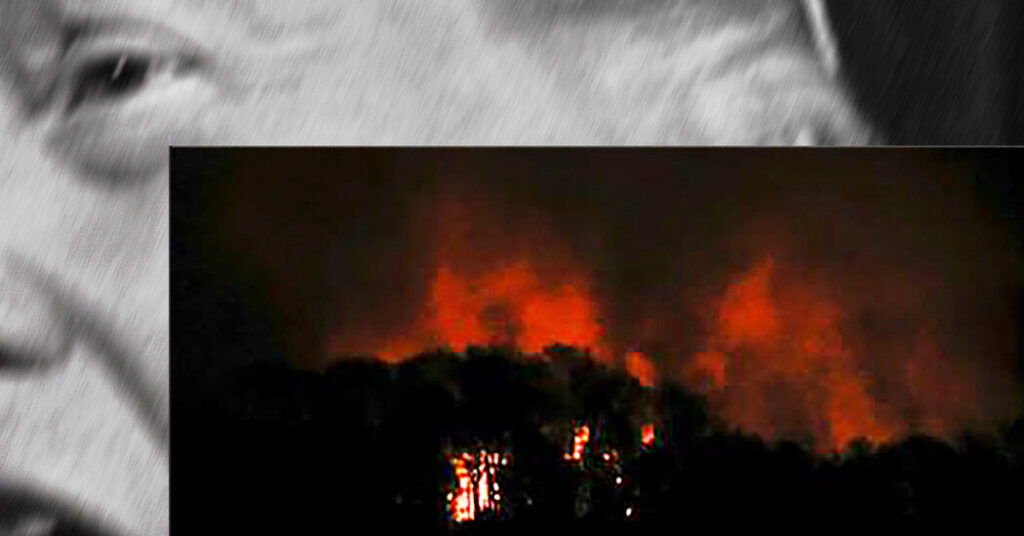
Source photographs by Anadolu and Jim WATSON via Getty Images.
The Times is committed to publishing a diversity of letters to the editor. We’d like to hear what you think about this or any of our articles. Here are some tips. And here’s our email: [email protected].
Follow the New York Times Opinion section on Facebook, Instagram, TikTok, Bluesky, WhatsApp and Threads.
The post The Danger of Trump’s Flamboyant Violence appeared first on New York Times.