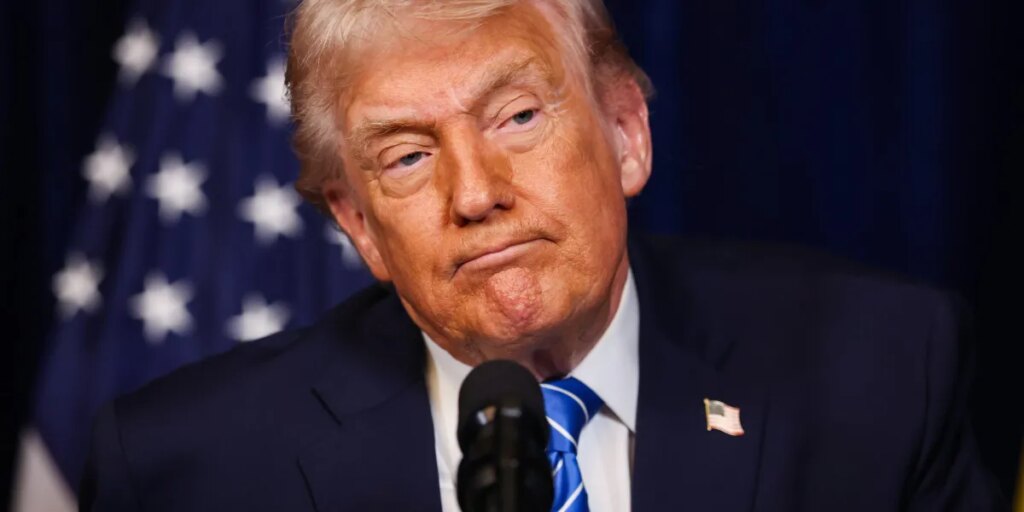
With the United States in debt to the tune of $38 trillion, President Trump has decided now is the time for the White House to also “run” another country. While the U.S. will not incur the costs needed to keep Venezuela’s economy moving, the action taken over the weekend will no doubt come with price tags attached. This, says UBS, will be a key concern for investors evaluating the risk premium for U.S. debt going into 2026. America’s fiscal trajectory, namely its debt burden, has been a growing concern for the likes of JPMorgan’s Jamie Dimon and Federal Reserve Chairman Jerome Powell, as well as droves of economists and Wall Street analysts. These concerns are made sharper by recent changes to Trump’s tariff policies, some of which he has recently delayed. In the face of increased outlays, the Oval Office is also reducing its income. Last week the White House ordered the delay to an increase in tariff rates for upholstered furniture, kitchen cabinets, and vanities that was set to take place on January 1, 2026. It was pushed back by a year.
A seeming falter on tariffs—an unusual but significant policy in helping rebalance America’s books—is likely to cause investors to question how reliable the income stream will be. Indeed, cash is needed all the more at the outset of a new geopolitical upheaval.
At UBS this morning, chief economist Paul Donovan highlighted that the delay to new tariffs comes as the latest political lightning rod—affordability—continues to concern the electorate. Speaking in an audio note to clients, he added: “Reducing tariffs is a fiscal stimulus; delaying tariffs is a delayed fiscal tightening in the States, which has some marginal growth implications. It’s also important in its implications for the size of the U.S. fiscal deficit.”
A fiscal deficit is the shortfall between a government’s spending and its revenue. According to the Bipartisan Policy Centre, as of November, the government’s cumulative deficit for the fiscal year 2026 was already $439 billion (it ends on the final day of September). Any deficits the government incurs year to year are added to the national debt, which currently exceeds $38.5 trillion.
“This may also be a consideration from the recent U.S. action in Venezuela,” Donovan said. “While it is not clear what, if anything, is meant by statements that the U.S. will ‘run Venezuela,’ military adventures cost money. That might be the most significant consequence of the weekend’s activities: Social media warriors may get excited about other geopolitical threats, but these are likely to be less of a focus in financial markets.”
How long is a piece of string?
It’s still early days, but how costly President Trump’s intervention into Venezuela is depends on the magnitude and longevity of the action. The bill could come to something in the palatable billions, Wharton’s Professor Kent Smetters told Fortune, if U.S. troops remain offshore and a new president acceptable to both the White House and the Venezuelan public assumes power.
President Trump sidestepped questions about an election in Venezuela in a huddle with media on board Air Force One overnight, insisting that the U.S. is going to “run” the country but caveating “we’re not going to invest anything”—which oil companies will do instead. This potentially presents a net gain to the U.S. over time, the University of Pennsylvania professor added, as the nation may get access to a new heavy crude oil producer.
“However, if the Venezuela intervention becomes the new Iraq, then the costs could be hundreds of billions of dollars or even more over the next decade. So, I think the biggest risk is how this is managed going forward,” Professor Smetters said. If a conflict arises, then the “cost could be high.” Equally, if the U.S. is forced to show dominance, then this could increase the price of action to “tens of billions of dollars over the next few years,” Professor Smetters added.
America’s fiscal situation would be a pressing concern even without military intervention, according to Desmond Lachman, senior fellow at the American Enterprise Institute—but it’s certainly not helping. Lachman pointed out that America’s most pressing national debt threats remain the legality of the tariff regime (and hence, it’s valuable revenue) and President Trump’s pledge to give away said revenue instead of using it to pay down debt as was previously stated.
“What my concern about Venezuela is that … it’s just confirming that the United States isn’t a very reliable partner,” Lachman tells Fortune. “The bigger factor of the story, Venezuela and talking about Greenland, is going to just heighten geopolitical uncertainty. What it’s also going to do is raise questions, certainly in central banks’ minds: Do you really want to have your money in a form that the United States can freeze it, if they just decide that they don’t like you?
“My problem is that the budget deficit is so bad to begin with, and Venezuela is certainly not going to improve it; if anything, Venezuela makes it worse, so I think we’ve really got a big budget problem.”
The post ‘Military adventures cost money’: Economists’ key concern about Trump’s Venezuela action is how it weakens $38.5 trillion national debt picture appeared first on Fortune.


