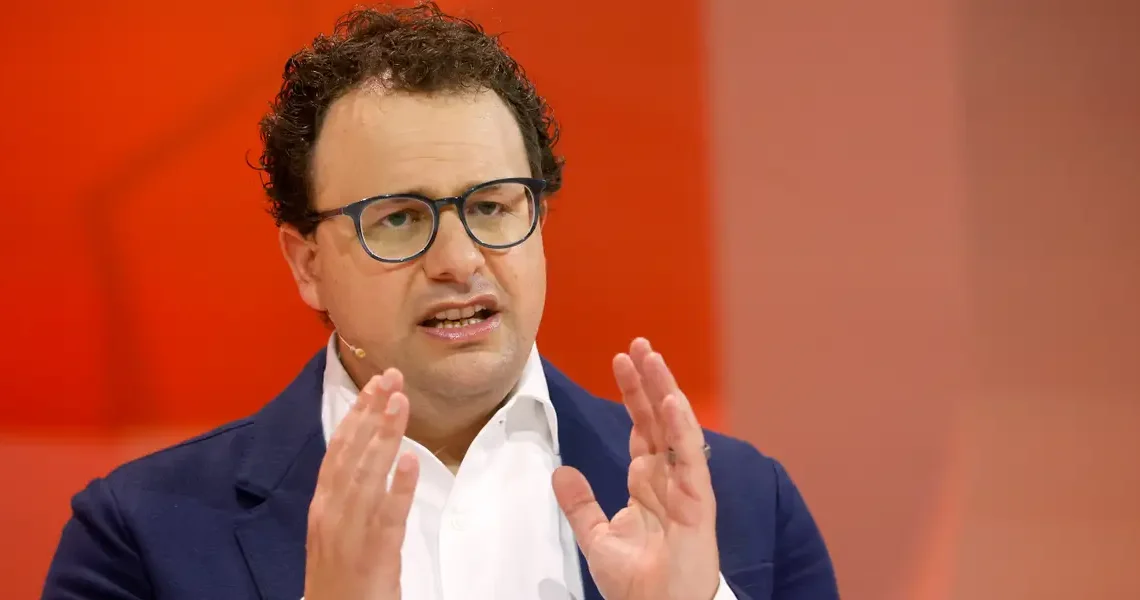
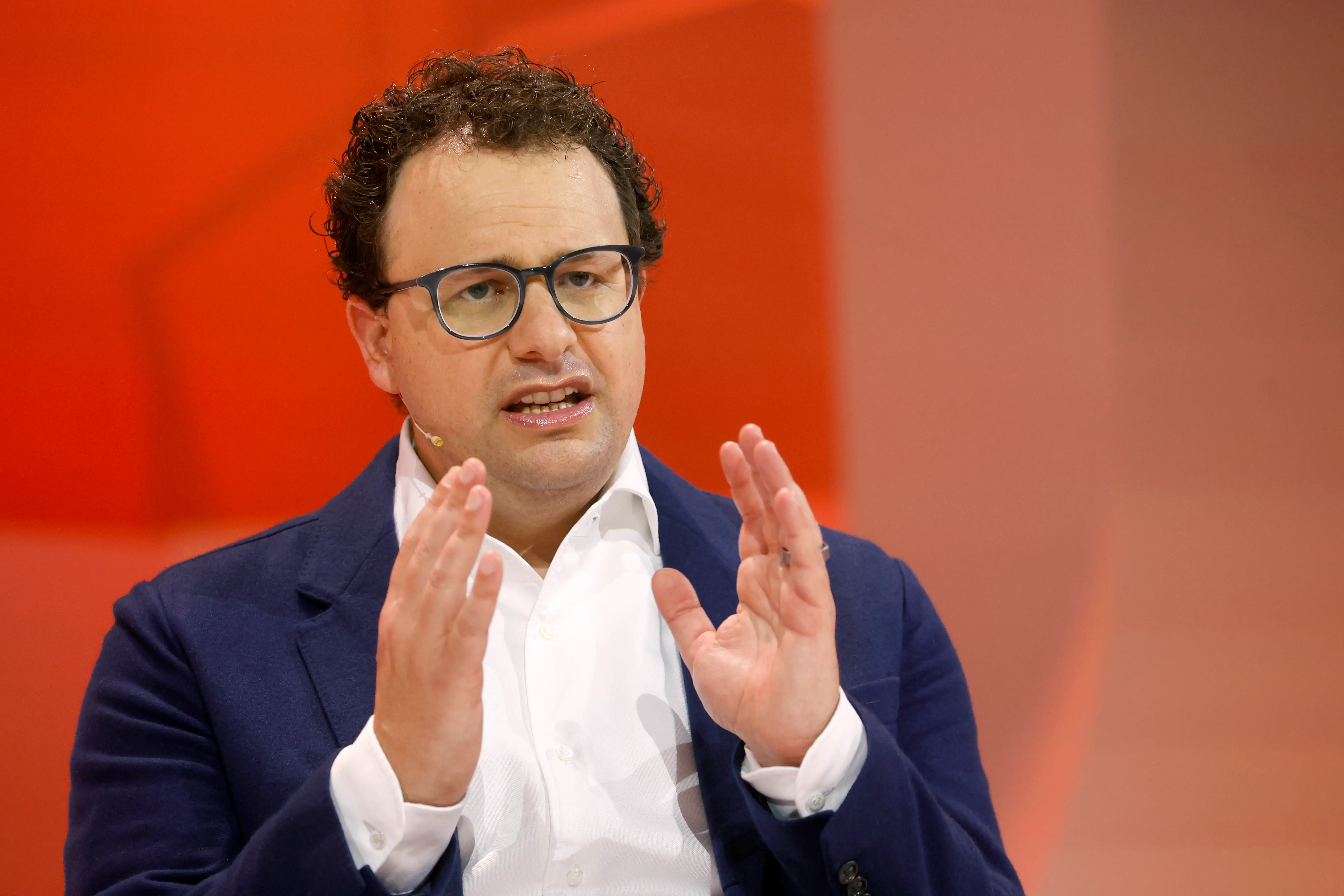
Anthropic CEO Dario Amodei doesn’t mince words.
He’s rankled some rival tech CEOs by boldly predicting that AI could wipe out half of entry-level, white-collar jobs and that the upheaval could happen between now and the next five years.
“I think at the end of the day, I warn about these things not to be a prophet of doom, but because warning about them is the first step towards solving them,” Amodei said in December during The New York Times’ DealBook Summit.
As 2025 comes to a close, Amodei still has a lot to warn about. By his own admission, the longtime AI researcher turned executive has said his vision for the future has led some to dismiss him as a “doomer,” even as he thinks AI could unlock a 150-year lifespan.
“Actual people who are building the technology, they’re excited about the potential, but they’re also worried,” he said during the December event. “They’re worried about the national security risks. They’re worried about alignment of the models; they’re worried about the economic impacts of the models.”
Under Amodei’s leadership, Anthropic, once the underdog of the AI startups, is poised to remain a major part of the race.
Here’s a look at Amodei’s life and career so far.
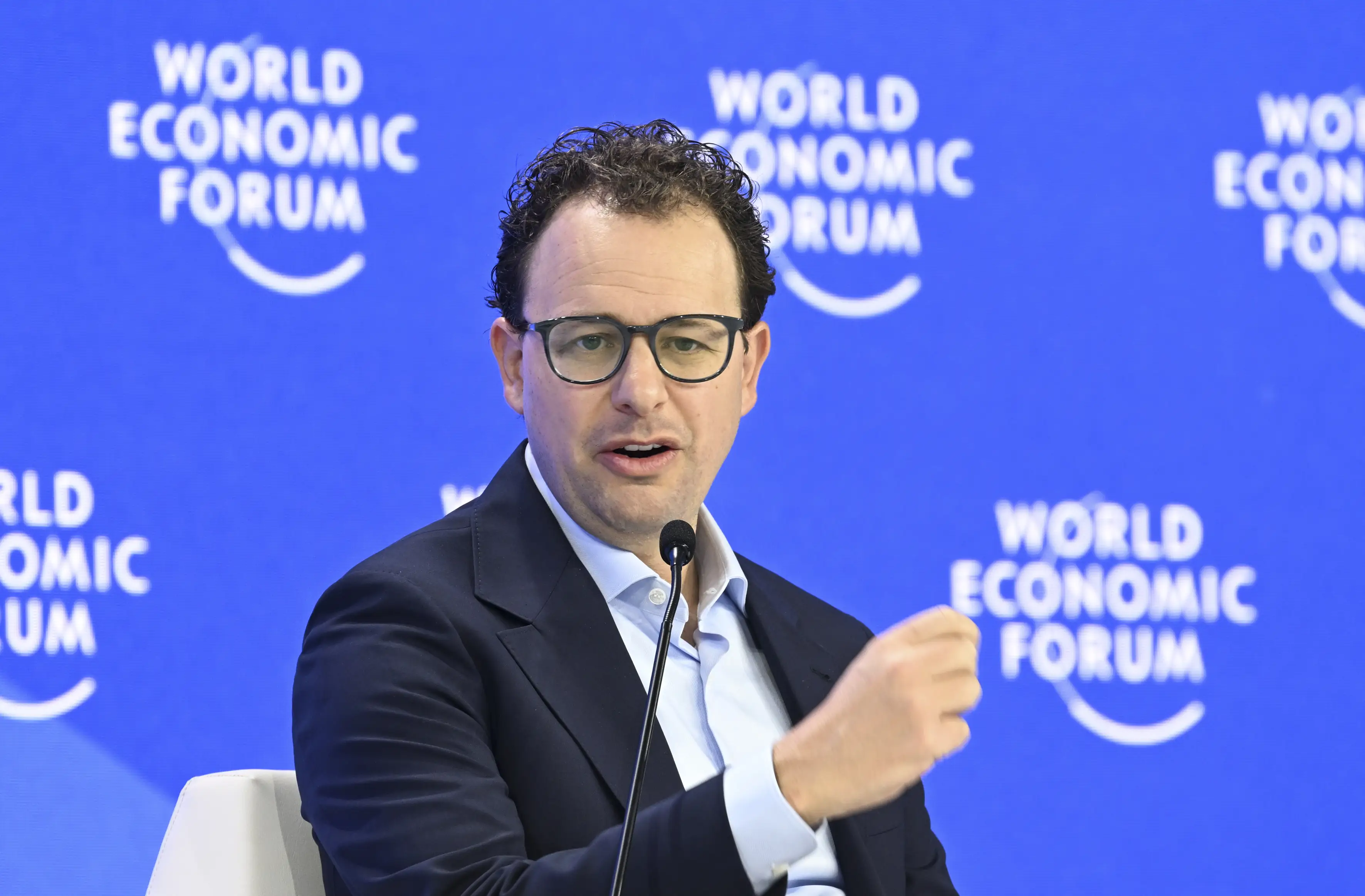
Amodei’s childhood and education
Dario Amodei was born in 1983 in San Francisco to Elena Engel and Riccardo Amodei. A few years later, his sister Daniela, who would later help him cofound Anthropic in 2021, followed. Engel worked on library renovation and construction projects. Amodei’s father was a leatherworker raised in a small town near the Italian island of Elba.
Despite growing up in what became Big Tech’s cradle, Amodei said he was much more interested in hard sciences. His sister said Amodei’s intelligence was apparent from an early age. She told Bloomberg that her brother would declare “counting days,” seeing how high he could go.
“It’d be like a whole day,” she said. “What kind of 3-year-old has that attention span?”
After attending Lowell High School, Amodei studied physics at Caltech before transferring to Stanford to complete his degree. He was pursuing a graduate degree at Princeton when Riccardo Amodei died from a rare illness. His father’s death was a seminal moment, tech journalist Alex Kantrowitz wrote. Amodei shifted from studying theoretical physics to biophysics. Amodei told Kantrowitz that the survival rate of his father’s illness improved rapidly in just a few years after his death.
It’s a lesson that Anthropic’s CEO said remains with him.
“I get really angry when someone’s like, ‘This guy’s a doomer. He wants to slow things down,'” Amodei told Kantrowitz, who writes the Big Techology newsletter. “You heard what I just said, my father died because of cures that could have happened a few years [earlier]. I understand the benefit of this technology.”
A shift to AI
In 2011, Amodei obtained a Ph.D. in physics from Princeton. During postdoctoral research at Stanford, Amodei told Kantrowitz that he saw how artificial intelligence could help researchers like him tackle questions in biology that seemed “beyond human scale.” In 2014, Andrew Ng, a computer science professor at Stanford and cofounder of Coursera, recruited Amodei to join him at Baidu, a Chinese search engine.
While working on speech recognition systems at Baidu, Amodei said he got the inclination of AI scaling, the theory that by increasing everything feeding into AI, the performance improves.
“I noticed that the models started to do better and better as you gave them more data, as you made the models larger, as you trained them for longer,” Amodei told podcaster Lex Fridman in 2024. “And I didn’t measure things precisely in those days, but along with colleagues, we very much got the informal sense that the more data and the more compute and the more training you put into these models, the better they perform.”
Elon Musk and OpenAI
Elon Musk and Sam Altman, then friends, assembled a group of leading AI thinkers for a dinner at a Menlo Park hotel. Musk, Wired later reported, wanted to know if it was too late for a rival AI lab to rise to challenge Google, planting the seeds for what would become OpenAI.
Amodei, who, according to Kantrowitz, was at the dinner, elected to join Google instead. While at Google, Amodei published well-regarded research laying out potential concerns for AI advancements. But after just 10 months at the tech giant, Amodei left for OpenAI.
At OpenAI, Amodei played a big role in the development of GPT-2 and 3, the startup’s large language models. His experience galvanized his belief in the power of scaling, but it also reinforced he desire to tie AI advacements to safety.
“You don’t tell the models what their values are just by pouring more compute into them,” Amodei told Fortune in 2023. “And so there were a set of people who believed in those two ideas.”
Over time, Amodei said he lost faith that OpenAI’s leaders shared his beliefs. In 2020, after rising to become OpenAI’s vice president of research, Amodei quit.
The breakup remains a major point of conversation around Silicon Valley.
During the December event, Amodei took multiple perceived swipes at Altman, even as he repeatedly refused to directly name OpenAI’s CEO.
Amodei said that Anthropic was cautiously trying to thread the needle between the enormous investment required for data center construction and the risk of overextending itself. In contrast, he said others in AI are “yoloing and who pull the risk dial too far.”
The most clear potential shot at Altman came after Amodei was asked about the OpenAI CEO’s decision to declare a “code red” to employees amid fears that ChatGPT was losing its edge.
“We have a little bit of a privileged position where we can just keep growing and just keep developing our models, and we don’t have to do any code reds,” Amodei said.
Why Amodei founded Anthropic with his sister and former OpenAI employees
With seven other former OpenAI employees, Amodei cofounded Anthropic in 2021. It was a close-knit group. One of the cofounders, Daniela Amodei, is Dario’s sister. Some of them had even roomed together, dating back to their time in a shared house when they all worked at OpenAI.
Inside Silicon Valley, there were doubts that a new startup could catch up to OpenAI. Just over two years in, Anthropic reached unicorn status.
Amodei told Time Magazine that by the summer of 2022, Anthropic had finished training its chatbot, Claude. However, the company held back from releasing it. OpenAI, Amodei’s now-rival, released ChatGPT months later.
“I suspect it was the right thing to do,” Amodei told the magazine in 2024, when Time named Anthropic one of its most influential companies and put him on the cover. “But it’s not totally clear-cut.”
Anthropic launched Claude almost a year after ChatGPT’s release. The startup’s bot still won praise. Over time, it has built up a devoted following, particularly for its coding ability.
Unlike OpenAI, Anthropic is largely devoted to businesses and not consumer AI. In May, Reuters reported that Anthropic is making $3 billion in annualized revenue, a significant jump.
In 2025, Amodei, his sister Daniela, and the rest of the cofounders were all minted billionaires based on the company’s valuation. Forbes estimates that Amodei is worth roughly $3.7 billion, as of mid-December.
‘We have a better business model’
Amodei said that Anthropic’s focus on enterprise clients has created a “durable” revenue stream with “better margins” than competitors who are more focused on consumer products.
“We’re trying to manage that risk well while also buying an amount of compute that allows us to be competitive with the other players,” he said during the December event. “We’re very efficient in training, we’re very efficient in inference. We have good margins. I think we can manage it. I think the odds are on our side.”
In November, Anthropic announced it would spend $30 billion on Microsoft Azure compute, a deal that also positioned it as the first model to be available on the three largest clouds. As part of the agreement, Anthropic is set to receive up to $5 billion from Microsoft and up to $10 billion from Nvidia.
Amodei later said that partnering with Nvidia hasn’t changed his view that its CEO Jensen Huang is mistaken in his view that US companies should sell advanced chips to China.
“This isn’t personal, this is a policy question,” Amodei said. “This is a question of how best to defend our national security.”
Other views have also put Amodei up against his competitors and even the White House. In October, AI czar David Sacks, accused Anthropic of “running a sophisticated regulatory capture strategy based on fear-mongering.” Amodei said that Sacks’ claims were “inaccurate.”
Notably, Amodei has not changed his opposition to a White House-favored federal preemption of state-level AI laws. Some Republicans in Congress have attempted to pass a 10-year moratorium into law, although the policy has split even within their own party.
“It’s like saying, I’m driving a car, I’m going to rip out the steering wheel because I don’t need to steer for 10 years,” Amodei said in December.
Read the original article on Business Insider
The post Meet Dario Amodei, Anthropic’s outspoken CEO appeared first on Business Insider.