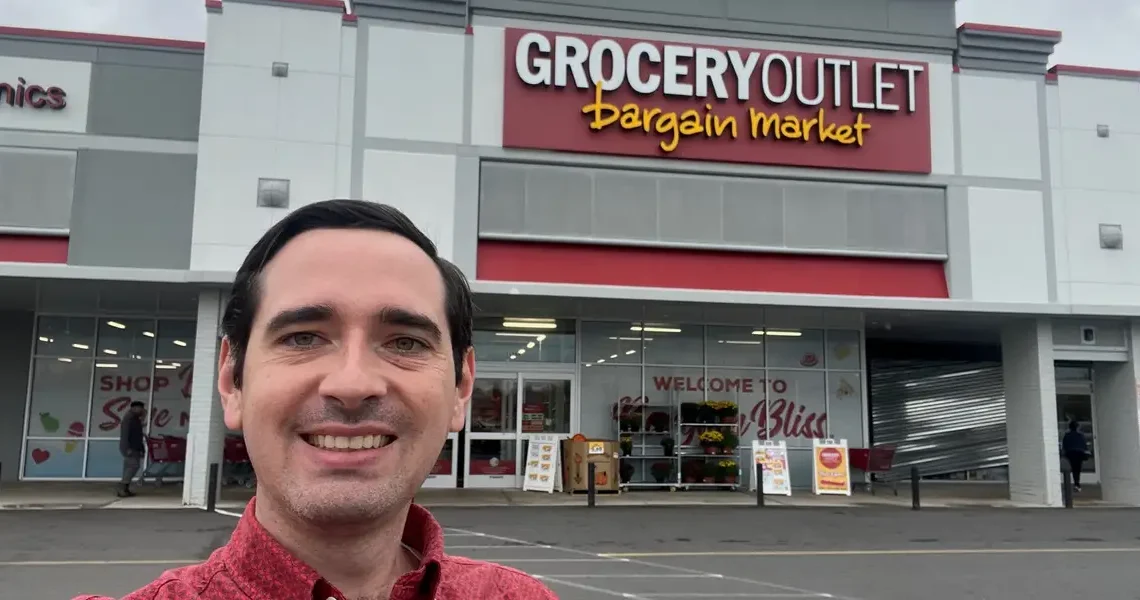
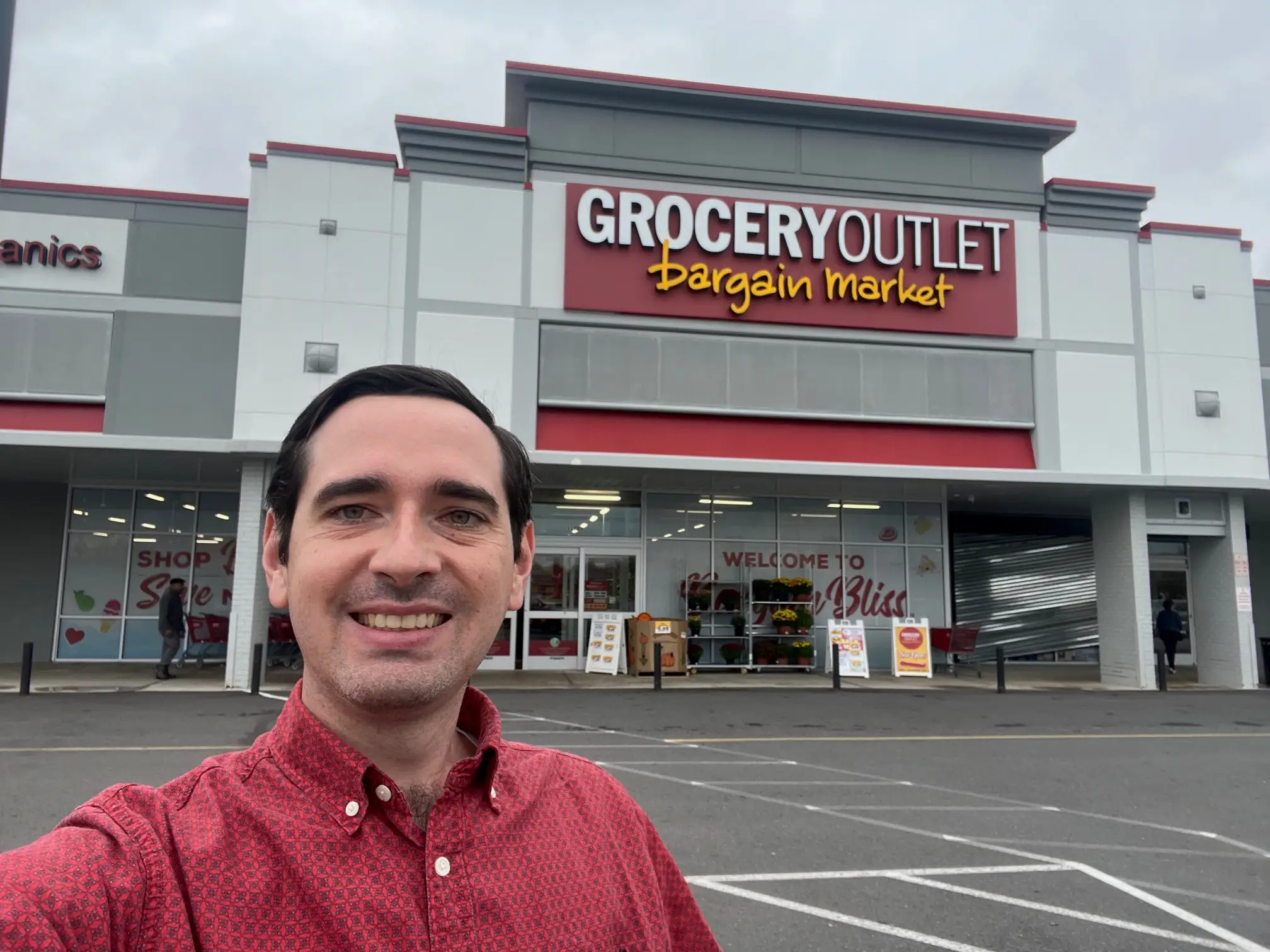
One grocery chain is expanding using a business model that’s somewhere between Aldi and T.J. Maxx.
Supermarket chain Grocery Outlet promises low prices, and it has a novel approach: Like Aldi’s locations, Grocery Outlet stores tend to be smaller than traditional grocery stores and emphasize low prices.
But like T.J. Maxx, Grocery Outlet often sells products that other retailers or food manufacturers can’t move themselves.
During the height of the pandemic in 2020, for instance, Grocery Outlet bought 30,000 cases of 1-gallon containers of salsa that were meant for restaurants, former CEO Robert Sheedy said on an earnings call at the time.
“Grocery Outlet buyers are experts at purchasing that product opportunistically,” the chief marketing officer, Layla Kasha, said in a statement to Business Insider in September.
That means finding products “outside of the normal retail channel as a result of packaging changes, product overruns, and other varied inventory circumstances,” she said. “Our suppliers offer us great prices on that surplus inventory, and we pass those savings along to our customers.”
This approach allows Grocery Outlet to sell products for 40% to 70% less than comparable items at traditional retailers, according to the company’s latest annual report.
Grocery Outlet had 563 stores as of its third quarter, which ended on September 27. The chain said in November that it planned to end 2025 with 37 new store openings for the year.
The San Francisco-based company already has a significant presence in the Western US, but it’s expanding in Eastern states, including Delaware, Maryland, and Pennsylvania.
I wanted to experience shopping at Grocery Outlet for myself, so I visited one of the chain’s relatively new stores in September. Here’s what I found.
Do you have a story idea to share about Grocery Outlet or another retailer? Contact this reporter at [email protected].
I visited one of Grocery Outlet’s newer stores in Maryland.
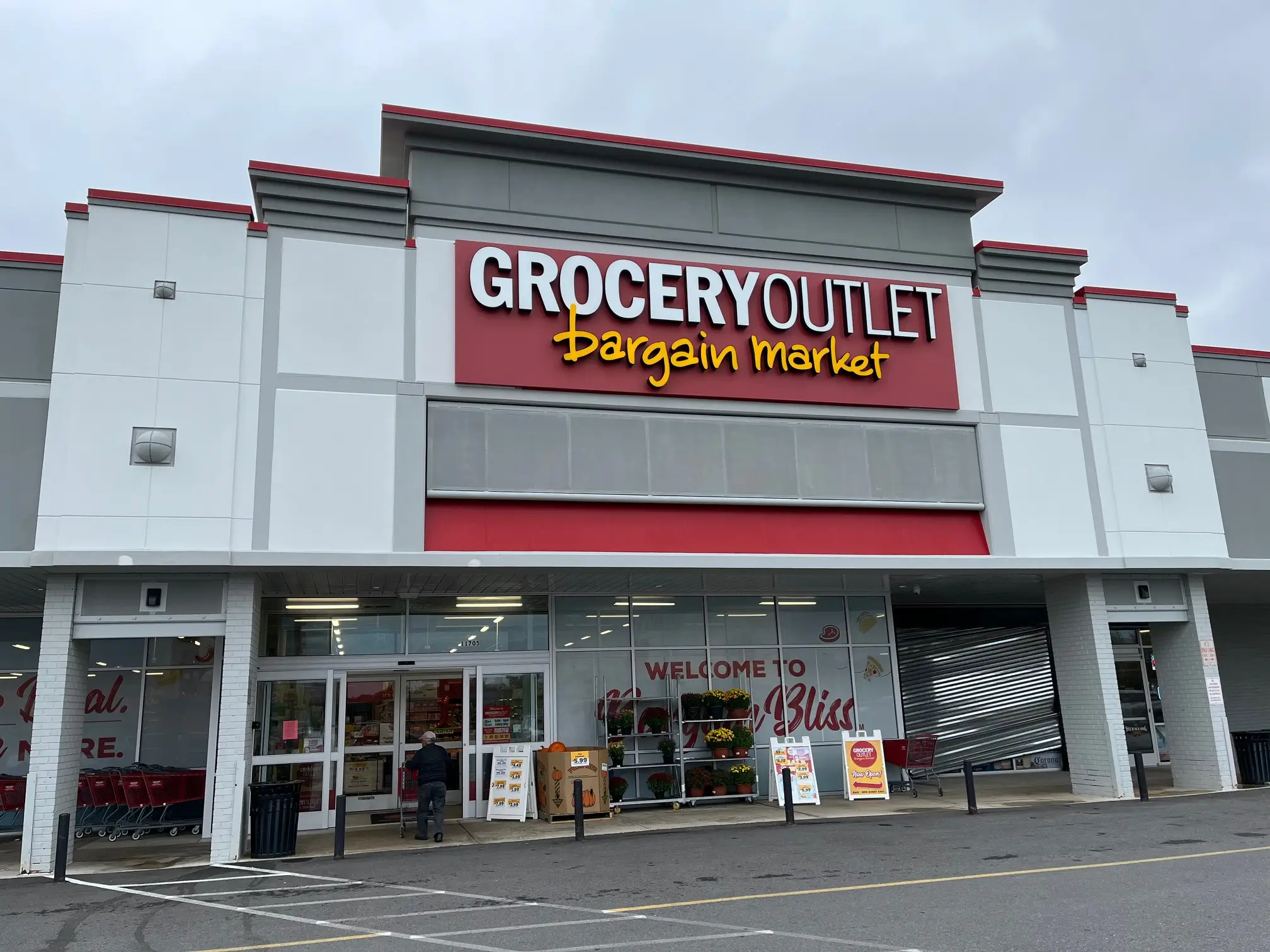
Located in a shopping mall in Beltsville, Maryland, this store opened in July 2024.
Grocery Outlet’s emphasis on deals was clear from the moment I walked in.
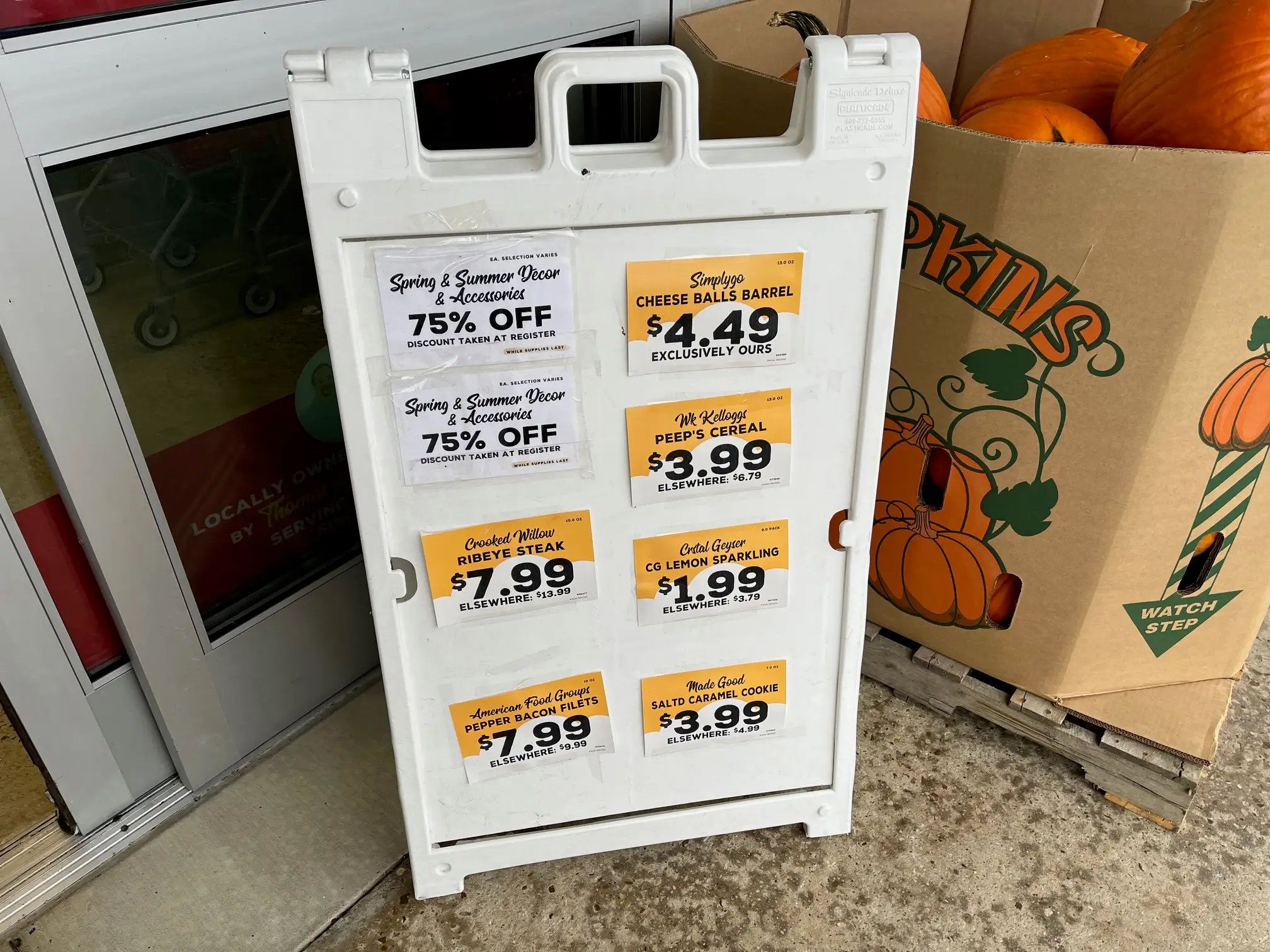
This sign outside the main entrance highlighted some of Grocery Outlet’s deals, including salted caramel cookies, cheese balls, and ribeye steaks.
Grocery Outlet also sells fresh produce and meat.
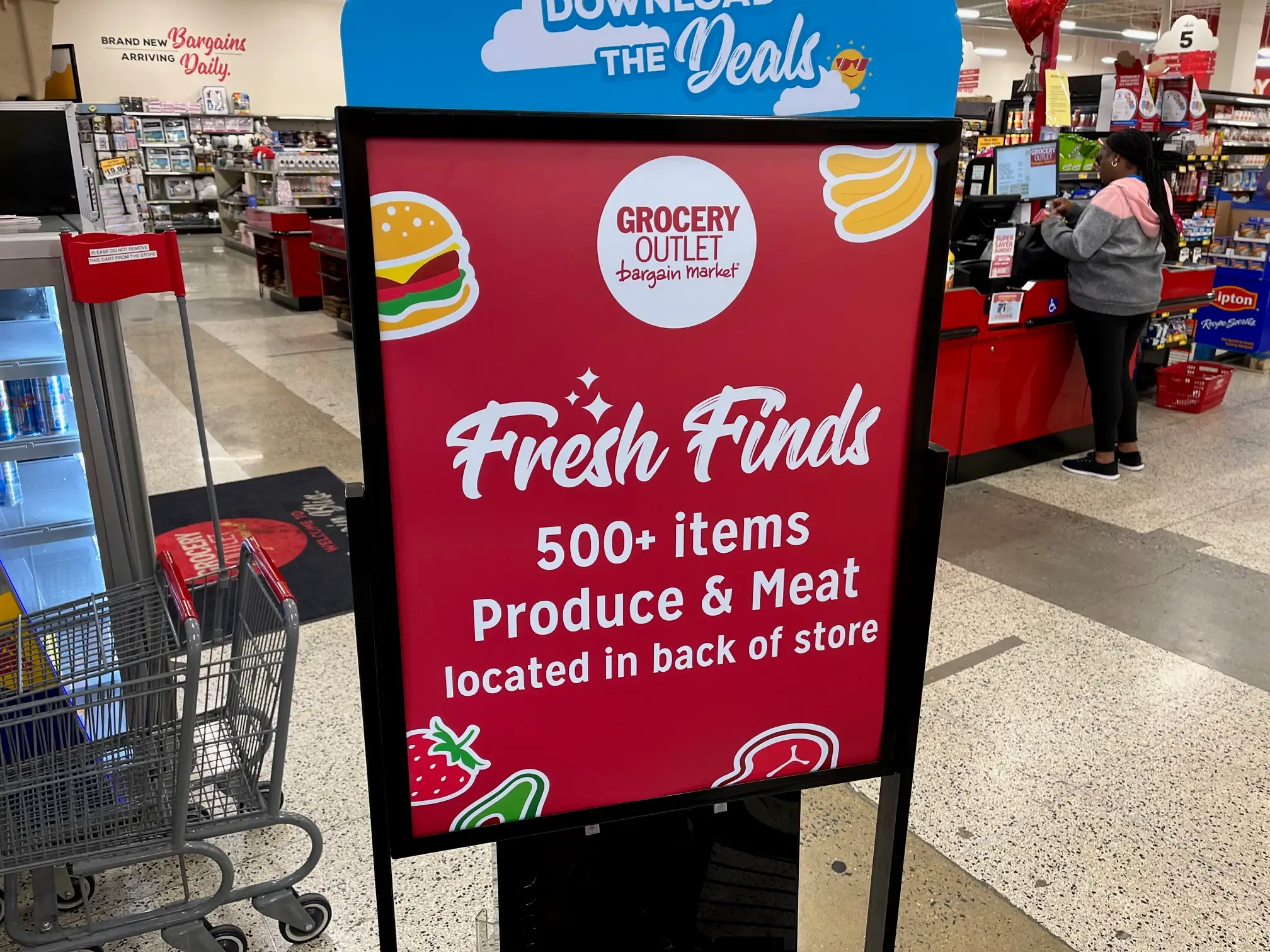
Though Grocery Outlet says it’s “opportunistic” with its buying, the chain’s stores stock many of the same types of products that you’ll find at traditional grocery stores, such as produce. This sign reminded me of that as I walked in.
This Grocery Outlet store was similar in size to an Aldi or other small-format supermarket.
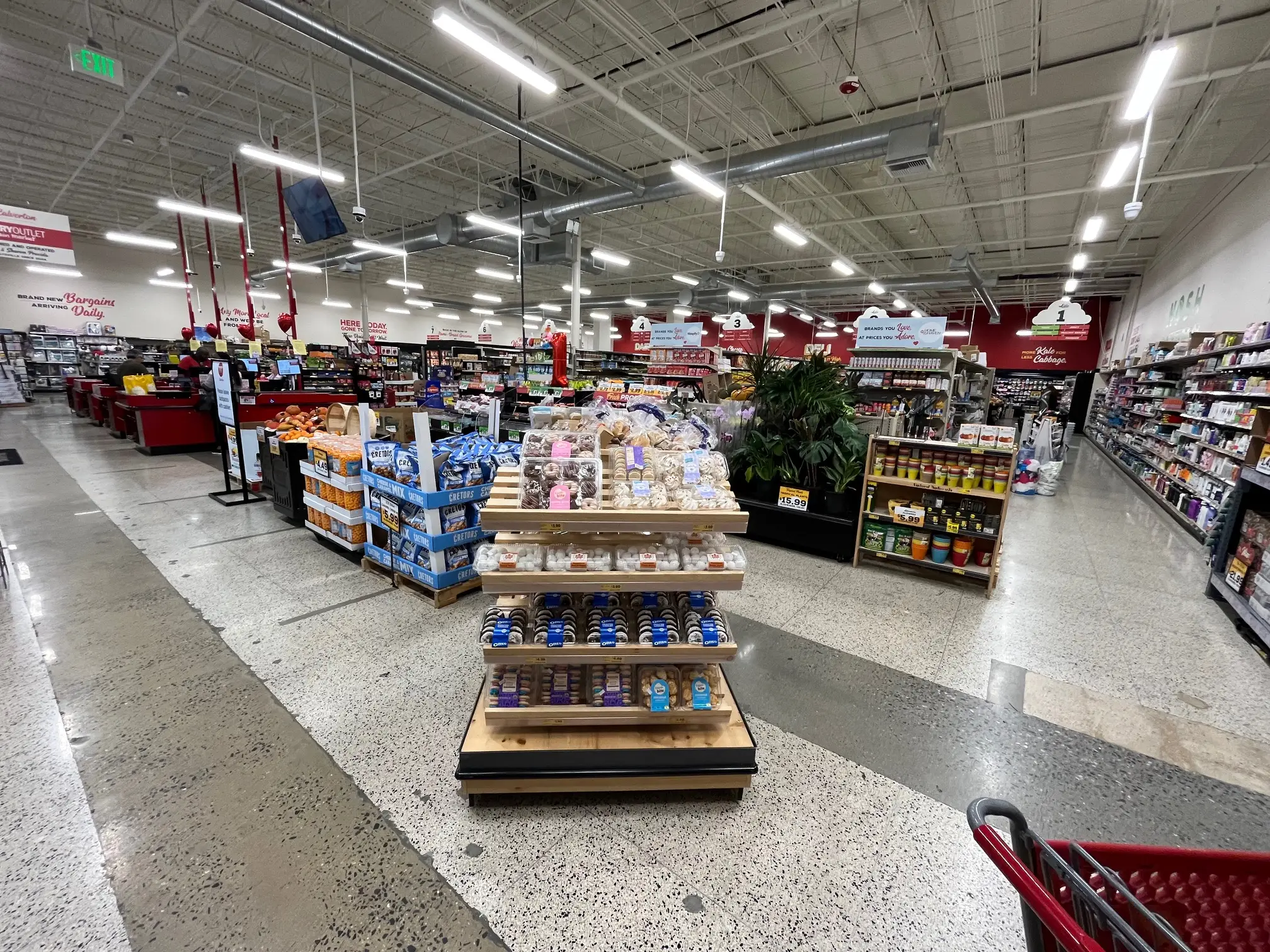
Grocery Outlet stores generally take up between 15,000 and 20,00 square feet, according to the company’s latest annual filing. Aldi stores, by comparison, are generally about 22,000 square feet.
Both grocery chains are much smaller than the format used by traditional supermarkets, which can take up twice as much space at about 40,000 square feet.
Grocery Outlet sells more than food.
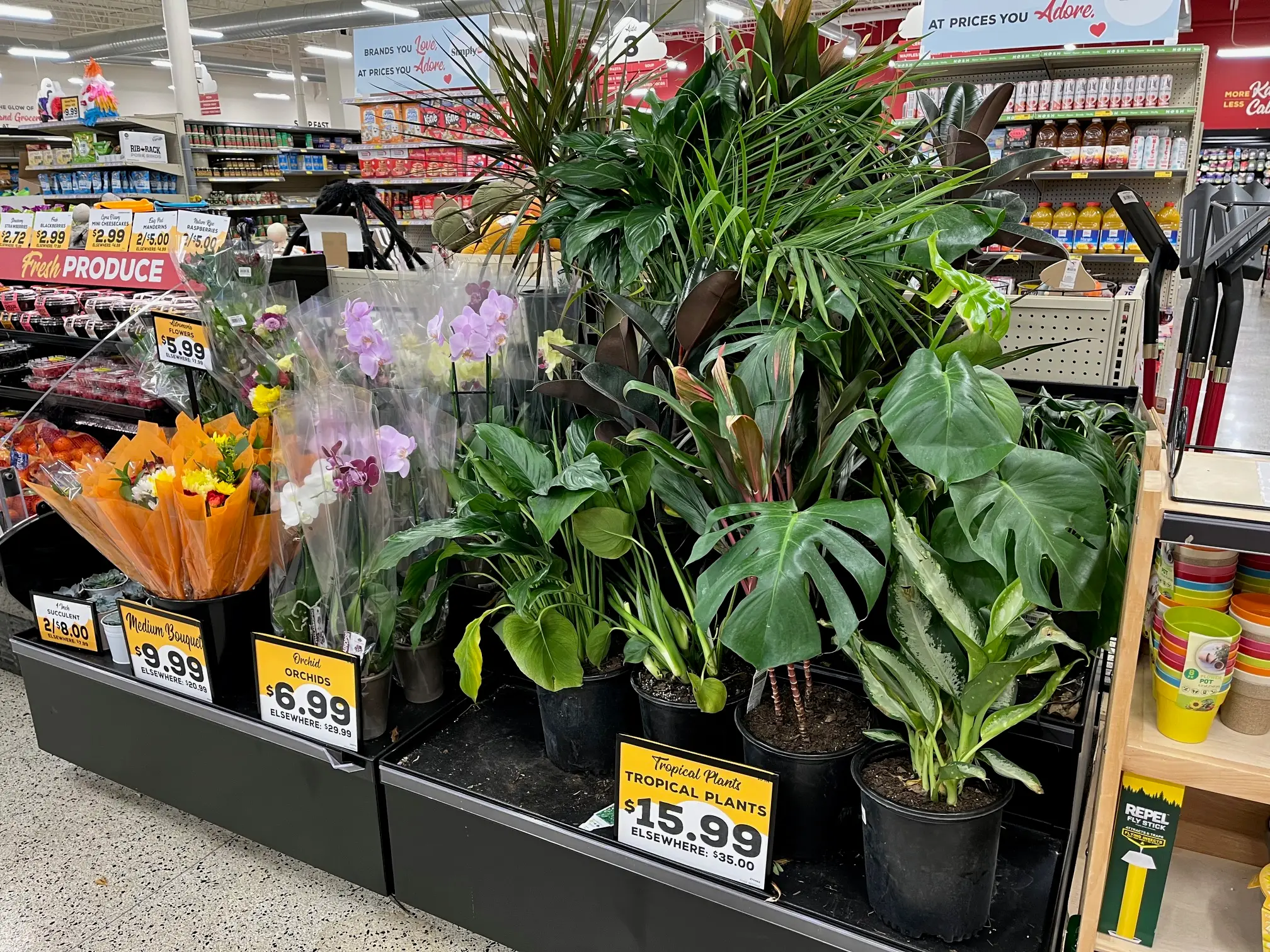
As I walked through the front of the store, I found ceramic pots, gardening tools, and this selection of potted plants.
I found name-brand groceries …
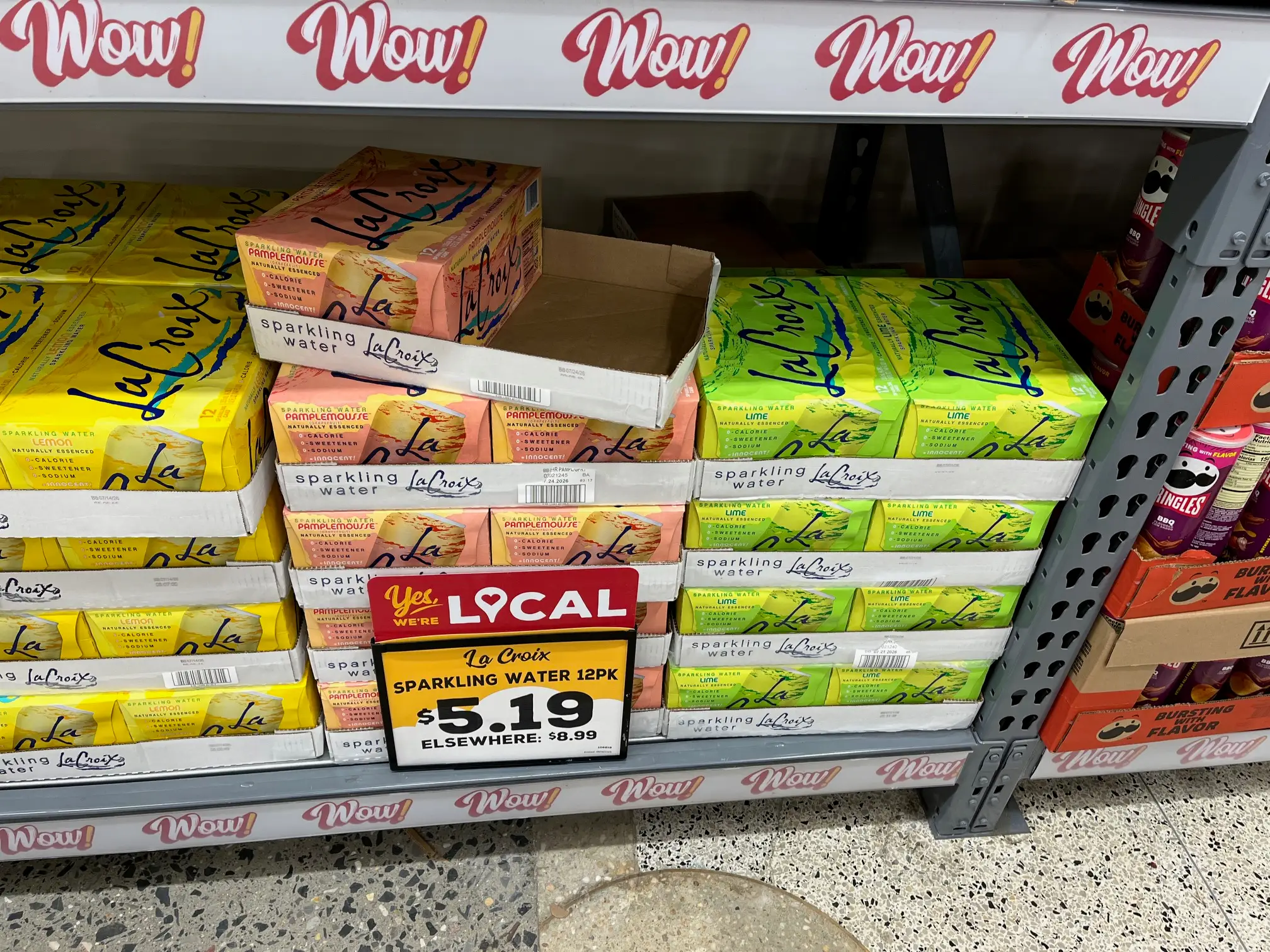
Grocery Outlet often touts that many of its products are name brands. That was true with these boxes of canned La Croix seltzer.
… as well as items I’d never heard of before.
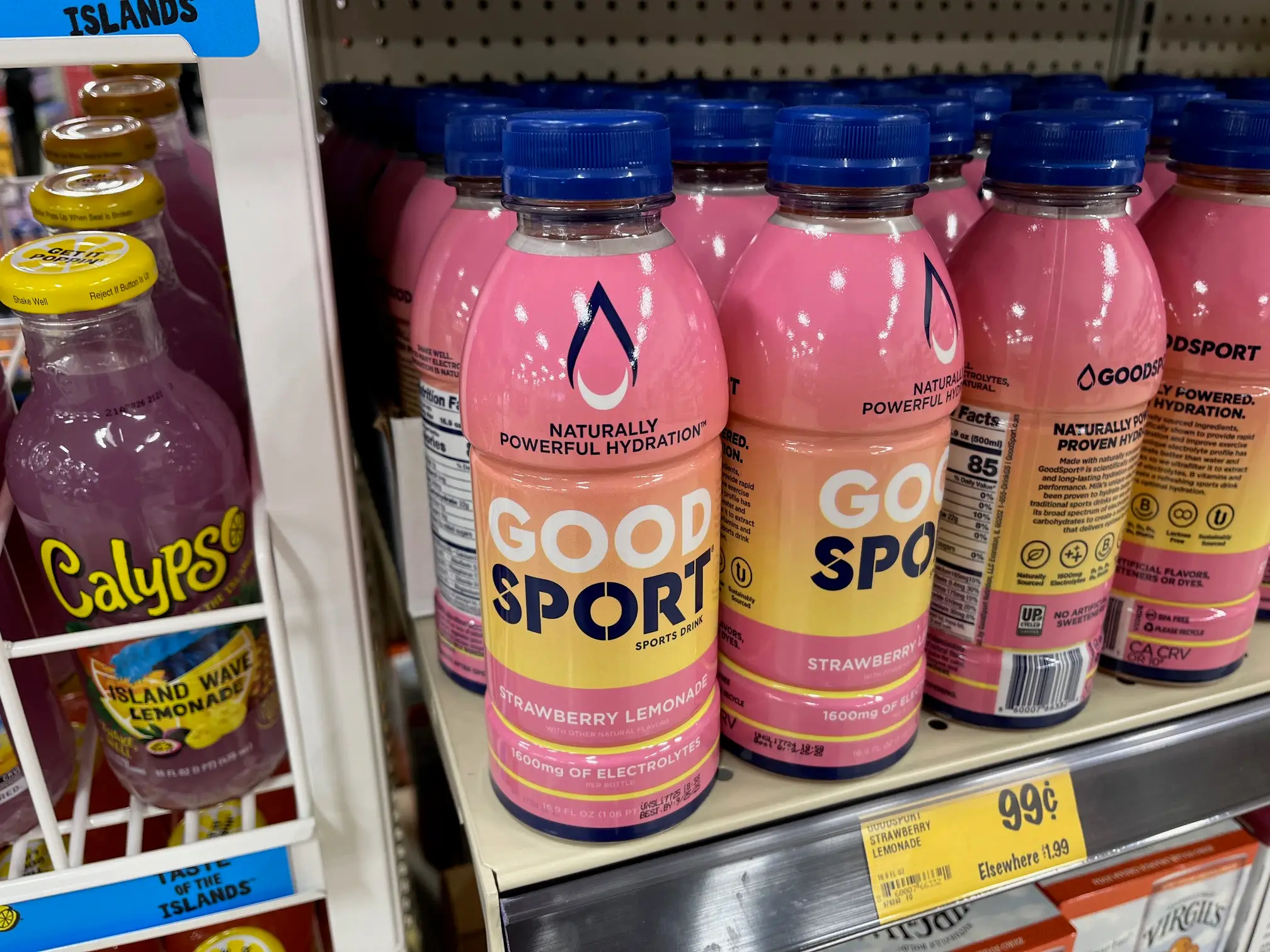
I’ve written about and followed many food and beverage brands over the years, but I wasn’t familiar with Good Sport, a dairy-based sports drink.
Grocery Outlet also has its own brands.
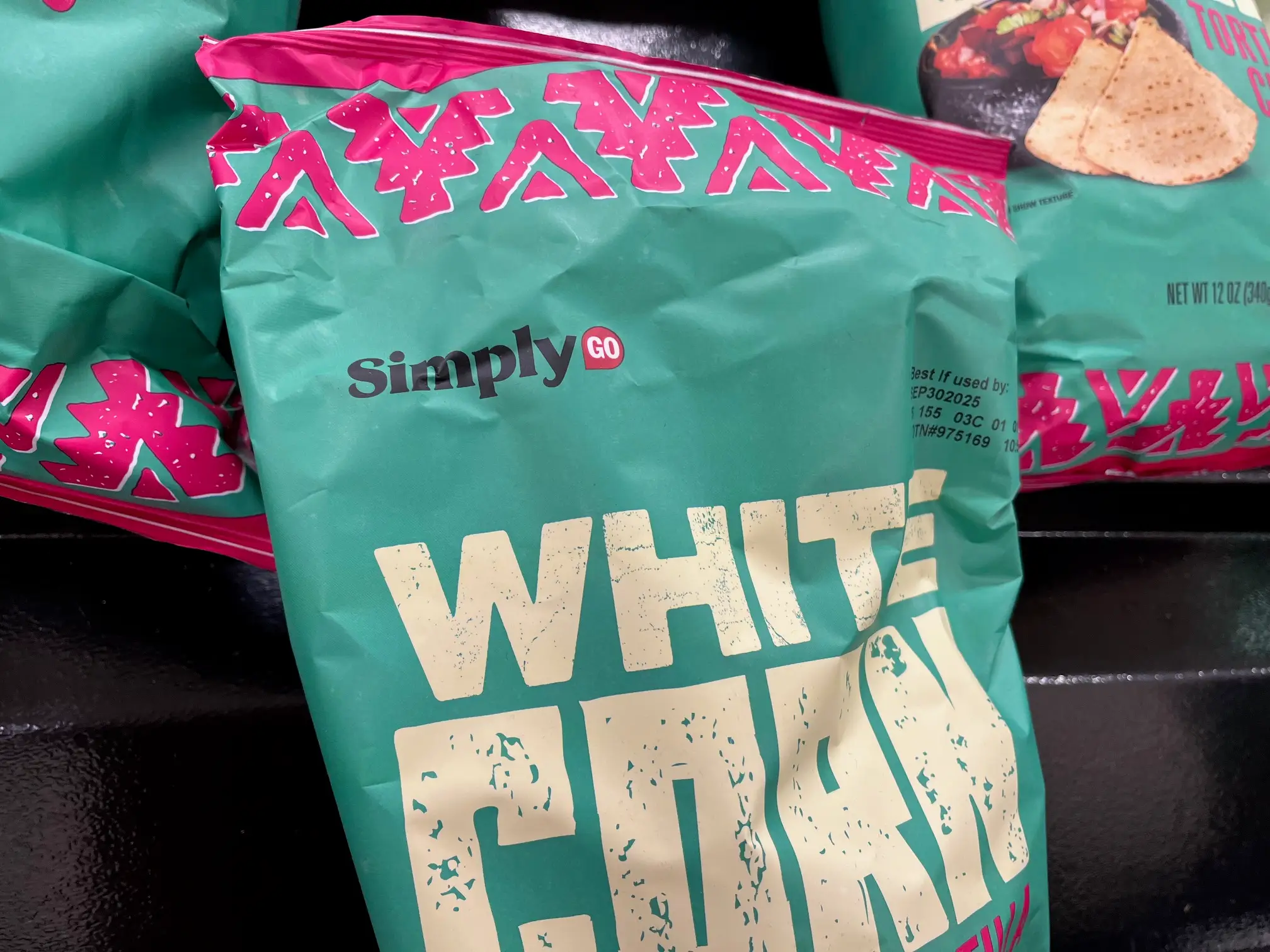
Grocery Outlet makes some of its own products under the SimplyGo name, such as these tortilla chips.
The chain tries to stock store-branded goods and those from name brands “as evenly as possible,” Kasha told Business Insider.
Most of Grocery Outlet’s private-label items are “everyday grocery basics” such as butter, eggs, and paper towels, she said. “We source those traditionally to ensure our shoppers can find them each time they come to the store,” she said.
Many of the name-brand goods, meanwhile, are meant to create a “treasure hunt shopping experience,” Kasha said. Think about “a holiday-themed cereal, or a fun soda flavor that you’ve never heard of,” she said.
I saw products from some popular restaurant chains in the freezer aisle.
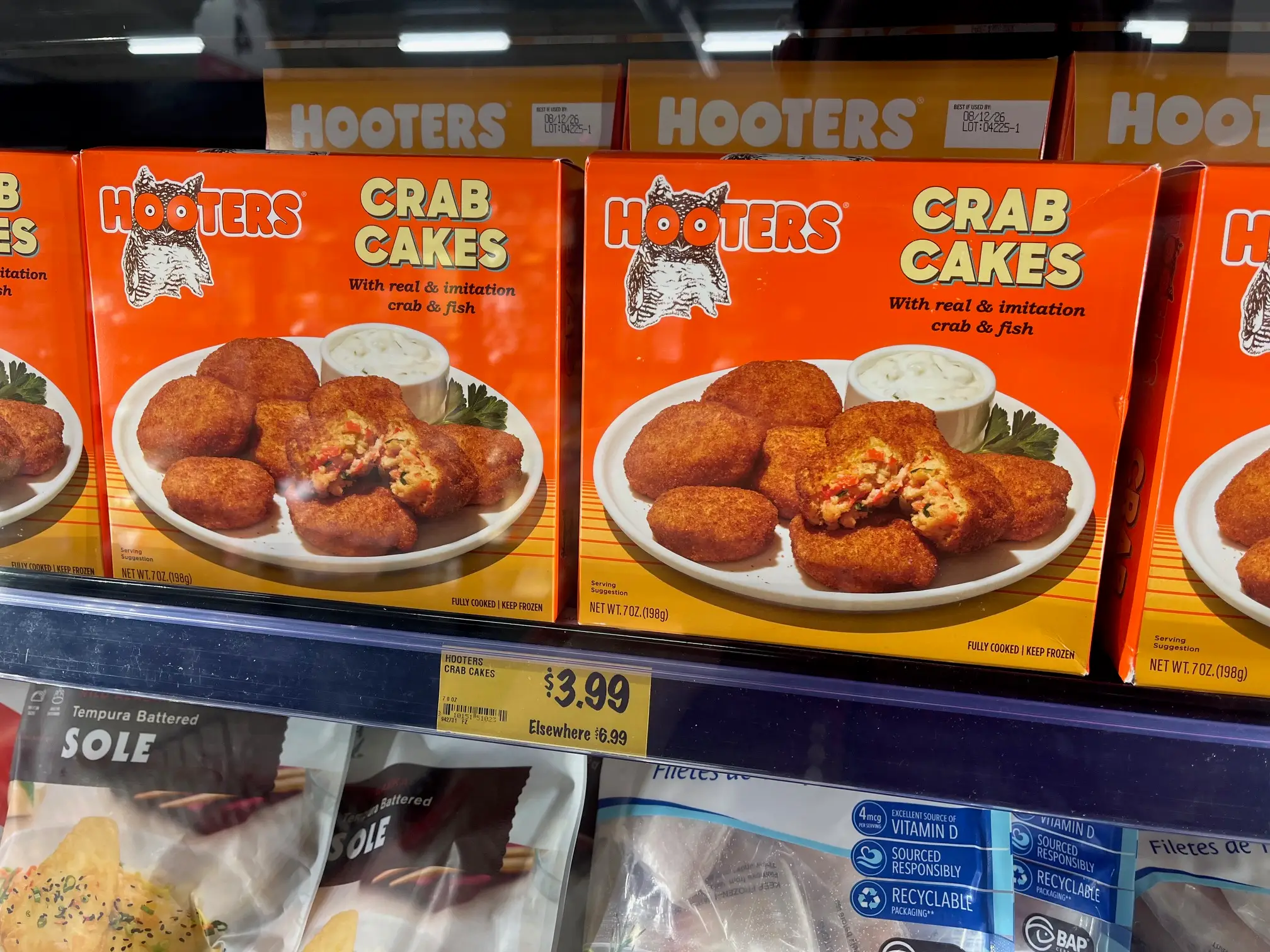
These Hooters-branded crab cakes piqued my interest, given my reporting on the chain’s bankruptcy earlier this year.
I bought a box and tried them at home. They were unremarkable.
Some parts of Grocery Outlet looked like any other grocery store.
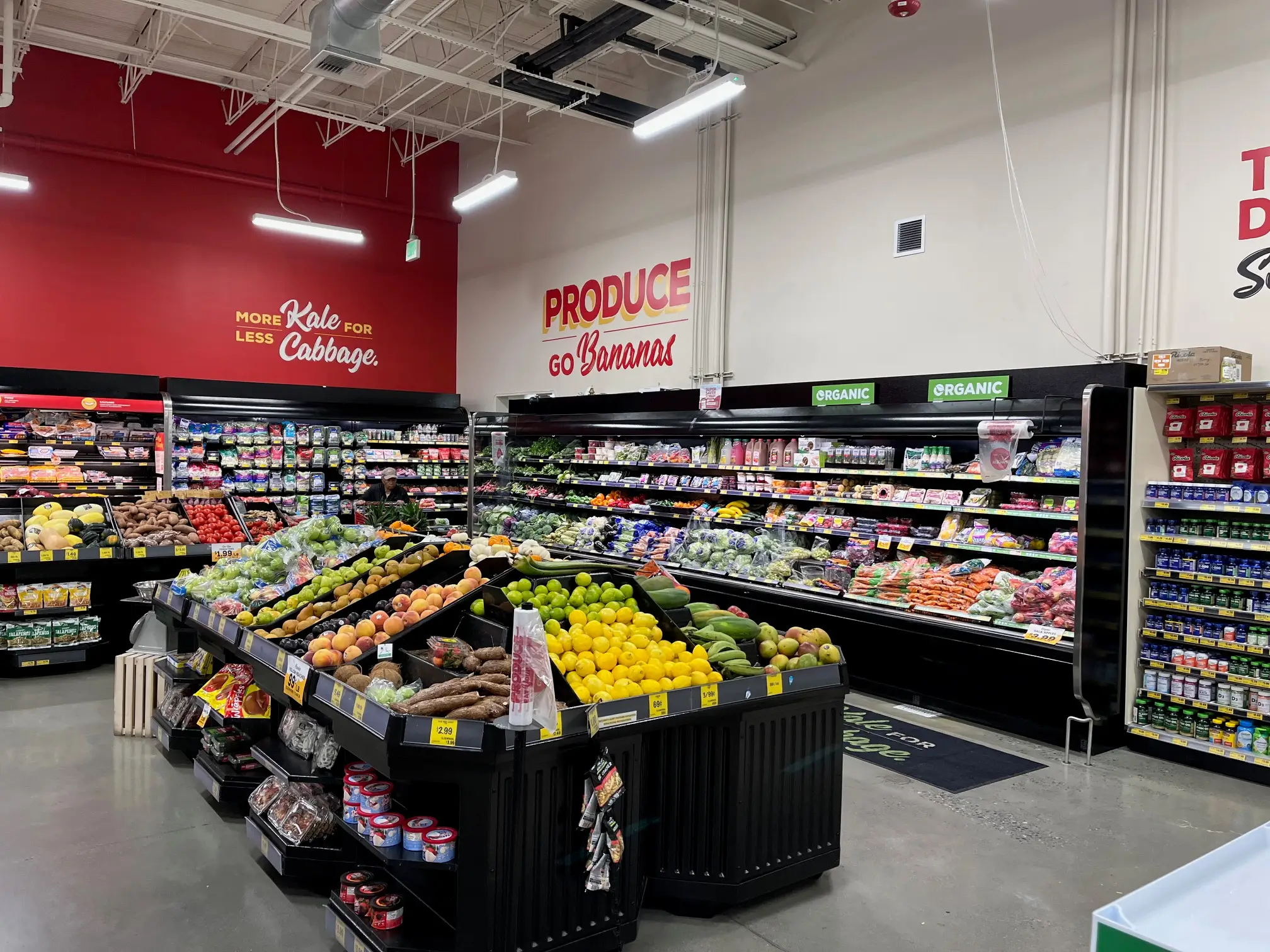
In the back of the store, I found the produce section, which had many of the basic types of fruit and vegetables that other stores have, from eggplants to lemons.
The quality of the produce seemed decent.
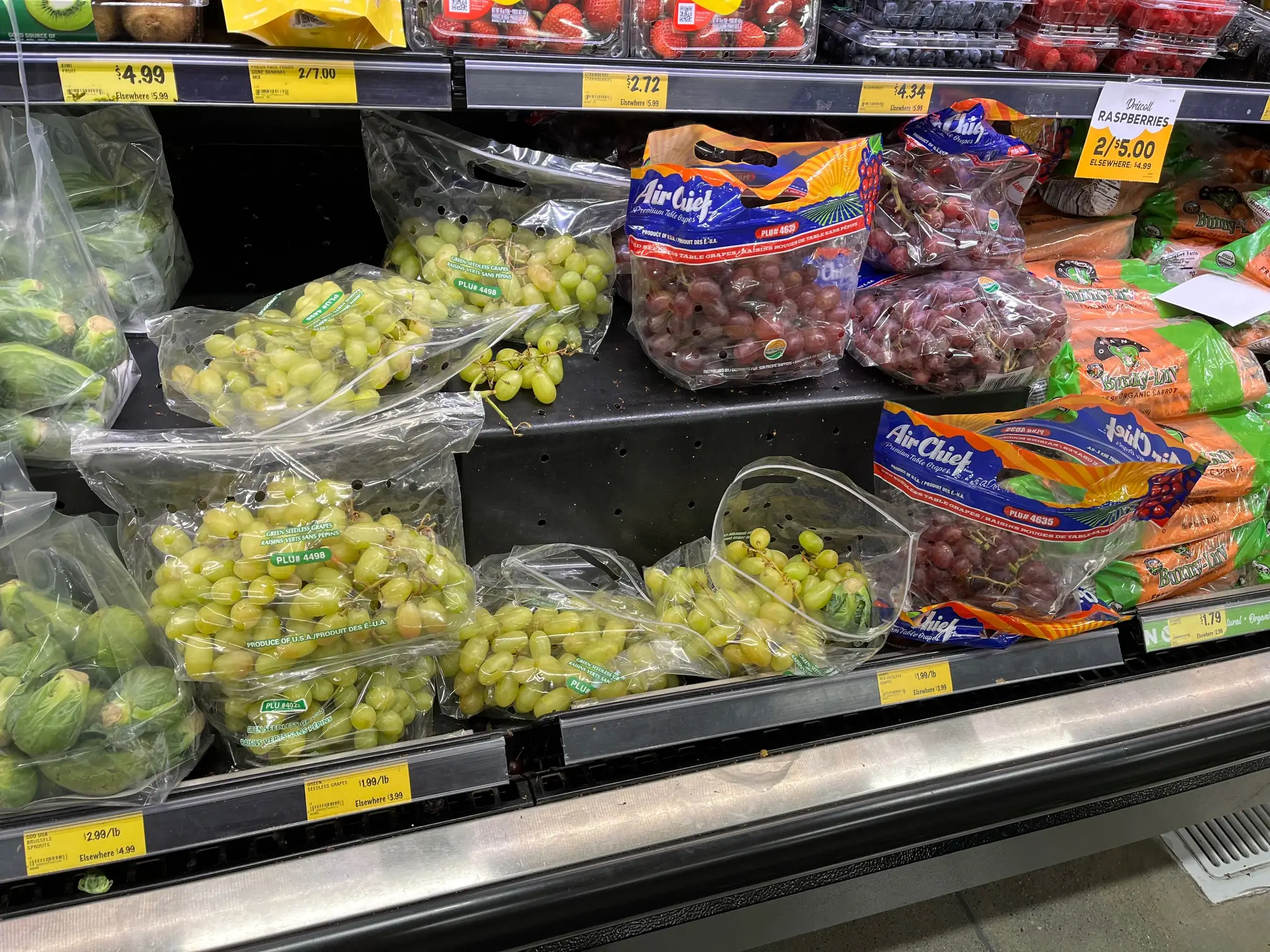
I bought some red, seedless grapes and was happy with the quality.
Price tags that highlighted savings were everywhere.
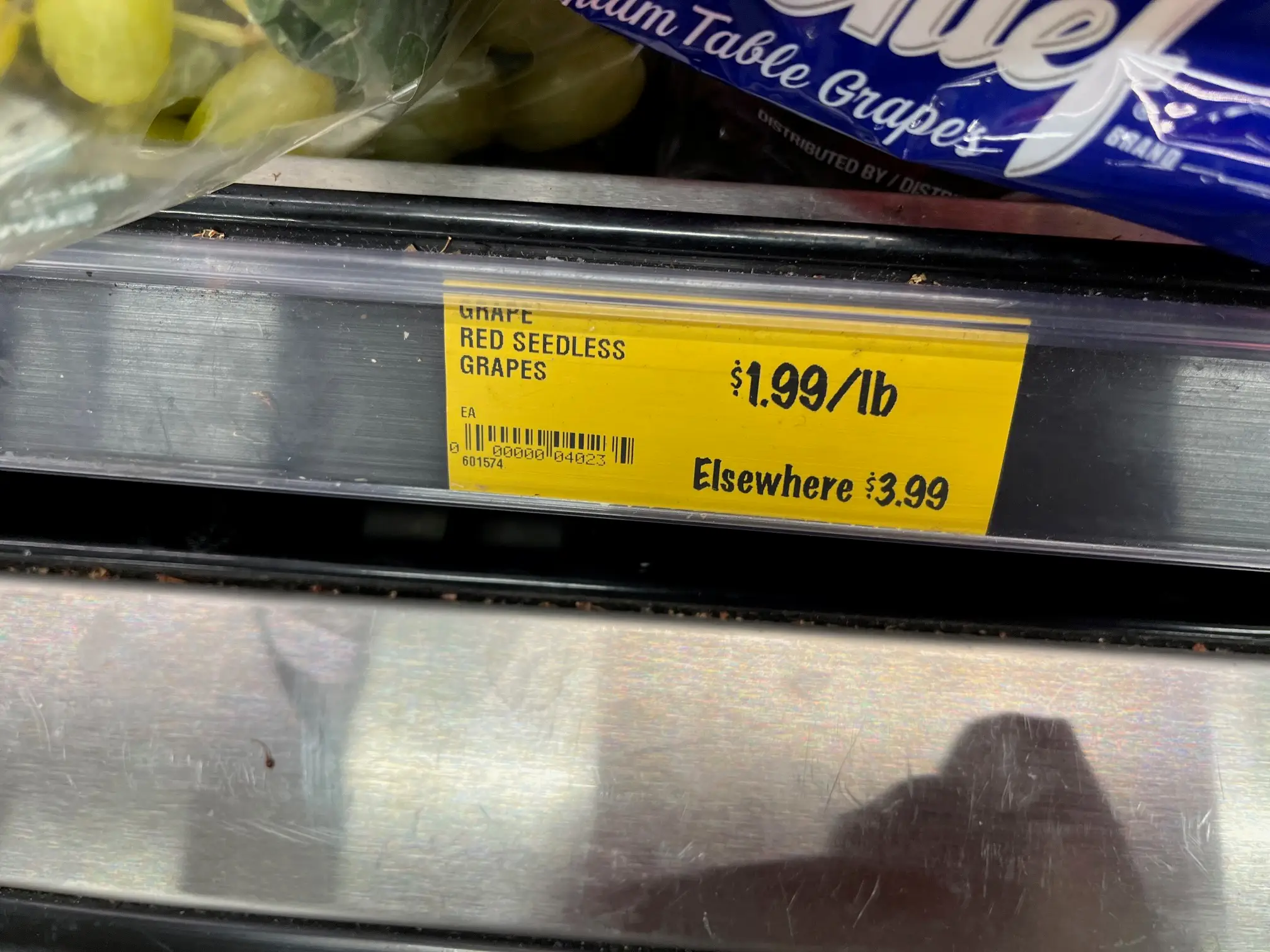
These grapes were $1.99 a pound at Grocery Outlet. The tag said that they’d cost $3.99 a pound “elsewhere,” which seems plausible to me, though I had no clue which other stores they were talking about.
There was a robust selection of Latin American groceries.
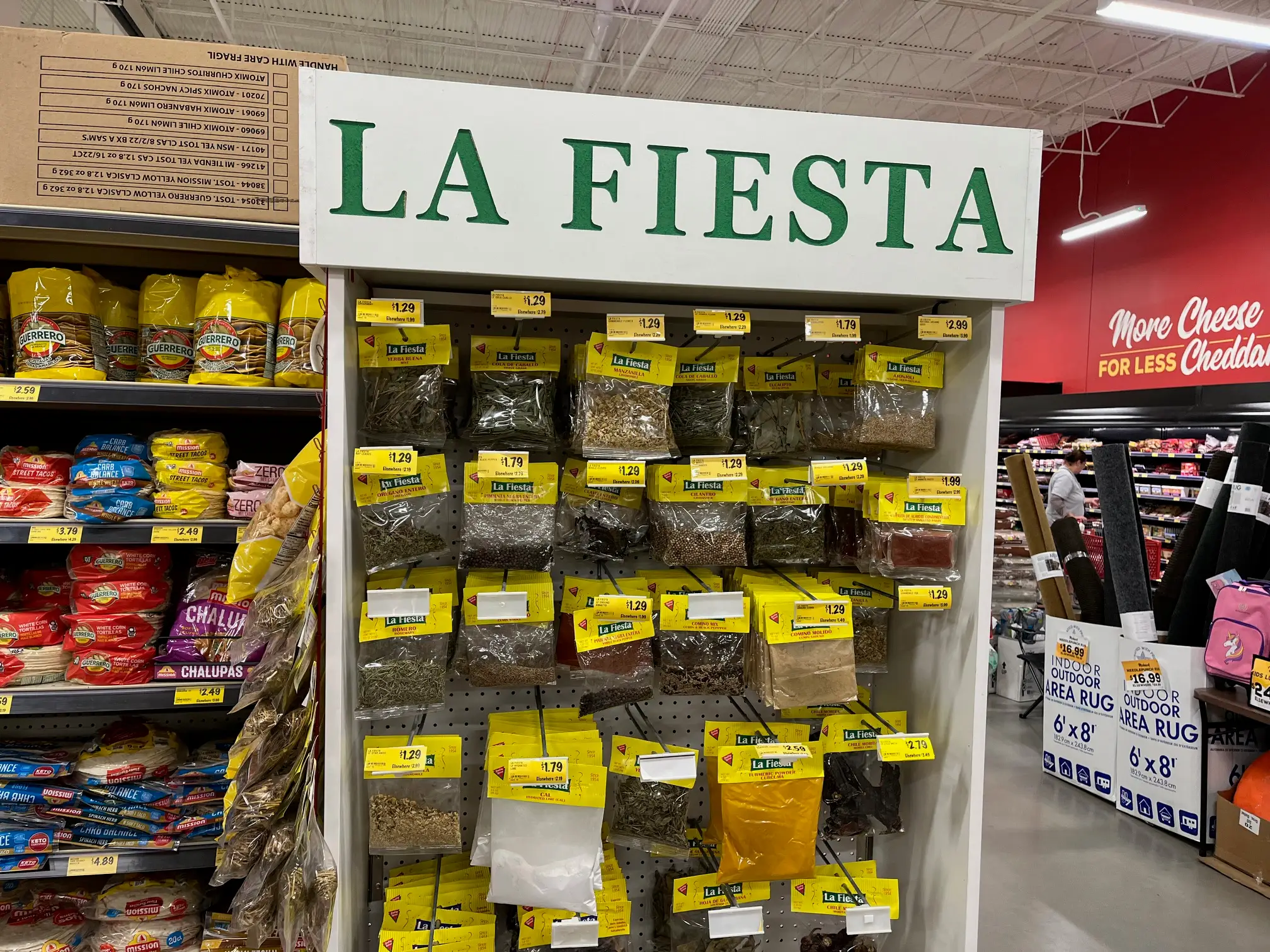
Besides jars of salsa and tortillas, there was a range of spices often used in Mexican cooking. I picked up some dried chiles for my next homemade salsa rosa.
As I ventured deeper into the store, I saw more unusual products.
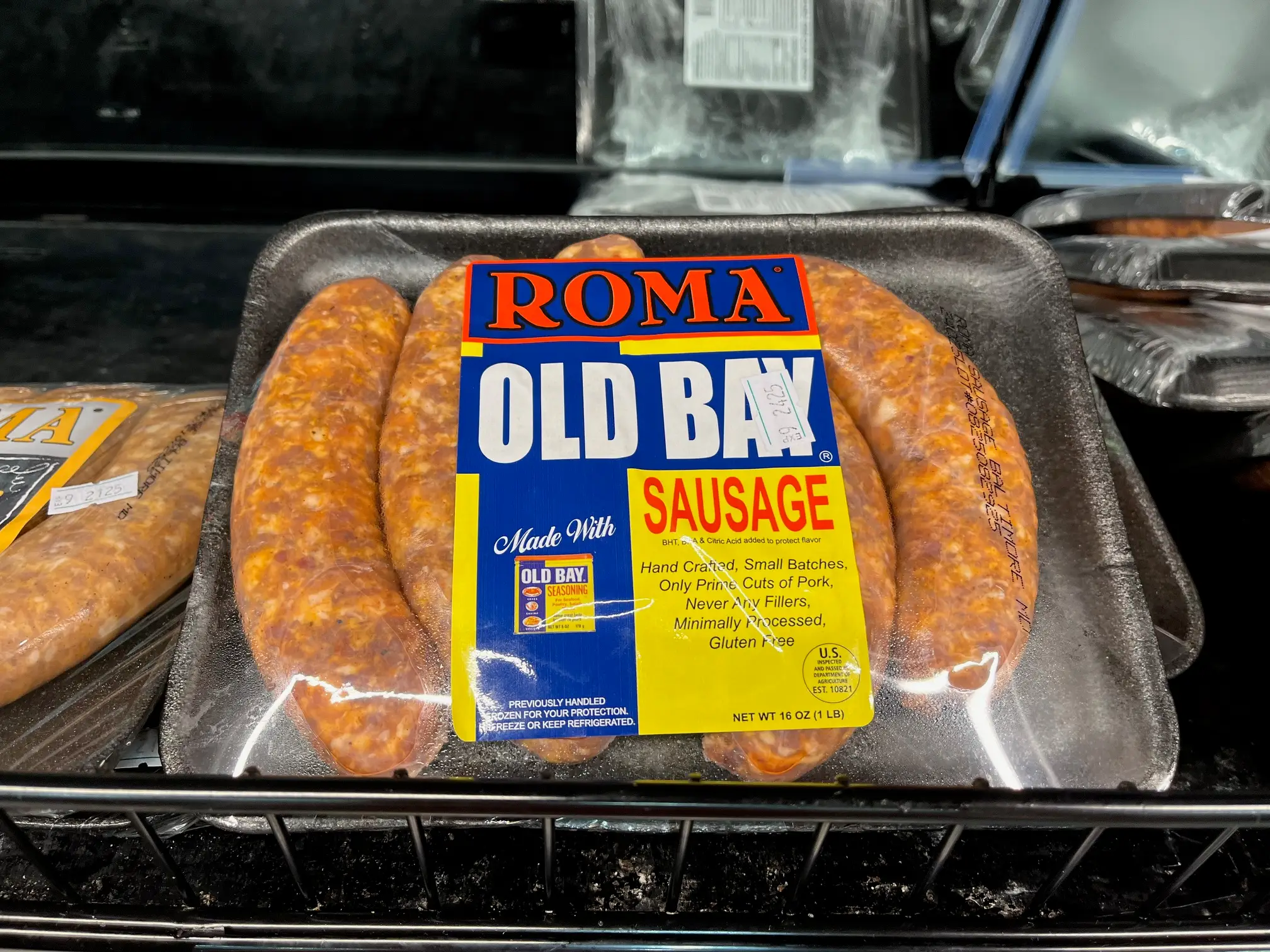
I’d never seen sausages flavored with Old Bay, which I wanted to try but opted not to because I had a long drive home.
I saw products I didn’t know existed from popular brands like DiGiorno.
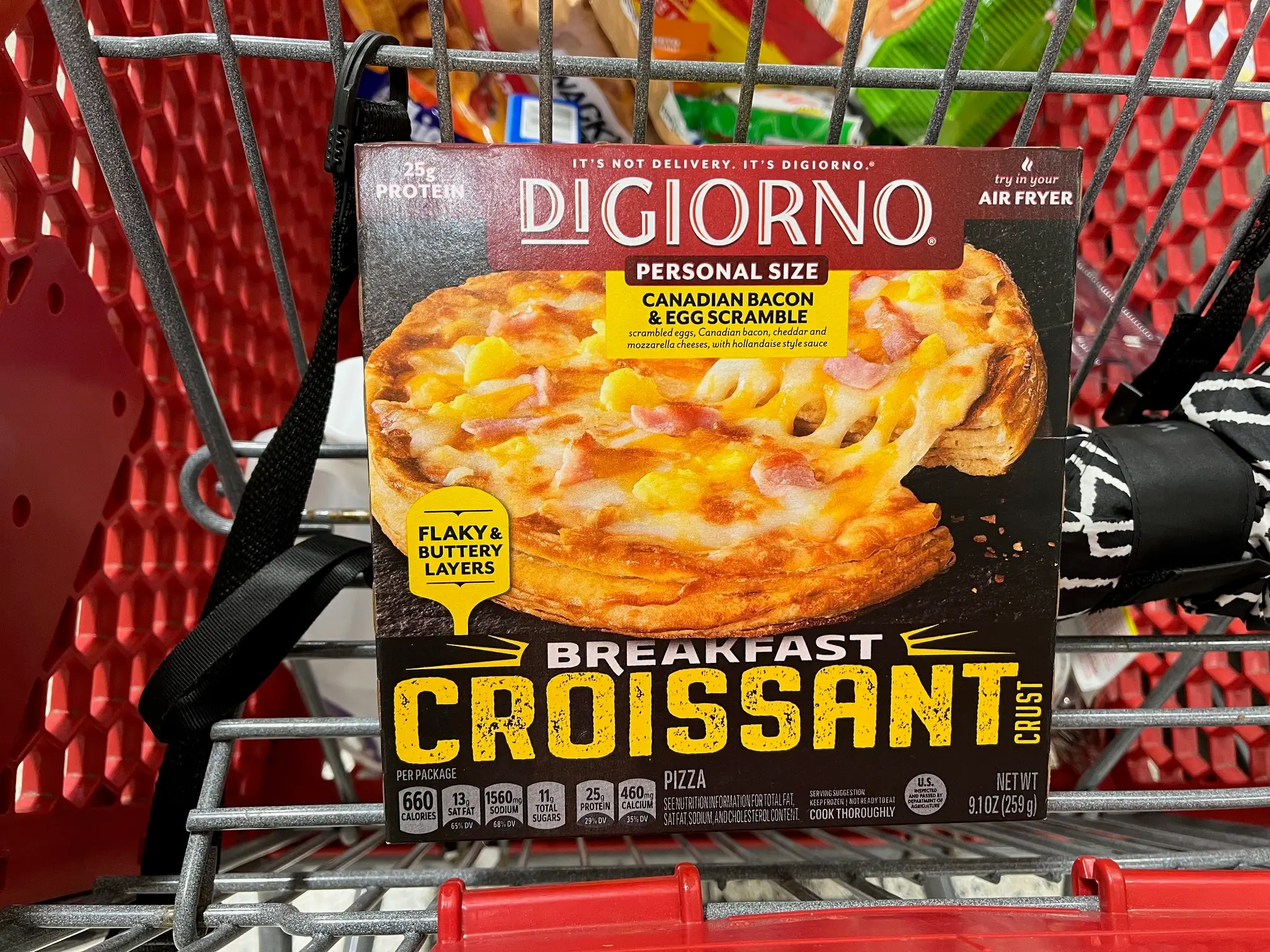
This frozen personal DiGiorno “breakfast croissant” was $2.49, so I picked one up.
Many of the products I bought were fine, though not wonderful.

The breakfast croissant was good, though I probably won’t be rushing back for more.
Other products were surprisingly niche.
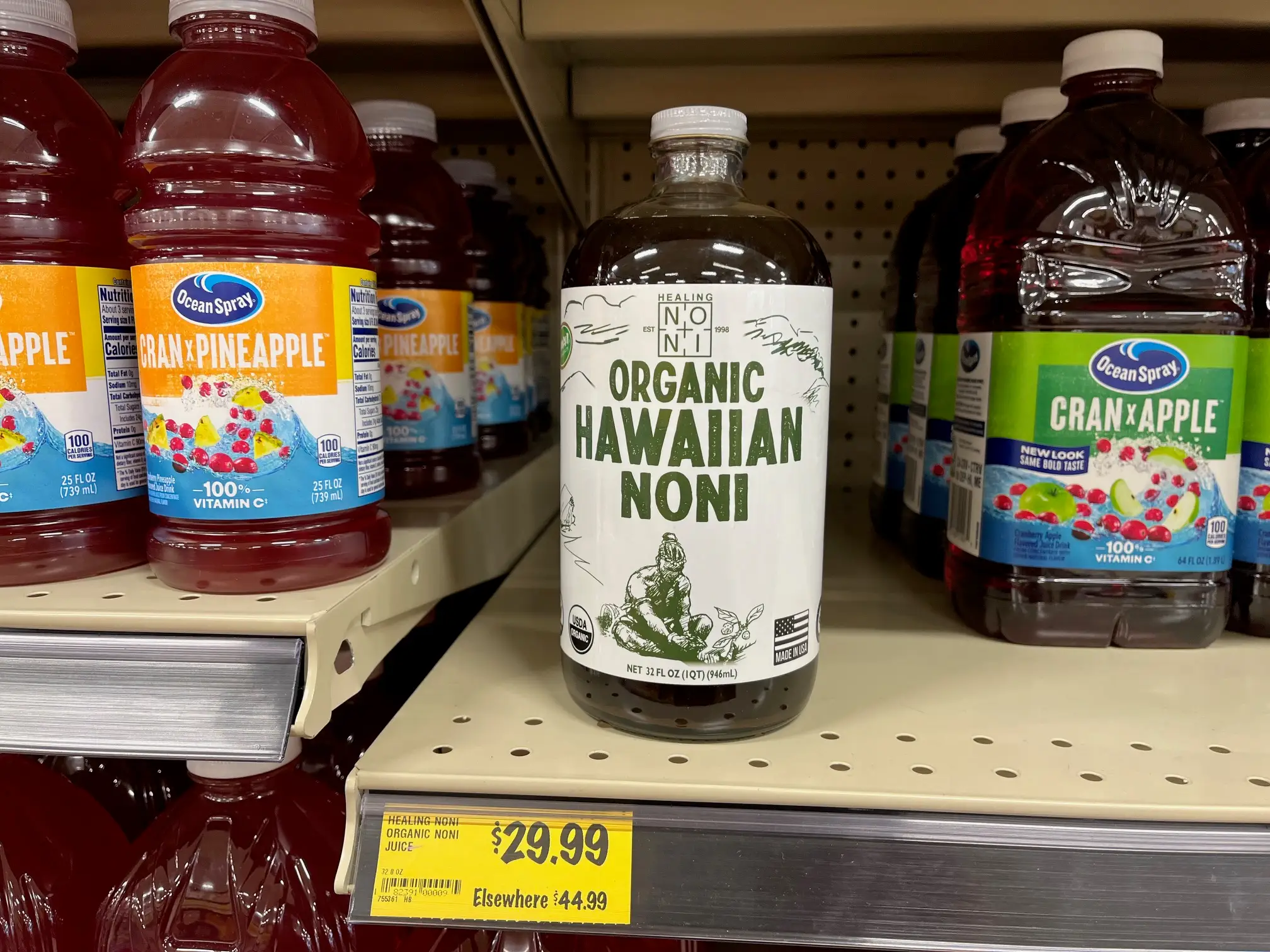
I almost bought the last bottle of juice squeezed from noni, a fruit native to Southeast Asia and common in parts of the Pacific such as Hawaii.
Curious, I did a quick Google search and found that this same bottle was selling for more than $40 online, as the price tag said.
I started to get a sense of Grocery Outlet’s strategy the more I saw.
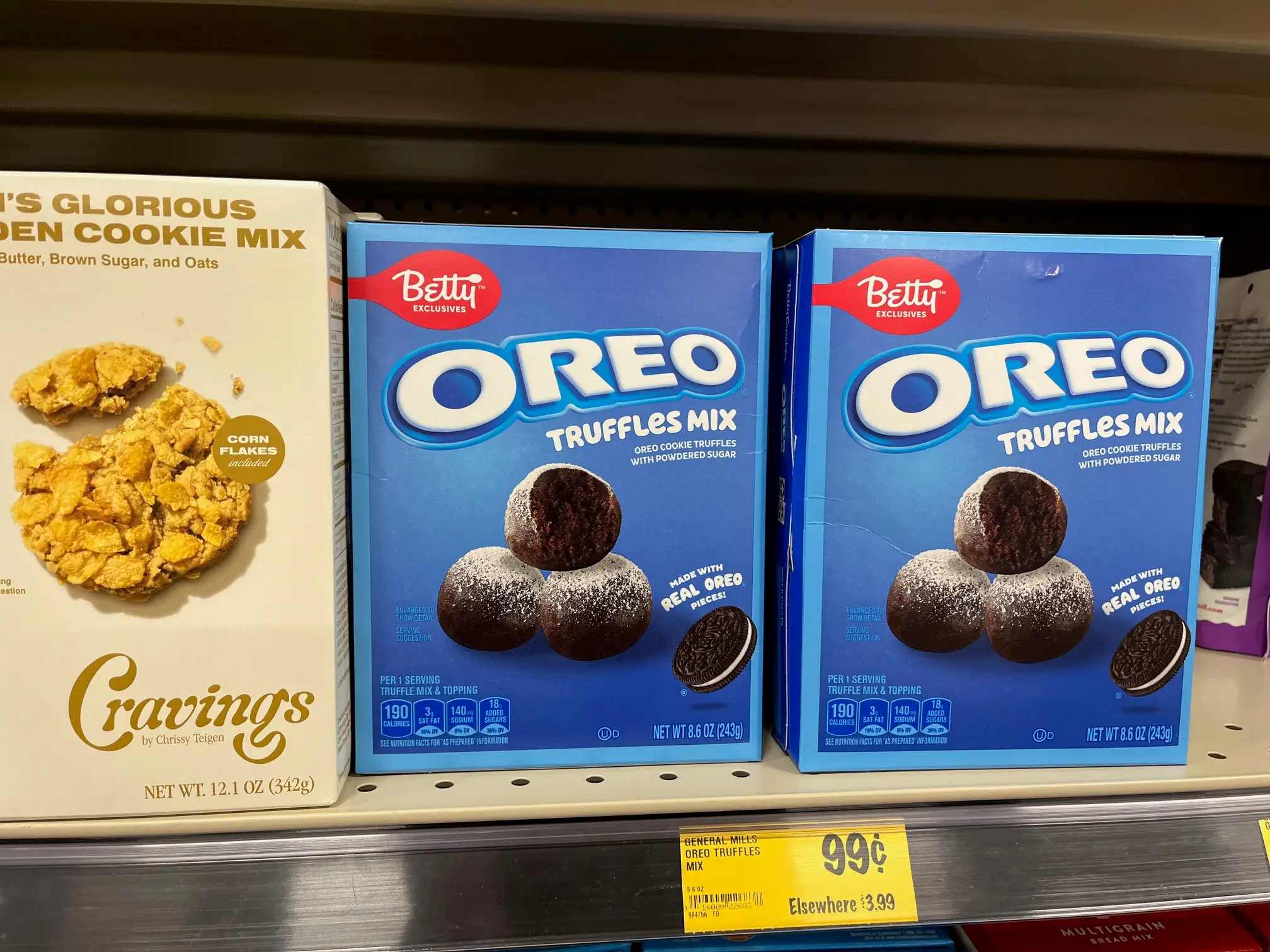
Many of the products that Grocery Outlet sold at the location I visited were a little outside what you’d expect in a normal grocery store.
Oreo truffle mix? A breakfast croissant with cheese and ham? It felt like I had asked the beta version of an AI model to generate pictures of normal groceries.
Many of the prices were much lower than those in other stores in the area.
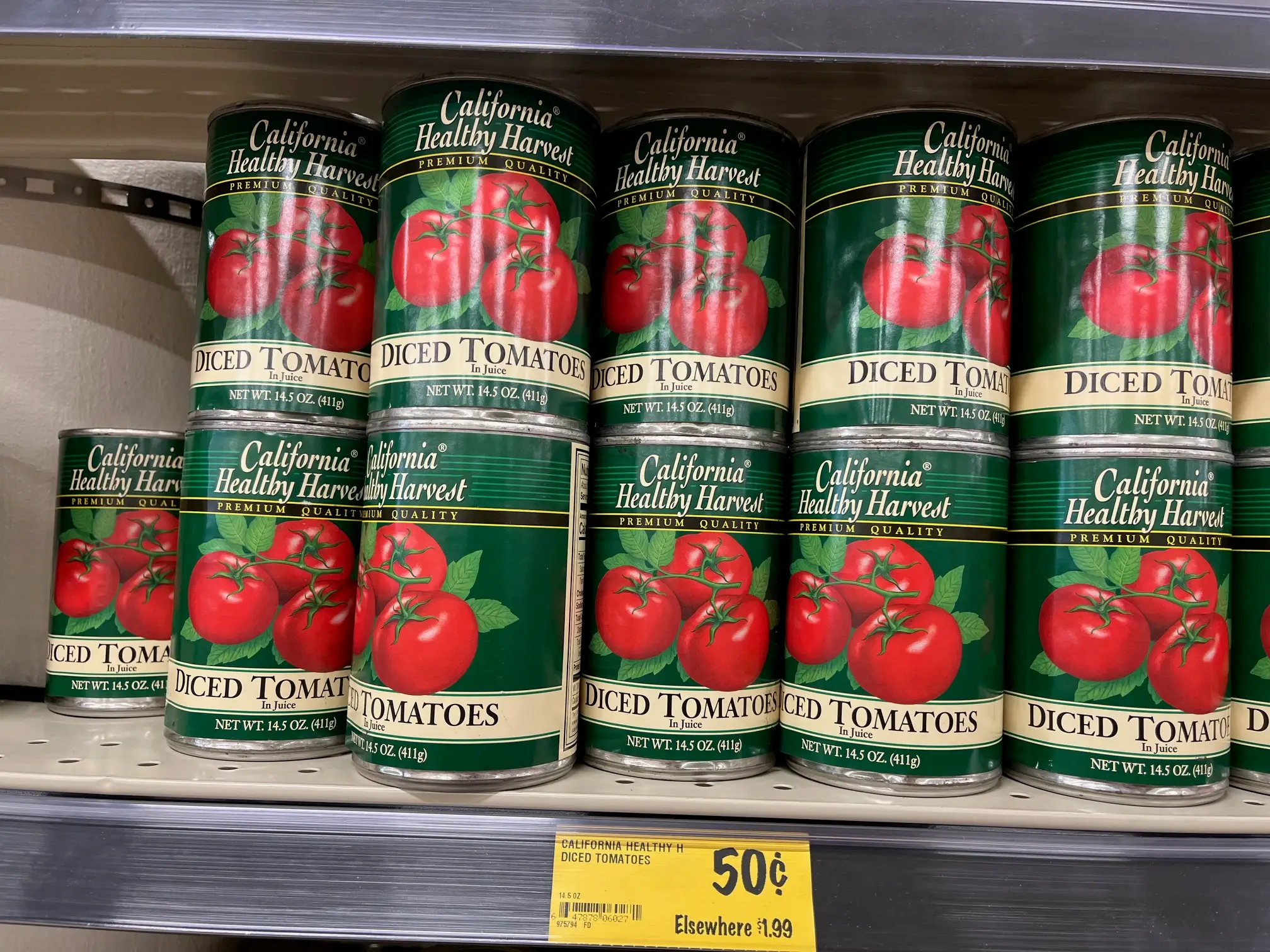
These cans of diced tomatoes were from a brand I’ve never heard of — California Healthy Harvest. At $0.50 each, I bought two, since I hadn’t seen canned tomatoes so cheap elsewhere in the DC area where I live.
For the really value-focused shoppers, there was this “last chance” shelf in the back of the store.
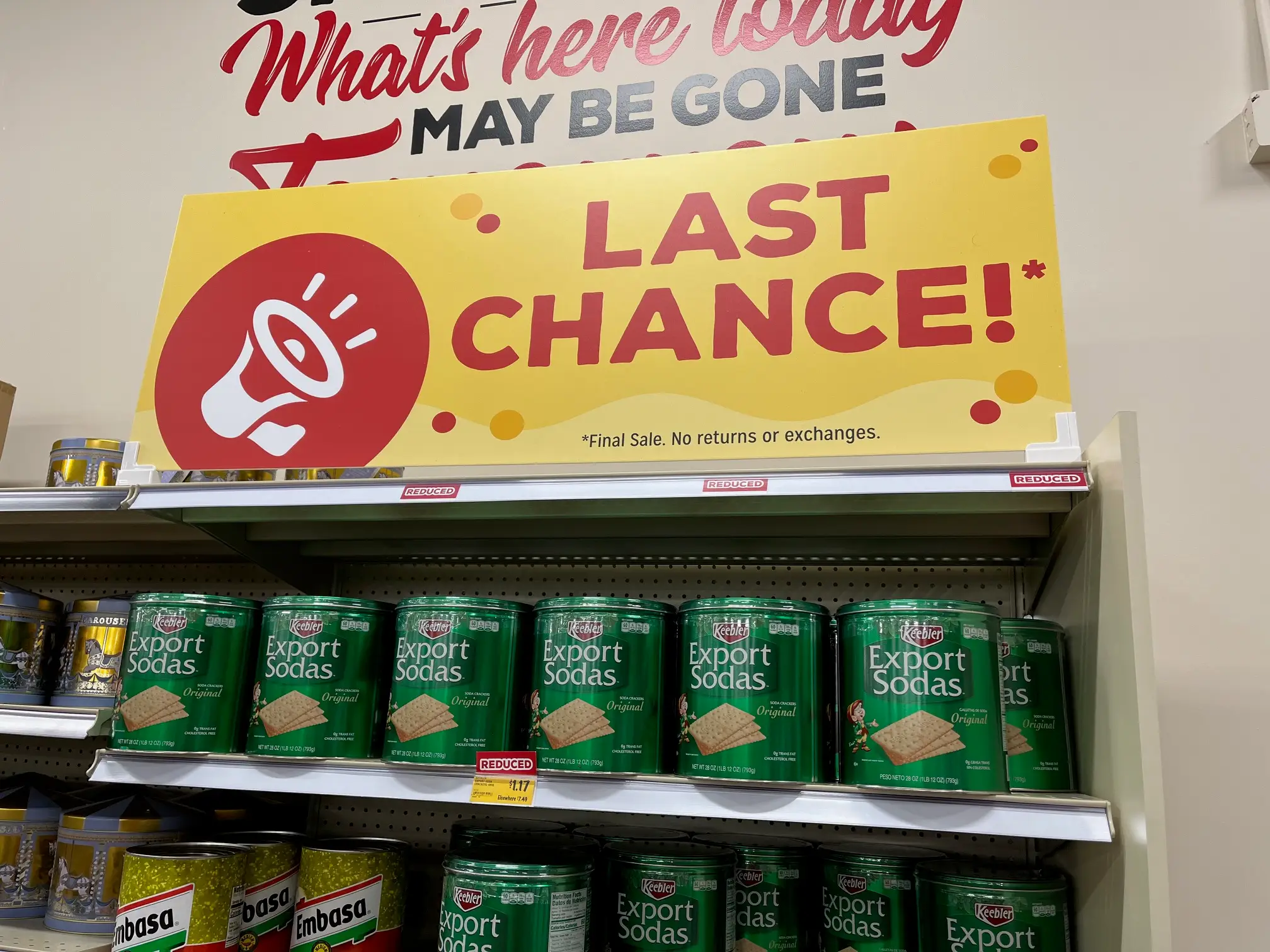
Given Grocery Outlet’s model, I was curious to see what kinds of groceries ended up in the clearance section.
The answer: huge tins of soda crackers for $1.17 each and 6-pound cans of salsa verde for $2.57 each.
As I headed for the checkout, I saw more merchandise that wasn’t food.
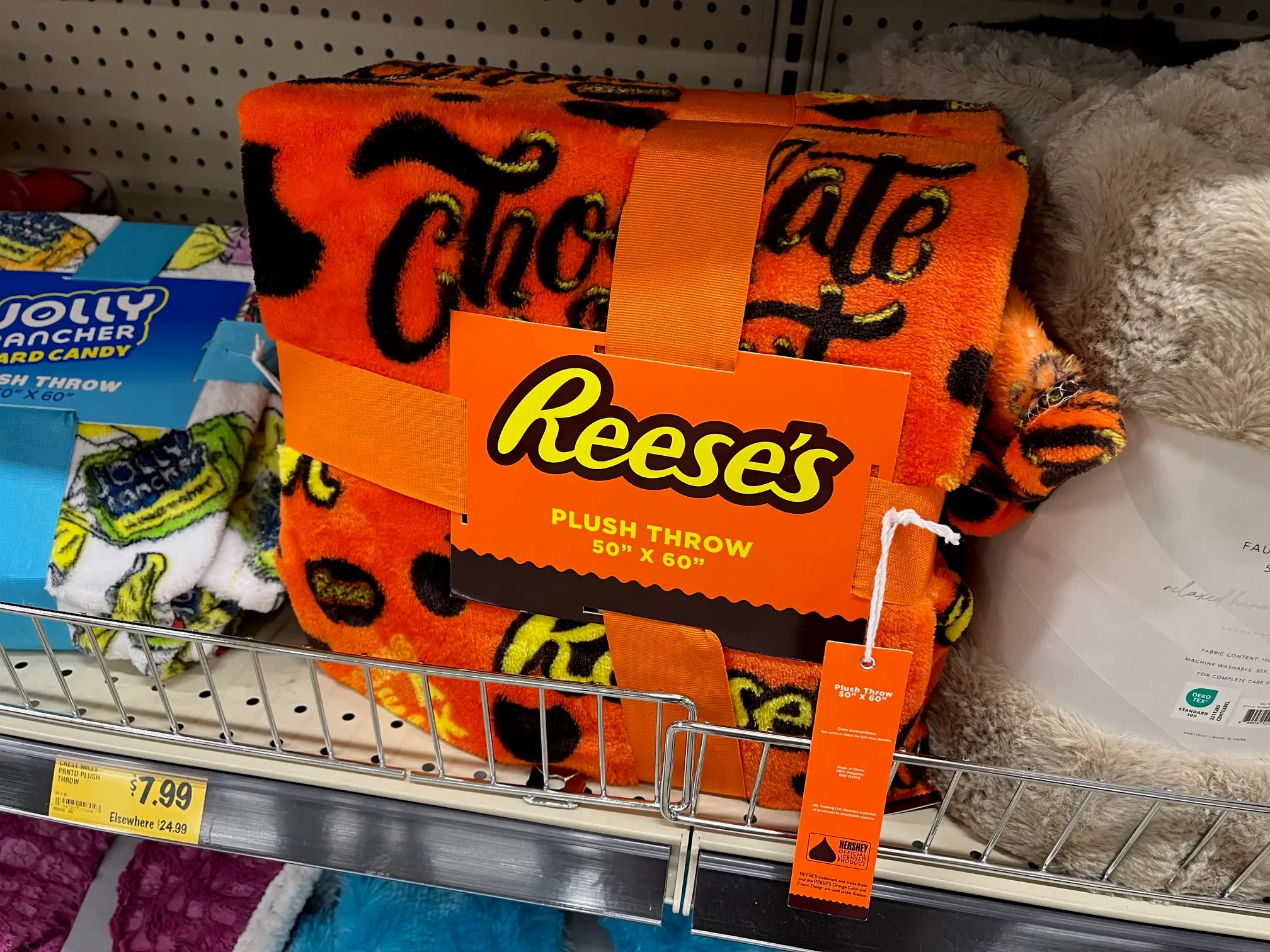
There was a selection of candy-themed blankets, such as this orange Reese’s throw.
I also found an homage to the founder of Grocery Outlet.
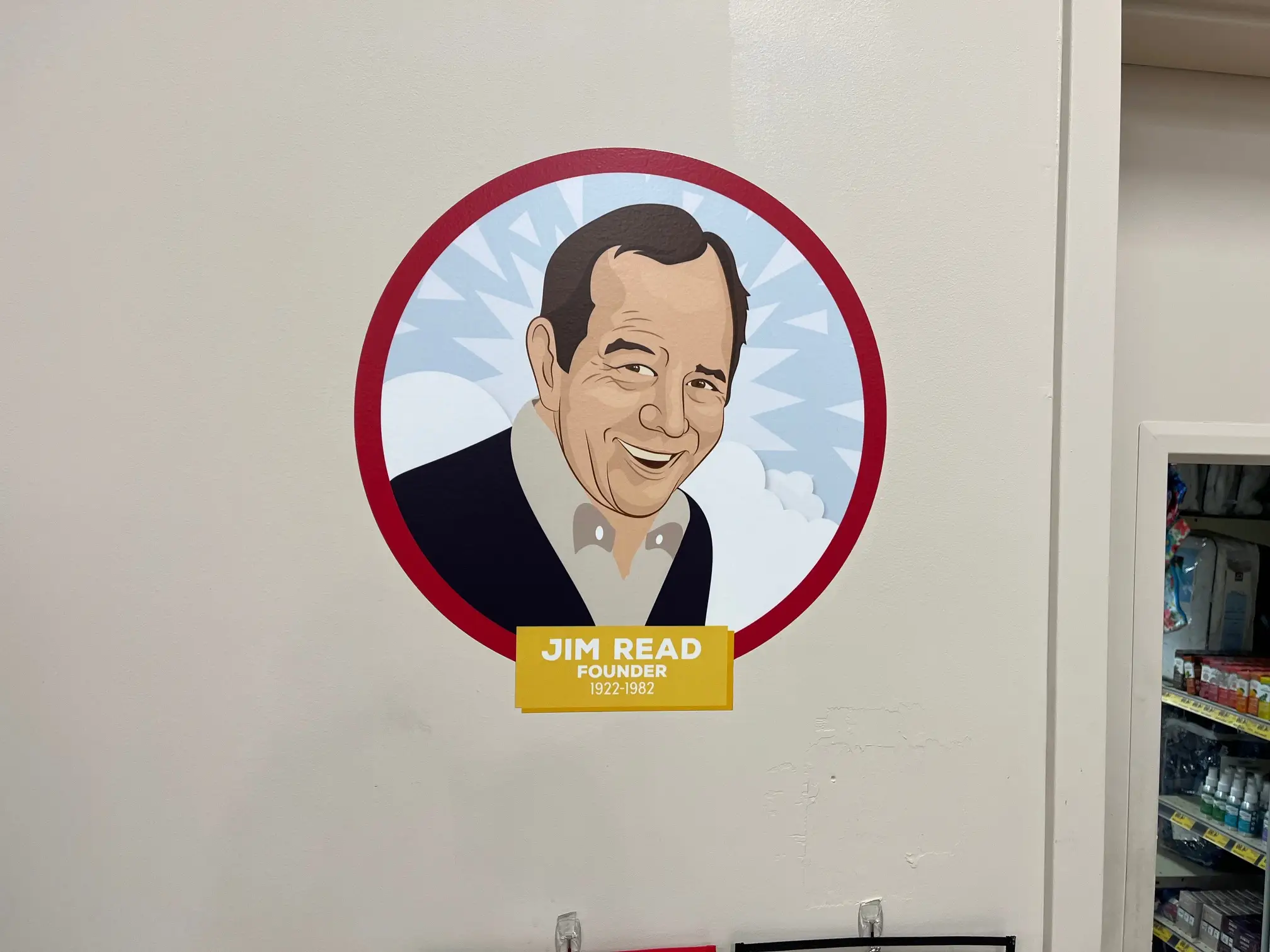
Jim Read started what would become Grocery Outlet in 1946 by selling surplus military supplies, according to the company.
Like any supermarket, there was candy near the register, tempting me as I waited.
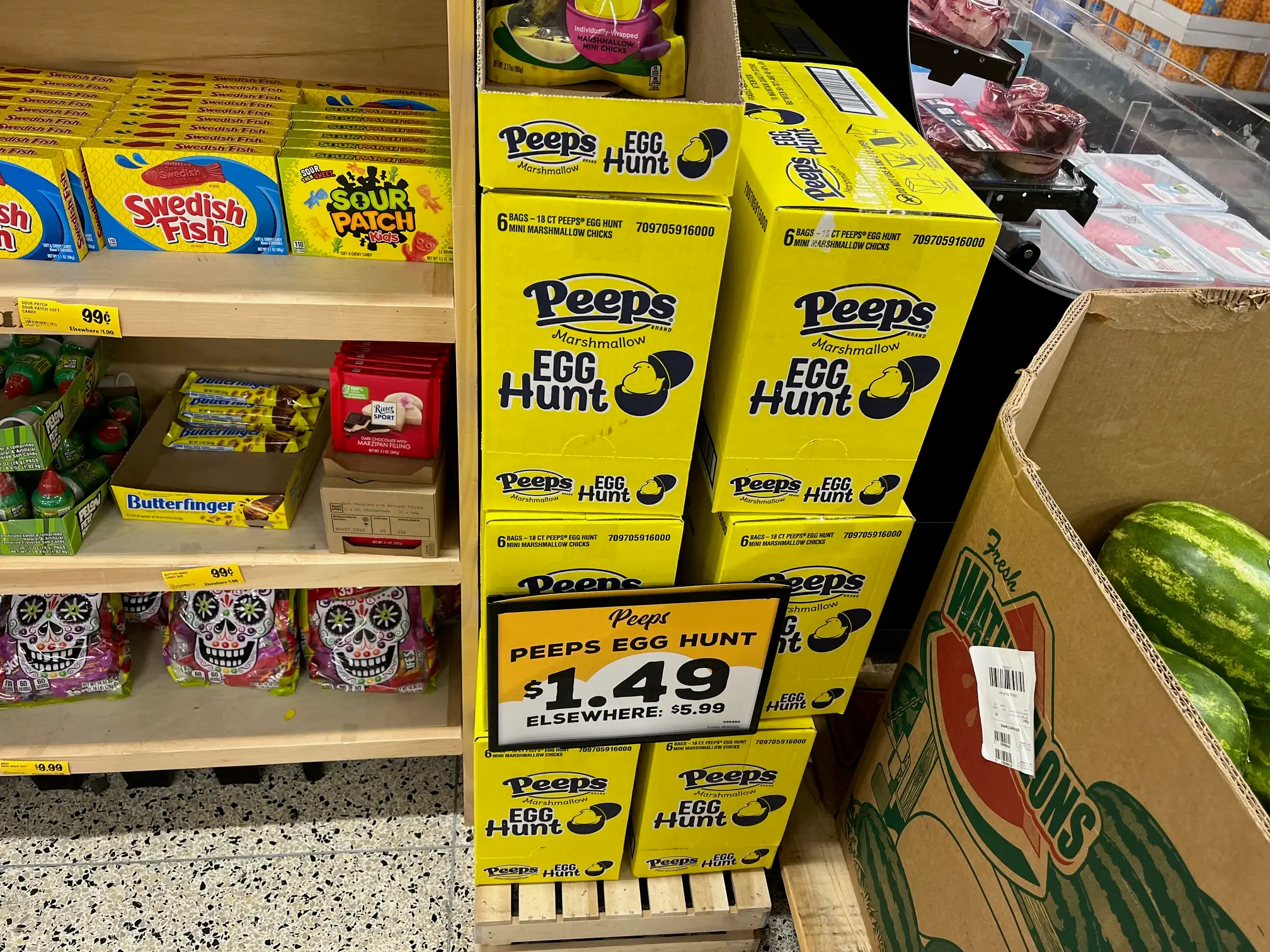
These packs of Peeps came individually wrapped to make them easier to hide in Easter eggs.
It’s a great idea, but given that I was shopping at Grocery Outlet in September, I could see why they were so heavily discounted.
Shopping at Grocery Outlet was one of the most novel experiences I’ve had at a store.
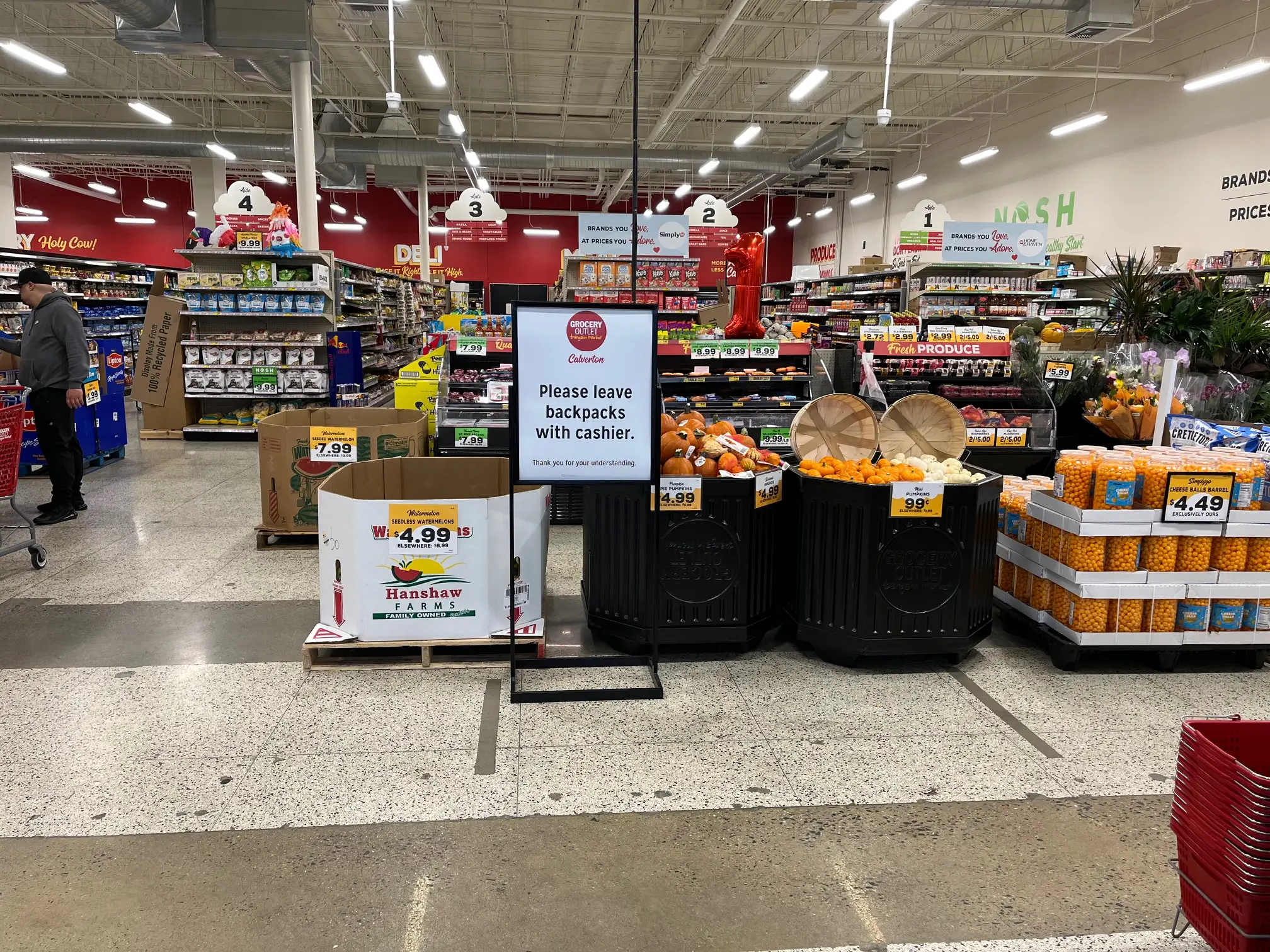
The product selection was eclectic, and that’s no accident. Grocery Outlet’s “treasure hunt” strategy encourages customers to stop by regularly to see what’s new.
That could make it a hard place to shop if you tend to buy the same groceries every week or have dietary requirements.
On the other hand, many shoppers are looking to save money after years of inflation.
There are also signs that buying food from big, recognizable brands is no longer as important for shoppers as it once was, as evidenced by Aldi’s success with its store brands and Kraft Heinz‘s decision to split into two companies.
Grocery Outlet reported comparable sales of just over 1% in the third quarter, the most recent reporting period. CEO Jason Potter said on an earnings call in November that he was “dissatisfied with” that result but hoped that sales would pick up in 2026.
I’ll probably be back, especially if Grocery Outlet opens more stores in my area.
Grocery Outlet continues to open new stores, including another location in Pennsylvania in August.
If the chain continues to expand — especially on the East Coast — I bet I’ll be back at some point.
Read the original article on Business Insider
The post I visited Grocery Outlet. It was weird, but I saw why it’s a go-to supermarket for some shoppers. appeared first on Business Insider.