Facing protests sparked by a deepening economic crisis, Iran’s government announced plans on Monday to provide every citizen with a monthly payment equivalent to around seven dollars.
The plan, according to the government spokeswoman, Fatameh Mohajerani, is aimed at “preserving households’ purchasing power, controlling inflation, and ensuring food security.” But it will likely do little to ease the economic struggles of most Iranians, whose minimum needs cost upward of $200 a month.
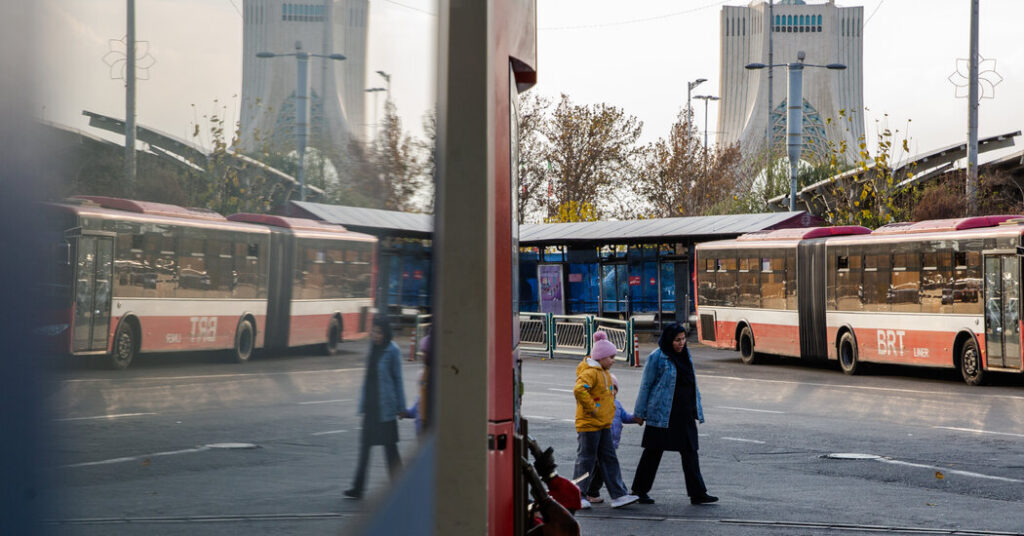
In late December, economic pressures drove merchants, traders, and university students in many cities to stage protests, shutting down marketplaces and demonstrating on campuses. Over the past year, Iran’s currency has lost more than half its value against the dollar, and official statistics show that inflation exceeded 42 percent in December alone.
The protests, now in their ninth day, have erupted in 22 of Iran’s 31 provinces, and the chants have in many cases gone beyond economic demands to calls for freedom and the ouster of the Islamic Republic’s authoritarian leadership.
The current protests are not nearly as widespread as others that have swept the country — one in 2022 led by women and another in 2019 set off by gasoline prices. But this time, Iran’s beleaguered government has attempted to respond not only with force but also by adjusting its economic policy.
The protests are the latest in a string of troubles to strike the Iranian authorities in the past year.
A brief war with Israel in June battered the country’s military and its nuclear facilities. Iran has also faced a string of environmental crises, including the worst drought in six decades. And its economic turmoil has worsened since the United Nations reinstated sanctions on the country late last year, after Iran and European governments failed to renegotiate a nuclear agreement.
Shortly after protests broke out in December, the government replaced the central bank governor. Last week, the government reformed its currency exchange policy, which previously subsidized the imports of certain essential goods. Iran’s president, Masoud Pezeshkian, said that the exchange rate had been exploited by some sectors without reducing prices as intended.
In a statement on Sunday, Ms. Mohajerani, the spokeswoman, said that the $10 billion once spent annually to subsidize some imports would instead be used to pay Iranian citizens directly. The payments will amount to one million Iranian tomans — around seven dollars — and will be provided in the form of credit to eligible Iranians for the purchase of certain goods. She did not specify which items the credits could be used for.
The monthly payment would cover the equivalent of around 100 eggs, a kilo of red meat, or a few kilos of rice or chicken at current prices in Iran. The payments will be handed out to 80 million Iranians, the vast majority of the population, according to the labor minister.
The Iranian authorities may be hoping that policies aimed at appeasing both merchants and Iran’s poorest classes will be enough to deflate the main grievances driving protests, said Esfandyar Batmanghelidj, a founder of the Bourse & Bazaar Foundation, an economic think tank based in the United Kingdom..
But the new payments are unlikely to be enough to change Iranians’ broader sense of despair over the economy and their future, he said.
“It’s a small amount for the middle class and will not meaningfully improve their standard of living, but it will definitely improve the situation for the poorest quintile,” Mr. Batmanghelidj said.
“The government clearly thinks it can afford to do this,” he said. “But what they can afford is not enough to alleviate the pressures most Iranians are facing.”
Iran’s economic troubles began to deepen in 2018, when President Trump exited the nuclear deal with Tehran and reimposed sanctions on oil sales and international banking transactions. After the U.N. Security Council also brought back sanctions in September, the Iranian currency plunged further.
Reversing the crisis would require far more sweeping policy changes. These include a nuclear deal to lift sanctions, and cracking down on the economic mismanagement and corruption that has increasingly led to a far more uneven distribution of wealth.
Protests were reported to have continued on Monday in several cities, including the capital, Tehran, and Yasuj, according to the BBC Persian and activist groups.
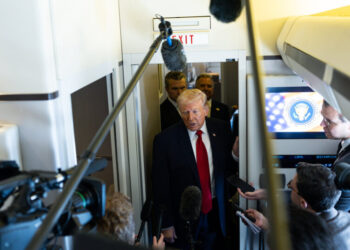
The Iranian authorities have responded warily but defiantly to Mr. Trump’s repeated threats to intervene on behalf of protesters.
Last week, he warned that the United States was “locked and loaded” and prepared to come to their aid if protesters were killed. He doubled down on that position on Sunday as he described to journalists a willingness to take action against other countries after capturing Venezuela’s president.
“If they start killing people like they have in the past, I think they’re going to get hit very hard by the United States,” he said.
On Monday, Esmail Baghaei, the spokesman for Iran’s Ministry of Foreign Affairs, called the remarks “psychological warfare and media propaganda against the country” and “part of their strategy to exert pressure on Iran.”
The post Facing Protests and Economic Crisis, Iran Offers Citizens Monthly Payments appeared first on New York Times.