This must be about the oil, right? It’s a presumption that got lots of airtime this weekend, following the dramatic seizure of Venezuelan President Nicolás Maduro and his wife by US forces. The pair now face drug trafficking and narco-terrorism charges in New York, while observers in both countries are scrambling to interpret the sudden action by President Donald Trump, which followed months of escalating tension between Venezuela and the US.
Trump himself seemed to suggest that oil played a major role in his decision to strike now, telling reporters on Saturday that American oil companies will soon “go in, spend billions of dollars [and] fix the badly broken infrastructure” that has hamstrung Venezuela’s oil production for well over a decade. As a justification for invading, though, that actually doesn’t make much sense: America has plenty of oil already, and the type of oil on offer in Venezuela is expensive and difficult to extract, says my colleague Eric Levitz. In other words, oil isn’t the easy explanation that many commentators seem to think it is. But the US and Venezuela do have a long, tangled, and fascinating history around oil — a history that has undeniably shaped the economy, politics, and culture of Venezuela over the past 100 years. So even if Maduro’s capture isn’t “about the oil,” per se, the boom-and-bust story of US oil interests in Venezuela does very much inform how we got here.
Venezuelan oil was dominant early
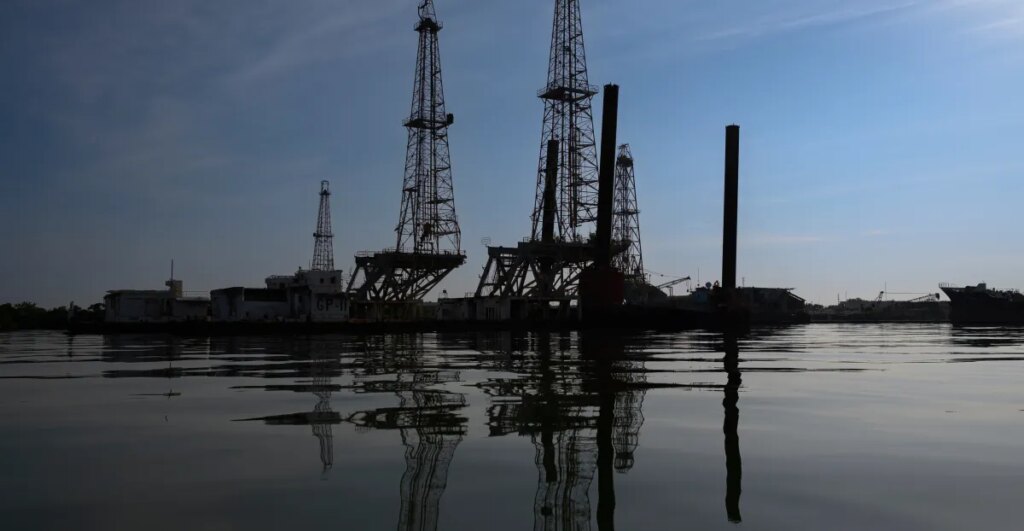
Today, Venezuela accounts for only 1 percent of world oil production. But the South American country ranked among the world’s very top producers from the 1920s, when a large well was discovered at Lake Maracaibo, through the late ’90s. Foreign oil companies — most of them American — dominated the early Venezuelan industry by the express invitation of the country’s then-dictator General Juan Vicente Gómez. In exchange for the right to explore and develop oil reserves, firms like Gulf, Shell, and Standard Oil built out entire communities in the Venezuelan countryside, complete with hospitals, schools, bowling alleys, American-style soda fountains, and the largest American expat community in the world. For the most part, the arrangement worked well for all involved. Venezuela grew rich from oil taxes and royalties: By the mid-1970s, it boasted the highest per-capita income in Latin America. US policy in the region at that time, meanwhile, was focused on containing communism and the influence of the Soviet Union. Venezuela, which elected a stable democratic government in 1958, was considered a good partner in that mission — even as its leaders began taking steps to make more money from, and gain more control over, domestic oil production.
The nationalization of the oil industry was “relatively uncontroversial”
That effort came to a head in 1976, when Venezuela nationalized its domestic oil industry. But as far as nationalization projects go, this one was pretty bloodless. The government bought out foreign firms, including ExxonMobil, Shell, and Chevron, and created a state-owned oil company called Petroleos de Venezuela to take over drilling. The change was “relatively uncontroversial,” one Venezuelan economist told the Washington Post; in fact, Petróleos de Venezuela, or PDVSA, continued to partner with foreign companies. Instead, when Trump and his allies refer to Venezuela’s alleged theft of “Oil, Land, and other Assets” from the United States — as he did on Truth Social in December — it seems likely that they’re referencing, albeit inaccurately, a second nationalization effort that took place after former Venezuelan President Hugo Chávez came to power in 1998. Chávez, a socialist who ran on the promise of ending poverty in Venezuela, clashed repeatedly with the PDVSA as he sought to redirect its revenue to social projects. At the same time, he moved to “forcefully renegotiate” contracts with foreign oil companies, which prompted ExxonMobil and ConocoPhillips to leave Venezuela and sue — successfully — over their lost investments. It wasn’t just American companies that suffered, though: PDVSA was also starved of resources. At one point, Chávez fired more than 18,000 workers. That situation has not improved since Maduro, Chávez’s protege, came to power in 2013. As part of an international effort to oust Maduro after his term ended in 2019, the US imposed harsh sanctions on PDVSA and Venezuela that essentially cut both off from the world oil market.
The Venezuelan oil industry has collapsed
Today, Venezuela produces fewer than 1 million barrels of oil a day, down from roughly 3.5 million in 1997. Since oil is the basis of the country’s economy — PDVSA remains its largest employer — that three-decade collapse has transformed Venezuelan life and politics. More than 90 percent of Venezuelans live in poverty, and millions of refugees and migrants have fled the country. Maduro’s administration, meanwhile, has reportedly sought to open its domestic oil industry up once again, quietly granting more operational control to its international partners. Earlier this year, in negotiations with the White House, Maduro also reportedly offered even larger concessions to US companies, promising to open up all existing and future oil projects to US companies and giving preferential contracts to the US. The White House rebuffed that offer and, three months later, captured Maduro instead.
A version of this story originally appeared in the Today, Explained newsletter. Sign up here!
The post America’s century-long interest in Venezuelan oil appeared first on Vox.