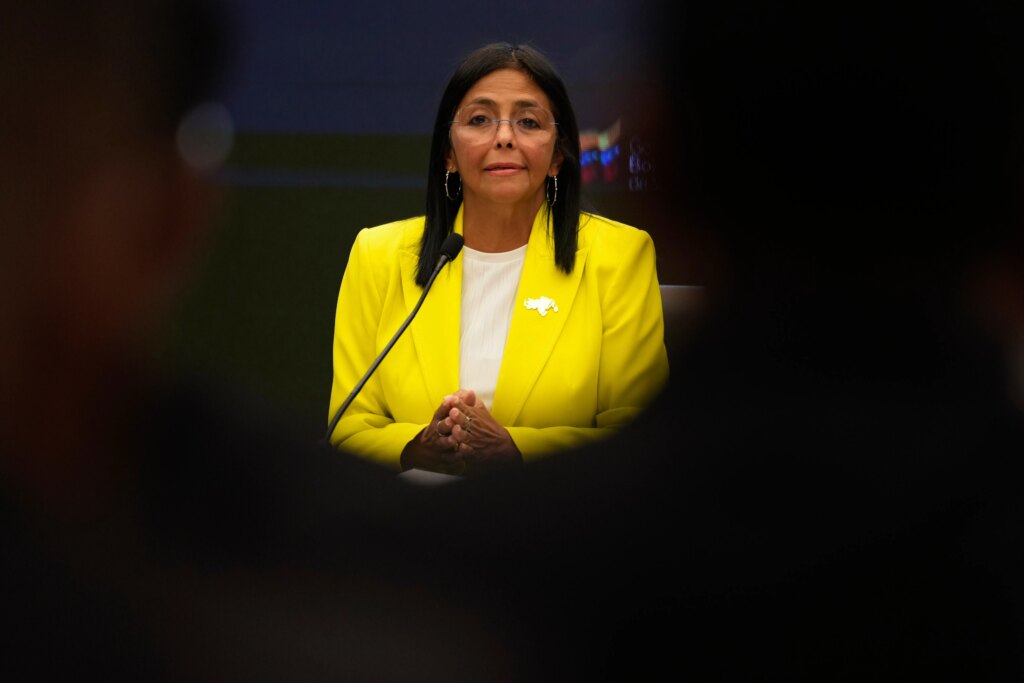
Just hours after U.S. forces attacked Venezuela and captured President Nicolás Maduro on Saturday morning, Vice President Delcy Rodríguez emerged as the country’s de facto leader.
Rodríguez, who has served in the position since 2018, takes over following months of U.S. military pressure against the country to oust Maduro, who was seized in Caracas along with his wife Cilia Flores, and transported to New York to face drug trafficking charges.
[time-brightcove not-tgx=”true”]
President Donald Trump said that the U.S. would “run the country” until a “proper and judicious transition” of power took place in Venezuela, without providing further details.
Read more: How the World Is Reacting to the U.S. Capture of Nicolas Maduro
To the surprise of many in the Venezuelan diaspora, Trump brushed aside any suggestion that 58-year-old opposition leader and Nobel Peace Prize winner Maria Corina Machado would take over, saying she lacked support.
Instead, at a news conference on Saturday, Trump named Rodríguez as the most likely successor, saying she had spoken with Secretary of State Marco Rubio and agreed to cooperate with the U.S. role in Venezuela.
“She, I think, was quite gracious, but she really doesn’t have a choice,” Trump said. “She is essentially willing to do what we think is necessary to make Venezuela great again. Very simple.”
Rodríguez has demanded proof that Maduro and Flores are alive and strongly denied Trump’s comments in public statements on Saturday.
“We demand the immediate liberation of President Nicolás Maduro and his wife, Cilia Flores. The only president of Venezuela is President Nicolás Maduro,” Rodríguez said on state television flanked by senior officials. “Never again will we be slaves, never again will we be a colony of any empire. We’re ready to defend Venezuela.”
For now, it appears that many of Maduro’s top aides remain serving alongside Rodríguez, who was notably joined on Saturday by her brother, Interior Minister Diosdado Cabello, and Defense Minister Vladimir Padrino López.
For now, at least, she is Venezuela’s de facto leader. Here is what we know about her.
A political family
Rodríguez, 56, was born in Caracas in 1969.
Rodríguez’s father, Jorge Antonio Rodríguez, was a Marxist leader who was involved in the kidnapping of William Niehous, an American businessman who was held captive for three years until 1979.
He co-founded the Socialist League, a militant-leftist group in the 1960s and 70s and died in 1976 at the age of 34 when he was in custody and being interrogated for his role in Niehous’s capture.
Rodríguez would visit her father in prison as a child, and was seven years old when her father died.
“The revolution is our revenge for the death of our father,” Rodríguez said in a past interview.
A Chavez ally
Rodríguez is a lawyer and has served as a professor at the Central University of Venezuela. She began her political career in 2003, during the reign of former President Hugo Chavez, one of Venezuela’s most consequential modern leaders who transformed the country with his so-called Bolivarian Revolution.
Under Chavez, who was president from 1999 until his death in 2013, Rodríguez served in many roles, including as vice-minister for European affairs and general coordinator to the vice president of Venezuela. Her brother, Jorge Rodríguez, has also served in the Venezuelan government and is the current president of the National Assembly.
In 2013, Maduro appointed Rodríguez as Minister of Communication, and she served in that position until 2014. That year, she became the first female foreign minister and held the position until 2017. As foreign minister, Rodríguez defended the actions of Maduro’s government against international criticism, including from human rights groups, and spoke on Venezuela’s behalf at forums such as the United Nations.
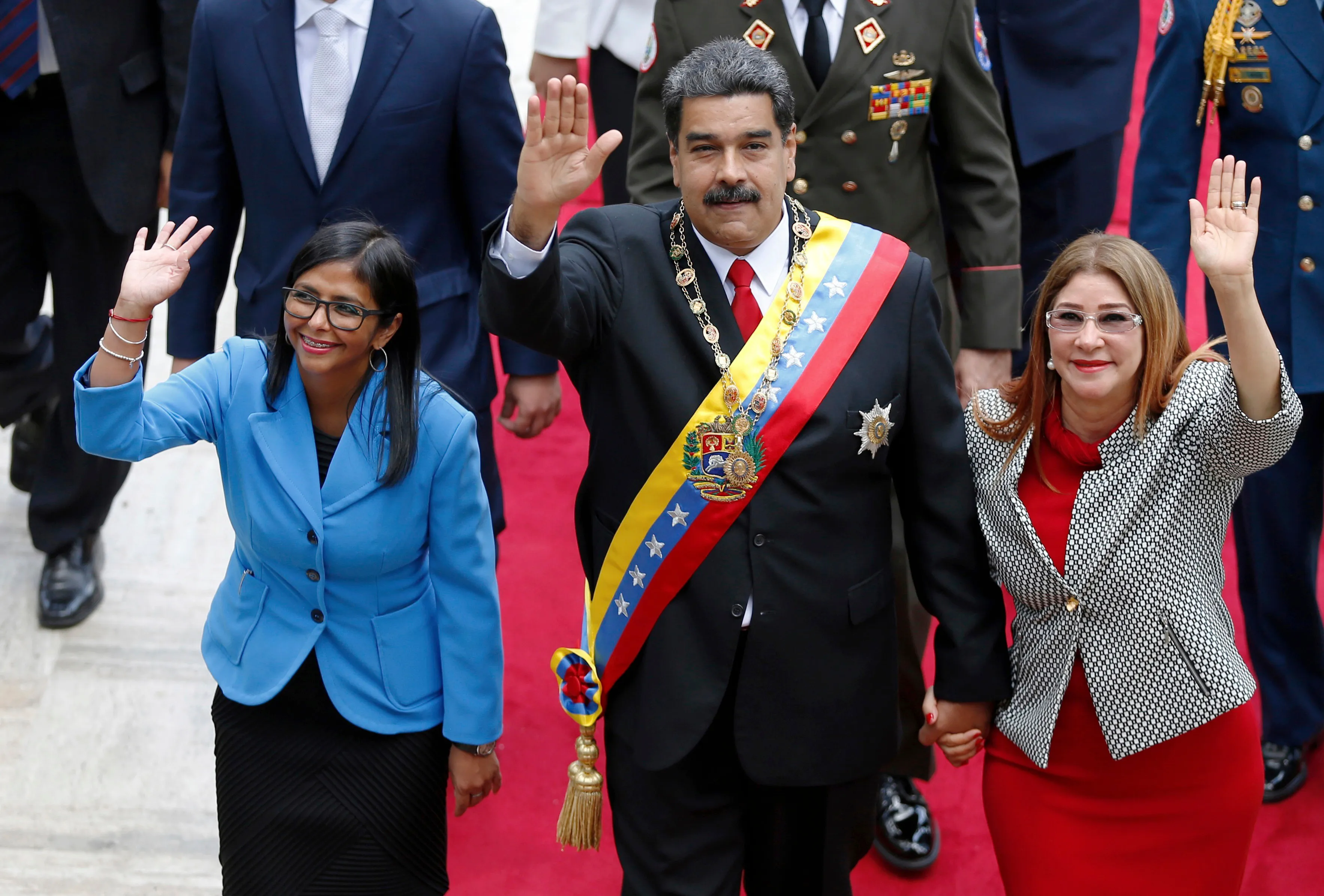
She then served as president of the Constituent National Assembly, and in 2018, Maduro appointed her vice president for his second term, a position she retained through his third presidential term, which followed a controversial election.
The U.S., along with other countries, does not recognize Maduro as Venezuela’s president nor the elections held in July 2024 as legitimate. Instead, former ambassador Edmundo González Urrutia is considered the true winner.
Since 2020, Rodríguez has served as the minister of finance and oil, overseeing the country’s most valuable industry.
Sanctioned by the West
Rodríguez has faced sanctions from several countries and is currently banned from neighboring Colombia, which generally opposes Maduro’s authoritarian regime.
In 2018, the European Union sanctioned Rodríguez, along with 10 other Venezuelan officials, freezing their assets and instituting a travel ban, citing human rights violations.
She has also been sanctioned by Canada, Switzerland, and the U.S. during Trump’s first administration for repressing dissent in Venezuela.
As minister of oil, Rodríguez has had to navigate escalating U.S. sanctions affecting the country’s most lucrative industry.
Trump announced plans to take over the oil industry in Venezuela following Maduro’s capture. “We’ll make the people of Venezuela rich,” he said.
How the Trump Administration picked Rodríguez
The Trump Administration’s decision to accept Rodríguez was made at the same time it decided that Maduro would be removed, according to people familiar with the matter who spoke to the New York Times.
Soon after, Rodríguez was identified as a suitable, but temporary replacement, the Times reported.
The Administration was reportedly convinced by intermediaries that Rodríguez was the viable choice, given Trump’s interest in Venezuela’s oil industry, which had been well managed by Rodríguez in her role as oil minister.
In her role, Rodríguez helped stabilize the Venezuelan economy after years of crisis and increase oil production amid tightening U.S. sanctions, earning the respect of some American officials.
“I’m not claiming that she’s the permanent solution to the country’s problems, but she’s certainly someone we think we can work at a much more professional level than we were able to do with him,” an official said to the Times, referring to Maduro.
It is unclear at this point whether Rodríguez will cooperate with Trump officials, who have said that the U.S. reserves the right to take further military action should she misalign with the Administration’s interests.
The post Who is Delcy Rodríguez, Venezuela’s New Leader? appeared first on TIME.