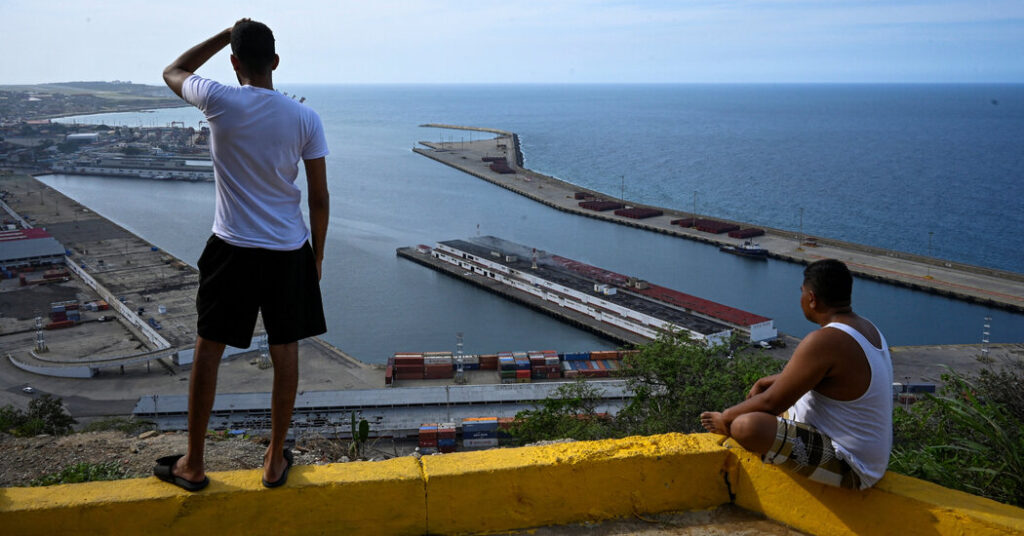
On my last visit to Venezuela in 2019, I saw children starving because of the kleptocracy overseen by President Nicolás Maduro.
In the impoverished, violent slum of La Dolorita in Caracas, I met an emaciated 5-year-old girl, Alaska. Her mother told me that Alaska, weighing just 26 pounds and near death from malnutrition, had been turned away from four hospitals because no beds were available.
Another mother wept as she said that her 8-month-old baby girl, Daisha, died after three hospitals had turned the girl away.
Many Americans don’t understand how brutal and incompetent Maduro’s dictatorship was, and how much suffering the population endured. Government thugs tortured, raped and killed with impunity, and ordinary citizens lost their children to tragic misrule — even as regime officials lived lavishly and ostentatiously (such as overindulging in expensive whiskeys at the hotel where I last stayed).
Venezuela has the largest oil reserves in the world, and back in 2000 it had a lower child mortality rate than Peru, Brazil and Colombia; now, the rate is higher in Venezuela than in any of those countries, which means thousands of children die unnecessarily each year. It’s true that U.S. sanctions compounded the suffering (and I argued against such general sanctions), but the central reason was the venality and ineptitude of the regime. So of course many Venezuelans are celebrating when they see Maduro fall.
“We are free,” a Venezuelan woman in Chile told Reuters after Maduro’s removal on Saturday. “We are all happy that the dictatorship has fallen and that we have a free country.”
I understand the giddiness, but I worry the triumphalism may be overdone.
True, Maduro was a disaster for Venezuela and for the entire region, with nearly eight million refugees fleeing the country. Yes, he appears to have stolen the 2024 election.
But President Trump’s operation to remove Maduro appears to be illegal, and it’s not at all clear that the regime itself will be toppled or that life will improve for ordinary Venezuelans.
Barging into countries to arrest a foe, reportedly killing at least 40 people in the process, is not a precedent we want others to follow. I’m in Taiwan as I write this, and some are wondering if President Xi Jinping of China will get ideas. Frankly, I doubt that: I believe that what constrains Xi is military calculus, not concern for the rule of law. But it’s still true that the world works better when the United States promotes the “rules-based international order” rather than the law of the jungle that Thucydides recounted 2,500 years ago: “The strong do what they can, and the weak suffer what they must.”
Trump could have tried to provide a legal justification for the incursion by saying that he had the permission of Venezuela’s rightful president, Edmundo González, the apparent winner of the 2024 election. The United States even under President Joe Biden recognized González as Venezuela’s true president-elect, so that might have been a useful fig leaf for lawyers to work with. But Trump has been dismissive of the democratic forces represented by González and María Corina Machado, the opposition leader and Nobel Peace Prize winner.
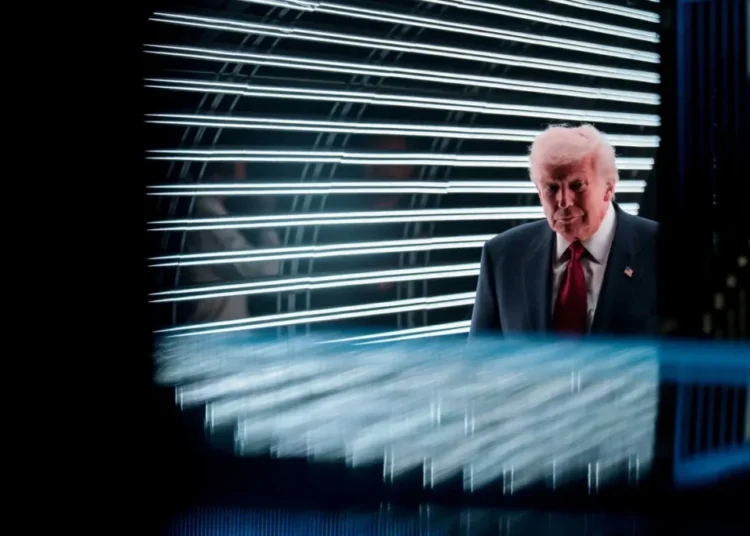
Instead, Trump asserted in a news conference on Saturday, “We are going to run the country.” He seemed less interested in Venezuelan democracy and human rights than in gaining American control over Venezuelan oil. “We’re going to have presence in Venezuela as it pertains to oil,” he declared.
.op-aside { display: none; border-top: 1px solid var(–color-stroke-tertiary,#C7C7C7); border-bottom: 1px solid var(–color-stroke-tertiary,#C7C7C7); font-family: nyt-franklin, helvetica, sans-serif; flex-direction: row; justify-content: space-between; padding-top: 1.25rem; padding-bottom: 1.25rem; position: relative; max-width: 600px; margin: 2rem 20px; }
.op-aside p { margin: 0; font-family: nyt-franklin, helvetica, sans-serif; font-size: 1rem; line-height: 1.3rem; margin-top: 0.4rem; margin-right: 2rem; font-weight: 600; flex-grow: 1; }
.SHA_opinionPrompt_0325_1_Prompt .op-aside { display: flex; }
@media (min-width: 640px) { .op-aside { margin: 2rem auto; } }
.op-buttonWrap { visibility: hidden; display: flex; right: 42px; position: absolute; background: var(–color-background-inverseSecondary, hsla(0,0%,21.18%,1)); border-radius: 3px; height: 25px; padding: 0 10px; align-items: center; justify-content: center; top: calc((100% – 25px) / 2); }
.op-copiedText { font-size: 0.75rem; line-height: 0.75rem; color: var(–color-content-inversePrimary, #fff); white-space: pre; margin-top: 1px; }
.op-button { display: flex; border: 1px solid var(–color-stroke-tertiary, #C7C7C7); height: 2rem; width: 2rem; background: transparent; border-radius: 50%; cursor: pointer; margin: auto; padding-inline: 6px; flex-direction: column; justify-content: center; flex-shrink: 0; }
.op-button:hover { background-color: var(–color-background-tertiary, #EBEBEB); }
.op-button path { fill: var(–color-content-primary,#121212); }
Know someone who would want to read this? Share the column.
All that should sound an alarm. The military and intelligence side of the Venezuela operation was masterful, but the legal and political sides seem frightful, and that bodes poorly for the country’s future.
Maduro’s vice president, Delcy Rodríguez, remains in place, and is acting as president. Trump aides seem to think they can control Venezuela through her, but for now, Rodriguez does not seem eager to be their poodle.
“If there is something the Venezuelan people will never be again, it is slaves,” she said. She referred to the attack on her country as “barbaric” and an “illegal kidnapping.”
It’s true that Rodríguez has been more pragmatic in her career and more attuned to the public’s well being than Maduro was (a low bar), but in any case, it’s not clear how much autonomy she has to make decisions. Venezuela is run by a clutch of top security officials backed by Cuban gunmen, and it’s not obvious why they would choose to surrender power.
If Rodríguez resists, what then? Trump suggested that there might be a “second wave” of attacks. “We’re not afraid of boots on the ground,” he said, but he should be. For America to dispatch an invading force to occupy Venezuela, an area roughly twice the size of California, would take an enormous force; Afghanistan and Iraq should have taught us a bit of prudence.
China was bitterly critical of Trump’s attack on Venezuela, but I wonder if China might prove a beneficiary of it. Careless invasions reinforce narratives of Yankee arrogance and undermine American soft power. And while Trump aides intellectually understand the need to redirect attention and resources to Asia, Venezuela may end up being a long-term distraction that would impede that pivot.
Maybe I’m being too bleak; it’s possible that this will all work out. Perhaps economic pressure and the threat of further military force will lead the Venezuelan regime to hand power to Machado and those around her. If Venezuela were properly led, it could thrive and become an engine for the region, and the loss of Venezuelan support might bring down the Cuban dictatorship as well.
That’s because it’s quite possible that the Maduro regime will stagger on without Maduro, leaving the population increasingly impoverished. Or Venezuela could descend into chaos or civil war that empowers paramilitary “colectivos” or guerrillas in the leftist ELN organization.
A central lesson of post-World War II military interventions is to beware of leaders glibly celebrating their missions accomplished. Toppling a government is invariably easier than ensuring a better one.
As I was listening to Trump triumphantly announce his plans to run the country and control Venezuelan oil, I thought of a time I was caught up in street fighting in Caracas in 2002. I was interviewing people in a huge crowd of left-wing Chavistas who were facing off against another large crowd down the street, apparently right-wing anti-Chavistas. Gunshots were fired, bottles rained down, and the army fired tear gas to try to dispel the crowds.
I slipped over to interview people on the other side — and discovered that they were Chavistas as well. Two furious mobs, unaware that they were on the same side, were straining through the tear gas to rip each other apart.
Venezuela is murky like that. So hold the champagne, for that scene suggests the deceptive and dangerous terrain on which Trump’s gunboat diplomacy has landed us.
I’m looking for a travel partner! Every year I choose an outstanding university student to travel with me on a reporting trip, and I’m now taking applications for the 2026 trip. Find more information about this win-a-trip contest and how to apply at nytimes.com/winatrip.
The Times is committed to publishing a diversity of letters to the editor. We’d like to hear what you think about this or any of our articles. Here are some tips. And here’s our email: [email protected].
Follow the New York Times Opinion section on Facebook, Instagram, TikTok, Bluesky, WhatsApp and Threads.
The post What I Learned in Venezuela appeared first on New York Times.