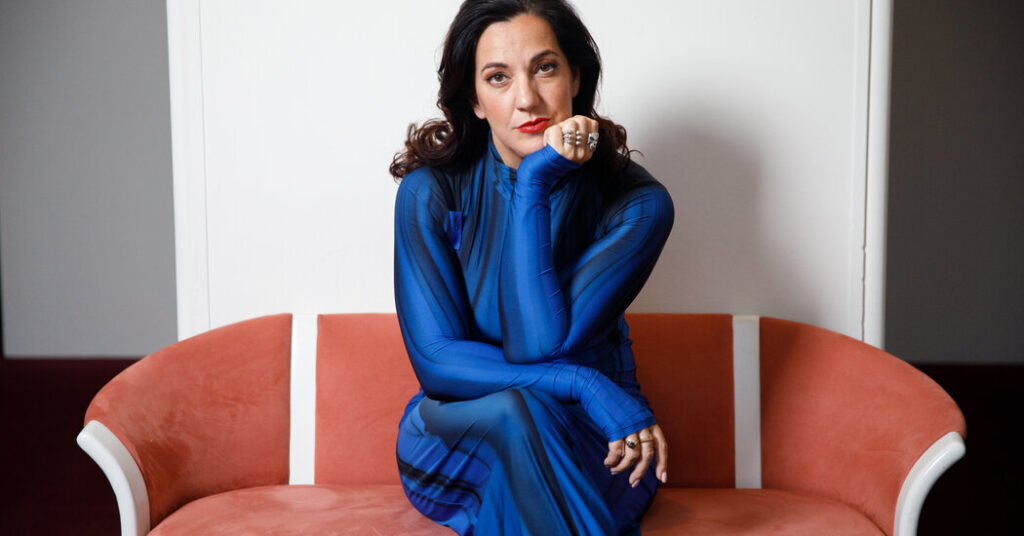
The mezzo-soprano Marina Viotti woke up on a July morning in 2024 knowing that millions of people would watch her sing in the opening ceremony of the Paris Olympics later that day. She had only one concern.
“I needed to find a friend to play golf with,” she said. “I don’t like to sit around.”
She really doesn’t.
Viotti, 39, is currently performing the role of Prince Orlofsky in “Die Fledermaus” at the Zurich Opera — her brother,Lorenzo, is the conductor — part of a packed season that has included Charlotte in Massenet’s “Werther,” Jocasta in Stravinsky’s “Oedipus Rex” and the title role of “Carmen” at the Dallas Opera.
But the Swiss-born Viotti, a rising opera world star with a versatile range that includes Baroque, bel canto and operetta, has had a few other lives. She was a heavy metal singer, has a master’s degree in literature and philosophy, and organized metal concerts before beginning to study voice. Those studies were undertaken in spite of significant doubts about her age — she was in her mid-20s, well beyond the conventional late-teens starting point for an opera singer — and her metal background.
Along the way she has weathered cancer, written a book, produced three albums, sung with Black Sabbath, won a Grammy and maintained numerous ongoing projects melding musical genres. (She is also sporty and speaks an alarming number of languages fluently.)
“I think generally people should not do only one thing in their lives,” she said last year over coffee in Paris, where she was performing in “Faust” at the Bastille opera. She laughed. “But maybe not as many things as me!”
Viotti, as animated and charismatic as her résumé suggests, might have seemed destined for classical music success like her three siblings. Her parents are the Swiss conductor Marcello Viotti and the French violinist Marie-Laurence Bret, and she grew up traveling to her father’s engagements all over the world.
“It was an amazing formation; my ear is full of all those voices,” Viotti recounted. “I wanted to be an opera singer from 5 years old.”
Her parents suggested she study the flute, as it required similar breath work, and she continued to professional level “although my real passion was horse riding,” she said.
Then, when she was 18, her harmonious family life was upended when Marcello Viotti died after a stroke.
Viotti was devastated. Depressed, she refused to have anything to do with classical music, which she associated with her father’s death. “We couldn’t even listen to it in the car with her,” Lorenzo Viotti said. “I think she was just trying to survive what had happened in her own way.”
She turned to heavy metal, which she had discovered through a friend.
“This music that was so violent and dark was my refuge,” she said. “I was writing my own texts, screaming it and sharing it with a community that felt welcoming.” Her family, particularly her mother, was supportive. “I had a very dark, gothic look, tattoos,” Viotti said. “I was drinking, but she didn’t judge and came to my concerts.”
While singing with metal bands, she began a tough preparatory course for entry into the French grandes écoles (the elite institutions that prepare students for the civil service or government work), then swerved into literature and philosophy. She began to organize metal concerts and, thinking she would study cultural management, began an internship with a chamber music festival in Aix-en-Provence. Listening to classical music for the first time in four years, she realized how much she had missed it.
“I decided spontaneously to go and hear Lorenzo play percussion in ‘Simon Boccanegra’ in Vienna,” she said. “The opera is the story of a dad and his daughter. By the end I was sobbing. I told my mother, this is where I should be.”
(Their mother, Lorenzo said, “was like, OK, I just paid for an entire cultural management course, but fine.”)
Viotti decided that Vienna was the best place to study voice technique, but her gothic look, heavy metal history and relatively late start proved problematic. “All the conservatories rejected me,” Viotti said. Eventually, Heidi Brunner, a Swiss mezzo-soprano and coach, accepted her after an X-ray of her vocal cords showed no damage from the metal singing.
“I had unconsciously been imitating opera singers,” Viotti said. “It turned out I already had some technique.”
Todd Camburn, a pianist at the Haute Ecole de Musique in Lausanne, which Viotti would later attend, said that before he played at her audition, he had been told she was something special. “She obviously needed to develop her vocal skills, but she clearly had so much talent,” Camburn said. “She had an intuitive sense of different styles of music, and a natural talent for stage presence, interpretation, communication.”
Her vocal breakthrough, he added, came when she began to study bel canto technique with the Argentine tenor Raúl Giménez.
“I was a contralto,” Viotti said. “In two lessons he unlocked my high notes and I was a mezzo.”
Auditioning after she got her diploma, wasn’t easy, she said. “The biggest challenge was my father’s name.”
It was “tough for Marina,” Lorenzo Viotti said, as it had been for him. “There was jealousy. We had to prove that we are not just the kids of a famous conductor.”
Viotti began to enter competitions and win small roles in European houses. She had just been cast as Stéfano in Gounod’s “Romeo and Juliette” at La Scala, when, in May 2019, she fainted during a performance in Lucerne.
“I had a huge tumor in my thorax,” she said matter-of-factly. “I was told I might never sing again.”
She underwent chemotherapy and radiation, but told few people about the diagnosis or treatment. “I didn’t want the label of sick or unreliable when I was just starting, and all my big debuts were coming,” she said. (In 2024, she released the album “Melankholia,” a fusion of Renaissance songs and rock music, that dealt with her experience of cancer.)
Six weeks after her final radiation treatment she made her La Scala debut, with Lorenzo conducting. “I was so exhausted,” she said. “But it gave me so much happiness.”
Soon after came the coronavirus pandemic. The enforced rest, she said, allowed her to recuperate properly and work on her technique. By 2021, she was performing Poulenc’s difficult “La Voix Humaine,” and moving into principal roles at major houses.
“From the beginning you could cast her in almost all the repertory, from Baroque to today,” said Baptiste Charroing, the director general of the Théâtre des Champs-Élysées, where Viotti has performed regularly over the last few years. “It’s very unusual to have that diversity and wide palette, and an enormous advantage. She can be comical, dramatic and has extraordinary technique. But she also has the mental capacity to go from one thing to another with enormous agility.”
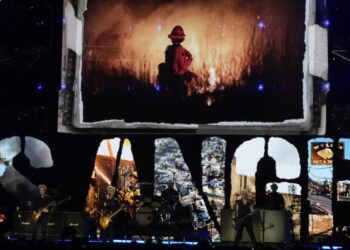
Viotti said that the opportunities opened up this year by the Olympics, and a Grammy Award (for best metal performance with the French metal band Gojira) have been enormous, bringing metal and rock back into her life in a bigger way. She has performed with Gojira and sang at Black Sabbath’s last concert in Birmingham, England, a little more than two weeks before the death of Ozzy Osbourne. And she has received numerous requests from festivals and opera houses to do crossover projects involving metal and opera.
“Ten years ago, I was considered a bit weird,” she said. “Now what I do is seen as cool. I can go back to metal from the front door now and build a bridge between my worlds.”
Opera needs new audiences, she said. “Singing an aria from “Carmen” with Gojira tells a younger generation that there are many possibilities for this form.” This, she added, “is the crossover career and life I always wanted; now I can live it.”
The post The Opera Star With Heavy-Metal (and Philosophy) Chops appeared first on New York Times.