While President Trump crowed on Saturday about the dramatic capture of President Nicolás Maduro of Venezuela by U.S. authorities, Democrats in Congress sounded alarms about the legality of the action and raised questions about recent briefings in which administration officials assured them that they were not seeking regime change in the nation.
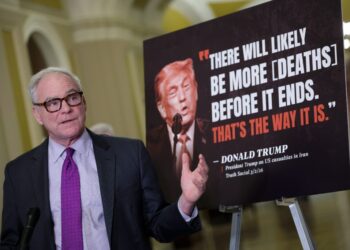
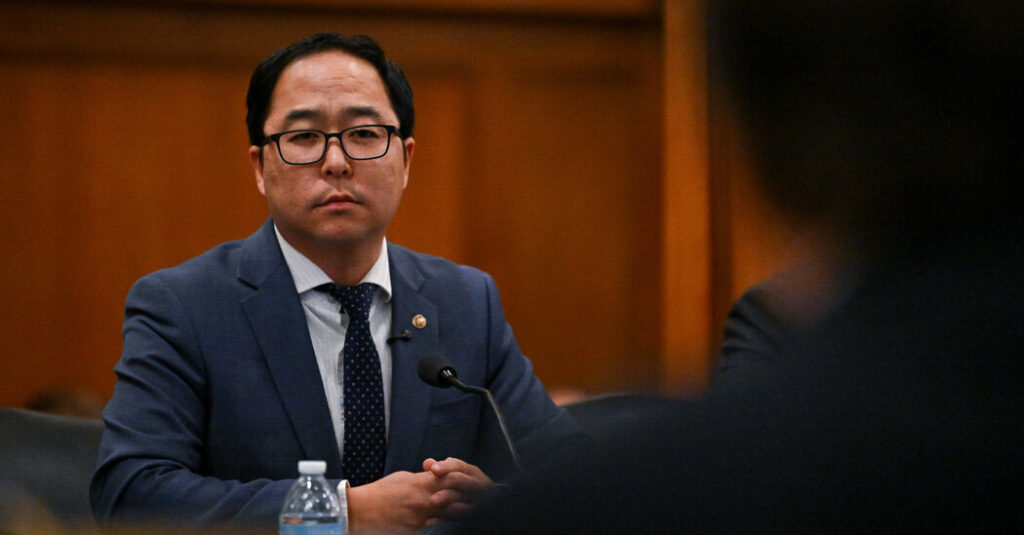
Senator Andy Kim, Democrat of New Jersey, accused Secretary of State Marco Rubio and Defense Secretary Pete Hegseth of having “blatantly” lied to Congress when they said the administration’s objective in Venezuela was not about toppling Mr. Maduro. He called the move to oust the Venezuelan leader “disastrous,” arguing that it would further isolate the United States on the global stage.
“Trump rejected our Constitutionally required approval process for armed conflict because the Administration knows the American people overwhelmingly reject risks pulling our nation into another war,” Mr. Kim, a former national security official in the Obama administration, wrote on social media.
Representative Debbie Wasserman Schultz, a Florida Democrat who represents a district in which Venezuelan immigrants cheered for the news, said that Mr. Maduro’s capture was “welcome” but that the way it was done raised serious questions.
“I’ll demand answers as to why Congress and the American people were bypassed in this effort,” she said. “The absence of congressional involvement prior to this action risks the continuation of the illegitimate Venezuelan regime.”
Some Democratic candidates running for office in this year’s midterm elections were quick to condemn Republicans in Congress for failing to stand up to Mr. Trump when they could have, helping to set the stage for what they called an unauthorized large-scale strike on Venezuela.
Graham Platner, a veteran and a progressive Democrat running for Senate in Maine, noted that Senator Susan Collins, the Republican he is challenging, voted with most members of her party against a Senate resolution to block the president from invading Venezuela without congressional authorization. “From Iraq to Venezuela, you can count on Susan Collins to enable illegal foreign wars,” he wrote online.
Most congressional Republicans, however, rallied around the president’s action, in keeping with the extraordinary deference they have shown to Mr. Trump even as he has trampled over congressional prerogatives.
Senator John Thune, Republican of South Dakota and the majority leader, said Mr. Maduro’s capture was “an important first step to bring him to justice for the drug crimes for which he has been indicted in the United States.” He called the operation a “decisive action” by Mr. Trump.
And even Senator Mike Lee, Republican of Utah, who had raised constitutional concerns early Saturday morning over the lack of congressional authorization, later said he was satisfied with the explanation that Mr. Rubio had given him in a phone call.
In an initial post on Saturday morning, Mr. Lee said he wanted to know “what, if anything, might constitutionally justify this action” in the absence of congressional authorization for military force. But in a second post hours later, he wrote that Mr. Rubio had told him that Mr. Maduro was “arrested by U.S. personnel to stand trial on criminal charges in the United States.”
He added: “This action likely falls within the president’s inherent authority under Article II of the Constitution to protect U.S. personnel from an actual or imminent attack.”
He also said that Mr. Rubio “anticipates no further action in Venezuela now that Maduro is in U.S. custody.”
Annie Karni is a congressional correspondent for The Times.
The post Trump Did Not Seek Congressional Authorization to Capture Maduro appeared first on New York Times.