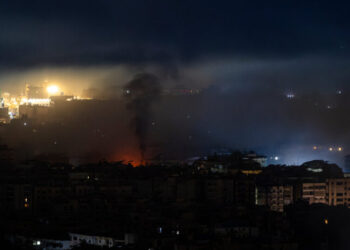
The United States captured Venezuela’s president, Nicolás Maduro, and his wife, Cilia Flores. But Mr. Maduro’s inner circle appeared on Saturday morning to have survived the U.S. strikes on the country, though it was not immediately clear who was in power.
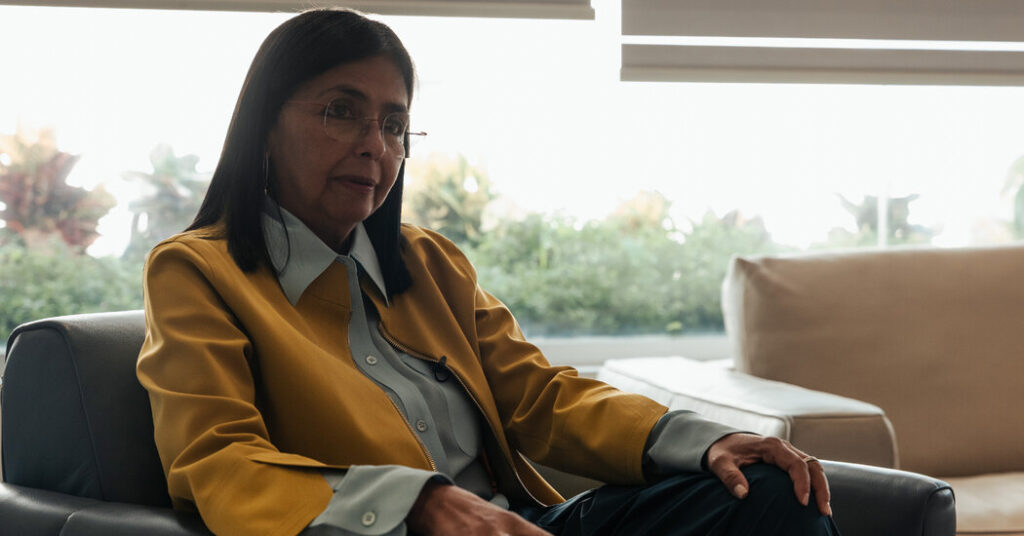
Venezuela’s vice president, Delcy Rodríguez, who is next in the presidential line of succession, figured among the Venezuelan officials issuing pronouncements or making public appearances after U.S. strikes on targets in the country. Reports circulated that Ms. Rodríguez was in Russia at the time of the attacks, but no official confirmation of her location was available.
Other top Maduro allies who appeared to survive the attacks included Vladimir Padrino López, the defense minister and Venezuela’s top ranking military officer; and Diosdado Cabello, the interior minister and one of Mr. Maduro’s top enforcers.
The survival of these officials suggests that Venezuela’s government remains functioning, at least shakily, in the hours after Mr. Maduro and the first lady were seized and extracted from the country.
If Mr. Maduro’s inner circle does remain intact and at the helm of Venezuela’s institutions, that also raises questions as to what happens next.
A war game run during President Trump’s first term assessed what may follow if Mr. Maduro were ousted, forecasting chaotic power struggles as military units, rival political factions and guerrilla groups vie for control of the country.
It is unclear how the intervention will influence the Venezuelan opposition’s ambitions to exercise power. Edmundo González, a retired diplomat, is considered the legitimate winner, by a wide margin, of a presidential election in 2024.
Unable to take office after the vote, Mr. González fled to Spain, ceding the spotlight to María Corina Machado, the opposition leader who had been barred from running and who won the 2025 Nobel Peace Prize.
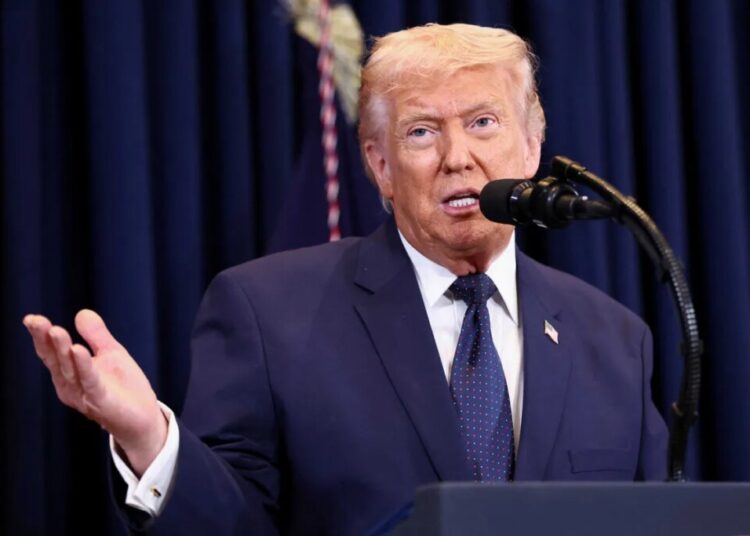
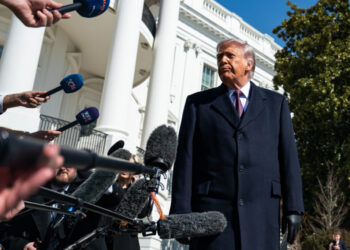
Mr. Trump appeared hesitant to throw his support behind Ms. Machado.
“Well, we have to look at it right now,” he said on Fox News on Saturday morning when asked if he would support her. “They have a vice president, as you know. I mean, I don’t know about what kind of an election that was, but, you know, the election of Maduro was a disgrace.”
Mr. Trump also suggested that his administration would continue to target Venezuelan government officials if they side with Mr. Maduro.
“If they stay loyal, the future is really bad, really bad for them,” he said.
Speaking by telephone on state television, Ms. Rodríguez, the vice president, invoked what she described as Mr. Maduro’s “instructions,” and called on the people and the armed forces to defend Venezuela.
Ms. Rodríguez also asked Mr. Trump to provide proof that Mr. Maduro is alive and condemned the U.S. intervention as an act of “military aggression” that violated the country’s sovereignty.
Educated partly in France, Ms. Rodríguez spearheaded a market-friendly overhaul which had provided, before the U.S. military campaign targeting Mr. Maduro, a semblance of stability in Venezuela’s economy after a prolonged collapse.
Her older brother, Jorge Rodríguez, another member of the inner circle who is the president of the National Assembly and Mr. Maduro’s chief political strategist, shared a statement on Telegram from Ms. Rodríguez calling the intervention a plot to seize Venezuela’s oil reserves.
Separately, Mr. Cabello, the interior minister, appeared on state television and urged Venezuelans to support Mr. Maduro’s government. While allied with Mr. Maduro, Mr. Cabello is also viewed as an internal rival in Venezuela’s power structures.
Mr. Cabello, a retired military figure, is at the helm of Venezuela’s repression apparatus. As a hard-liner with a caustic political style, his public profile had been on the rise as the U.S. intensified its campaign against Venezuela in recent weeks.
The defense minister, Mr. Padrino López, also appeared on state television after the U.S. attacks, calling them an act of “criminal military aggression.” He is known as a survivor of political upheaval in Venezuela, holding his role for the last 11 years.
Genevieve Glatsky contributed from Bogotá, Colombia, Jack Nicas from Mexico City and Anatoly Kurmanaev from Venezuela.
Simon Romero is a Times correspondent covering Mexico, Central America and the Caribbean. He is based in Mexico City.
The post Maduro’s Inner Circle Appears to Survive U.S. Strikes on Venezuela appeared first on New York Times.