President Trump said that he and key members of his administration watched in real time from Mar-a-Lago, his Florida club, the Delta Force raid that captured Nicolás Maduro, the Venezuelan president, on Saturday.
In a news conference with key administration officials, and during a lengthy telephone interview Saturday morning on “Fox & Friends,” Mr. Trump offered details of the monthslong planning that went into the operation, including the construction of a model of Mr. Maduro’s safe house, where special operations forces could practice the raid.
The pre-dawn raid by elite Army Delta Force commandos was the riskiest U.S. military operation of its kind since members of the Navy’s SEAL Team 6 killed Osama bin Laden in a safe house in Pakistan in 2011.
Mr. Trump said that the military repeatedly rehearsed the operation and was able to execute flawlessly, breaking through steel doors protecting Mr. Maduro in “a matter of seconds.”
“I watched it literally like I was watching a television show,” the president said on Fox News, adding that “it was an amazing thing.”
At Mar-a-Lago later on Saturday, Gen. Dan Caine, the chairman of the Joint Chiefs of Staff, offered a detailed account of the military operation, which began with months of intelligence collection. The C.I.A. had a team on the ground beginning in August collecting information on Mr. Maduro, people briefed on the operation said.
General Caine said that intelligence collection yielded detailed information about Mr. Maduro and that months of work helped the United States “find Maduro and understand how he moved, where he lived, where he traveled, what he ate, what he wore, what were his pets.”
The C.I.A. also collected intelligence from a fleet of stealth drones and a human source who could get close to Mr. Maduro and monitor his movements, according to people briefed on the matter.
The timing of the operation, General Caine added, was based on finding the right day to minimize harm to civilians in Caracas and to service members conducting the operation, and on the military’s ability to “maximize the element of surprise.”
In the days leading up to the raid, the United States sent increasing numbers of Special Operations aircraft, specialized electronic warfare planes, armed Reaper drones, search-and-rescue helicopters and fighter jets — last-minute reinforcements that military analysts said indicated the only question was when military action would happen, not if.
The raid was conducted more than a week after the C.I.A. carried out a drone strike on a port facility in Venezuela. It also came amid a legally disputed campaign that has destroyed 35 boats and killed at least 115 people in the waters around Latin America in an effort to raise pressure on Mr. Maduro.
The operation began with roughly 150 military aircraft, including drones, fighter planes and bombers, taking off from 20 different military bases and Navy ships.
Since late August, the Pentagon has amassed an armada of a dozen ships in the Caribbean Sea. The arrival of the aircraft carrier Gerald R. Ford and three missile-firing Navy destroyers in November added about 5,500 military personnel to a force of 10,000 troops already in the region, roughly half ashore in Puerto Rico and half at sea. With more than 15,000 military personnel, the U.S. buildup is the largest in the region since the Cuban Missile Crisis in 1962.
General Caine said the aircraft came into Venezuela to destroy the country’s air defenses, to allow helicopters carrying U.S. special operations forces in.
As the military forces moved in on Mr. Maduro, the United States turned off the power to parts of Caracas. Mr. Trump said lights were turned off “due to a certain expertise that we have.” He did not elaborate, but people briefed on the operation said a cyberoperation temporarily shut down power.
General Caine said that as the aircraft advanced on Caracas, the military determined that it had maintained so-called tactical surprise.
While air defenses were suppressed, the helicopters came under fire as they moved in on Mr. Maduro’s compound at about 2:01 a.m. local time. General Caine said the helicopters responded with “overwhelming force.”
The Delta Force operators assigned to capture Mr. Maduro were whisked to their target by an elite Army Special Operations aviation unit, the 160th Special Operations Aviation Regiment, which flies modified MH-60 and MH-47 helicopters, similar to the aircraft seen in the images that emerged on social media from Caracas.
The 160th, nicknamed the Night Stalkers, specializes in high-risk, low-level and nighttime missions like insertions, extractions and raids. The unit has conducted what the Pentagon called training missions near the coast of Venezuela in recent months.
One of the helicopters was hit. Speaking on Fox News, Mr. Trump said he thought some of the service members on the helicopter were injured. But he emphasized that no U.S. troops were killed in the operation. Two U.S. officials said that about half a dozen soldiers were injured in the overall operation.
Mr. Trump said that once the special operation forces made it through the compound and came to Mr. Maduro’s room, he and his wife tried to escape into a steel reinforced room, but were stopped by the American forces.
“He was trying to get to a safe place,” Mr. Trump said, adding: “It was a very thick door, a very heavy door. But he was unable to get to that door. He made it to the door, he was unable to close it.”
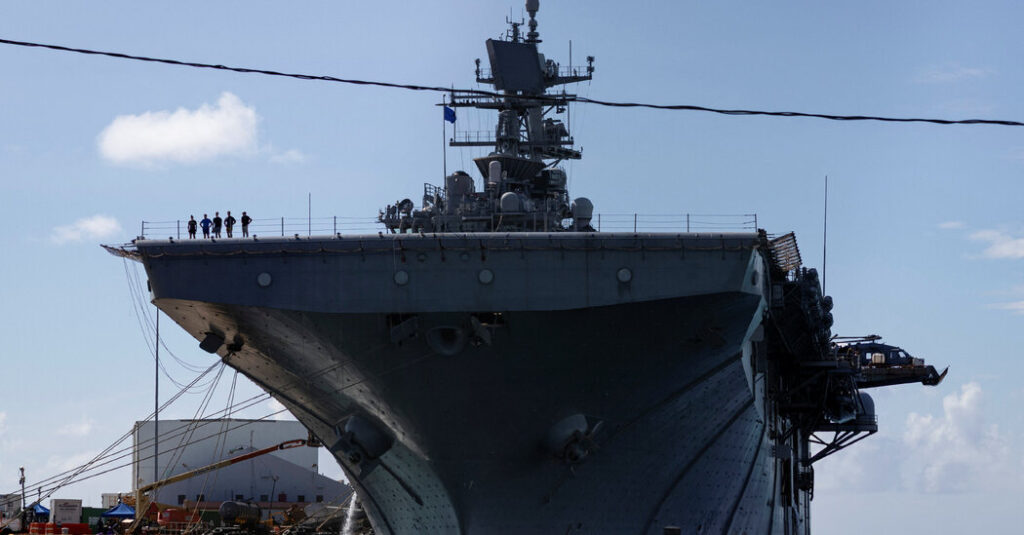
After Mr. Maduro was captured, with F.B.I. personnel accompanying the military troops to make the arrest, the helicopters returned to the compound. Mr. Maduro was loaded on a helicopter, and by 4:29 Caracas time, he and his wife were transferred to the U.S.S. Iwo Jima, a U.S. warship in the Caribbean.
Mr. Trump said that the United States was prepared to conduct a second wave of attacks against Venezuela, but that he did not think it would be necessary. He issued a warning to other Venezuelan leaders that he would be willing to come after them.
The raid, called Operation Absolute Resolve, capped off months of threats, warnings and accusations of drug smuggling from Mr. Trump and his cabinet, all centered on Mr. Maduro, whom the State Department has called the head of a “narco-terrorist” state. But the capture operation was also the product of months of meetings and military preparation, Gen. Caine said.
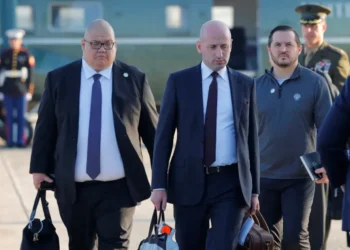
Other officials said that the meetings involved Mr. Trump; Secretary of State Marco Rubio, who also serves as the national security adviser; Defense Secretary Pete Hegseth; John Ratcliffe, the C.I.A. director; and Stephen Miller, one of Mr. Trump’s top aides. General Caine provided military advice to Mr. Trump and watched the operation with the president, Mr. Rubio, Mr. Hegseth and others.
Mr. Trump said on Saturday that he had vetoed a deal with Mr. Maduro to head off the raid, after Mr. Maduro had offered the United States access to Venezuelan oil.
Mr. Trump had authorized the U.S. military to conduct the operation several days ago, but left the precise timing to Pentagon officials and special operations planners to ensure that the attacking force was ready and that conditions on the ground were optimal.
Unseasonably bad weather pushed the operation off by several days. Earlier this week, however, the weather had cleared, and military commanders looked at a “rolling window” of targeting opportunities in the days ahead. Mr. Trump gave the final go order at 10:46 p.m. Friday.
Julian E. Barnes covers the U.S. intelligence agencies and international security matters for The Times. He has written about security issues for more than two decades.
The post Inside ‘Operation Absolute Resolve,’ the U.S. Effort to Capture Maduro appeared first on New York Times.