Presidents learn quickly the wisdom of distinguishing between an authoritarian regime and the people who suffer under its rule. President Donald Trump did just that, albeit in his own way, with a 2:58 a.m. Truth Social post Friday aimed at the leaders of the Islamic Republic of Iran. The president warned that, if protesters in escalating demonstrations are shot and killed, the United States “will come to their rescue.” He added: “We are locked and loaded and ready to go.”
Trump, who ordered the bombing of Iranian nuclear sites last summer, speaks with credibility, even if his message is ambiguous. The problem is that many protests have been crushed over the decades in Iran, and airstrikes are, at best, a temporary solution. If the administration wants this time to be different, it will need to oversee a patient, sustained campaign of maximum pressure against the government.
Iran is deeply degraded. The country’s regional proxies are in disarray. Israel has shown an ability to inflict pain deep inside its borders — hitting critical military facilities and assassinating nuclear scientists. U.N. sanctions went into effect in September, and the rial is at a record low. One U.S. dollar reportedly trades for 1.4 million rials on the street, compared with one to 70 at the start of the 1979 revolution.
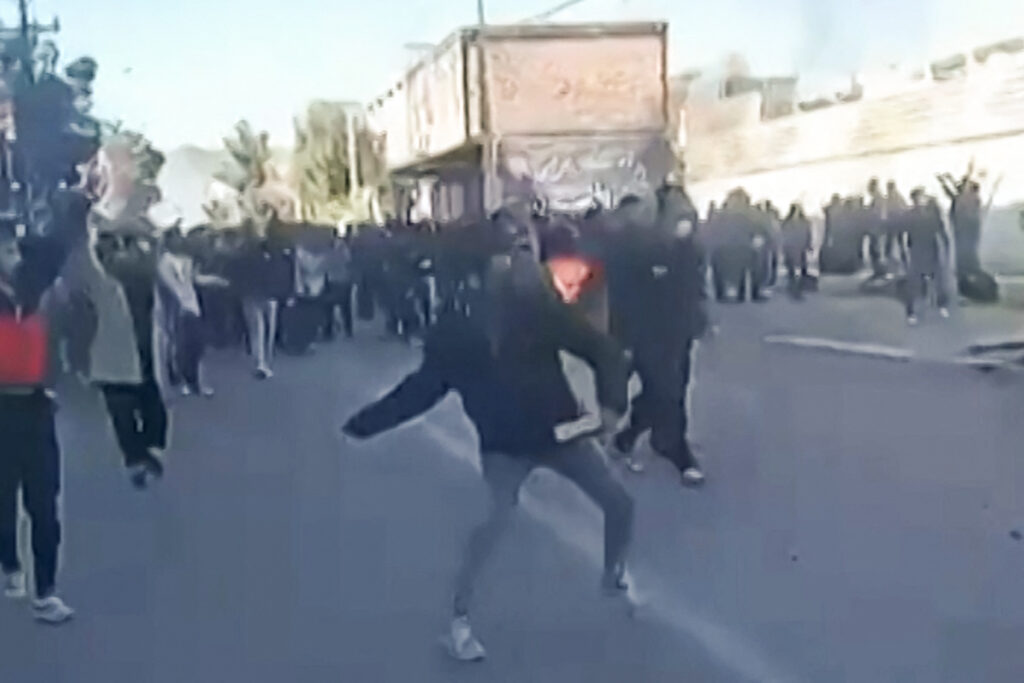
Spontaneous street protests have grown every day this week. On Wednesday, shaken authorities ordered a broad shutdown of banks, schools and other businesses, claiming it was to conserve energy due to cold weather. The government has projected a somewhat conciliatory tone, offering to meet with union leaders and merchants to hear their grievances, but it’s clear the public isn’t buying it. Many Iranians are reportedly chanting “Death to Khamenei,” a reference to the 86-year-old supreme leader ayatollah.
If the U.S. strikes inside Iran again, it should have a clear, limited objective with measurable results. Trump exaggerated the effects of the summer bombing, but it did set back the nuclear program. Also important is to not offer the Iranian people false hope; a few airstrikes won’t free them from bondage.
The optimal strategy is to economically squeeze the regime as hard as possible at this moment of maximum vulnerability. More stringent enforcement of existing oil sanctions would go a long way. President Joe Biden undermined the progress Trump had made in his first term on maximum pressure and strengthened Iran as he sought to revive an obviously dead nuclear deal. Oil exports remain robust, and they’re mostly headed to China. Trump has proven he can take tankers offline in Venezuela.
Western financial controls are actually working quite well. Iran has gotten so desperate to get around them that it’s now trying to sell ballistic missiles, drones and warships in exchange for cryptocurrency. The regime’s budget calls for collecting a bigger share of government funding via taxes this year instead of oil revenue, but the Islamic Revolutionary Guards and other institutions under Khamenei’s authority remain exempt from taxation. It would be helpful for the U.S. to actively leak embarrassing intelligence about national leaders to show everyday Iranians what most already intuit about their venal and hollow nature.
Beyond the moral case, hard-nosed realism makes clear that weakening Iran is the right move. The country props up Nicolás Maduro in Venezuela and supplies the Russian war machine in Ukraine. Energy-hungry China, while not dependent on Iranian crude, likes having a diverse mix of suppliers.
Trump is often knocked as an isolationist, but the reality is that he is comfortable intervening abroad when he senses weakness and an opportunity to advance American interests. The Islamic Republic won’t last forever, and perhaps it will survive this bout of discontent, but squeezing consistently will have positive knock-on effects for U.S. policy far beyond the Middle East.
The post How to make this time different in Iran appeared first on Washington Post.