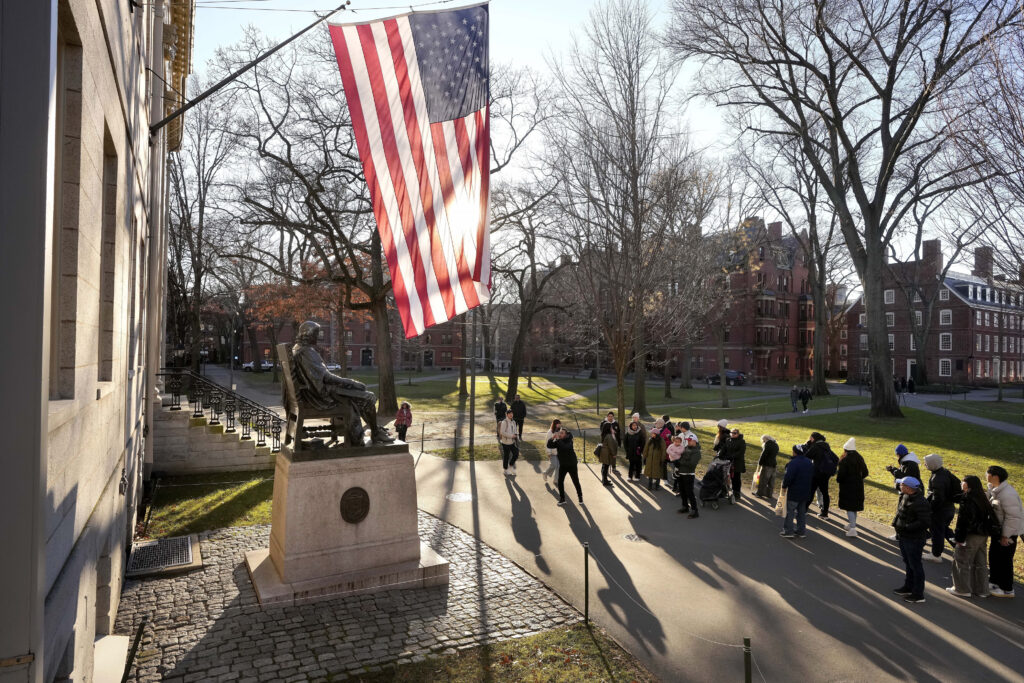
America’s top universities are training grounds for the country’s elite – producing a disproportionate number of stars in politics, business, academia, medicine and more. Yet a startling trend has emerged in recent years: Increasing numbers of students at these schools are claiming disabilities. The trend is more than a little suspicious.
In 2014, three percent of Harvard undergraduates received special disability accommodations. By 2024, it was 21 percent, according to the student paper.
A similar share of undergrads at Yale, Brown, Cornell and the University of Chicago also now claim to be disabled.
Stanford is illustrative. In the 2012-2013 school year, 1,570 students registered a disability with the Office of Accessible Education. Less than a decade later, in 2020-2021, that number had risen to 3,672 — 24 percent of undergraduates and 18 percent of graduate students. This year, 38 percent of undergrads are registering disabilities with the university and 24 percent have received accommodations in housing or academics as a result, according to a recent media report.
Such disabilities include traditionally understood definitions of the word: difficulty with mobility, vision, hearing and speech, along with chronic illnesses. Yet the rapid increase has been driven by students claiming mental or emotional conditions, such as anxiety around deadlines or difficulty concentrating.
Why are disability accommodations exploding most starkly at elite schools while the rate at community colleges, where one would expect to see the most disabled students, has remained more stable? It’s quite clear: Affluent students are registering disability designations that entitle them to significant advantages, from single dorm rooms and deadline extensions to laptops in no-laptop classes and extra time on tests. For kids who don’t legitimately need them, these perks become a crutch that hobbles their intellectual growth. Coursework is supposed to be challenging.
We confess, we’re skeptical that a quarter of Stanford students — median SAT score 1540 — are unable to handle college without a bevy of special exceptions to the rules that apply to everyone else. A more reasonable explanation is that the new diagnoses are a result of “concept creep”: criteria have been progressively relaxed to the point where society now pathologizes normal human variation, or what used to be called “strengths and weaknesses.”
The accommodations themselves are often ad hoc and unscientific. No one believes that schools shouldn’t offer real disability-specific fixes like wheelchair ramps and braille books. But everyone benefits from having extra time on tests or a quiet single room in which to study. It makes no more sense to give the most privileged students exemptions, on the grounds that they are bad at solving problems quickly and under pressure, than it would to exempt a pilot from an eye exam, on the grounds that he cannot see.
It’s not fair to other students, and because it’s so obviously unfair, it encourages them to get their own diagnosis. This undermines the meritocracy, deepens resentments and signals to ambitious youths that it’s foolish to play by the rules instead of trying to skirt them. It also means more graduates are unprepared to join the workforce, where they’ll be expected to perform at a normal tempo.
Unfortunately, federal law has made it hard for schools to contain the explosion, let alone push back. In 2008, Congress overly broadened the definition of what counted as a disability under the Americans with Disabilities Act.
Disability policy used to aim for reasonable tradeoffs. Decades ago, the Educational Testing Service flagged the standardized test scores of students who took tests under non-standard conditions, such as separate rooms or extra time, with an asterisk. While students whose scores came with an asterisk understandably worried that schools might discriminate against them, that worry was also what kept non-disabled students from gaming the system.
Decades of well-meaning but poorly conceived policy changes, aimed at reducing “stigma,” have gotten rid of the asterisk. It’s time to bring back those disincentives — or else just declare everyone disabled and give up on having any rules at all.
The post America’s fragile future elite will meet the real world eventually appeared first on Washington Post.