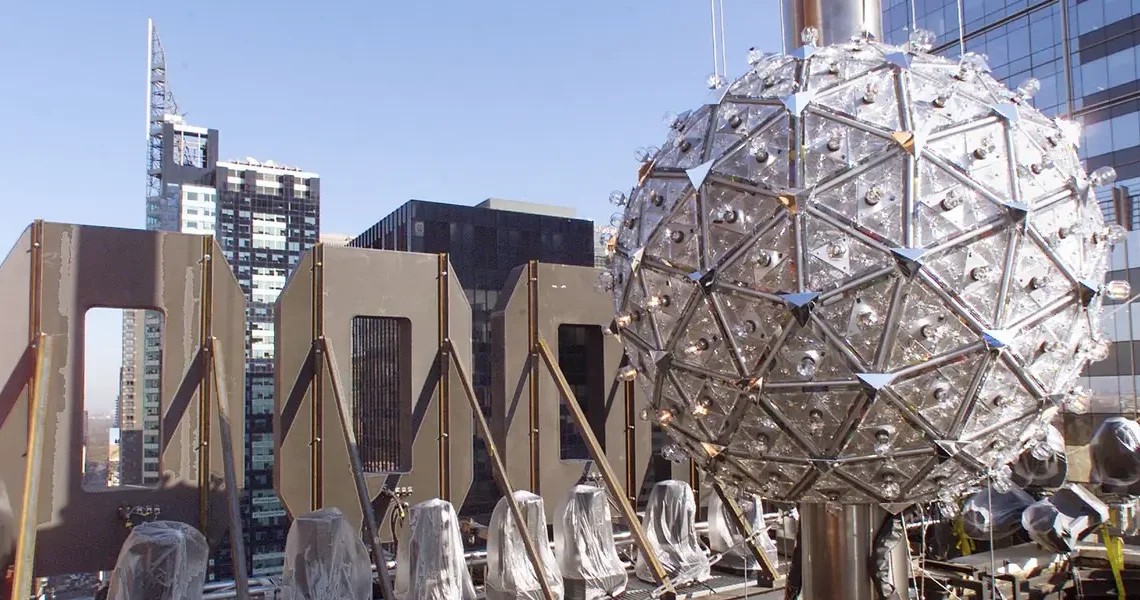
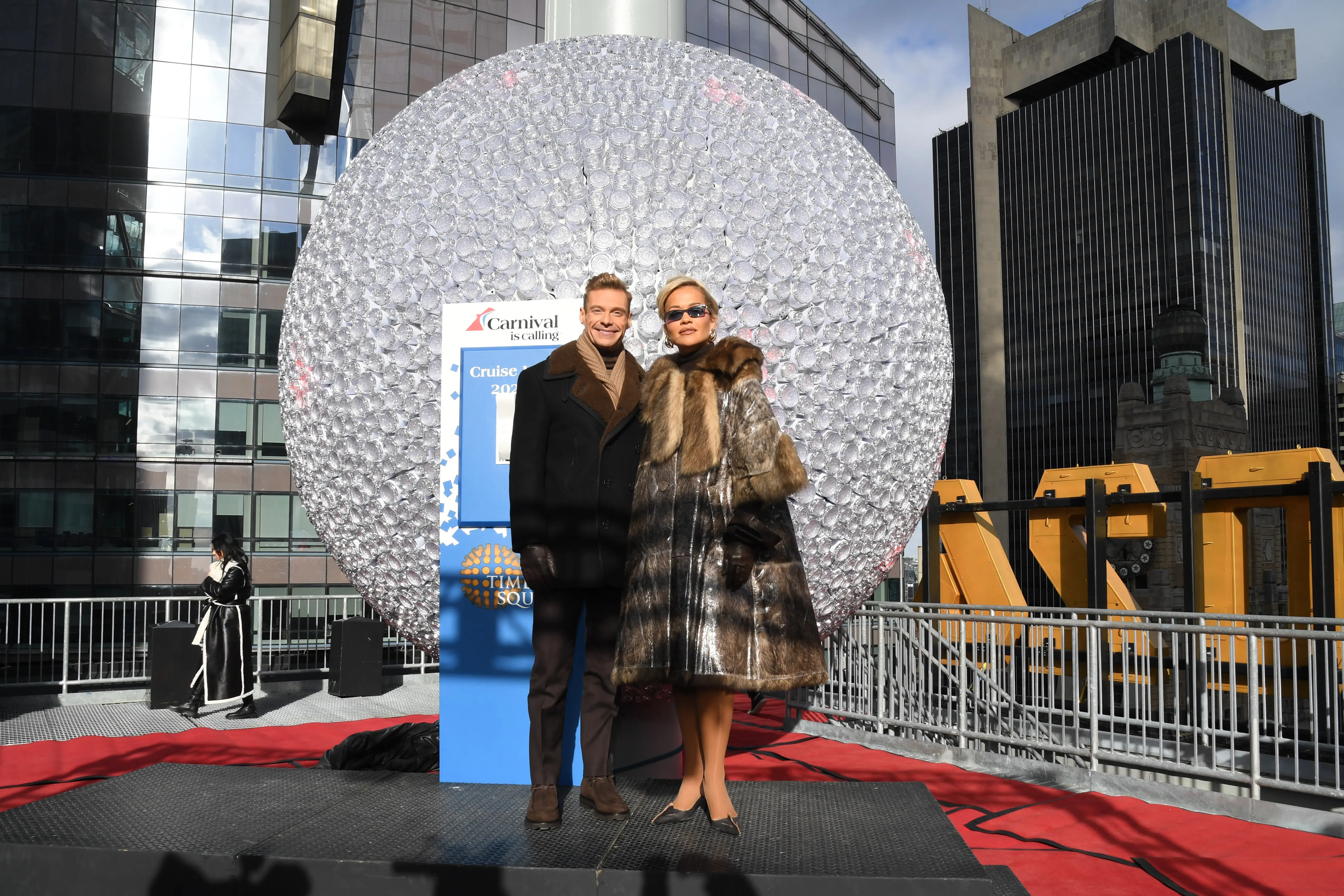
2025 is coming to a close. So, as we reflect on all this year had to offer — the Coldplay ‘”Kiss Cam” video, Taylor and Travis’ engagement, and “KPop Demon Hunters” may come to mind — it’s time to ring in 2026 with a bit of fun.
Different countries are known for their own unique traditions to celebrate and bring good energy into the new year. In Denmark, for example, people celebrate New Year’s Eve by breaking plates. Meanwhile, in Italy, it’s tradition to wear red underwear. And of course, in the US, it’s common to watch the Times Square ball drop.
The ball drop has been a New York City tradition for over a century, symbolizing new beginnings. But the ball itself has changed drastically since its debut in 1907; then, it was crafted from iron and wood, measured 5 feet in diameter, and weighed 700 pounds, according to Times Square.
In contrast, today’s ball — the ninth iteration — measures 12.5 feet in diameter, weighs 12,350 pounds, and is lit by more than 5,280 crystals and LED lights.
And, in a new twist, this year, there’ll be two ball drops as part of the celebrations for America’s 250th birthday: one to mark the new year, and one in July.
Here’s a look back at how the tradition started 118 years ago and what to expect from this year’s event.
Before the Times Square ball was invented, people would gather downtown at Trinity Church to hear the bells chime.
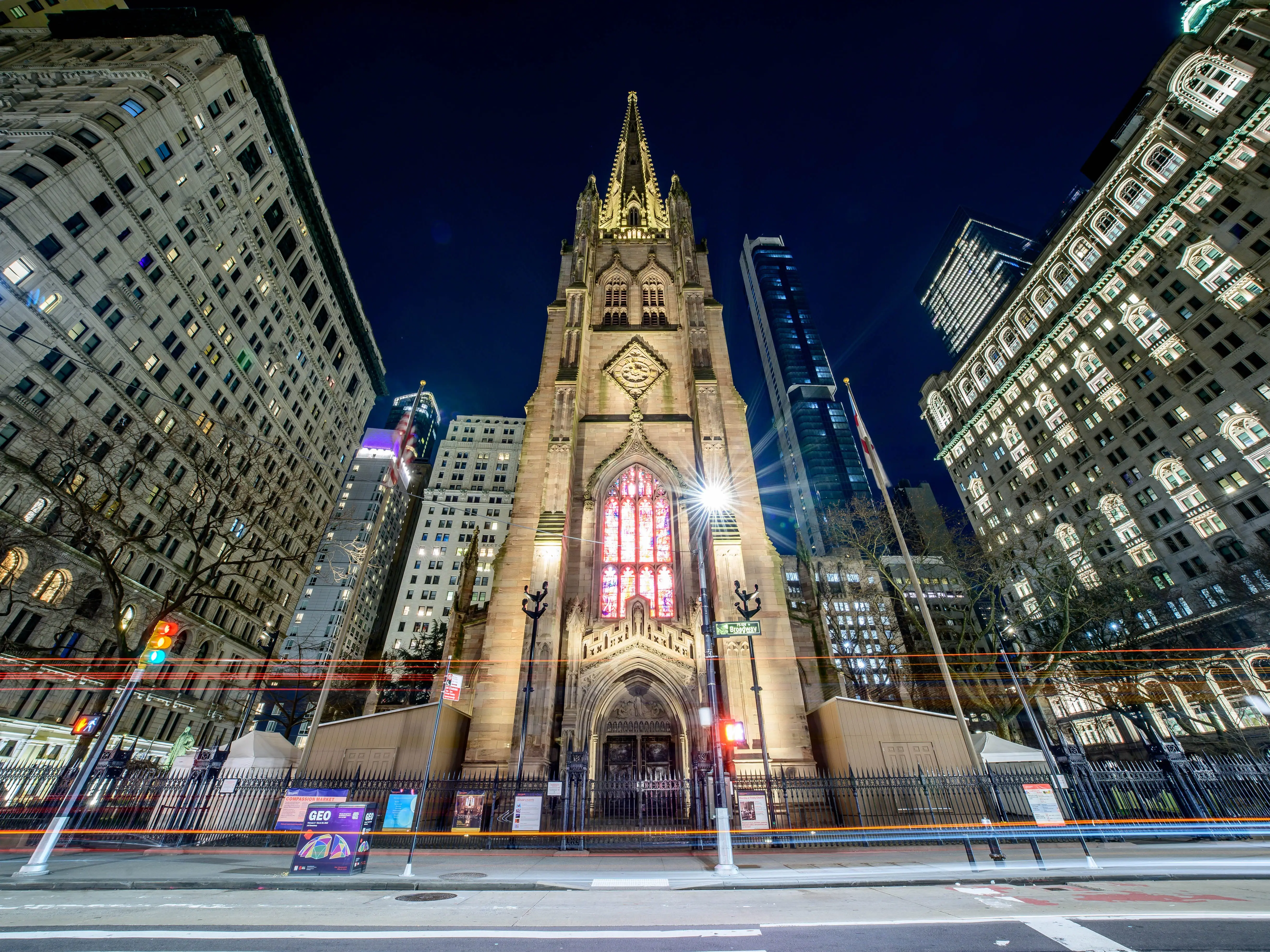
Before the ball’s invention, people in New York City would gather outside Trinity Church in Lower Manhattan to hear the bells chime at midnight, PBS reported.
But after The New York Times moved offices to Midtown’s Longacre Square — promptly renamed Times Square — in the early 1900s, the company started a midnight firework display to encourage people to celebrate farther north.
The fireworks were later banned by the city’s police department, so Adolph Ochs, then-owner and publisher of The New York Times, commissioned the company’s chief electrician, Walter Palmer, “to find a new light display,” PBS reported.
The first Times Square ball dropped in 1907 to ring in 1908 and was made of iron and wood.
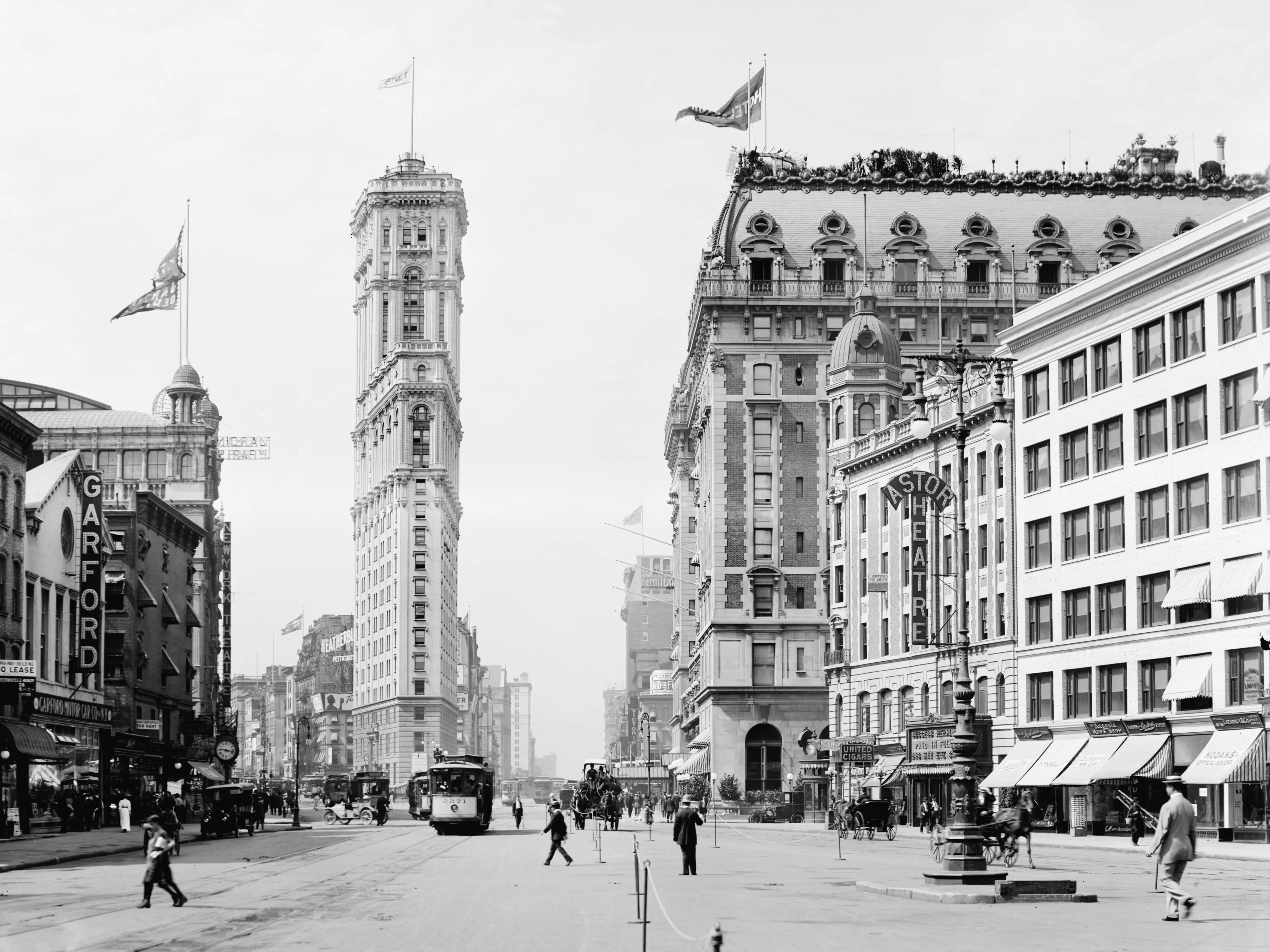
Palmer was inspired by a 19th-century maritime method of timekeeping, which involved dropping a ball at a certain time to help mariners ensure their timepieces were accurate, PBS reported.
The first Times Square New Year’s Eve ball was built by Jacob Starr, an immigrant metalworker. It weighed 700 pounds, measured 5 feet in diameter, and featured 100 light bulbs.
Artkraft Strauss, Starr’s company, was in charge of lowering the ball at midnight with an elaborate pulley system. When it dropped for the first time to ring in 1908, it started a tradition that remains more than 100 years later.
In 1920, the ball was redesigned and made of wrought iron.

Midway through the 1920s, a lighter ball replaced the original iron and wood one.
The new ball weighed 400 pounds and was made of wrought iron.
In 1942 and 1943, no ball was dropped in Times Square due to World War II.
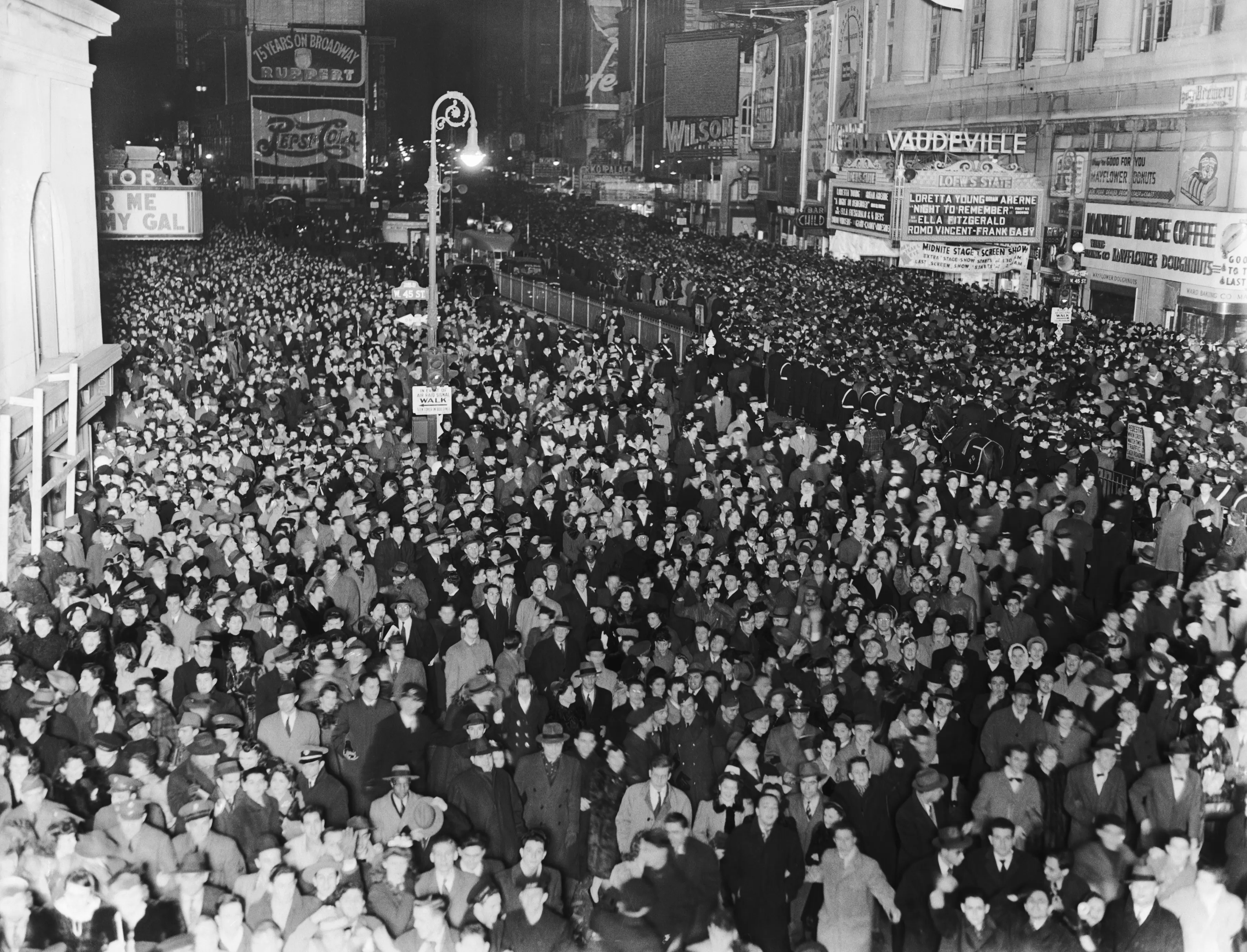
1942 and 1943 are the only years to date that the Times Square ball was not dropped to ring in the new year.
At the time, the US was engaged in World War II, and New York City participated in a dim-out to protect the city from attacks, according to the Museum of the City of New York.
The dim-out didn’t keep crowds away, though. On New Year’s Eve, people still gathered in Times Square.
In 1955, the ball was recreated and made entirely of aluminum.
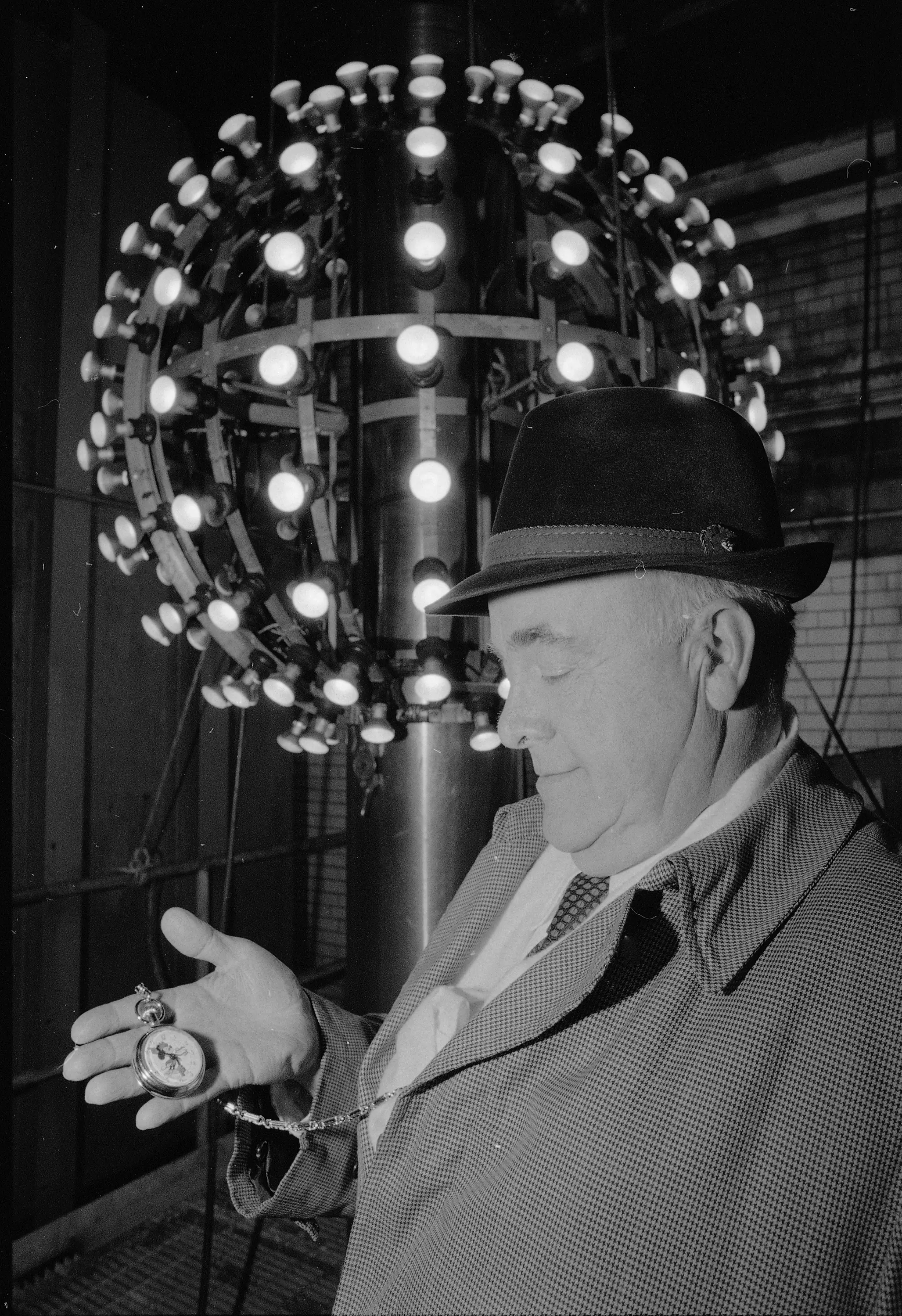
The new ball was made of aluminum and weighed only 150 pounds, the lightest it has ever been.
It was used until 1980, as seen in the photo above, behind Russ Brown, then-superintendent of One Times Square.
From 1981 to 1988, the aluminum ball was transformed into an apple.
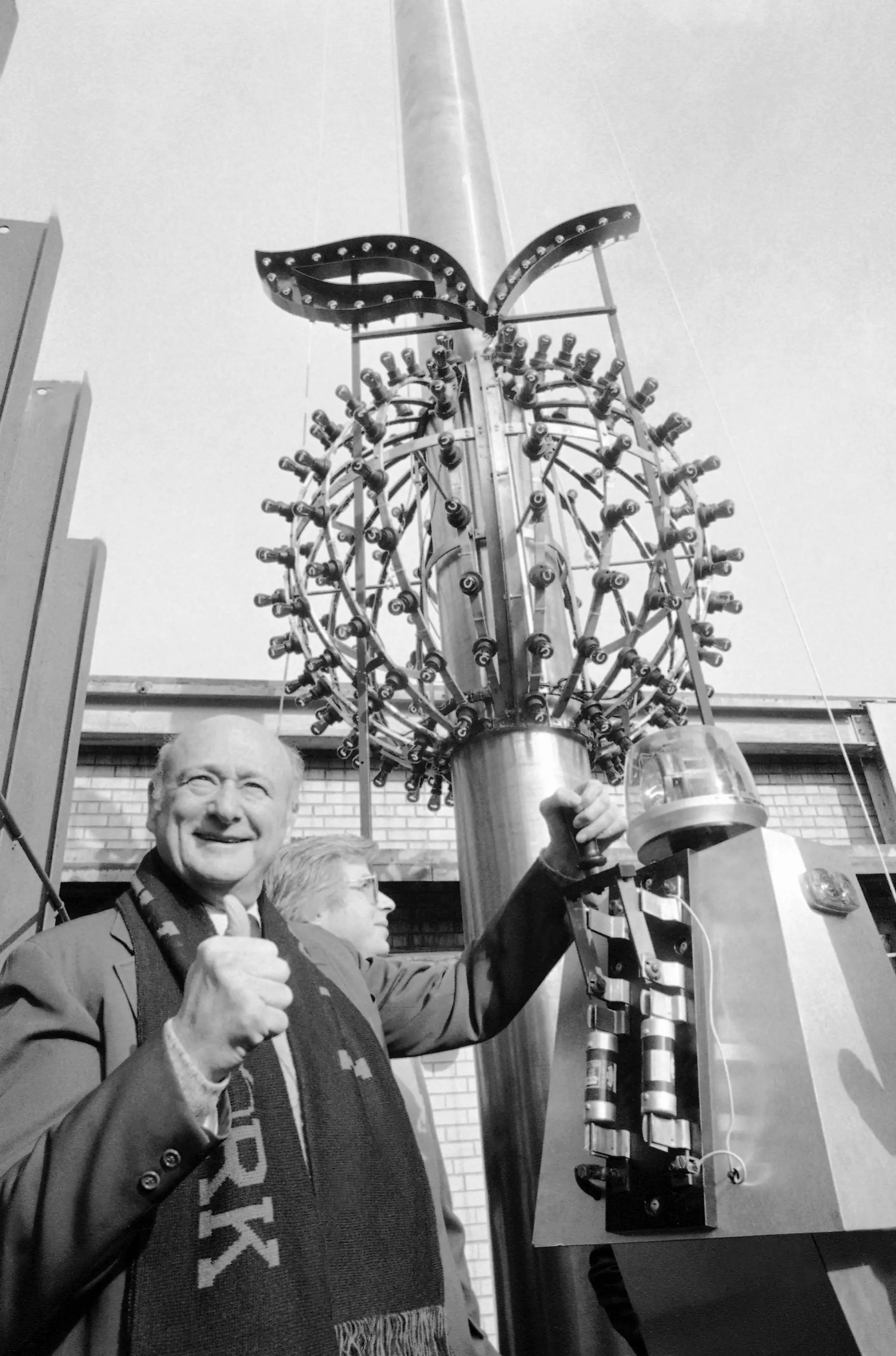
From 1981 to 1988, the Times Square ball was transformed into the “Big Apple Ball,” complete with red light bulbs and a green stem to resemble an apple for the “I Love New York” marketing campaign, according to Times Square’s website.
When the campaign ended, the ball returned to its white light bulbs along with a few upgrades.
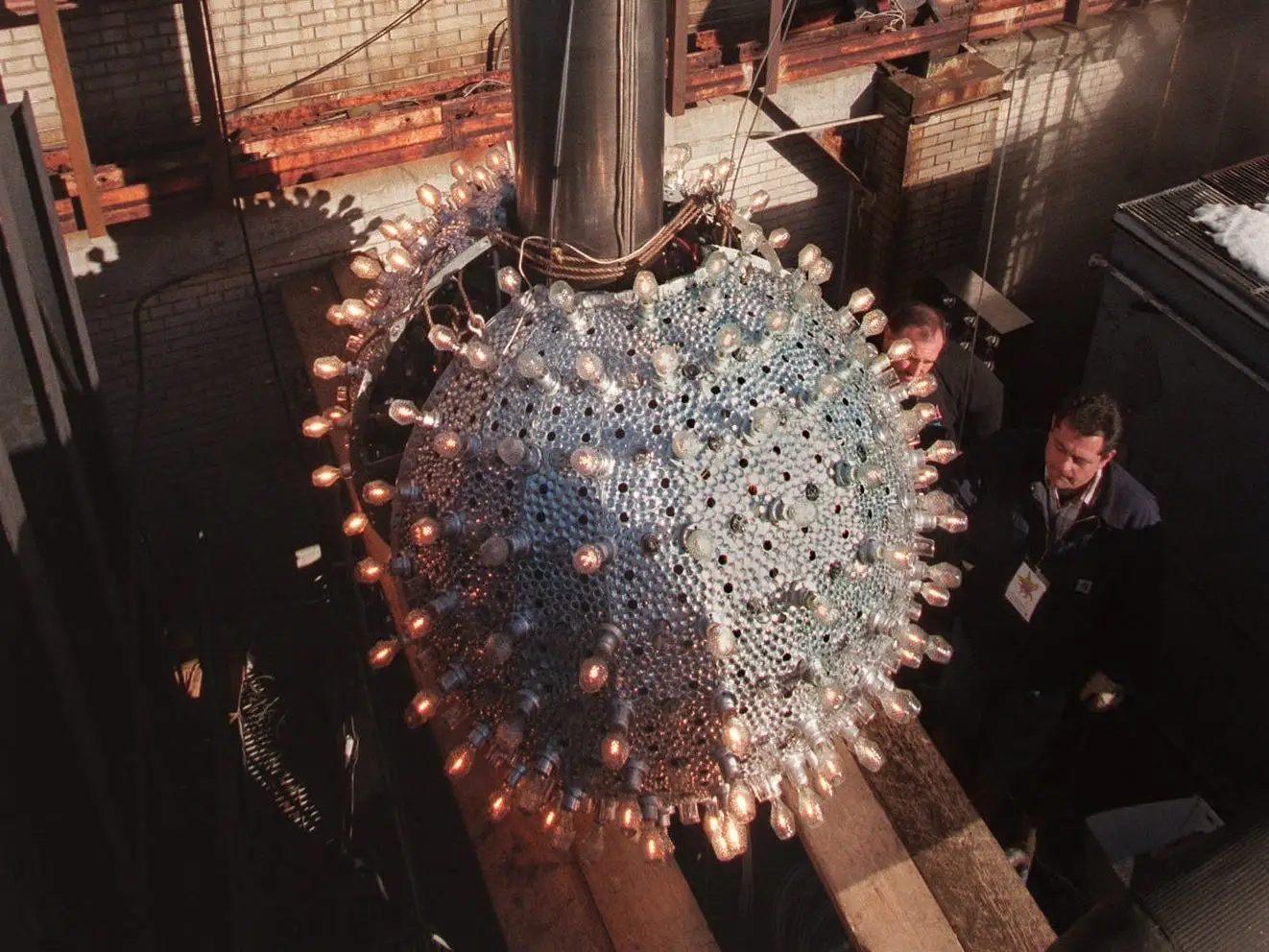
The traditional aluminum ball returned in 1989 and was upgraded in 1995 to include aluminum skin, rhinestones, and strobes.
But perhaps the most important upgrade was the addition of computer controls that lowered the ball at midnight.
The aluminum ball dropped for the last time in 1998.
Ahead of the year 2000, the Times Square ball was completely transformed and redesigned using crystal.
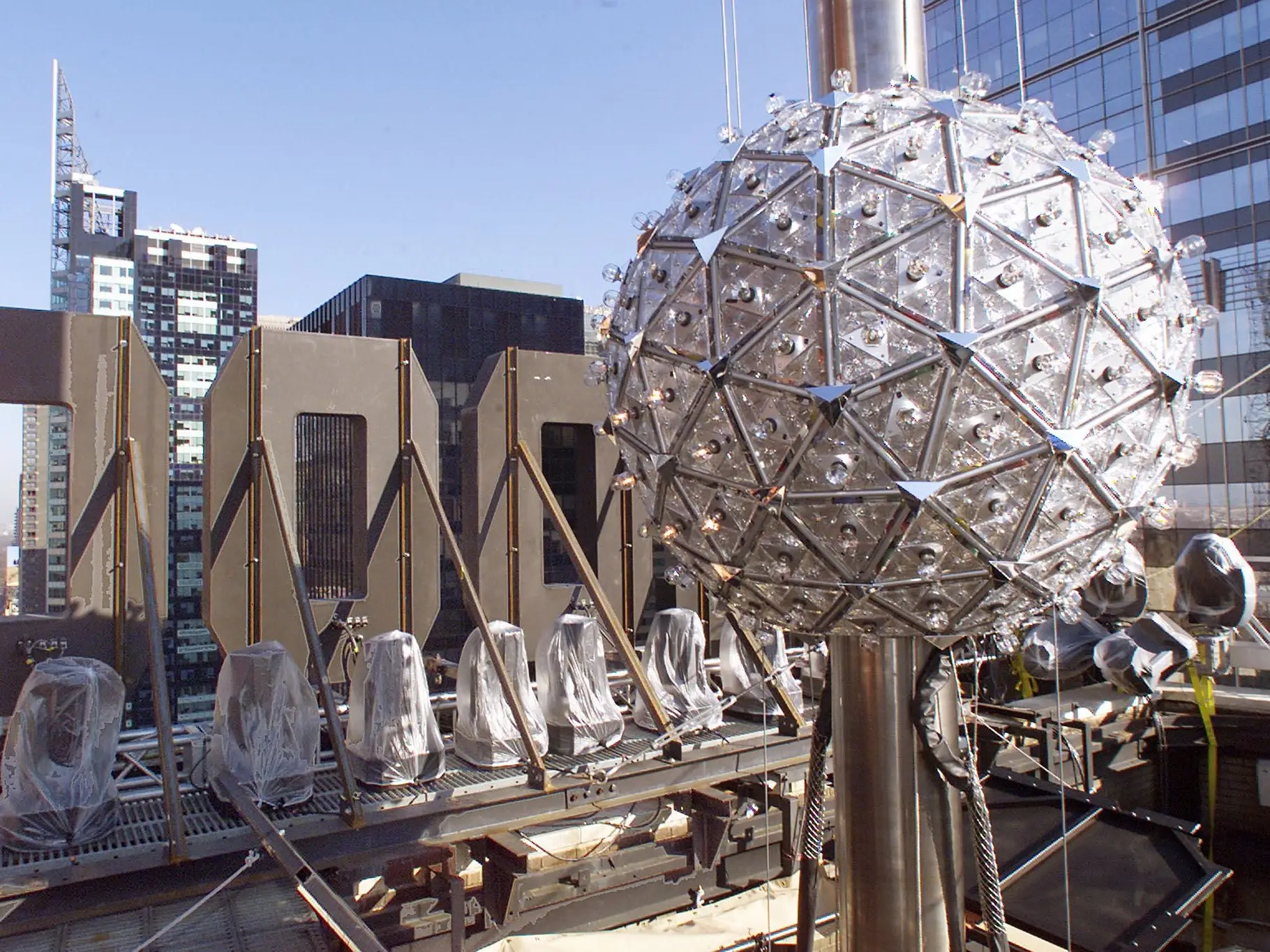
To celebrate the turn of the millennium, the ball was redesigned by Waterford Crystal.
For the ball’s 100-year anniversary in 2007, it was upgraded with LEDs.
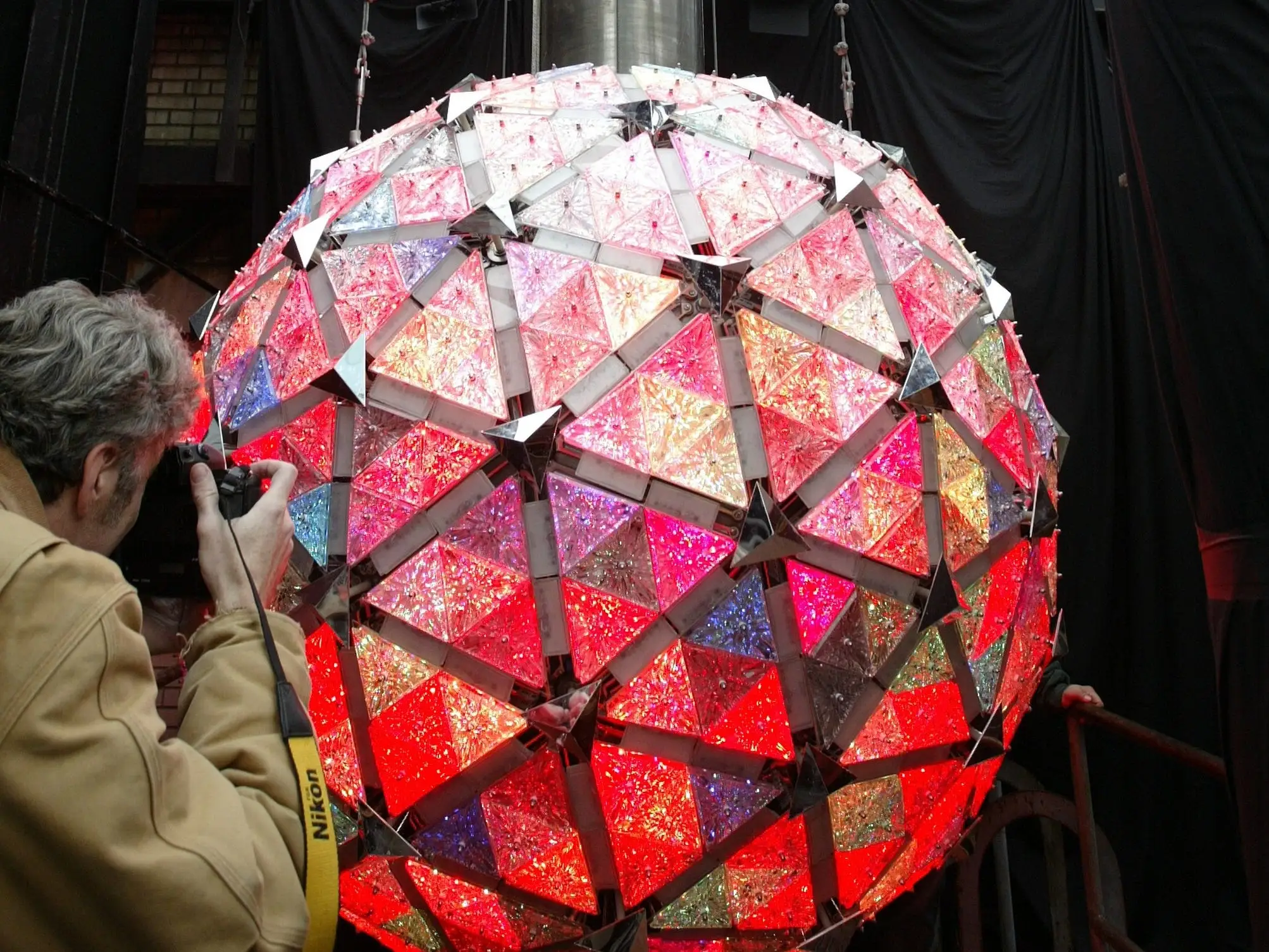
In 2017, the 2007 ball — known as the Centennial Ball — was displayed at Ripley’s Believe It or Not in Times Square.
At the time, Stacy Shuster, then-director of marketing and sales at Ripley’s New York, told Untapped New York that the 2007 ball featured 672 Waterford crystal triangles and 9,576 Philips Luxeon LEDs.
In 2008, the “Big Ball” was created to sit permanently atop One Times Square.

The ball can be seen on display year-round, just like it was here in July 2020.
2020’s New Year’s Eve ball was another showstopper despite major changes to tradition.
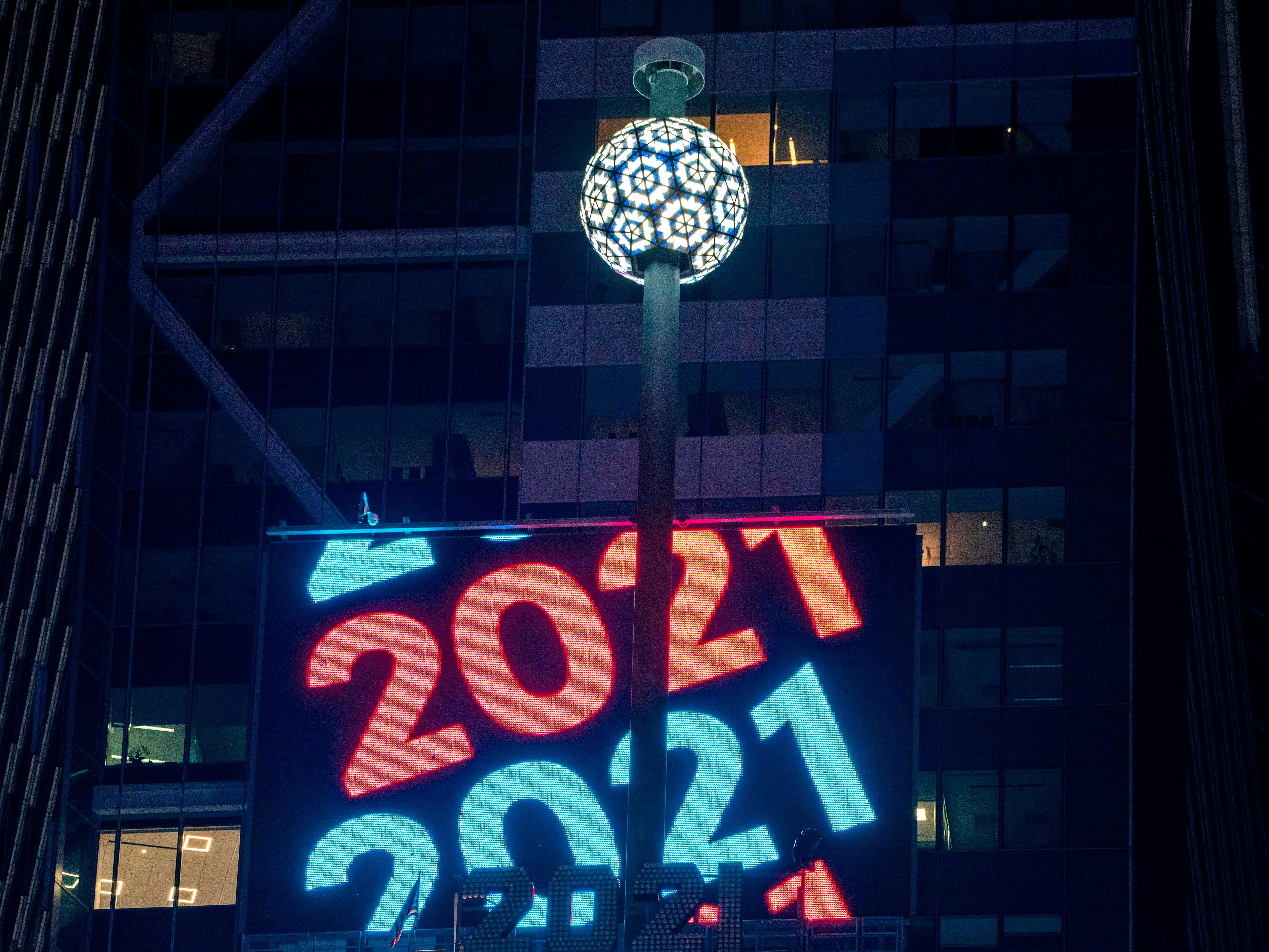
In 2020, Times Square was closed to the public on New Year’s Eve due to the COVID-19 pandemic. But the ball was still the star of the show.
The ball weighed 11,875 pounds and was 12 feet in diameter. As well as 2,688 Waterford crystals, it had 32,256 LED lights.
2021’s ball drop was also scaled back, only allowing 15,000 spectators in comparison to its usual 58,000 people, and in-person viewers were required to wear masks and show proof of vaccination.
The ball was updated as a part of Waterford’s “Gift of Wisdom” design for 2022.
Ahead of 2023, new crystals were added.

Nearly 200 new Waterford crystals were installed on the ball ahead of 2023’s arrival with the theme, the “Gift of Love,” Reuters reported. The crystals featured circles of intertwining love hearts.
Ahead of 2024, the ball was given a “new bow tie lighting pattern” in honor of Times Square’s former nickname as “the bow tie,” CBS reported.
The 2025 ball was replaced for the 2026 drop.
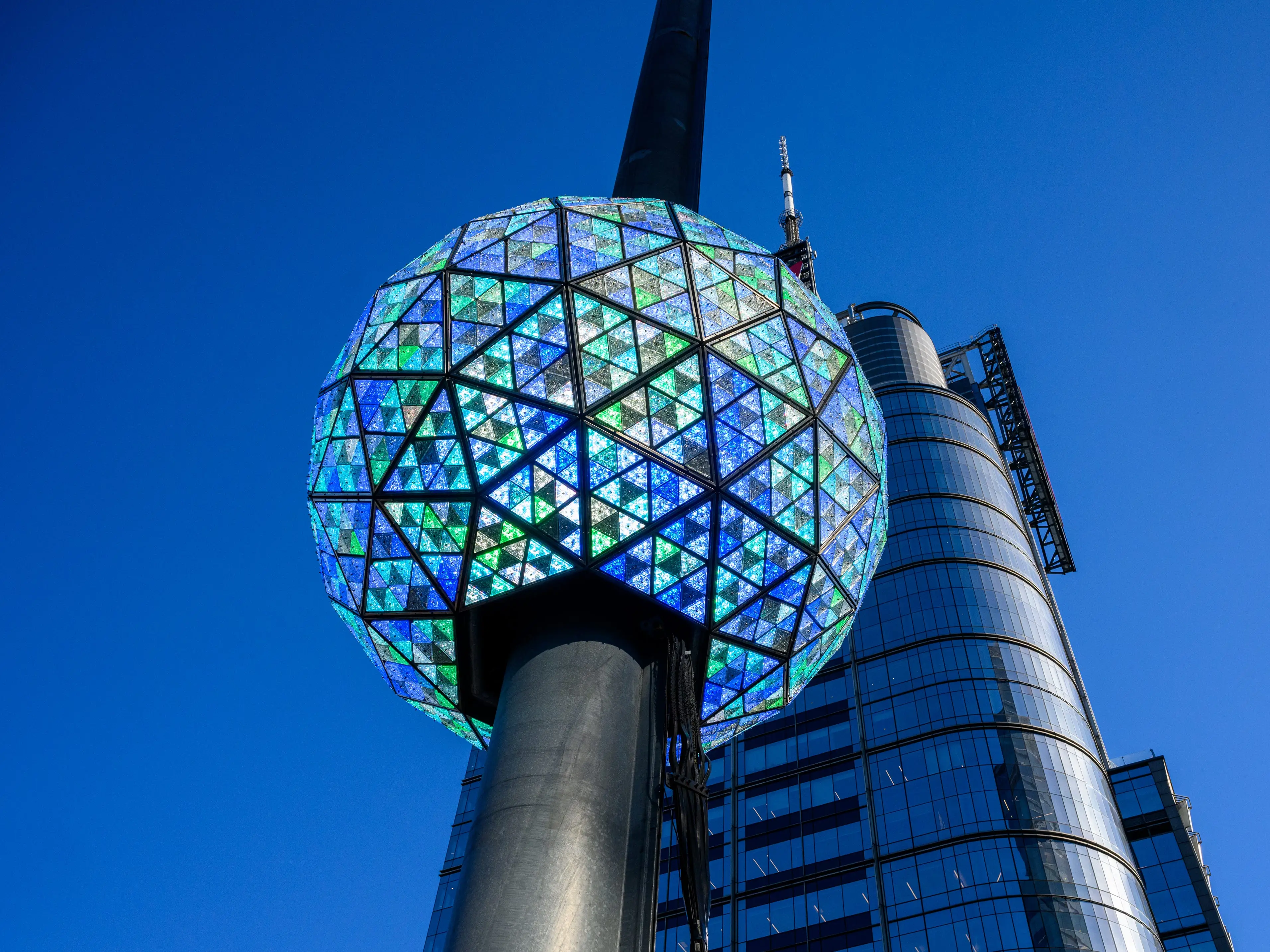
The 2025 ball featured crystal triangles with two designs, according to Times Square 2025 organizers: the “One Times Square” crystal design and the “Ever” crystal design.
The One Times Square design featured “long linear cuts with a circle near the top” to represent the pole and building where the ball drop takes place.
Meanwhile, the Ever design consisted of “three pairs of interlocking rings surrounded by diamond facets that provide the setting for the letter E” in honor of One Times Square becoming a new destination for vow ceremonies in 2025, according to organizers.
This year, the ball will drop twice in celebration of America’s 250th birthday.

For the 2026 drop, the ball weighs more than 12,000 pounds and measures 12.5 feet in diameter, making it the largest ever. It’s also adorned with more than 5,200 Waterford crystals, which form circular patterns rather than triangular ones.
The ball, named the Constellation Ball, is the ninth iteration in the tradition’s almost 120-year history.
Minutes after it drops to mark the start of 2026, it will be illuminated again with a red, white, and blue “America250” design, in a nod to the US’ 250th birthday, and 2,000 pounds of red, white, and blue confetti will drop on the crowd below.
Then, the ball will drop again on July 3 to mark 250 years since the Declaration of Independence was adopted. It will be the first time the ball drops outside New Year’s Eve in its 118-year history, Times Square said.
Read the original article on Business Insider
The post The first Times Square ball was just 5 feet in diameter. See how it’s evolved over the last 118 years. appeared first on Business Insider.