This year, long before the potential acquisition of HBO by Netflix, each of these two entities launched a hospital drama produced by respected TV veterans. HBO Max debuted “The Pitt” in January, created by members of the team that produced “E.R.,” and Netflix premiered “Pulse” in April, executive produced by Carlton Cuse, a longtime showrunner on “Lost.”
Both shows seemed promising, borrowing elements from past medical-drama hits: “The Pitt” combined the procedural focus of “E.R.” with the real-time tension of “24,” and “Pulse” aimed to infuse itself with the relationship-angst of “Grey’s Anatomy.”
That’s where the similarities end.
“The Pitt,” which wound up as my choice for the best show of the year, felt handcrafted and specific, an example of television with something real to say (in this case, about the fragile state of our health care system) and an addictively entertaining way to say it (a real-time format set over the course of a single emergency-room shift). Viewers noticed, as did the industry: “The Pitt” won five Emmys, including outstanding drama series. “Pulse,” on the other hand, felt like yet another generic medical show, got no award attention and exists somewhere in the depths of the Netflix library, if you know to search for it.
The differing fates of these shows perfectly illustrate the ongoing culture clash between HBO and Netflix — and it’s an important distinction, given that, if Netflix’s purchase of Warner Bros. goes through, these entities will become one. This consolidation would mean that the streaming wars — after a decade of competition that resulted in innovative and exciting programming (as well as a glut of forgettable TV) — were essentially over, with Netflix having inarguably prevailed.
So, in a Netflix-Warner Bros. future, what will motivate the creation of exciting new television? Or will T.V. return to its default settings — low on risk, low on cost, and concerned only with producing programming that brings in the biggest possible audience — which HBO has spent the last 25 years undoing?
For TV to have a chance to continue improving, Netflix can’t take its corporate victory as validation of its programming philosophy. It must not just absorb HBO; it must embrace the HBO approach.
Ever since the success over 25 years ago of shows like “The Sopranos” and “Sex and the City,” HBO has operated like a hip boutique, crafting prestige hits and aiming for niche acclaim over mass appeal. It strives to strenuously curate everything it develops, so that each new series feels in some way worthy of being part of HBO’s storied brand, the one that also gave us “The Wire” and “Curb Your Enthusiasm” (to name but a few programs).
HBO has also historically cultivated relationships with favored creators, from David Milch of “Deadwood” to David Simon, the creator of “The Wire,” to Danny McBride and Jody Hill, part of the team behind “Eastbound & Down” and “The Righteous Gemstones” — a thoughtful approach that’s yielded blockbuster successes, because the cable network invested passion and specificity in its work.
HBO’s game plan hasn’t been foolproof. For every water-cooler hit like “Succession,” multiple shows came and went without leaving much impression, from Mr. Milch’s metaphysical surfing show, “John From Cincinnati,” to the sexually frank relationship drama “Tell Me You Love Me.” But by not only taking big swings, but also taking far fewer and more careful swings, HBO has had a higher batting average than any of its competitors, and established itself as a formidable brand. If someone describes something as an HBO show, you know exactly what kind of show to expect.
Netflix, by contrast, has always been about scale: It’s an everything store that prioritizes content that’s as broad and populist as possible. Original TV programming is only one aspect of Netflix’s business model, with original movies and acquired series (like “The Office” and “Suits”) also fueling its growth. But on the original TV side, at least, the goal for Netflix has always been to generate so much content in every category that subscribers feel that they’ll never run out of … true-crime documentaries, or stand-up comedy specials, or reality shows, or whatever particular distraction they’re looking for. To call something a Netflix show doesn’t mean much, since that could describe anything from “The Hunting Wives” to “Squid Game” to “Love Is Blind.”
Once you’ve subscribed to Netflix, the recommendation algorithm does all the work, serving up shows that tend to resemble ones you’ve previously enjoyed. Lots of Netflix’s original series seem reverse-engineered to recall the streamer’s most popular acquired titles — if you loved the AMC show “Breaking Bad,” which found a new audience on Netflix, you’ll probably be fine with watching a Netflix knockoff like “Ozark” or “Bloodline,” especially if you’re only half-watching them while scrolling on your phone.
There have been outstanding Netflix original limited series, such as “The Queen’s Gambit,” and laudable original shows like “BoJack Horseman” and “Orange Is the New Black.” But even Netflix’s strongest comedies and dramas tend to lead to diminishing returns after a season or two — perhaps because, where HBO gravitates toward established creators with prior experience, Netflix often leans on screenwriters or other newcomers who don’t know or care enough about the specific structures of television to keep things interesting past the initial idea.
The biggest strategic difference between Netflix and HBO is also the most telling: the way they release their shows. HBO, which prizes cultivating an ongoing conversation, remains steadfast in its devotion to weekly releases. Netflix, ever a disruptive tech company, has stuck with the binge model it pioneered with its big foray into prestige TV, “House of Cards” in 2013. Outlets like Hulu and Disney have tried imitating the binge model — releasing entire seasons of a show on the same day — but the industry pendulum has largely swung back to week-to-week, with Netflix the stubborn outlier.
If HBO comes under the Netflix umbrella, few viewers will welcome a world in which new seasons of “The Last of Us” are dumped in a single day or “The White Lotus” is franchised into a reality TV spinoff, as Netflix did with “Squid Game.” In an ideal world — for viewers, at least — HBO would remain a distinct, discreet entity within the Netflix offerings and, so far, public comments of the Netflix co-chief executive Ted Sarandos have suggested that’s the intention.
But reassurances have little weight once mergers are completed, and it’s hard to imagine a reason for Netflix to isolate HBO within its content library, other than reverence for the brand. Netflix is also staring down the competitive behemoth of YouTube, which has built a huge audience on user-generated content, and no one should expect a Netflix versus YouTube battle to generate the most interesting possible TV programming for the rest of us.
Which is why Netflix needs to not just swallow HBO but also emulate it. In 2013, Mr. Sarandos famously said of Netflix’s ambitions, the goal “is to become HBO faster than HBO can become us.” Netflix never did manage to become HBO — at least not in terms of quality — so it’s opted instead for an if-you-can’t-beat-’em-buy-’em philosophy. But Netflix has a lot more to learn from its potential new partner than vice versa. Adopting HBO’s artisanal approach would represent a true victory in the streaming wars — not only for Netflix or for HBO, but for us, the viewing audience.
Alan Sepinwall has been a TV critic for The Star-Ledger and Rolling Stone. He writes the newsletter What’s Alan Watching? and is the author of, among other books, “Saul Goodman v. Jimmy McGill: The Complete Critical Companion to ‘Better Call Saul.’”
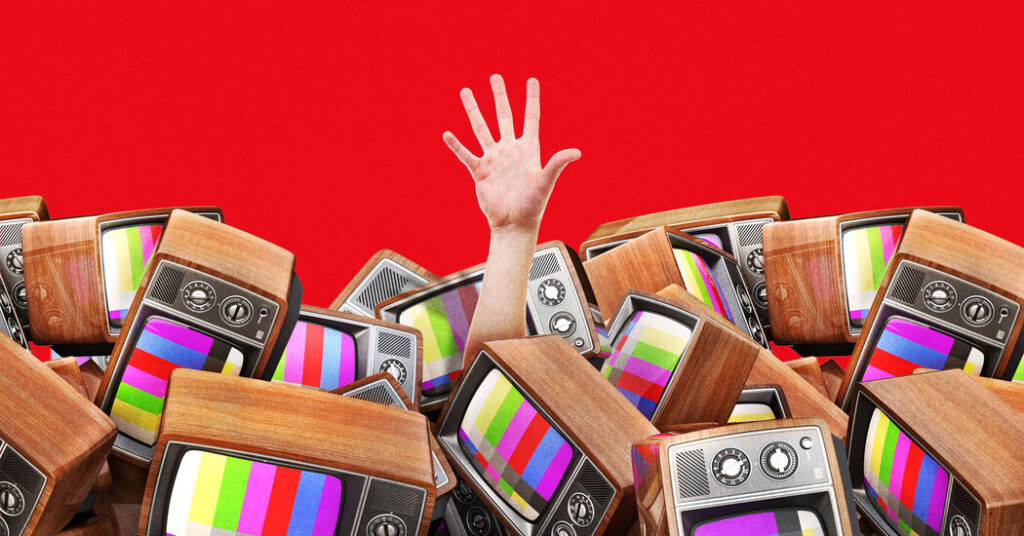
Source photographs by CursedSenses and urfinguss/Getty Images.
The Times is committed to publishing a diversity of letters to the editor. We’d like to hear what you think about this or any of our articles. Here are some tips. And here’s our email: [email protected].
Follow the New York Times Opinion section on Facebook, Instagram, TikTok, Bluesky, WhatsApp and Threads.
The post One Factor Will Decide How Much You Enjoy TV Next Year appeared first on New York Times.