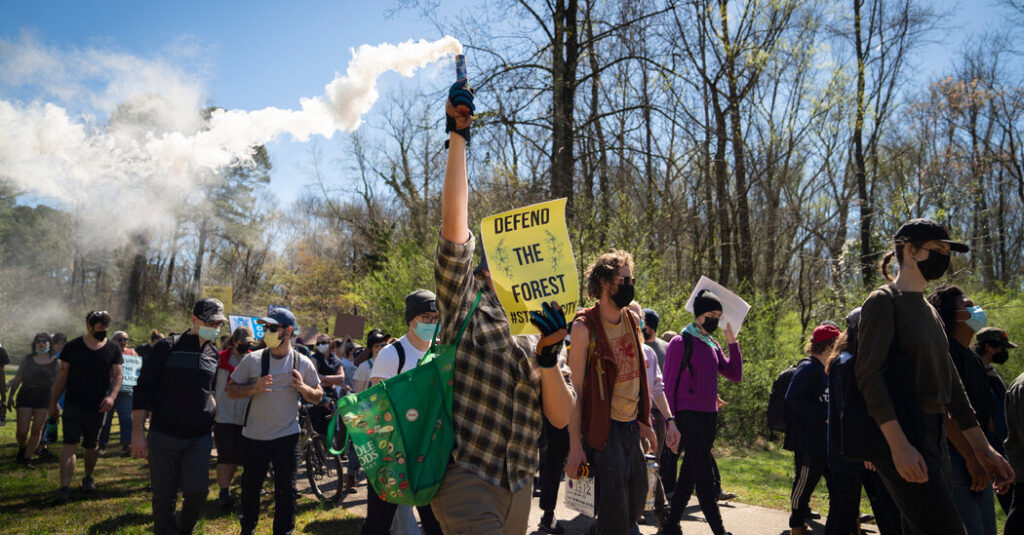
A Georgia judge dismissed racketeering charges on Tuesday against activists who had fought the construction of a police and fire training center outside of Atlanta that became known as “Cop City,” dealing a major setback to state officials who had pursued an unusually aggressive case against dozens of protesters.
The plan to transform a spread of forest on the outskirts of the city had drawn activists from across the country, who camped in the trees and repeatedly clashed with law enforcement officers for nearly two years.
After sweeping them from the woods, Georgia officials argued that the demonstrators were part of a criminal enterprise bent on sowing violence and disorder, and in 2023 the state attorney general charged dozens of activists with racketeering. The case was believed to be the largest of its kind brought against protesters.
In his ruling on Tuesday, Judge Kevin M. Farmer of Superior Court of Fulton County cited what was essentially a technical misstep by the attorney general’s office as justification for tossing the charges against all of the 61 protesters named in the racketeering indictment. Prosecutors and the activists had been waiting for Judge Farmer’s order for months, after he signaled his intentions to dismiss the charges during a hearing in September.
The judge found that state prosecutors had failed to obtain the necessary authorization of Gov. Brian Kemp to move forward with a case that would otherwise be within the remit of a local district attorney. (It is an approval that Mr. Kemp, a Republican and a persistent critic of the activists, would have been inclined to provide.)
In the 109-page indictment, prosecutors accused the activists of arson, domestic terrorism and money laundering, and claimed that they had thrown Molotov cocktails and fireworks at police officers, firefighters and emergency workers.
In a statement on Tuesday, the office of Chris Carr, the Georgia attorney general, said that it would appeal the judge’s decision and vowed to “continue to vigorously pursue this domestic terrorism case to ensure that justice is served.”
Activists, civil liberties groups and other critics had argued that the prosecution was an unsettling and dangerous overreach. Lawyers from the American Civil Liberties Union had called the charges “breathtakingly broad.”
Rick Rojas is the Atlanta bureau chief for The Times, leading coverage of the South.
The post Georgia Judge Dismisses Racketeering Charges Against ‘Cop City’ Activists appeared first on New York Times.