You’re reading The Checkup With Dr. Wen, a newsletter on how to navigate medical and public health challenges. Click here to get the full newsletter in your inbox, including answers to reader questions and a summary of new scientific research.
One of the most common questions readers have asked me in recent months is whether older adults can receive a second dose of the 2025-2026 covid vaccine. The confusion is understandable; federal health officials have narrowed the government’s recommendations for younger and lower-risk groups, with little clarity on what those changes mean for seniors.
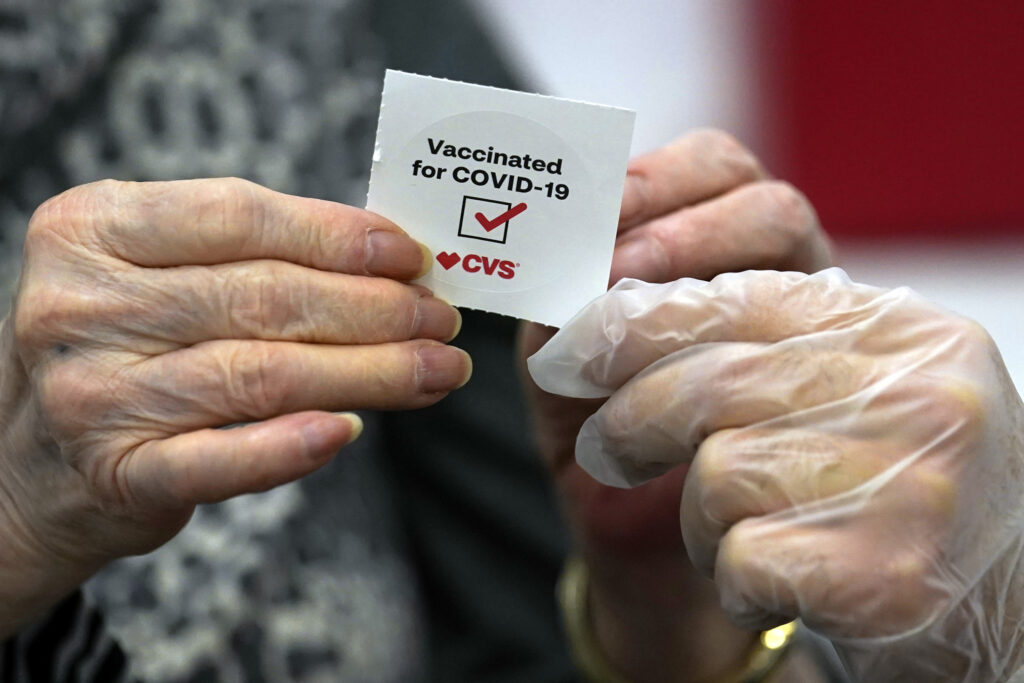
As it turns out, the Centers for Disease Control and Prevention not only permits a second dose but recommends it. The agency quietly updated its guidance in November to encourage adults 65 and older to receive two shots of this season’s vaccine, ideally six months apart to optimize protection. (People can get them as soon as two or three months after the first shot, depending on which vaccine they received.)
The same guidance applies to those who are moderately or severely immunocompromised, who are also eligible to receive two doses of the 2025-2026 covid vaccine. Importantly, individuals do not need documentation to prove immunocompromised status, and vaccinators are explicitly instructed not to deny vaccination because of a lack of medical records or other paperwork.
This is the right move and should come as a great relief to people who want additional protection. Recent studies have shown that protection gained from covid vaccines wanes substantially after four to six months. It is appropriate to offer a second vaccine to those at highest risk of severe disease.
The clarification will help readers like Phil from Texas, who is 76 years old and has several medical conditions. He received the updated covid vaccine in early September. “I’d like another one in early January, as I’ll be traveling later that month,” he wrote. “Is that too soon for another covid vaccination?”
It is not, according to the new CDC guidance. Though waiting six months extends protection longer, getting the dose in January is a reasonable choice for Phil given his upcoming travel.
Ron from California wrote that he was recently diagnosed with chronic lymphocytic leukemia. “It seems to have been discovered on the early side, and my doctor recommended monitoring for now. I received my covid immunization in October. Should I get a covid booster in six months? We plan to travel to Europe in early May.”
This is also allowed as part of the CDC’s new guidance. Getting the covid booster in mid-April would be optimal timing ahead of Ron’s trip.
“Back in fall 2025, both my husband and I eagerly awaited the release of an updated covid vaccine, but the public commentary was such that we doubted the updated vaccine would be approved and released soon,” wrote Robin from Virginia. “It was more than six months since our last covid vaccine (we are 66 and 67), and as such, we opted to take a booster of the then-current 2024 vaccine. Are we eligible to take the 2025 vaccine, and when?”
Yes, if it’s been at least two months since your 2024-2025 vaccine, you can receive the updated vaccine now. You would be eligible to get another dose of the 2025-2026 vaccine this spring or summer.
For younger adults without immunocompromising conditions, the guidance is different. For most, only a single dose of the 2025-2026 covid vaccine is available, and the guidance has been changed from a blanket recommendation to one of shared decision-making between patients and their health care providers based on individual circumstances. For children, the recommendations are more complex, and accessing the shots may be challenging.
Overall, it is reassuring that protection remains available for those who need it most, though it’s befuddling why the announcement recommending additional covid boosters was so quiet. In the past, such a change affecting millions of people would have been accompanied by prominent public communication. A spokesperson for the Department of Health and Human Services did not answer questions about why it had not publicized the change.
It’s unfortunate that careful, evidence-based vaccine guidance now arrives with so little fanfare, especially as federal health officials appear to be devoting their efforts to questioning vaccines and making them harder to access.
The post The CDC quietly recommends a second covid booster for vulnerable adults appeared first on Washington Post.