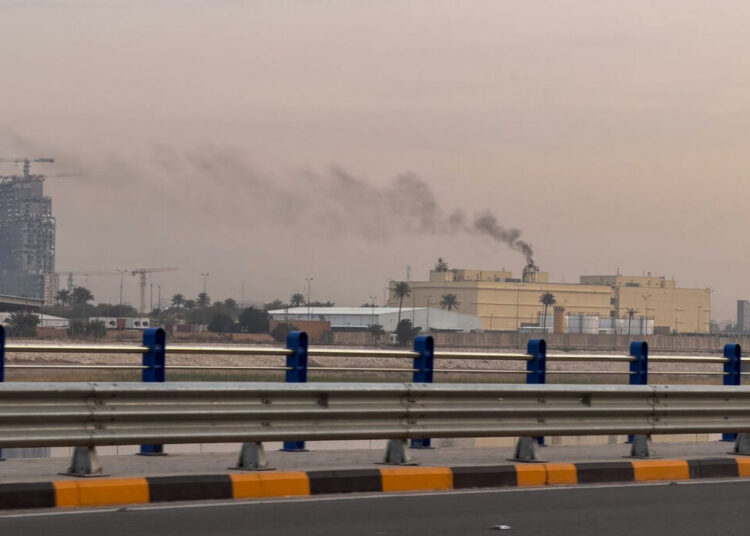
The C.I.A. conducted a drone strike last week in Venezuela, the first known U.S. operation inside the country since the Trump administration began its pressure campaign against the government of Nicolás Maduro.
President Trump had mentioned the attack twice in recent days without disclosing that the spy agency was behind it. U.S. officials said the target was a dock believed to be where Tren de Aragua, a Venezuelan gang, was storing narcotics and potentially preparing to move the drugs onto boats, according to people briefed on the mission.
“There was a major explosion in the dock area where they load the boats up with drugs,” Mr. Trump told reporters on Monday at Mar-a-Lago, his club and residence in Florida. “They load the boats up with drugs. So we hit all the boats, and now we hit the area. It’s the implementation area, that’s where they implement, and that is no longer around.”
Here’s what we know about the situation.
It was the first known land strike by the United States.
Mr. Trump had been warning for weeks that he was prepared to expand his pressure campaign with land strikes, but the attack last week was the first known strike inside Venezuela.
The attack became public only after Mr. Trump mentioned it during a radio interview on Friday. He said that it had taken place two days earlier and that the United States had knocked out “a big facility.”
The Venezuelan government has not commented directly on the strike or Mr. Trump’s remarks. But Diosdado Cabello, Venezuela’s interior minister, denounced months of “imperial madness” and “harassment, threats, attacks, persecution, robberies, piracy and murders.”
Trump had authorized covert action.
The C.I.A. has played a substantial role in preparing the administration’s campaign against Venezuela, and earlier this year, Mr. Trump authorized C.I.A. operations in Venezuela and ordered the agency to plan for a variety of missions.
The agency is not known to have conducted strikes against foreign targets recently, leaving operations to the U.S. military. But during the Bush and Obama administrations, the C.I.A. regularly conducted drone strikes against terrorist targets in Pakistan, Yemen, Somalia and elsewhere.
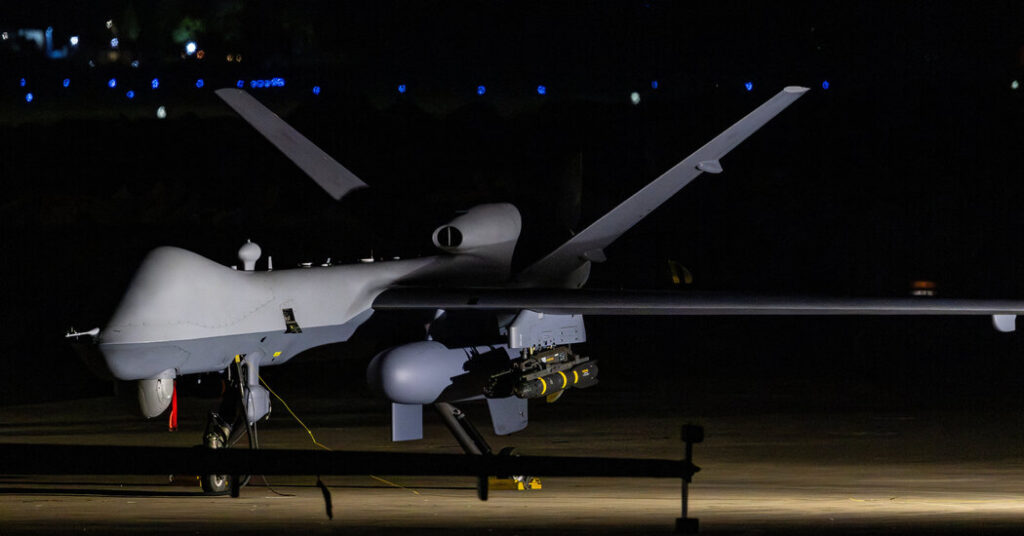
It is not clear if the drone used in the mission was owned by the C.I.A. or borrowed from the U.S. military. Military officials have declined to comment. The Pentagon has stationed several MQ-9 Reaper drones, which carry Hellfire missiles, at bases in Puerto Rico as part of the pressure campaign.
But the C.I.A. has a long, and often sordid, history of intervening in Latin America, with coups, assassination plots and the contra fight against Nicaragua’s leftist government in the 1980s.
The strike is part of a broader pressure campaign.
The strike suggests a new phase in Mr. Trump’s campaign against the Maduro government after his administration has spent months building up a heavy military presence in the Caribbean.
What began as a counternarcotics campaign has evolved into a broader mission to cripple Mr. Maduro and secure access to Venezuela’s vast oil reserves for U.S. companies.
Until now, the United States has been pressuring Venezuela by conducting military strikes on boats it suspects of trafficking drugs and seizing oil tankers. Those operations have taken place in international waters, but many legal experts say the strikes on the boats are unlawful.
Officials have signaled that they intend to continue targeting tanker traffic after Mr. Trump ordered a “complete blockade” on oil tankers that are under sanctions going to and from Venezuela.
“Venezuela is completely surrounded by the largest Armada ever assembled in the History of South America,” Mr. Trump wrote on social media this month. “It will only get bigger, and the shock to them will be like nothing they have ever seen before.”
The next steps are unclear.
Mr. Trump has signaled that he plans to continue to ratchet up the pressure on Mr. Maduro, as the president and his advisers have made clear they do not think he should be in power. But Mr. Maduro has shown no signs of stepping away voluntarily, and so what the Trump administration does next is unclear.
One potential challenge for the administration is the cost of keeping the massive military presence in the Caribbean. The aircraft carrier Gerald R. Ford was redirected to the Caribbean in October, and if the Pentagon extends its deployment it would delay crucial maintenance for the Ford and strain the crew’s morale. The crew is entering its seventh month at sea, and peacetime deployments typically do not go beyond six months.
Keeping not only the Ford strike group near Venezuela, but also an expeditionary strike group in the same region built around the amphibious assault ship Iwo Jima, is an extraordinary amount of conventional naval firepower for what began as an unconventional counternarcotics mission.
Finally, Mr. Trump and his aides have said very little about what would happen if Mr. Maduro was removed from power.
Julian E. Barnes, Eric Schmitt and Genevieve Glatsky contributed reporting.
Tyler Pager is a White House correspondent for The Times, covering President Trump and his administration.
The post The C.I.A. Strike on Venezuela: What to Know appeared first on New York Times.